
Advanced Palladium-Catalyzed Cross-Coupling for Scalable Pharmaceutical Intermediate Manufacturing
Advanced Palladium-Catalyzed Cross-Coupling for Scalable Pharmaceutical Intermediate Manufacturing
The landscape of fine chemical synthesis is constantly evolving, driven by the need for safer, more efficient, and cost-effective methodologies. A pivotal advancement in this domain is detailed in patent CN102241553B, which discloses a novel preparation method for aromatic cross-coupled compounds. This technology represents a significant departure from classical approaches by enabling the direct cross-coupling of aromatic amines and aromatic boronic acids under anhydrous and oxygen-free conditions. By leveraging alkyl nitrites, palladium catalysts, and specific organophosphorus ligands, this process achieves high reaction efficiency without the need to isolate unstable diazonium intermediates. For R&D directors and process chemists, this offers a robust pathway to access complex biaryl scaffolds that are ubiquitous in modern pharmaceutical agents and agrochemicals. The strategic implication of this patent extends beyond mere academic interest; it provides a tangible solution for reducing lead times and enhancing the safety profile of large-scale manufacturing operations.
The Limitations of Conventional Methods vs. The Novel Approach
The Limitations of Conventional Methods
Historically, the synthesis of biaryl structures via diazonium salts has been plagued by significant operational hazards and logistical bottlenecks. Classical protocols typically involve the pre-formation and isolation of aromatic diazonium tetrafluoroborate salts, which are notoriously unstable and sensitive to light and heat. These intermediates often present severe safety risks, including potential explosivity, necessitating specialized handling equipment and stringent temperature controls that drive up capital expenditure. Furthermore, the purification and storage of these diazonium salts are technically challenging, often leading to decomposition before they can be utilized in subsequent coupling steps. This instability limits the applicability of such reactions to small-scale laboratory settings and creates substantial barriers for commercial scale-up. The reliance on pre-formed diazonium salts also introduces additional unit operations, increasing solvent consumption, waste generation, and overall process time, which directly negatively impacts the cost of goods sold (COGS) for high-volume intermediates.
The Novel Approach
In stark contrast, the methodology outlined in CN102241553B revolutionizes this workflow by generating the reactive diazonium species in situ. This one-pot strategy allows aromatic amines to react directly with alkyl nitrites within the reaction mixture, immediately engaging with the palladium catalyst and boronic acid partner. This eliminates the dangerous isolation step entirely, transforming a hazardous multi-step sequence into a streamlined, single-vessel operation. The use of stable aromatic amines as starting materials drastically improves substrate availability and shelf-life, as amines are commodity chemicals compared to their fleeting diazonium counterparts. Moreover, the reaction conditions are remarkably mild yet effective, typically proceeding at temperatures between 80°C and 90°C. This approach not only enhances operational safety but also broadens the substrate scope, accommodating a wide array of functional groups that might otherwise be incompatible with harsher traditional conditions.

Mechanistic Insights into Pd-Catalyzed In-Situ Diazotization Coupling
The core of this technological breakthrough lies in the sophisticated interplay between the palladium catalyst and the organophosphorus ligand within the reaction matrix. The mechanism initiates with the in situ formation of the diazonium ion from the aromatic amine and alkyl nitrite, which then undergoes oxidative addition to the active Pd(0) species. This step is critical and is facilitated by the specific electronic properties of the ligand system, such as tri-furylphosphine, which stabilizes the palladium center while maintaining sufficient reactivity for the subsequent transmetallation with the aromatic boronic acid. The final reductive elimination step releases the desired aromatic cross-coupled product and regenerates the catalyst, completing the cycle. Understanding this mechanistic nuance is vital for process optimization, as the choice of ligand and catalyst loading (typically 2.5%-5% for Pd and 15-20% for ligand) directly influences the turnover number and overall yield. The patent highlights that deviations in ligand selection can lead to catalyst deactivation or incomplete conversion, underscoring the importance of precise formulation control.
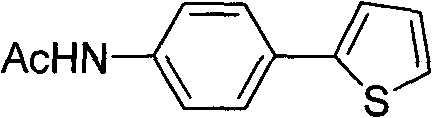
Furthermore, the impurity profile of the final product is meticulously managed through this controlled environment. By avoiding the isolation of diazonium salts, the formation of side products associated with salt decomposition, such as phenols or azo-compounds, is significantly minimized. The reaction demonstrates exceptional tolerance to various substituents, including electron-withdrawing groups like esters and cyano groups, as well as electron-donating groups like alkoxy and amides. For instance, the successful synthesis of heterocyclic derivatives, such as thienyl-containing biaryls, showcases the system's versatility in handling sterically and electronically diverse substrates. This high level of chemoselectivity ensures that downstream purification is simplified, often requiring only standard column chromatography or crystallization to achieve high-purity specifications required for pharmaceutical applications.
How to Synthesize Aromatic Cross-Coupled Compounds Efficiently
Implementing this synthesis route requires strict adherence to anhydrous and oxygen-free conditions to maintain catalyst activity and prevent side reactions. The process begins by charging a reaction vessel with the aromatic boronic acid, the palladium catalyst precursor, the phosphine ligand, and a portion of the organic solvent, typically DMF. Simultaneously, the aromatic amine is mixed with the alkyl nitrite in a separate container. This separation allows for controlled addition, managing the exotherm associated with diazotization. Once the mixture is introduced to the catalyst pot, the system is heated to promote the coupling. While the general procedure is robust, specific parameters such as stoichiometry (amine to boronic acid ratio of 1:1.1-1.5) and reaction time (8-10 hours) must be optimized for each specific substrate pair to maximize yield. For a detailed, step-by-step standardized operating procedure tailored to your specific target molecule, please refer to the technical guide below.
- Prepare an anhydrous and oxygen-free reaction vessel containing the aromatic boronic acid, palladium catalyst (e.g., Pd2(dba)3), organophosphorus ligand, and organic solvent.
- In a separate container, mix the aromatic amine compound with alkyl nitrite (such as tert-butyl nitrite) and additional organic solvent to generate the diazonium species in situ.
- Add the amine/nitrite mixture to the catalyst vessel, heat to 80-90°C for 8-10 hours, and purify the resulting biaryl product via column chromatography.
Commercial Advantages for Procurement and Supply Chain Teams
For procurement managers and supply chain heads, the transition to this in-situ diazotization technology offers profound strategic benefits that extend well beyond the laboratory bench. The primary advantage lies in the fundamental shift of raw material sourcing. By replacing custom-synthesized, unstable diazonium salts with widely available aromatic amines, the supply chain becomes inherently more resilient and less prone to disruption. Amines are bulk commodities produced by numerous global manufacturers, ensuring competitive pricing and consistent availability. This substitution effectively decouples the production schedule from the lead times associated with specialized intermediate suppliers, thereby enhancing overall supply security. Additionally, the elimination of the isolation step for the diazonium intermediate translates directly into reduced operational complexity, lowering the barrier for contract manufacturing organizations (CMOs) to adopt this process without requiring specialized hazardous material handling infrastructure.
- Cost Reduction in Manufacturing: The economic impact of this process is driven by the simplification of the synthetic route. Eliminating the isolation, drying, and storage of diazonium salts removes entire unit operations from the manufacturing workflow, which significantly reduces labor costs, energy consumption, and solvent usage. Furthermore, the use of commodity amines instead of premium-priced diazonium salts results in substantial raw material cost savings. The high atom economy and reduced waste generation associated with the one-pot protocol also contribute to lower waste disposal costs, aligning with green chemistry principles that are increasingly mandated by regulatory bodies. These cumulative efficiencies create a leaner cost structure, allowing for more competitive pricing in the final API or intermediate market.
- Enhanced Supply Chain Reliability: Reliability is paramount in the pharmaceutical supply chain, and this technology fortifies it by utilizing stable, shelf-stable starting materials. Unlike diazonium salts which degrade rapidly and require cold chain logistics, aromatic amines can be stored under ambient conditions for extended periods without loss of quality. This stability allows manufacturers to maintain strategic stockpiles of key raw materials, buffering against market volatility or sudden demand spikes. The robustness of the reaction conditions also means that the process is less susceptible to minor variations in environmental parameters, ensuring consistent batch-to-batch quality and reducing the risk of production delays due to failed batches or out-of-specification results.
- Scalability and Environmental Compliance: Scaling chemical processes often amplifies safety and environmental challenges, but this method mitigates those risks effectively. By avoiding the accumulation of energetic diazonium salts, the process safety profile is markedly improved, facilitating easier regulatory approval for larger reactor sizes. The reduced solvent footprint and minimized waste streams simplify effluent treatment and lower the environmental burden of the manufacturing site. This alignment with sustainable manufacturing practices not only reduces compliance costs but also enhances the corporate social responsibility profile of the supply chain, a factor that is increasingly weighted in vendor selection criteria by major multinational corporations.
Frequently Asked Questions (FAQ)
The following questions address common technical and commercial inquiries regarding the implementation of this cross-coupling technology. These insights are derived directly from the experimental data and claims presented in the patent literature, providing a factual basis for evaluating its suitability for your specific project requirements. Understanding these nuances is essential for making informed decisions about process adoption and vendor qualification.
Q: Why is this in-situ diazotization method safer than traditional Suzuki couplings?
A: Traditional methods often require isolating unstable aromatic diazonium tetrafluoroborate salts, which pose explosion risks and storage difficulties. This patent utilizes stable aromatic amines and generates the reactive diazonium species transiently within the reaction mixture, eliminating the need for hazardous isolation steps.
Q: What is the functional group tolerance of this palladium-catalyzed system?
A: The method demonstrates excellent tolerance for diverse substituents including alkyl, alkoxy, ester, amide, ketone, nitro, and halogen groups. It is also effective for coupling heterocyclic aryl boronic acids, such as thienyl derivatives, making it highly versatile for complex drug intermediate synthesis.
Q: How does this process impact commercial scalability?
A: By utilizing commercially available and stable aromatic amines instead of custom-synthesized diazonium salts, the supply chain is significantly simplified. The one-pot nature reduces unit operations, solvent usage, and processing time, facilitating easier scale-up from laboratory to industrial production.
Partnering with NINGBO INNO PHARMCHEM: Your Reliable Aromatic Cross-Coupled Compounds Supplier
The technological potential of the in-situ diazotization coupling method described in CN102241553B is immense, offering a pathway to high-value biaryl intermediates with superior safety and efficiency profiles. At NINGBO INNO PHARMCHEM, we possess the technical expertise and infrastructure to translate such complex patent methodologies into robust, commercial-scale realities. Our team has extensive experience scaling diverse pathways from 100 kgs to 100 MT/annual commercial production, ensuring that the transition from gram-scale discovery to tonnage manufacturing is seamless. We operate stringent purity specifications and maintain rigorous QC labs equipped with advanced analytical instrumentation to guarantee that every batch meets the exacting standards required by the global pharmaceutical industry.
We invite you to leverage our capabilities to optimize your supply chain and reduce your manufacturing costs. Whether you are looking to secure a reliable source for existing intermediates or need assistance in developing a new synthetic route, our technical procurement team is ready to assist. We encourage you to request a Customized Cost-Saving Analysis for your target molecules. By engaging with us, you gain access to specific COA data and comprehensive route feasibility assessments that can accelerate your project timelines and enhance your competitive edge in the market.
Engineering Bottleneck?
Can't scale up this synthesis? Upload your target structure or CAS, and our CDMO team will evaluate the industrial feasibility within 24 hours. Request Evaluation →