
Advanced Palladium-Catalyzed Synthesis of Chiral 3-(2,3-Butadienyl) Oxindoles for Commercial Drug Development
The pharmaceutical industry continuously seeks robust methodologies for constructing complex molecular scaffolds, particularly those featuring quaternary carbon centers with high stereochemical fidelity. Patent CN113548999B introduces a groundbreaking approach for the synthesis of racemic and chiral 3-(2,3-butadienyl) oxindole compounds, which serve as critical intermediates in the development of antiviral agents targeting SARS-CoV-2. This technology leverages a palladium-catalyzed coupling reaction between 2,3-butadienyl carbonates and oxindolinones, enabling the direct construction of these valuable structures in a single operational step. The significance of this innovation lies not only in its chemical elegance but also in its potential to accelerate the supply chain for high-purity pharmaceutical intermediates. By addressing the historical difficulties associated with allene synthesis, this method offers a reliable pathway for producing compounds that exhibit strong binding affinity to the 3CL hydrolase enzyme, thereby supporting the global effort to develop effective treatments for viral infections.
The Limitations of Conventional Methods vs. The Novel Approach
The Limitations of Conventional Methods
Historically, the construction of tetrasubstituted optically active quaternary carbon centers, especially those incorporating allene functionalities, has presented substantial synthetic challenges for organic chemists. Traditional strategies often rely on multi-step sequences that involve harsh reaction conditions, expensive reagents, and tedious purification processes, which collectively diminish the overall economic viability of the manufacturing process. Furthermore, achieving high levels of enantioselectivity in these conventional routes frequently requires stoichiometric amounts of chiral auxiliaries or resolution steps that inherently limit the maximum theoretical yield to fifty percent. The instability of allene intermediates under standard conditions also poses significant risks for scale-up, leading to inconsistent batch quality and extended lead times for procurement teams. These inefficiencies create bottlenecks in the supply of complex pharmaceutical intermediates, forcing manufacturers to absorb higher costs and face greater uncertainty in meeting production schedules for critical drug substances.
The Novel Approach
In stark contrast to these legacy methods, the technology disclosed in CN113548999B utilizes a highly efficient palladium-catalyzed asymmetric allylic alkylation strategy that streamlines the synthesis into a concise, one-step transformation. This novel approach employs readily available starting materials, specifically functionalized oxindolinones and 2,3-butadienyl carbonates, which react under mild conditions to deliver the target molecules with excellent conversion rates. The use of specialized chiral phosphine ligands allows for precise control over the stereochemical outcome, ensuring that the resulting products possess the high enantiomeric excess required for biological activity. Additionally, the broad substrate scope and good functional group compatibility of this method mean that a wide variety of derivatives can be accessed without the need for extensive process re-optimization. This flexibility significantly enhances the scalability of complex pharmaceutical intermediates, providing a robust foundation for commercial manufacturing that reduces both technical risk and operational complexity.
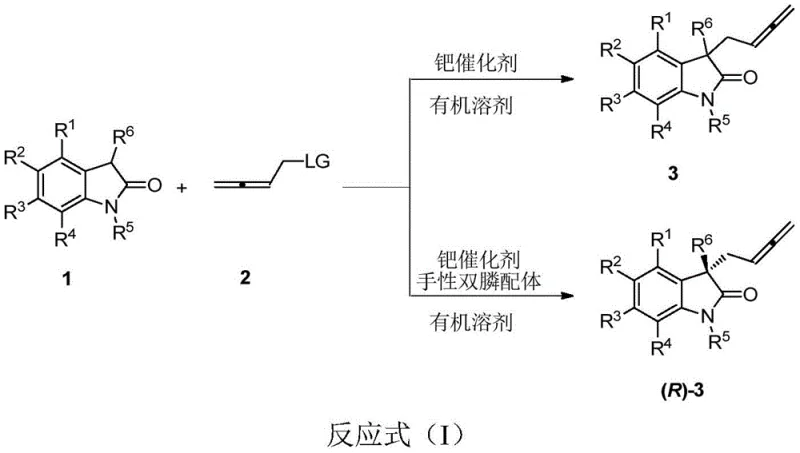
Mechanistic Insights into Pd-Catalyzed Asymmetric Allylic Alkylation
The mechanistic pathway underpinning this transformation involves a sophisticated catalytic cycle initiated by the oxidative addition of the palladium catalyst to the 2,3-butadienyl carbonate substrate. This step generates a pi-allyl palladium intermediate, which is subsequently stabilized and rendered stereoselective through coordination with the chiral phosphine ligand. The oxindolinone substrate, activated via enolization, then undergoes a ligand exchange process with this metal complex, positioning the nucleophile for attack at the specific allylic terminus. The final reductive elimination step releases the desired 3-(2,3-butadienyl) oxindole product while regenerating the active palladium species to continue the cycle. Understanding this mechanism is crucial for R&D directors as it highlights the importance of ligand selection in controlling the regioselectivity and enantioselectivity of the reaction, ensuring that the formation of unwanted 1,3-conjugated diene byproducts is effectively suppressed.
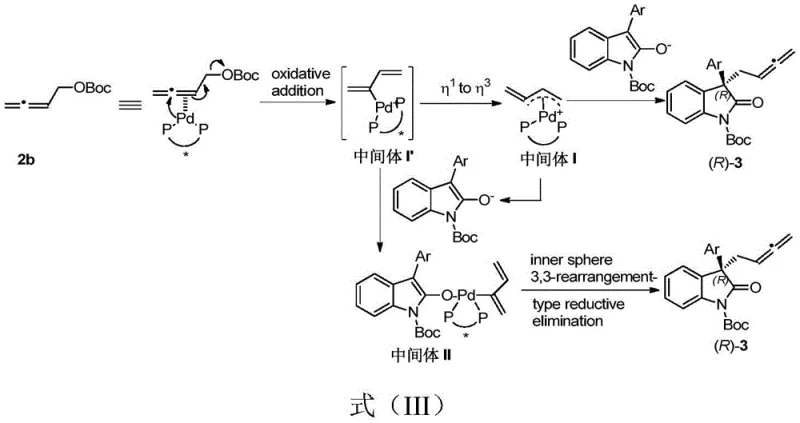
Furthermore, the impurity profile of the reaction is tightly managed through the specific choice of reaction conditions and catalyst systems described in the patent. The mechanism suggests that the rapid conversion of intermediate species prevents the accumulation of reactive byproducts that could otherwise complicate downstream purification. By maintaining strict control over parameters such as temperature and solvent polarity, the process ensures that the chemical selectivity remains high throughout the reaction duration. This level of control is essential for meeting the stringent purity specifications required in pharmaceutical manufacturing, where even trace impurities can impact the safety and efficacy of the final drug product. The ability to predict and manage these mechanistic nuances provides a significant advantage in process development, allowing for the design of more robust and reproducible manufacturing protocols that align with regulatory expectations.
How to Synthesize 3-(2,3-Butadienyl) Oxindoles Efficiently
The practical implementation of this synthesis route begins with the preparation of the reaction environment under an inert atmosphere to prevent catalyst deactivation by oxygen or moisture. Operators must carefully weigh and introduce the palladium catalyst along with the specific chiral ligand into the reaction vessel, followed by the addition of the oxindolinone substrate and the organic solvent. Once the mixture is equilibrated at the prescribed temperature, the 2,3-butadienyl carbonate is introduced to initiate the coupling reaction, which proceeds over a defined period to ensure complete conversion. Detailed standardized synthesis steps see the guide below.
- Prepare the reaction vessel under inert atmosphere and add palladium catalyst with appropriate chiral phosphine ligands.
- Introduce substituted oxindolone and 2,3-butadienyl carbonate substrates into the organic solvent system.
- Maintain controlled temperature conditions to facilitate asymmetric coupling, followed by purification via column chromatography.
Commercial Advantages for Procurement and Supply Chain Teams
From a commercial perspective, this patented methodology offers profound benefits for procurement managers and supply chain heads by fundamentally altering the cost structure of producing these specialized intermediates. The elimination of multi-step sequences and the use of commercially available starting materials drastically simplify the supply chain, reducing the number of vendors required and minimizing the logistical overhead associated with sourcing exotic reagents. Moreover, the high efficiency of the one-step process means that less raw material is wasted, leading to substantial cost savings in manufacturing without compromising on the quality of the output. The mild reaction conditions also translate to lower energy consumption and reduced requirements for specialized equipment, further enhancing the economic attractiveness of adopting this technology for large-scale production campaigns.
- Cost Reduction in Manufacturing: The streamlined nature of this palladium-catalyzed process eliminates the need for expensive protecting group manipulations and lengthy purification sequences that typically drive up the cost of goods. By achieving high yields in a single step, the overall material throughput is maximized, which directly correlates to a lower cost per kilogram of the final intermediate. Additionally, the recovery and potential recycling of the palladium catalyst can offer further economic benefits, making the process increasingly competitive against traditional synthetic routes. This efficiency allows companies to allocate resources more effectively, investing in other areas of R&D while maintaining healthy margins on their core product lines.
- Enhanced Supply Chain Reliability: Relying on readily available starting materials such as substituted oxindoles and carbonates ensures a stable and resilient supply chain that is less susceptible to market fluctuations or geopolitical disruptions. The robustness of the reaction conditions means that production can be scaled up rapidly to meet surges in demand without the need for extensive process validation or equipment modification. This reliability is critical for maintaining continuity of supply for downstream drug manufacturers, who depend on consistent availability of high-quality intermediates to keep their own production lines running smoothly. Consequently, partnerships based on this technology foster long-term stability and trust between suppliers and their pharmaceutical clients.
- Scalability and Environmental Compliance: The process is designed with scalability in mind, utilizing solvents and reagents that are compatible with standard industrial chemical processing equipment. The reduction in waste generation due to higher atom economy and fewer purification steps aligns well with modern environmental regulations and sustainability goals. This compliance reduces the regulatory burden on manufacturers and minimizes the costs associated with waste disposal and environmental remediation. As the industry moves towards greener chemistry practices, adopting such efficient and clean technologies positions companies as leaders in sustainable manufacturing, enhancing their corporate reputation and market value.
Frequently Asked Questions (FAQ)
The following questions address common technical and commercial inquiries regarding the implementation and benefits of this synthesis technology. These answers are derived directly from the experimental data and technical specifications outlined in the patent documentation, providing clarity on the capabilities and limitations of the method. Understanding these details helps stakeholders make informed decisions about integrating this chemistry into their existing development pipelines.
Q: What are the primary challenges in synthesizing allene-containing quaternary carbon centers?
A: Traditional methods often struggle with stereocontrol and require multiple steps to install the allene motif adjacent to a quaternary center, leading to lower overall efficiency and yield.
Q: How does this palladium-catalyzed method improve enantioselectivity?
A: By utilizing specific chiral phosphine ligands such as (R)-DTBM-Biphep, the reaction achieves high enantiomeric excess through precise spatial control during the reductive elimination step.
Q: Can these intermediates be further derivatized for drug discovery?
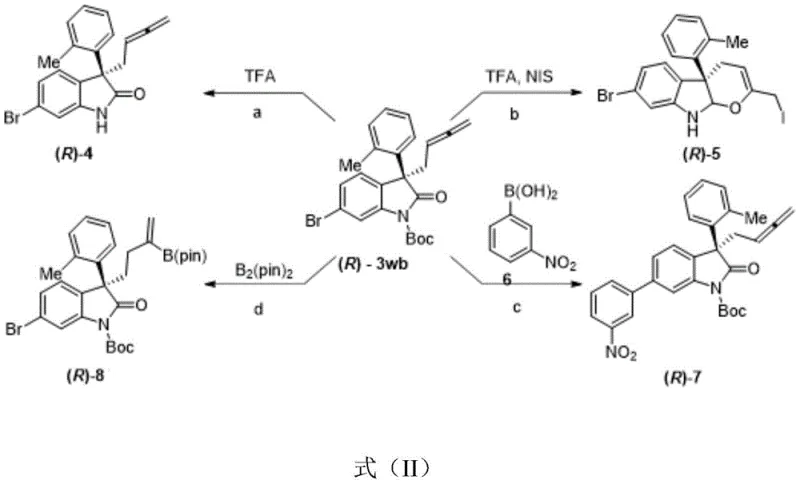
A: Yes, the resulting 3-(2,3-butadienyl) oxindoles possess reactive allene groups that allow for diverse downstream transformations including cyclization, borylation, and cross-coupling reactions.
Partnering with NINGBO INNO PHARMCHEM: Your Reliable 3-(2,3-Butadienyl) Oxindole Supplier
At NINGBO INNO PHARMCHEM, we recognize the critical role that advanced synthetic methodologies play in accelerating drug discovery and development timelines. Our team of experts possesses extensive experience scaling diverse pathways from 100 kgs to 100 MT/annual commercial production, ensuring that your project transitions seamlessly from the laboratory bench to full-scale manufacturing. We are committed to delivering products that meet stringent purity specifications through our rigorous QC labs, guaranteeing that every batch of 3-(2,3-butadienyl) oxindole intermediates performs consistently in your downstream applications. Our dedication to quality and reliability makes us the preferred partner for multinational corporations seeking to secure their supply chains for complex pharmaceutical ingredients.
We invite you to contact our technical procurement team to discuss how this innovative palladium-catalyzed technology can be tailored to your specific project needs. By requesting a Customized Cost-Saving Analysis, you can gain valuable insights into the potential economic benefits of switching to this more efficient synthetic route. We encourage you to reach out today to obtain specific COA data and route feasibility assessments that will empower you to make strategic decisions for your upcoming development programs. Let us collaborate to bring your next breakthrough therapy to market faster and more cost-effectively.