
Revolutionizing Triallyl Isocyanurate Production: High-Purity Crosslinking Agents for Global Polymer Industries
The global demand for high-performance polymer additives continues to surge, driven by the automotive, wire, and cable industries' need for materials with superior thermal stability and mechanical strength. At the forefront of this sector is Triallyl Isocyanurate (TAIC), a multifunctional olefinic monomer containing a triazine ring that serves as a critical crosslinking modifier. Recent technological advancements, specifically detailed in patent CN102775364A, have introduced a transformative preparation method that addresses long-standing inefficiencies in TAIC synthesis. This innovation shifts the paradigm from traditional aqueous separation techniques to a sophisticated solid-liquid filtration process, fundamentally altering the economic and environmental landscape of polymer additive manufacturing. By controlling the crystallization of the sodium chloride byproduct through the addition of specific agents, manufacturers can now achieve a seamless separation process that yields high-purity TAIC while simultaneously recovering valuable industrial-grade salt.
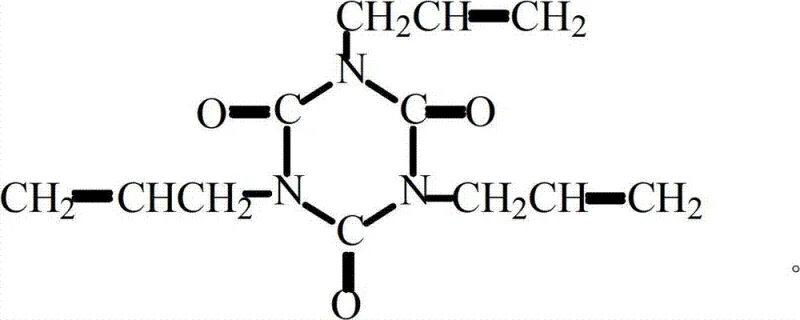
The structural integrity of TAIC, characterized by its three active allyl functional groups attached to a stable isocyanurate ring, makes it indispensable for modifying thermoplastic macromolecular materials such as EPDM, chlorinated polyethylene, and EVA. However, the historical challenge has always been balancing high yield with environmental compliance. The methodology outlined in the referenced patent provides a robust solution, ensuring that the production of this essential crosslinking agent meets the rigorous standards required by modern reliable polymer additive suppliers. This report delves deep into the mechanistic advantages and commercial implications of this novel synthetic route.
The Limitations of Conventional Methods vs. The Novel Approach
The Limitations of Conventional Methods
Historically, the industrial production of TAIC has relied heavily on the Zassol solvent method, which utilizes high-boiling aprotic solvents like DMF to facilitate the nucleophilic substitution between allyl chloride and alkali metal cyanates. While this approach successfully mitigates the hydrolysis side reactions associated with aqueous methods, it introduces a significant downstream bottleneck: the separation of the sodium chloride byproduct. In traditional processes, the sodium chloride precipitates as a viscous, muddy powder that is notoriously difficult to filter. To overcome this, manufacturers have been forced to adopt aqueous dissolution methods, adding large volumes of water to dissolve the salt and separate the organic phase. This practice generates massive quantities of high-salinity wastewater, posing severe environmental hazards and incurring substantial treatment costs. Furthermore, the emulsification tendencies of the muddy salt often lead to significant entrainment of the valuable TAIC product into the waste stream, drastically reducing overall yield and complicating the purification of the final organic phase.
The Novel Approach
The breakthrough described in patent CN102775364A elegantly resolves these issues by manipulating the physical state of the byproduct rather than changing the core chemistry of the synthesis. By introducing a compound crystallizing agent—typically a mixture of sodium chloride seeds and quaternary ammonium salts—into the reaction matrix during the保温 (holding) phase, the process induces the formation of large, well-defined sodium chloride crystals. This transformation from a colloidal sludge to a crystalline solid allows for direct mechanical filtration, completely eliminating the need for water washing at the separation stage. Consequently, the generation of saline wastewater is avoided, and the solvent (DMF) is preserved within the filtrate for efficient recovery. This shift not only streamlines the operational workflow but also converts a waste disposal problem into a resource recovery opportunity, as the filtered salt is obtained as a white crystalline solid with industrial application value.
Mechanistic Insights into Crystallization-Controlled Cyclization
The core chemical transformation involves a two-step tandem reaction sequence: initially, the nucleophilic substitution of allyl chloride by the cyanate ion to form allyl isocyanate intermediates, followed by the trimerization (cyclization) of these intermediates to form the stable triazine ring of TAIC. This reaction is typically catalyzed by tertiary amines or halide salts in an aprotic medium. The critical innovation lies in the post-reaction phase where the thermodynamics of crystallization are actively managed. The addition of quaternary ammonium salts acts as a crystal habit modifier, reducing the surface energy of the growing NaCl nuclei and preventing the aggregation of fine particles into an impermeable cake. This ensures that the sodium chloride grows into larger, discrete crystals that settle rapidly and allow the mother liquor to pass through filter media with minimal resistance. This mechanistic control is vital for maintaining the integrity of the reaction mixture, preventing the occlusion of TAIC within the salt lattice, which is a common cause of yield loss in conventional processes.
Furthermore, the purification strategy employs molecular short-path distillation, a technique specifically chosen for its suitability for heat-sensitive materials. TAIC contains reactive allyl groups that are prone to thermal polymerization at elevated temperatures, which can lead to the formation of insoluble thermosetting polymers and equipment fouling in traditional distillation columns. Molecular short-path distillation operates under high vacuum with a very short residence time and a minimal distance between the evaporator and condenser. This setup allows the TAIC to vaporize and condense before thermal degradation or polymerization can occur. As a result, the crude brown-red TAIC, which typically contains colored impurities and residual oligomers, is refined into a water-white, transparent liquid or crystal with purity levels exceeding 97%. This level of purity is essential for applications requiring optical clarity or where colored impurities could interfere with the curing kinetics of the final polymer matrix.
How to Synthesize Triallyl Isocyanurate Efficiently
The synthesis protocol defined in the patent offers a scalable pathway for producing high-grade TAIC suitable for demanding industrial applications. The process begins with the precise charging of an aprotic solvent, such as DMF, along with a dehydrating agent like anhydrous calcium chloride to scavenge trace moisture that could otherwise hydrolyze the reactive allyl chloride. Following the addition of the alkali metal cyanate and catalyst, the reaction temperature is carefully ramped to initiate the substitution. The key operational parameter is the timed addition of the crystallizing agent after the allyl chloride feed is complete, allowing the system to hold at elevated temperatures to ensure both complete cyclization and optimal crystal growth of the salt byproduct.
- Combine aprotic solvent (e.g., DMF), alkali metal cyanate, dehydrating agent, and catalyst in a reactor, then heat to 90-120°C.
- Slowly drip allyl chloride into the mixture, followed by the addition of a compound crystallizing agent to promote large crystal formation of sodium chloride.
- Filter the reaction mixture to isolate solid NaCl, recover the solvent via vacuum distillation, and purify the crude TAIC using molecular short-path distillation.
Commercial Advantages for Procurement and Supply Chain Teams
For procurement managers and supply chain directors, the adoption of this crystallization-controlled synthesis route offers profound strategic advantages beyond mere technical superiority. The primary benefit lies in the drastic simplification of the waste management infrastructure. By eliminating the generation of high-salinity wastewater, facilities can bypass the need for expensive multi-effect evaporation systems or membrane separation units traditionally required to treat brine. This reduction in auxiliary equipment translates directly to lower capital expenditure (CAPEX) and reduced operational complexity. Moreover, the ability to recover the solvent (DMF) more efficiently from the filtrate, without the dilution effects of water washing, significantly lowers the raw material consumption per unit of product, driving down the variable cost of production.
- Cost Reduction in Manufacturing: The elimination of aqueous workup steps removes the energy-intensive processes associated with heating and treating large volumes of saline water. Additionally, the recovery of high-purity sodium chloride as a saleable byproduct creates a new revenue stream that offsets raw material costs. The process avoids the loss of valuable TAIC product that is typically entrained in muddy filter cakes or lost to the aqueous phase in traditional methods, thereby maximizing the yield from every kilogram of allyl chloride purchased. This holistic optimization of material flow ensures a more competitive pricing structure for the final high-purity triallyl isocyanurate.
- Enhanced Supply Chain Reliability: Traditional methods that rely on complex wastewater treatment are vulnerable to regulatory shutdowns and environmental compliance bottlenecks. By adopting a near-zero liquid discharge process for the salt separation, manufacturers secure a more resilient supply chain that is less susceptible to environmental regulatory changes. The simplicity of the filtration step also reduces the cycle time of each batch, allowing for increased throughput and faster response to market demand fluctuations. This reliability is crucial for downstream customers in the wire and cable sectors who depend on consistent, uninterrupted supplies of crosslinking agents for their own production schedules.
- Scalability and Environmental Compliance: The transition from a slurry-based separation to a crystalline filtration process is inherently easier to scale from pilot plants to multi-ton commercial reactors. The handling of free-flowing crystals is mechanically straightforward compared to pumping and processing viscous sludges, reducing maintenance downtime and equipment wear. From an environmental perspective, the process aligns with green chemistry principles by minimizing waste generation at the source rather than treating it post-production. This proactive approach to sustainability enhances the corporate profile of the manufacturer and ensures long-term viability in increasingly regulated global markets.
Frequently Asked Questions (FAQ)
The following questions address common technical and commercial inquiries regarding the implementation of this advanced TAIC synthesis technology. These insights are derived directly from the experimental data and process descriptions found in the underlying patent literature, providing a factual basis for evaluating the feasibility of this method for your specific manufacturing needs. Understanding these nuances is critical for R&D teams planning the commercial scale-up of complex polymer additives.
Q: How does the new crystallization method improve TAIC production efficiency?
A: By adding specific crystallizing agents like quaternary ammonium salts, the process transforms viscous, hard-to-filter sodium chloride sludge into large, free-flowing crystals. This allows for simple mechanical filtration instead of water washing, significantly reducing wastewater generation and solvent loss.
Q: What is the purity level achievable with molecular short-path distillation for TAIC?
A: While conventional methods often yield pale red-brown TAIC with purity around 95%, the integration of molecular short-path distillation allows for the production of colorless, water-white TAIC with purity exceeding 97%, suitable for high-performance transparent polymer applications.
Q: Can the sodium chloride byproduct be commercially utilized?
A: Yes, unlike the muddy salt waste from traditional aqueous workups, this method produces white crystalline sodium chloride with a purity of approximately 95-96% and a high recovery rate, making it valuable for industrial reuse rather than requiring costly disposal.
Partnering with NINGBO INNO PHARMCHEM: Your Reliable Triallyl Isocyanurate Supplier
As the global market for high-performance polymers evolves, the need for specialized crosslinking agents like TAIC that offer both exceptional purity and sustainable production credentials has never been greater. NINGBO INNO PHARMCHEM stands at the intersection of chemical innovation and manufacturing excellence, leveraging advanced synthetic methodologies to deliver products that meet the most stringent industry specifications. Our facility is equipped with the expertise to scale diverse pathways from 100 kgs to 100 MT/annual commercial production, ensuring that we can support your projects from initial prototyping through to full-scale industrial deployment. We maintain stringent purity specifications across our product lines, supported by rigorous QC labs that utilize state-of-the-art analytical instrumentation to verify every batch.
We invite you to collaborate with us to optimize your supply chain for polymer additives. Our technical team is prepared to provide a Customized Cost-Saving Analysis tailored to your specific volume requirements and quality standards. Please contact our technical procurement team today to request specific COA data and comprehensive route feasibility assessments that demonstrate how our advanced manufacturing capabilities can drive value and efficiency in your operations.