
Advanced Enzymatic Synthesis of (S)-Bufuralol for Commercial Pharmaceutical Applications
Advanced Enzymatic Synthesis of (S)-Bufuralol for Commercial Pharmaceutical Applications
The pharmaceutical industry continuously seeks more efficient and sustainable pathways for producing chiral intermediates, and patent CN102649973A presents a groundbreaking method for the preparation of optically active (S)-bufuralol. This compound serves as a critical substrate for studying cytochrome P450 enzymes and acts as a potent beta-adrenergic receptor blocker with significant therapeutic potential for hypertension. The disclosed technology leverages advanced biocatalysis, specifically utilizing Cross-Linked Enzyme Aggregates (CLEA) of (R)-Oxynitrilase, to achieve superior stereocontrol compared to traditional chemical synthesis. By integrating enzymatic precision with robust chemical transformations, this route addresses long-standing challenges in impurity control and yield optimization. For R&D directors and procurement specialists, understanding this patent is essential for evaluating next-generation supply chain strategies that prioritize both purity and cost-efficiency in the production of high-value pharmaceutical intermediates.
The Limitations of Conventional Methods vs. The Novel Approach
The Limitations of Conventional Methods
Historically, the synthesis of optically active bufuralol has relied on methods that are inherently inefficient or economically burdensome for large-scale operations. One common approach involves the resolution of racemic mixtures using lipases, which theoretically caps the maximum yield at 50%, resulting in the wastage of half the starting material and increased disposal costs for the unwanted enantiomer. Another prevalent method employs expensive chiral metal catalysts, such as rhodium complexes, for asymmetric hydrogenation; while effective, these precious metals introduce significant raw material costs and require complex removal processes to meet stringent regulatory limits on heavy metal residues in active pharmaceutical ingredients. Furthermore, earlier enzymatic attempts often suffered from low stability in organic solvents, leading to inconsistent reaction rates and suboptimal optical purity that necessitated costly downstream purification steps. These limitations collectively hinder the ability of manufacturers to offer competitive pricing and reliable supply continuity for this critical intermediate.
The Novel Approach
The innovative strategy outlined in the patent data overcomes these barriers by employing a immobilized enzyme system that combines the selectivity of biocatalysis with the durability required for industrial processing. By utilizing (R)-Oxynitrilase in a Cross-Linked Enzyme Aggregate (CLEA) form, the process achieves remarkable stability in organic solvent systems, allowing for asymmetric cyanation under mild conditions without the rapid deactivation typical of free enzymes. This method eliminates the need for expensive transition metal catalysts, thereby simplifying the purification workflow and reducing the environmental footprint associated with heavy metal waste. The subsequent chemical steps, including acylation, Ritter reaction, and reduction, are optimized to preserve the stereochemical integrity established in the first step, ensuring high overall yields. This holistic approach not only enhances the economic viability of the synthesis but also aligns with modern green chemistry principles, making it an attractive option for sustainable manufacturing.
Mechanistic Insights into (R)-Oxynitrilase-CLEA Catalyzed Cyanation
The core of this synthetic route lies in the asymmetric cyanation of 7-ethylbenzofuran-2-carbaldehyde, a transformation that establishes the crucial chiral center with high fidelity. The use of Cross-Linked Enzyme Aggregates (CLEA) is pivotal, as the cross-linking process with agents like glutaraldehyde creates a rigid protein structure that prevents enzyme unfolding in the presence of organic solvents such as methyl tert-butyl ether or diisopropyl ether. This structural integrity ensures that the active site of the (R)-Oxynitrilase remains accessible and functional throughout the reaction duration, which typically spans 24 to 72 hours at temperatures between 20°C and 40°C. The enzyme facilitates the nucleophilic attack of the cyanide source on the aldehyde carbonyl group, strictly controlling the spatial orientation to favor the formation of the (S)-configured cyanohydrin intermediate. This biocatalytic step is superior to chemical alternatives because it operates under near-neutral pH conditions using citrate buffers, minimizing side reactions such as aldehyde decomposition or non-enzymatic racemization that often plague harsh chemical environments.
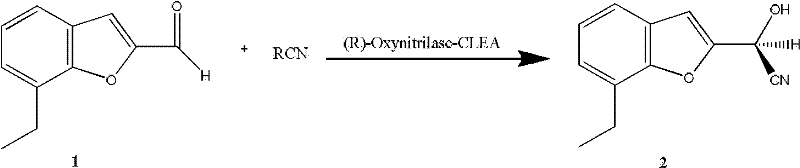
Following the initial enzymatic step, the process incorporates a strategic protection and functionalization sequence designed to maintain optical purity while introducing the necessary amine functionality. The resulting cyanohydrin is immediately acylated to protect the hydroxyl group, preventing retro-cyanation or decomposition during subsequent acidic or basic treatments. The Ritter reaction then converts the nitrile group into an amide using tert-butanol or isobutene in the presence of solid acid catalysts like PMA/SiO2 or high-silica MFI zeolites. This heterogeneous catalysis approach simplifies product isolation and reduces corrosion risks associated with liquid acids. Finally, the amide is reduced to the amine using hydride reducing agents, completing the synthesis of (S)-bufuralol. Throughout this multi-step sequence, the robust nature of the intermediates and the mildness of the conditions ensure that the optical excess (e.e.) remains consistently above 95%, meeting the rigorous quality standards required for pharmaceutical research and development applications.
How to Synthesize (S)-Bufuralol Efficiently
The synthesis of (S)-bufuralol via this enzymatic route involves a carefully orchestrated sequence of biocatalytic and chemical transformations that can be adapted for scale-up. The process begins with the preparation of the CLEA biocatalyst, followed by the asymmetric cyanation in a biphasic solvent system to maximize substrate solubility and enzyme stability. Subsequent steps involve standard organic synthesis techniques such as acylation, acid-catalyzed addition, and reduction, all of which are amenable to standard reactor equipment found in fine chemical manufacturing facilities. The detailed standardized synthesis steps are provided in the guide below to assist technical teams in evaluating feasibility.
- Asymmetric cyanation of 7-ethylbenzofuran-2-carbaldehyde using (R)-Oxynitrilase-CLEA catalyst.
- Protection of the hydroxyl group via acylation to form the acetoxy nitrile intermediate.
- Ritter reaction with tert-butanol followed by reduction to yield the final (S)-bufuralol product.
Commercial Advantages for Procurement and Supply Chain Teams
For procurement managers and supply chain heads, the adoption of this enzymatic technology offers tangible benefits that extend beyond mere technical feasibility into the realm of strategic cost management and risk mitigation. By replacing expensive chiral metal catalysts with a reusable biocatalyst, the direct material costs associated with the synthesis are significantly reduced, allowing for more competitive pricing structures in long-term supply agreements. The elimination of heavy metals also streamlines the quality control process, reducing the time and resources needed for metal scavenging and testing, which directly contributes to shorter lead times for batch release. Furthermore, the high yield and optical purity achieved through this method minimize the need for reprocessing or recycling of off-spec material, thereby enhancing overall production efficiency and reducing waste disposal costs. These factors collectively create a more resilient supply chain capable of meeting fluctuating demand without compromising on quality or delivery schedules.
- Cost Reduction in Manufacturing: The transition from precious metal catalysis to enzyme catalysis removes the dependency on volatile commodity prices for metals like rhodium, leading to substantial cost savings in raw material procurement. Additionally, the high atom economy of the asymmetric cyanation step ensures that a greater proportion of the starting aldehyde is converted into the desired product, reducing the effective cost per kilogram of the final intermediate. The mild reaction conditions also lower energy consumption requirements for heating and cooling, further contributing to operational expenditure reductions. These economic advantages make the process highly attractive for commercial scale-up of complex pharmaceutical intermediates where margin pressure is often significant.
- Enhanced Supply Chain Reliability: The robustness of the CLEA enzyme system ensures consistent performance across multiple batches, reducing the risk of production delays caused by catalyst failure or variability. Since the enzyme can be prepared from readily available biological sources and stabilized for storage, the supply of the catalyst itself is less prone to geopolitical or logistical disruptions compared to specialized synthetic ligands. This stability allows manufacturers to maintain higher inventory levels of critical reagents without concerns about degradation, ensuring continuous production capabilities. Consequently, partners can rely on a reliable pharmaceutical intermediate supplier to meet just-in-time delivery requirements without the fear of unexpected stoppages.
- Scalability and Environmental Compliance: The process utilizes solvents and reagents that are compatible with standard industrial waste treatment protocols, simplifying regulatory compliance and reducing the environmental burden of manufacturing. The absence of toxic heavy metals in the reaction mixture means that effluent treatment is less complex and costly, aligning with increasingly stringent global environmental regulations. Moreover, the simplicity of the reaction steps facilitates easy scale-up from laboratory to pilot and commercial scales without the need for specialized high-pressure or cryogenic equipment. This scalability ensures that the supply chain can expand rapidly to accommodate market growth, providing a secure source for high-purity chiral building blocks needed for drug development.
Frequently Asked Questions (FAQ)
The following questions address common technical and commercial inquiries regarding the production and application of (S)-bufuralol using this patented enzymatic method. These answers are derived directly from the technical specifications and beneficial effects described in the patent documentation, providing clarity for stakeholders evaluating this technology for their supply chains. Understanding these details is crucial for making informed decisions about sourcing strategies and process development.
Q: What is the primary advantage of using CLEA technology for (S)-bufuralol synthesis?
A: The Cross-Linked Enzyme Aggregates (CLEA) technology significantly enhances the stability of the (R)-Oxynitrilase enzyme in organic solvents, allowing for higher optical purity and yield compared to free enzyme systems.
Q: How does this method improve upon traditional resolution techniques?
A: Unlike traditional resolution methods which theoretically limit yield to 50%, this asymmetric cyanation route allows for 100% theoretical yield of the desired (S)-enantiomer, drastically reducing raw material waste.
Q: Is this process suitable for large-scale industrial production?
A: Yes, the reaction conditions are mild (20-40°C) and utilize robust catalysts, making the process highly scalable and economically viable for commercial manufacturing of pharmaceutical intermediates.
Partnering with NINGBO INNO PHARMCHEM: Your Reliable (S)-Bufuralol Supplier
At NINGBO INNO PHARMCHEM, we recognize the critical importance of high-quality intermediates in the drug development lifecycle and are well-positioned to support your needs for (S)-bufuralol. Our team possesses extensive experience scaling diverse pathways from 100 kgs to 100 MT/annual commercial production, ensuring that the transition from laboratory innovation to industrial reality is seamless and efficient. We adhere to stringent purity specifications and operate rigorous QC labs to guarantee that every batch meets the exacting standards required for pharmaceutical research and manufacturing. By leveraging our expertise in enzymatic and chemical synthesis, we can offer customized solutions that optimize both cost and quality for your specific project requirements.
We invite you to engage with our technical procurement team to discuss how we can assist in reducing lead time for high-purity chiral building blocks within your organization. Please request a Customized Cost-Saving Analysis to understand the potential economic benefits of switching to this enzymatic route for your supply chain. We are ready to provide specific COA data and route feasibility assessments to demonstrate our capability as a trusted partner in your success.
Engineering Bottleneck?
Can't scale up this synthesis? Upload your target structure or CAS, and our CDMO team will evaluate the industrial feasibility within 24 hours. Request Evaluation →