
Advanced Synthesis of Thiophene Ketone Intermediates for Scalable Herbicide Production
Introduction to Next-Generation Thiophene Chemistry
The landscape of agrochemical intermediate manufacturing is constantly evolving, driven by the dual demands of higher purity standards and stricter environmental compliance. A pivotal advancement in this sector is detailed in patent CN1030414A, which outlines a novel method for preparing N-(2,4-thioxene-3-yl)-N-(1-methoxy propyl-2-yl) chlor(o)acetamide and its critical precursors. This intellectual property represents a significant leap forward from traditional synthesis routes, specifically addressing the ecological drawbacks associated with older oxidizing agents. For R&D directors and procurement specialists seeking a reliable agrochemical intermediate supplier, understanding the nuances of this technology is essential. The patent describes a robust pathway to generate 2,4-dimethyl-2,3-dihydro-thiophene-3-ketone, a key building block, utilizing safer reagents like hydrogen peroxide instead of toxic disulfide chlorides. This shift not only aligns with green chemistry principles but also simplifies the waste treatment burden, making it an attractive candidate for cost reduction in agrochemical intermediate manufacturing.
The Limitations of Conventional Methods vs. The Novel Approach
The Limitations of Conventional Methods
Prior art, such as the methods disclosed in EP210320, relied heavily on the use of disulfide chloride as a primary oxidant to construct the thiophene ring system. While chemically effective, this approach presents severe limitations from both an operational safety and an environmental standpoint. Disulfide chloride is a hazardous reagent that generates corrosive byproducts and requires stringent containment measures, thereby inflating the capital expenditure for reactor lining and scrubbing systems. Furthermore, the disposal of sulfur-rich waste streams from such processes is increasingly regulated, adding hidden costs to the supply chain. From a purity perspective, reactions involving harsh sulfur chlorinating agents often lead to complex impurity profiles that require extensive downstream purification, such as multiple recrystallizations or chromatographic separations, which inevitably reduce the overall mass balance and yield of the final active pharmaceutical or agrochemical ingredient.
The Novel Approach
In stark contrast, the methodology presented in CN1030414A introduces a paradigm shift by employing hydrogen peroxide (H2O2) as the oxidant in conjunction with a Michael addition strategy using hydrogen sulfide. This novel approach circumvents the need for chlorine-based oxidants entirely, thereby eliminating the formation of chlorinated organic impurities that are notoriously difficult to remove. The process allows for the formation of the thiophene core under milder conditions, typically between 40°C and 80°C, which enhances the thermal safety profile of the reactor operations. By utilizing readily available starting materials like 4-methyl-4-amylene-2,3-diketone and controlling the reaction pH between 5 and 12, manufacturers can achieve a much cleaner crude product. This cleanliness translates directly into commercial value, as it reduces the load on purification units and shortens the batch cycle time, offering a distinct competitive advantage for any entity aiming to become a high-purity thiophene compound supplier in the global market.
Mechanistic Insights into Peroxide-Mediated Oxidative Cyclization
The core of this technological breakthrough lies in the precise orchestration of a Michael addition followed by an oxidative rearrangement. The process initiates with the reaction of a 1,3-diketone derivative with hydrogen sulfide in the presence of a base, such as triethylamine or sodium hydroxide. This step is critical for establishing the sulfur atom within the carbon framework. As illustrated in the reaction scheme below, the nucleophilic attack of the sulfide ion on the electron-deficient alkene system sets the stage for ring closure.

Following the initial cyclization, the intermediate hydroxy-thiophene species undergoes oxidation. Unlike traditional methods that might over-oxidize or degrade the sensitive heterocyclic ring, the use of aqueous peroxide solutions allows for a controlled transformation into the corresponding methoxy or acetoxy derivatives (Formula III). This oxidation step is exothermic, requiring careful thermal management, typically maintained around 60°C to 65°C to prevent runaway reactions while ensuring complete conversion. The mechanism likely involves the formation of a peroxy-intermediate that facilitates the migration of the double bond and the establishment of the ketone functionality at the 3-position of the thiophene ring. This specific regioselectivity is vital for the subsequent amidation steps required to produce the final herbicidal active ingredient.
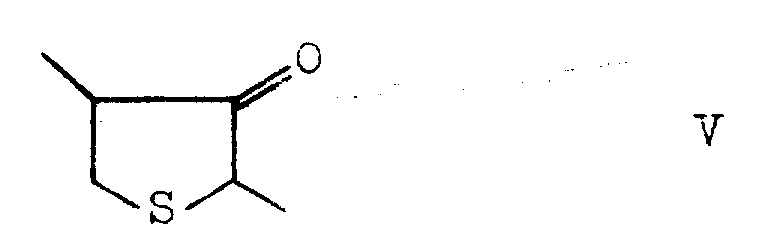
Furthermore, the tautomeric equilibrium between the ketone (Formula Ia) and enol (Formula Ib) forms is carefully managed through pH control and solvent selection. The patent data indicates that by adjusting the pH to slightly alkaline conditions using sodium hydroxide, the equilibrium can be shifted favorably towards the desired ketone form, which is more stable for storage and subsequent derivatization. This level of mechanistic control ensures that the impurity profile remains consistent batch-to-batch, a key requirement for regulatory approval in the agrochemical sector. The ability to isolate the intermediate as a stable oil with purity exceeding 95% via simple vacuum distillation underscores the efficiency of this mechanistic pathway.
How to Synthesize 2,4-dimethyl-2,3-dihydro-thiophene-3-ketone Efficiently
To implement this synthesis effectively, operators must adhere to strict temperature controls during the gas introduction phase. The absorption of hydrogen sulfide gas into the reaction mixture containing the diketone and base should be performed at low temperatures, ideally between 0°C and 5°C, to maximize the capture efficiency and minimize the loss of volatile H2S. Following the completion of the Michael addition, indicated by the disappearance of the starting diketone via gas chromatography, the reaction mixture can be directly subjected to oxidation without isolating the unstable hydroxy-intermediate. This telescoping of steps is a major process intensification strategy that reduces solvent usage and handling time. The subsequent oxidation with 35% hydrogen peroxide should be added dropwise to manage the exotherm, followed by a stirring period at 63°C to 65°C to ensure full conversion to the methoxy derivative. Finally, hydrolysis with aqueous sodium hydroxide converts the methoxy group back to the ketone/enol mixture, which is then extracted and distilled to yield the high-purity target compound.
- Perform a Michael addition reaction by treating 4-methyl-4-amylene-2,3-diketone with hydrogen sulfide (H2S) in the presence of an organic or mineral base at temperatures between -40°C and 20°C.
- Oxidize the resulting hydroxy-thiophene intermediate (Formula V) using an aqueous peroxide solution, such as 35% H2O2, at controlled temperatures of 40°C to 80°C to form the methoxy or acetoxy derivative.
- Convert the oxidized intermediate into the final 2,4-dimethyl-2,3-dihydro-thiophene-3-ketone (Formula I) by treating with sodium hydroxide or carboxylic acid under mild heating conditions.
Commercial Advantages for Procurement and Supply Chain Teams
For procurement managers and supply chain heads, the transition to the chemistry described in CN1030414A offers tangible strategic benefits beyond mere technical novelty. The primary advantage lies in the substantial cost savings derived from raw material substitution and waste reduction. By replacing expensive and hazardous disulfide chloride with commodity-grade hydrogen peroxide and hydrogen sulfide, the direct material cost of goods sold (COGS) is significantly lowered. Moreover, the elimination of chlorinated waste streams drastically reduces the expenditure associated with hazardous waste disposal and environmental compliance reporting. This creates a leaner cost structure that allows suppliers to offer more competitive pricing without sacrificing margins, a critical factor in the price-sensitive agrochemical market.
- Cost Reduction in Manufacturing: The streamlined process eliminates the need for complex scrubbing systems required for chlorine gas or disulfide chloride handling, leading to lower capital depreciation costs per kilogram of product. Additionally, the high selectivity of the peroxide oxidation minimizes the formation of byproducts, which means less product is lost during purification stages like distillation or crystallization. This improvement in overall mass yield directly translates to a lower cost per unit of active ingredient, providing a buffer against raw material price volatility. The use of common solvents like hexane and toluene, which are easily recovered and recycled, further enhances the economic viability of the process on a multi-ton scale.
- Enhanced Supply Chain Reliability: Dependence on specialized, high-hazard reagents often introduces single points of failure in the supply chain; if a specific chlorinating agent becomes unavailable due to regulatory bans or plant outages, production halts. The new method relies on bulk chemicals like hydrogen peroxide and hydrogen sulfide, which are produced globally in massive quantities for various industries, ensuring a robust and resilient supply base. This diversification of raw material sources mitigates the risk of supply disruptions, guaranteeing consistent delivery schedules for downstream herbicide manufacturers. Furthermore, the stability of the intermediates allows for flexible inventory management, enabling producers to stockpile key precursors during periods of low energy costs.
- Scalability and Environmental Compliance: Scaling chemical processes often amplifies safety risks, particularly with exothermic oxidations. However, the moderate temperature range (40°C to 80°C) and the use of aqueous peroxide make this reaction inherently safer to scale from pilot plants to 100 MT reactors compared to highly exothermic chlorination reactions. The reduced environmental footprint aligns perfectly with the increasing corporate sustainability goals of major agrochemical multinationals. By adopting this greener synthesis route, suppliers can future-proof their operations against tightening environmental regulations, ensuring long-term operational continuity and avoiding potential fines or shutdowns associated with non-compliant waste discharge.
Frequently Asked Questions (FAQ)
The following questions address common technical and commercial inquiries regarding the implementation of this thiophene synthesis technology. These insights are derived directly from the experimental data and claims within the patent literature, providing a factual basis for decision-making. Understanding these details helps stakeholders evaluate the feasibility of integrating this intermediate into their existing supply chains.
Q: What are the ecological advantages of this new thiophene synthesis method compared to prior art?
A: Unlike previous methods disclosed in EP210320 which utilized disulfide chloride as an oxidant—a reagent with significant ecological disadvantages and toxicity concerns—the process described in CN1030414A employs hydrogen peroxide. This shift to peroxide-based oxidation significantly reduces hazardous waste generation and improves the overall environmental profile of the manufacturing process.
Q: How does the Michael addition step impact the purity of the final agrochemical intermediate?
A: The Michael addition of hydrogen sulfide to the diketone precursor is conducted at low temperatures (0°C to 5°C) with catalytic amounts of base. This controlled condition minimizes side reactions and polymerization, leading to a cleaner reaction profile. Subsequent purification steps, such as vacuum distillation, have been shown to yield products with purity levels exceeding 95%, which is critical for downstream herbicide synthesis.
Q: Is this synthesis route suitable for large-scale commercial production?
A: Yes, the process is highly scalable. The reaction conditions utilize common industrial solvents like hexane, toluene, and methanol, and the exothermic oxidation step is manageable within standard temperature ranges (60°C to 65°C). The elimination of complex separation steps for certain intermediates allows for a streamlined 'one-pot' or telescoped approach, facilitating efficient commercial scale-up.
Partnering with NINGBO INNO PHARMCHEM: Your Reliable 2,4-dimethyl-2,3-dihydro-thiophene-3-ketone Supplier
At NINGBO INNO PHARMCHEM, we recognize that the successful commercialization of advanced agrochemicals depends on the availability of high-quality, consistently supplied intermediates. Our technical team has extensively analyzed the route described in CN1030414A and possesses the engineering expertise to adapt this laboratory-scale innovation into a robust industrial process. We bring extensive experience scaling diverse pathways from 100 kgs to 100 MT/annual commercial production, ensuring that the transition from gram-scale samples to metric-ton deliveries is seamless. Our facilities are equipped with rigorous QC labs capable of verifying stringent purity specifications, including the precise control of tautomeric ratios and trace impurity levels that are critical for the efficacy of the final herbicide.
We invite procurement leaders and R&D directors to engage with us for a Customized Cost-Saving Analysis tailored to your specific volume requirements. By leveraging our optimized version of this peroxide-mediated synthesis, we can help you achieve significant reductions in total landed cost while enhancing the sustainability profile of your product portfolio. Please contact our technical procurement team to request specific COA data and route feasibility assessments, and let us demonstrate how our commitment to innovation can drive value for your organization.
Engineering Bottleneck?
Can't scale up this synthesis? Upload your target structure or CAS, and our CDMO team will evaluate the industrial feasibility within 24 hours. Request Evaluation →