
Advanced Manufacturing of Ethyl 4-Methyloctanoate for High-Efficiency Pest Control Solutions
The global demand for effective and environmentally friendly pest control solutions has driven significant innovation in the synthesis of insect aggregation pheromones. A pivotal development in this sector is detailed in patent CN107200687B, which discloses a robust and scalable process for producing ethyl 4-methyloctanoate, a key aggregation pheromone for the coconut rhinoceros beetle (Oryctes rhinoceros). This pest causes devastating damage to palm trees and other crops across Southeast Asia and the Pacific, creating an urgent market need for reliable monitoring and control agents. The patented methodology offers a distinct advantage over prior art by utilizing a two-step sequence involving malonate synthesis followed by a Krapcho decarboxylation reaction. This approach not only circumvents the use of hazardous reagents found in older methods but also achieves superior yields and purity profiles, making it an ideal candidate for industrial scale-up by a reliable agrochemical intermediate supplier.
The significance of this technology lies in its ability to address the specific pain points of traditional pheromone manufacturing, namely safety, cost, and purification efficiency. By leveraging commercially available starting materials like 1-chloro-2-methylhexane and diethyl malonate, the process ensures a stable supply chain while minimizing the environmental footprint associated with toxic catalysts. For procurement managers and R&D directors alike, understanding the mechanistic nuances and commercial implications of this route is essential for optimizing the production of high-purity ethyl 4-methyloctanoate.
The Limitations of Conventional Methods vs. The Novel Approach
The Limitations of Conventional Methods
Historically, the synthesis of ethyl 4-methyloctanoate has been plagued by significant technical and safety hurdles that hinder efficient commercial production. One prominent method reported by Gries et al. involves the reaction of a Grignard reagent derived from 2-chlorohexane with ethyl acrylate. While chemically feasible, this route necessitates the use of hexamethylphosphoric triamide (HMPA) as a co-solvent, a substance now widely recognized as a potent carcinogen and reproductive toxin, posing severe regulatory and occupational health risks. Furthermore, this Grignard-based approach suffers from a critical purification bottleneck; the homocoupling by-product of the Grignard reagent exhibits a boiling point extremely close to that of the target ethyl 4-methyloctanoate, rendering separation by standard distillation techniques nearly impossible and drastically reducing the overall isolated yield to approximately 56%.
Another alternative pathway described by Valentine et al. relies on a four-step sequence initiating with a Mannich reaction between 1-hexanal and high-concentration formalin. This method introduces substantial operational hazards due to the generation of toxic formaldehyde vapors, requiring specialized containment infrastructure. Additionally, the multi-step nature of this synthesis inherently accumulates yield losses at each stage, resulting in a cumulative production yield of merely 55%. These conventional methods illustrate the industry's long-standing struggle to balance synthetic efficiency with safety and cost-effectiveness, highlighting the need for a paradigm shift in manufacturing strategies for this valuable pheromone intermediate.
The Novel Approach
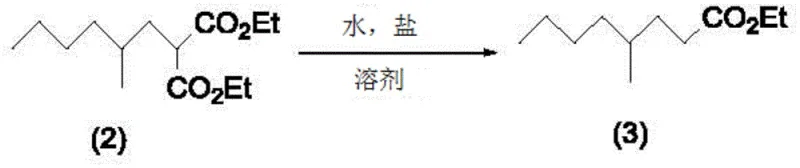
In stark contrast to the hazardous and low-yielding legacy methods, the process disclosed in CN107200687B introduces a streamlined and safer synthetic strategy centered on malonate chemistry. This novel approach begins with the alkylation of diethyl malonate using 1-chloro-2-methylhexane, a readily available and cost-effective starting material. The reaction is catalyzed by benign halides and utilizes carbonate bases, completely eliminating the need for toxic HMPA or volatile formaldehyde. Following the formation of the diester intermediate, the process employs a Krapcho decarboxylation reaction to selectively remove one ester group, yielding the target mono-ester with exceptional precision.
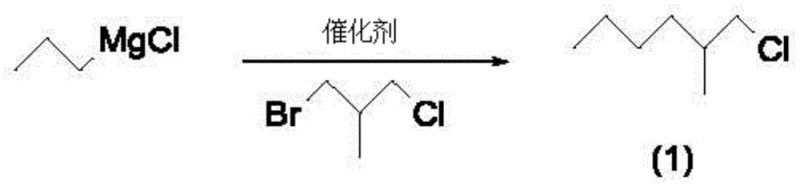
This innovative route offers a dramatic improvement in process mass intensity and safety profile. By avoiding the formation of difficult-to-separate by-products inherent in the Grignard coupling, the new method facilitates straightforward purification via distillation, ensuring high product purity essential for pheromone efficacy. Moreover, the potential for telescoping the two steps into a one-pot operation significantly reduces solvent consumption and processing time, addressing key concerns for cost reduction in agrochemical intermediate manufacturing. This transition from complex, hazardous multi-step syntheses to a concise, two-step catalytic process represents a major technological leap forward for the industry.
Mechanistic Insights into Malonate Alkylation and Krapcho Decarboxylation
The core of this synthetic breakthrough lies in the precise control of nucleophilic substitution and hydrolytic decarboxylation mechanisms. The first stage involves the deprotonation of diethyl malonate by a base, such as potassium carbonate or sodium ethoxide, to generate a resonance-stabilized enolate nucleophile. This enolate then attacks the electrophilic carbon of 1-chloro-2-methylhexane in an SN2 fashion. To enhance the reactivity of the chloro-alkane, a catalytic amount of a halide salt, preferably potassium iodide or sodium iodide, is added. This facilitates an in situ Finkelstein-type conversion, generating the more reactive iodo-alkane intermediate which reacts rapidly with the malonate enolate, thereby suppressing dialkylation side reactions and ensuring high selectivity for the mono-alkylated product.

Following the successful construction of the carbon skeleton, the second stage employs the Krapcho reaction to achieve the final structural motif. This transformation involves the heating of the diethyl 2-methylhexylmalonate intermediate in a polar aprotic solvent like N,N-dimethylacetamide in the presence of water and a salt such as sodium chloride. The mechanism proceeds through the nucleophilic attack of water on one of the ester carbonyls, facilitated by the coordination of the salt cation, leading to hydrolysis and subsequent thermal decarboxylation. This step is highly advantageous as it tolerates various functional groups and proceeds cleanly to give the mono-ester. The careful selection of reaction parameters, including temperature ranges of 100 °C to 190 °C and specific salt concentrations, ensures that the decarboxylation occurs efficiently without degrading the sensitive alkyl chain, resulting in the high-purity ethyl 4-methyloctanoate required for biological activity.
How to Synthesize Ethyl 4-Methyloctanoate Efficiently
To implement this advanced manufacturing protocol effectively, operators must adhere to strict control over reaction stoichiometry and thermal profiles. The process begins with the preparation of the reaction mixture containing the base, halide catalyst, and solvent, followed by the controlled addition of diethyl malonate and the alkyl halide. Maintaining the reaction temperature within the optimal window of 35 °C to 189 °C during the alkylation phase is crucial to maximize conversion while minimizing by-product formation. Once the diester intermediate is formed, the system can be directly charged with water and salt for the decarboxylation step, leveraging the existing solvent matrix to drive the reaction to completion. Detailed standardized operating procedures regarding work-up and distillation are essential to capture the full yield potential demonstrated in the patent examples.
- Perform malonate synthesis by reacting 1-chloro-2-methylhexane with diethyl malonate in the presence of a carbonate base and a halide catalyst in a polar solvent like DMAc.
- Isolate the intermediate diethyl 2-methylhexylmalonate or proceed directly to the next step in a one-pot sequence.
- Subject the diester intermediate to Krapcho reaction conditions using water and a salt (e.g., NaCl) at elevated temperatures to effect hydrolytic decarboxylation.
Commercial Advantages for Procurement and Supply Chain Teams
For procurement managers and supply chain leaders, the adoption of this patented process translates into tangible strategic benefits that extend beyond simple chemical transformation. The elimination of carcinogenic solvents like HMPA and toxic formaldehyde significantly reduces the regulatory burden and costs associated with hazardous waste disposal and worker safety compliance. This shift not only mitigates legal risks but also streamlines the auditing process for international clients who demand adherence to strict environmental, social, and governance (ESG) standards. Furthermore, the use of commodity chemicals such as carbonates and simple chloro-alkanes ensures a resilient supply chain that is less susceptible to the volatility often seen with specialized organometallic reagents.
- Cost Reduction in Manufacturing: The streamlined two-step nature of this process inherently lowers operational expenditures by reducing the number of unit operations, solvent swaps, and isolation steps required compared to the four-step Valentine route. The ability to potentially run the synthesis as a one-pot reaction further drives down utility costs and labor hours, as there is no need to isolate and dry the intermediate diester before proceeding to decarboxylation. Additionally, the high selectivity of the malonate alkylation minimizes the loss of raw materials to dialkylated by-products, ensuring that every kilogram of input contributes maximally to the final output, thereby substantially lowering the cost of goods sold.
- Enhanced Supply Chain Reliability: By relying on robust, non-cryogenic reaction conditions and stable starting materials, this manufacturing route offers superior scalability and consistency. Unlike Grignard reactions which require strict moisture exclusion and often cryogenic temperatures, the malonate synthesis can be conducted at elevated temperatures in common polar solvents, making it far more forgiving and easier to control in large-scale reactors. This operational robustness reduces the risk of batch failures and ensures a consistent supply of high-purity ethyl 4-methyloctanoate, allowing downstream formulators to plan their production schedules with greater confidence and reduced lead times.
- Scalability and Environmental Compliance: The process is designed with green chemistry principles in mind, utilizing solvents like N,N-dimethylacetamide which, while requiring careful handling, are easier to recover and recycle than the complex mixtures generated in Grignard couplings. The absence of heavy metal catalysts or toxic phosphoramides simplifies the effluent treatment process, reducing the load on wastewater treatment facilities. This environmental compatibility facilitates easier permitting for capacity expansion and aligns with the growing global demand for sustainable agrochemical production methods, positioning manufacturers as responsible partners in the global food security ecosystem.
Frequently Asked Questions (FAQ)
The following questions address common technical inquiries regarding the implementation and optimization of this synthesis route. Understanding these details is critical for R&D teams evaluating the feasibility of technology transfer and for quality assurance personnel establishing specification limits. The answers provided are derived directly from the experimental data and technical disclosures within the patent literature, ensuring accuracy and relevance for industrial application.
Q: Why is the malonate synthesis route preferred over the Grignard method for ethyl 4-methyloctanoate?
A: The traditional Grignard method utilizes hexamethylphosphoric triamide (HMPA), a suspected carcinogen, and produces by-products with boiling points very close to the target, making purification difficult. The malonate route avoids toxic reagents and allows for easier separation via distillation.
Q: What are the critical reaction conditions for the Krapcho decarboxylation step?
A: The Krapcho reaction requires heating the diester intermediate in a polar solvent such as N,N-dimethylacetamide in the presence of water and a salt like sodium chloride or cesium carbonate, typically at temperatures between 100 °C and 190 °C.
Q: Can the synthesis be performed as a one-pot reaction?
A: Yes, the patent describes that the malonate synthesis and the subsequent Krapcho reaction can be performed continuously in one pot, which reduces processing time, solvent usage, and waste generation compared to isolating the intermediate.
Partnering with NINGBO INNO PHARMCHEM: Your Reliable Ethyl 4-Methyloctanoate Supplier
At NINGBO INNO PHARMCHEM, we recognize the critical role that high-quality pheromones play in modern integrated pest management strategies. Our technical team possesses extensive experience scaling diverse pathways from 100 kgs to 100 MT/annual commercial production, ensuring that the transition from laboratory bench to industrial reactor is seamless and efficient. We are committed to delivering ethyl 4-methyloctanoate with stringent purity specifications, utilizing rigorous QC labs to verify that every batch meets the exacting standards required for effective biological activity. Our state-of-the-art facilities are equipped to handle the specific solvent systems and thermal requirements of the malonate-Krapcho route, guaranteeing a consistent and reliable supply for your formulation needs.
We invite you to collaborate with us to optimize your supply chain for this vital agrochemical intermediate. Contact our technical procurement team today to request a Customized Cost-Saving Analysis tailored to your specific volume requirements. We are prepared to provide specific COA data and comprehensive route feasibility assessments to demonstrate how our manufacturing capabilities can support your long-term business goals and enhance your competitive position in the global pest control market.