
Advanced Catalytic Chlorination Technology for Commercial Scale Production of High-Purity 2,4-Dichlorophenol
Introduction to Next-Generation 2,4-Dichlorophenol Manufacturing
The global demand for high-purity agrochemical intermediates continues to surge, driven by the critical need for efficient herbicide production, specifically for 2,4-D and related compounds. A pivotal advancement in this sector is detailed in patent CN110452094B, which discloses a highly efficient method for preparing 2,4-dichlorophenol through the catalytic chlorination of phenol. This technology represents a significant departure from legacy synthesis routes, addressing long-standing challenges regarding selectivity and impurity profiles that have plagued manufacturers for decades. By leveraging a synergistic catalytic system comprising iron species and specific sulfur-containing cocatalysts, the process achieves complete phenol conversion while minimizing the formation of problematic isomers. 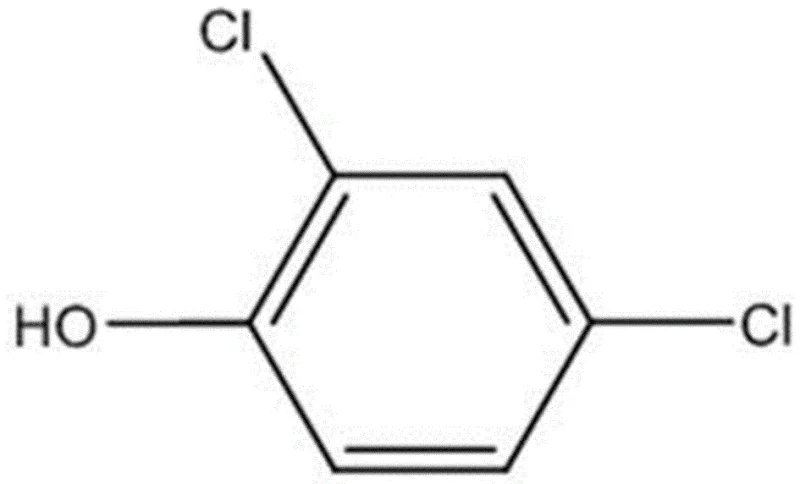 For R&D directors and procurement specialists, understanding the mechanistic underpinnings of this innovation is crucial for evaluating its potential to streamline supply chains and reduce manufacturing overheads in the fine chemical sector.
The Limitations of Conventional Methods vs. The Novel Approach
The Limitations of Conventional Methods
Historically, the industrial synthesis of 2,4-dichlorophenol has relied on methods that suffer from inherent inefficiencies and economic drawbacks. Traditional catalytic chlorination often yields products with purity levels capped below 90%, primarily due to the co-formation of the 2,6-dichlorophenol isomer, which possesses physical properties nearly identical to the target molecule, making separation via distillation energetically prohibitive and costly. Alternative routes utilizing sulfuryl chloride as the chlorinating agent, while offering better selectivity, introduce severe logistical and financial burdens; sulfuryl chloride is significantly more expensive than elemental chlorine and generates corrosive gaseous by-products that require extensive scrubbing and neutralization infrastructure. Furthermore, processes starting from o-chlorophenol incur higher raw material costs and involve complex multi-step sequences that erode profit margins and extend lead times for high-purity agrochemical intermediates.
The Novel Approach
The methodology outlined in CN110452094B disrupts this status quo by enabling the direct chlorination of phenol with chlorine gas while maintaining exceptional regioselectivity. By introducing trace amounts of sulfur-based cocatalysts such as phenothiazine, p-toluenethiophenol, or o-aminothiophenol alongside standard iron catalysts, the reaction environment is fundamentally altered to favor substitution at the 4-position over the 6-position. This strategic modification allows for the use of inexpensive chlorine gas instead of premium chlorinating agents, effectively decoupling high purity from high cost. The result is a streamlined process where phenol conversion reaches 100%, and the content of 2,4-dichlorophenol in the crude mixture exceeds 97%, drastically reducing the burden on downstream purification units and enabling cost reduction in fine chemical manufacturing through simplified operational workflows.
Mechanistic Insights into Fe-Catalyzed Regioselective Chlorination
The core of this technological breakthrough lies in the sophisticated interplay between the iron catalyst and the sulfur-containing cocatalyst during the electrophilic aromatic substitution process. In the absence of the cocatalyst, iron-mediated chlorination typically proceeds with poor discrimination between the ortho and para positions relative to the hydroxyl group, leading to a statistical mixture of 2,4- and 2,6-isomers, as well as over-chlorinated 2,4,6-trichlorophenol. The introduction of the sulfur cocatalyst is hypothesized to coordinate with the iron center, modifying the electronic density and steric environment of the active chlorinating species. This coordination likely creates a transient complex that is bulky enough or electronically tuned to disfavor attack at the sterically hindered 6-position, thereby channeling the reaction pathway almost exclusively toward the desired 2,4-substitution pattern.
From an impurity control perspective, this mechanism offers a robust solution to the persistent issue of 2,4,6-trichlorophenol formation. In conventional systems, once the 2,4-dichlorophenol is formed, it remains reactive towards further chlorination, degrading the yield of the target product. The novel catalytic system appears to deactivate the ring towards further substitution once the 2,4-pattern is established, or alternatively, consumes the chlorine gas at a rate that matches the mono-chlorination kinetics, preventing accumulation of the trichloro impurity. This precise control over the reaction trajectory ensures that the crude product stream is exceptionally clean, containing negligible amounts of the difficult-to-remove 2,6-isomer and minimizing the need for energy-intensive fractional distillation columns to achieve pharmaceutical or agrochemical grade specifications.
How to Synthesize 2,4-Dichlorophenol Efficiently
The implementation of this synthesis route is designed for seamless integration into existing chlorination infrastructure, requiring minimal capital expenditure for retrofitting. The process begins with the precise charging of phenol into a reactor equipped with efficient gas dispersion capabilities, followed by the addition of the iron catalyst and the selected sulfur cocatalyst. The reaction is initiated by heating the mixture to a moderate temperature range of 60-65°C, which is sufficiently low to prevent thermal degradation yet high enough to maintain optimal reaction kinetics for the gas-liquid mass transfer of chlorine.
- Charge the reactor with phenol, add iron powder or ferric chloride catalyst (0.3-0.5 mol%), and introduce a sulfur-based cocatalyst such as phenothiazine.
- Heat the reaction mixture to 60-65°C under stirring to activate the catalytic system before introducing the chlorinating agent.
- Pass chlorine gas into the system over 5-6 hours maintaining a molar ratio of 1: 2.0-2.2 relative to phenol, then cool and analyze for purity.
Commercial Advantages for Procurement and Supply Chain Teams
For procurement managers and supply chain heads, the adoption of this catalytic technology translates into tangible strategic advantages that extend beyond mere technical specifications. The shift from expensive sulfuryl chloride to commodity chlorine gas represents a fundamental restructuring of the raw material cost base, eliminating the volatility associated with specialized reagent markets. Furthermore, the high selectivity of the process means that less feedstock is wasted on generating unusable isomers, effectively increasing the throughput of the manufacturing asset without expanding the physical footprint of the plant. This efficiency gain is critical for maintaining competitive pricing in the global agrochemical intermediate market while ensuring consistent availability of material for downstream herbicide formulation.
- Cost Reduction in Manufacturing: The elimination of expensive sulfuryl chloride and the removal of complex solvent recovery steps (as the process can operate solvent-free or with minimal solvent) lead to substantial cost savings. By avoiding the generation of stoichiometric sulfur dioxide waste, the facility also saves significantly on waste treatment and environmental compliance costs, allowing for a leaner operational budget that can be reinvested into capacity expansion or R&D initiatives for new product lines.
- Enhanced Supply Chain Reliability: Relying on elemental chlorine, a bulk commodity chemical with a stable and widespread supply network, mitigates the risk of raw material shortages that often plague specialty reagent supply chains. The robustness of the iron-based catalyst system, which uses non-precious metals, further insulates the production process from geopolitical fluctuations in the prices of rare earth or precious metal catalysts, ensuring a steady and predictable production schedule for reliable agrochemical intermediate supplier networks.
- Scalability and Environmental Compliance: The mild reaction conditions (60-65°C) and the absence of hazardous solvents simplify the engineering controls required for scale-up, facilitating the commercial scale-up of complex phenolic intermediates from pilot batches to multi-ton production runs. Additionally, the reduced impurity profile minimizes the volume of hazardous still bottoms and waste streams, aligning the manufacturing process with increasingly stringent global environmental regulations and supporting corporate sustainability goals without compromising on output quality.
Frequently Asked Questions (FAQ)
The following technical inquiries address common concerns regarding the implementation and performance of this novel chlorination technology, based on the data provided in the patent literature. These answers are derived from the experimental results and comparative examples detailed in the intellectual property documentation, offering clarity on the practical implications for industrial adoption.
Q: How does the novel cocatalyst system improve selectivity over traditional methods?
A: The addition of sulfur-based cocatalysts like phenothiazine or p-toluenethiophenol significantly modulates the electrophilicity of the chlorinating species. This modulation suppresses over-chlorination at the 6-position, drastically reducing the formation of 2,4,6-trichlorophenol and the difficult-to-separate 2,6-dichlorophenol isomer, thereby achieving purities exceeding 97% without complex downstream purification.
Q: What are the supply chain advantages of using chlorine gas over sulfuryl chloride?
A: Utilizing elemental chlorine gas eliminates the need for expensive sulfuryl chloride reagents and avoids the generation of stoichiometric amounts of sulfur dioxide and hydrochloric acid by-products associated with sulfuryl chloride routes. This simplifies waste treatment protocols and reduces raw material procurement costs, enhancing overall supply chain reliability and environmental compliance.
Q: Is this process scalable for industrial production of agrochemical intermediates?
A: Yes, the process operates under mild temperatures (60-65°C) and utilizes inexpensive, commercially available iron catalysts. The absence of complex solvents and the high conversion rate of phenol (100%) make it highly suitable for large-scale commercialization, offering a robust pathway for reliable agrochemical intermediate suppliers to meet global demand.
Partnering with NINGBO INNO PHARMCHEM: Your Reliable 2,4-Dichlorophenol Supplier
At NINGBO INNO PHARMCHEM, we recognize the critical importance of high-purity intermediates in the synthesis of next-generation agrochemicals and pharmaceuticals. Our technical team has extensively analyzed the catalytic chlorination pathways described in recent patents, confirming their viability for large-scale production. We possess extensive experience scaling diverse pathways from 100 kgs to 100 MT/annual commercial production, ensuring that the transition from laboratory innovation to industrial reality is seamless. Our facilities are equipped with rigorous QC labs and adhere to stringent purity specifications, guaranteeing that every batch of 2,4-dichlorophenol meets the exacting standards required for the synthesis of 2,4-D and other vital crop protection agents.
We invite forward-thinking partners to collaborate with us to leverage these advanced manufacturing capabilities for their supply chains. By engaging with our technical procurement team, you can request a Customized Cost-Saving Analysis tailored to your specific volume requirements. We encourage you to contact us directly to obtain specific COA data and route feasibility assessments, ensuring that your production planning is built on a foundation of verified technical excellence and commercial reliability.