
Industrial Scale Production of 5-Oxo-7-Oxabicyclo[4.1.0]hept-3-ene-3-Carboxylate Esters
Industrial Scale Production of 5-Oxo-7-Oxabicyclo[4.1.0]hept-3-ene-3-Carboxylate Esters
The pharmaceutical industry constantly seeks robust, scalable, and economically viable pathways for the production of critical active pharmaceutical ingredients (APIs) and their precursors. Patent CN1414959A introduces a groundbreaking methodology for the preparation of 5-oxo-7-oxabicyclo[4.1.0]hept-3-ene-3-carboxylic acid esters, which serve as pivotal synthetic intermediates for GS4104, a potent neuraminidase inhibitor used in the treatment and prevention of influenza. This technology represents a significant departure from traditional extraction-based methods, offering a fully synthetic route that begins with readily available industrial chemicals. By leveraging a sophisticated sequence of Diels-Alder cycloadditions, epoxidations, and stereoselective ring openings, this process addresses the chronic supply chain vulnerabilities associated with natural product sourcing. For global health security, having a reliable pharmaceutical intermediate supplier capable of executing such complex chemistry is essential to ensure the uninterrupted availability of life-saving antiviral medications.
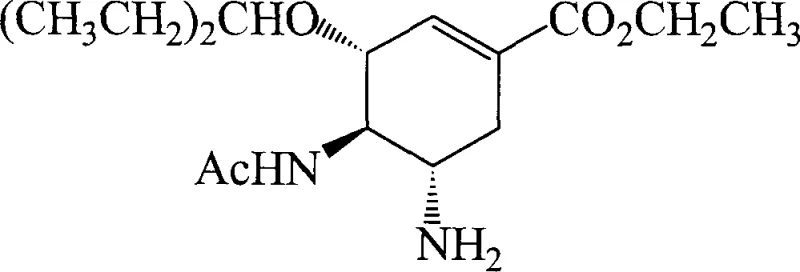
The strategic importance of this synthesis cannot be overstated, particularly given the historical reliance on shikimic acid, a compound traditionally extracted from star anise or produced via fermentation. The volatility of agricultural yields and the complexity of fermentation processes have long created bottlenecks in the production of oseltamivir phosphate. The methodology outlined in this patent circumvents these issues by establishing a linear, chemically driven pathway. This shift not only stabilizes the supply chain but also opens avenues for cost reduction in anti-influenza drug manufacturing by utilizing commodity chemicals such as furan and acrylic esters. As we analyze the technical depth of this innovation, it becomes clear that it offers a superior alternative for producing high-purity GS4104 intermediates with consistent quality attributes required for regulatory compliance.
The Limitations of Conventional Methods vs. The Novel Approach
The Limitations of Conventional Methods
Historically, the synthesis of the core bicyclic framework required for neuraminidase inhibitors has been heavily dependent on chiral pool starting materials, specifically shikimic acid or quinic acid. While these natural products provide the necessary stereochemistry, their procurement is fraught with challenges. The extraction of shikimic acid from plant sources is subject to seasonal variations, geopolitical instability in growing regions, and competition from other industries. Furthermore, fermentation-based production, while an improvement, still faces limitations regarding substrate costs, downstream processing complexity, and overall yield efficiency. These factors contribute to high raw material costs and unpredictable lead times, making the commercial scale-up of complex pharmaceutical intermediates difficult to manage effectively. Additionally, the functionalization of the shikimic acid scaffold often requires extensive protection and deprotection sequences that generate significant waste and reduce the overall atom economy of the process.
The Novel Approach
In stark contrast, the process disclosed in CN1414959A utilizes a fully synthetic strategy initiated by the Diels-Alder reaction between furan and an acrylate derivative. This foundational step constructs the 7-oxabicyclo[2.2.1]heptene skeleton with high regioselectivity and endo/exo control. The subsequent transformation involves a halolactonization followed by a base-mediated epoxidation to generate key epoxy intermediates. This approach decouples production from biological constraints, allowing for year-round manufacturing independent of harvest cycles. The route is designed for modularity, enabling the introduction of various ester groups (R1) and alkoxy substituents (R3) early in the synthesis. This flexibility is crucial for optimizing the physical properties of the intermediate for downstream processing. By replacing scarce natural resources with abundant petrochemical derivatives, this novel approach fundamentally alters the economic landscape of antiviral drug production, offering a pathway that is both industrially advantageous and economically sustainable.
![Overall reaction scheme showing the multi-step conversion from halolactone to the final 5-oxo-7-oxabicyclo[4.1.0]hept-3-ene-3-carboxylate](/insights/img/gs4104-intermediate-synthesis-pharma-supplier-20260313140709-012.webp)
Mechanistic Insights into Base-Mediated Epoxidation and Ring Opening
The core chemical innovation lies in the precise manipulation of the bicyclic oxygenated framework. The process begins with the conversion of a 2-halo-7-oxabicyclo[2.2.1]heptane-5,3-carbonolactone into an epoxy carboxylic acid derivative. This transformation is achieved through the action of a strong base, such as potassium hydroxide or lithium hydroxide, which facilitates an intramolecular nucleophilic substitution. The halogen atom, typically iodine or bromine, acts as a leaving group, allowing the carboxylate anion or an adjacent alkoxide to displace it, thereby forming the strained epoxide ring. This step is critical as it sets the stereochemical stage for subsequent ring-opening events. The choice of base and solvent system—often involving polar aprotic solvents like DMF or mixtures with water—is optimized to maximize the yield of the desired endo-epoxy isomer while minimizing hydrolysis side reactions.
Following esterification, the epoxy ester undergoes a base-induced rearrangement to form the 5-hydroxy-7-oxabicyclo[4.1.0]hept-2-ene structure. This step involves the abstraction of a proton alpha to the ester carbonyl, triggering a cascade of electron shifts that result in the contraction or rearrangement of the bicyclic system. Subsequent protection of the hydroxyl group, typically as an acetate or silyl ether, prepares the molecule for a Lewis acid-catalyzed ring opening. In this pivotal step, an alcohol (R3OH) attacks the activated epoxide or allylic position in the presence of catalysts like boron trifluoride etherate or zinc chloride. This reaction installs the critical ether linkage found in the final GS4104 structure. The regioselectivity of this opening is governed by the electronic and steric environment of the bicyclic ring, ensuring that the alkoxy group is installed at the correct position (C5) with the requisite stereochemistry. Finally, sulfonylation of the remaining hydroxyl group followed by base treatment induces an intramolecular displacement, closing the epoxide ring to regenerate the 7-oxabicyclo[4.1.0]hept-3-ene core, now fully functionalized for the final stages of API synthesis.
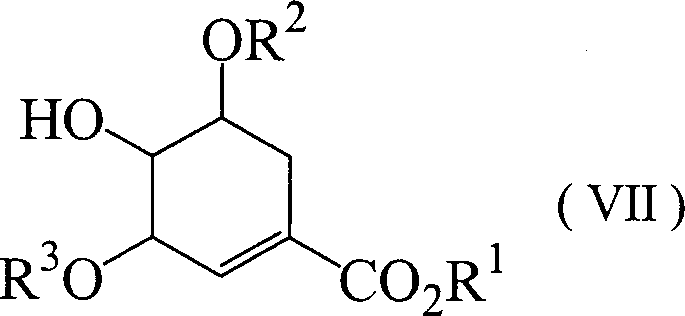
How to Synthesize 5-Oxo-7-Oxabicyclo[4.1.0]hept-3-ene-3-Carboxylate Efficiently
The execution of this synthesis requires careful control of reaction parameters to ensure high fidelity and yield. The process is divided into distinct operational units, starting from the preparation of the halolactone precursor via Diels-Alder cycloaddition and halolactonization. The subsequent steps involve sequential additions of reagents under controlled temperatures ranging from cryogenic conditions (-78°C) for lithiation steps to elevated temperatures (up to 140°C) for esterification. Solvent selection is paramount; non-protic solvents are preferred for organometallic steps, while alcoholic solvents are utilized for esterification and deprotection. Work-up procedures typically involve aqueous quenches followed by extraction with organic solvents like ethyl acetate or dichloromethane. Purification is achieved through standard techniques such as silica gel column chromatography or recrystallization, ensuring the removal of diastereomers and by-products. The detailed standardized synthesis steps are provided below to guide process development teams in replicating this efficient route.
- React 2-halo-7-oxabicyclo[2.2.1]heptane-5,3-carbonolactone with a base to form the epoxy carboxylic acid intermediate.
- Perform esterification followed by base treatment to generate the oxabicyclohept-2-ene structure.
- Execute Lewis acid-catalyzed ring opening with alcohol, followed by sulfonylation and base-induced cyclization to yield the final ester.
Commercial Advantages for Procurement and Supply Chain Teams
For procurement managers and supply chain directors, the transition from natural extraction to total synthesis offers profound strategic benefits. The primary advantage is the stabilization of raw material costs. By shifting the feedstock base from shikimic acid to furan and acrylates, manufacturers can hedge against the volatility of agricultural markets. Furan and acrylic esters are commodity chemicals produced on a massive scale for other industries, ensuring a deep and liquid market with transparent pricing. This shift eliminates the risk of supply shocks caused by crop failures or export restrictions, thereby enhancing supply chain reliability. Furthermore, the synthetic route allows for continuous manufacturing possibilities, as opposed to the batch-limited nature of fermentation or extraction. This continuity supports just-in-time inventory models and reduces the need for large safety stocks of expensive natural precursors.
- Cost Reduction in Manufacturing: The elimination of expensive chiral pool starting materials directly impacts the bill of materials. Shikimic acid is a high-value specialty chemical, whereas the precursors used in this patent are low-cost bulk chemicals. Additionally, the synthetic route avoids the complex downstream purification associated with fermentation broths, reducing utility consumption and waste disposal costs. The atom economy of the Diels-Alder reaction is inherently high, minimizing waste generation. By streamlining the number of unit operations and utilizing common reagents, the overall cost of goods sold (COGS) for the intermediate is significantly lowered, providing a competitive edge in pricing negotiations with API manufacturers.
- Enhanced Supply Chain Reliability: Dependence on a single geographic source for natural extracts creates a single point of failure in the supply chain. This synthetic methodology diversifies the source of supply, allowing production to be sited in any region with access to basic petrochemical infrastructure. The robustness of the chemical steps, which tolerate a range of conditions and reagents, further reduces the risk of batch failures. This reliability is critical for maintaining the continuity of supply for essential medicines, especially during pandemic scenarios where demand spikes unpredictably. Manufacturers can scale production capacity rapidly without being constrained by biological growth rates or agricultural lead times.
- Scalability and Environmental Compliance: The process is designed with industrial scalability in mind. Reactions are conducted in common solvents that are easily recovered and recycled, aligning with green chemistry principles. The avoidance of heavy metal catalysts in favor of Lewis acids like zinc chloride or boron complexes simplifies waste treatment and reduces the environmental footprint. The ability to perform telescoped reactions, such as the one-pot epoxidation and esterification described in the patent, reduces solvent usage and processing time. This efficiency translates to lower capital expenditure for reactor volume and reduced energy consumption per kilogram of product, making the process attractive for large-scale commercial deployment while meeting stringent environmental regulations.
Frequently Asked Questions (FAQ)
The following questions address common technical and commercial inquiries regarding the implementation of this synthetic route. These insights are derived from the specific embodiments and examples provided in the patent documentation, focusing on reproducibility, scalability, and quality control. Understanding these nuances is vital for technical teams evaluating the feasibility of technology transfer.
Q: Why is this synthetic route preferred over shikimic acid extraction?
A: Traditional methods relying on shikimic acid are limited by natural availability and high cost. This patented process utilizes economical starting materials like furan and acrylates via Diels-Alder reactions, ensuring a stable and scalable supply chain independent of agricultural fluctuations.
Q: What are the critical purity controls in this synthesis?
A: The process incorporates specific protection and deprotection steps, along with controlled sulfonylation, to minimize impurities. The use of defined Lewis acids and bases ensures high stereochemical fidelity, which is crucial for the biological activity of the final antiviral agent.
Q: Is this process suitable for multi-ton commercial production?
A: Yes, the reaction conditions described, such as the use of common solvents and manageable temperature ranges (-20°C to 150°C), are designed for industrial scalability. The elimination of rare natural precursors significantly enhances the feasibility of large-scale manufacturing.
Partnering with NINGBO INNO PHARMCHEM: Your Reliable 5-Oxo-7-Oxabicyclo[4.1.0]hept-3-ene-3-Carboxylate Supplier
The successful translation of laboratory-scale chemistry to commercial production requires a partner with deep technical expertise and robust infrastructure. NINGBO INNO PHARMCHEM possesses extensive experience scaling diverse pathways from 100 kgs to 100 MT/annual commercial production, ensuring that the complexities of this multi-step synthesis are managed with precision. Our facility is equipped with state-of-the-art reactors capable of handling the specific temperature and pressure requirements of the Diels-Alder and epoxidation steps. We adhere to stringent purity specifications and operate rigorous QC labs to guarantee that every batch of intermediate meets the exacting standards required for pharmaceutical applications. Our commitment to quality ensures that the downstream synthesis of GS4104 proceeds without interruption due to impurity profiles.
We invite potential partners to engage with our technical procurement team to discuss how this optimized synthetic route can enhance your supply chain resilience. By requesting a Customized Cost-Saving Analysis, you can quantify the potential economic benefits of switching to this fully synthetic pathway. We encourage you to contact us for specific COA data and route feasibility assessments tailored to your volume requirements. Let us collaborate to secure the global supply of essential antiviral therapeutics through advanced chemical manufacturing.
Engineering Bottleneck?
Can't scale up this synthesis? Upload your target structure or CAS, and our CDMO team will evaluate the industrial feasibility within 24 hours. Request Evaluation →