
Advanced Industrial Synthesis of Oseltamivir Intermediates via Optimized Benzylamine Ring-Opening Strategy
Introduction to Next-Generation Oseltamivir Manufacturing
The global demand for antiviral therapeutics remains critical, with Oseltamivir Phosphate standing as a cornerstone in the treatment of influenza A and B viruses. As detailed in the recent patent CN111499536B, filed in October 2022, a significant technological breakthrough has been achieved in the synthesis of this vital active pharmaceutical ingredient (API). This patent discloses a novel preparation method that fundamentally reimagines the construction of the cyclohexene core, moving away from hazardous and costly legacy processes toward a streamlined, benzylamine-mediated strategy. For pharmaceutical manufacturers and supply chain leaders, this represents a pivotal opportunity to optimize production lines for high-purity oseltamivir while mitigating regulatory and safety risks associated with older synthetic pathways.
The core innovation lies in the strategic use of benzylamine not merely as a reactant but as a dual-purpose protecting group and nucleophile, facilitating a cleaner reaction profile. By leveraging inorganic salt catalysts such as magnesium chloride or zinc chloride, the process achieves high regioselectivity during the critical epoxide ring-opening step. This technical advancement ensures that the resulting intermediates possess the precise stereochemistry required for biological activity, thereby reducing the burden on downstream purification. As we analyze the implications of this patent, it becomes clear that adopting this methodology offers a robust pathway for cost reduction in API manufacturing and enhances the overall reliability of the antiviral supply chain.
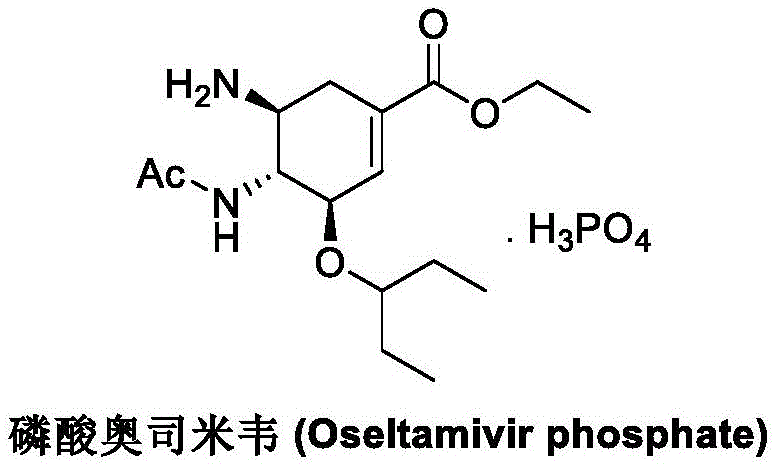
The Limitations of Conventional Methods vs. The Novel Approach
The Limitations of Conventional Methods
Historically, the industrial synthesis of oseltamivir has been plagued by significant technical and economic hurdles, primarily stemming from the reliance on three main retrospective routes. The first conventional route, often cited in early literature, utilizes tert-butylamine for epoxide ring-opening. While chemically feasible, this method suffers from the necessity of using expensive reagents and harsh reaction conditions that complicate scale-up. Furthermore, the subsequent steps involve complex mesylation and ring-closing sequences that introduce multiple opportunities for impurity formation, ultimately lowering the overall yield and increasing the cost of goods sold (COGS).
Even more problematic is the third historical route which employs sodium azide for nucleophilic substitution. Although chemically effective for introducing the necessary nitrogen functionality, the use of sodium azide presents unacceptable safety risks in a large-scale manufacturing environment due to its explosive nature and high toxicity. The disposal of azide-containing waste streams requires specialized and costly treatment protocols to prevent environmental contamination. Additionally, other routes relying on allylamine necessitate the use of precious palladium catalysts for multiple deprotection steps, creating a dependency on volatile metal markets and adding significant expense to the production of high-purity oseltamivir.
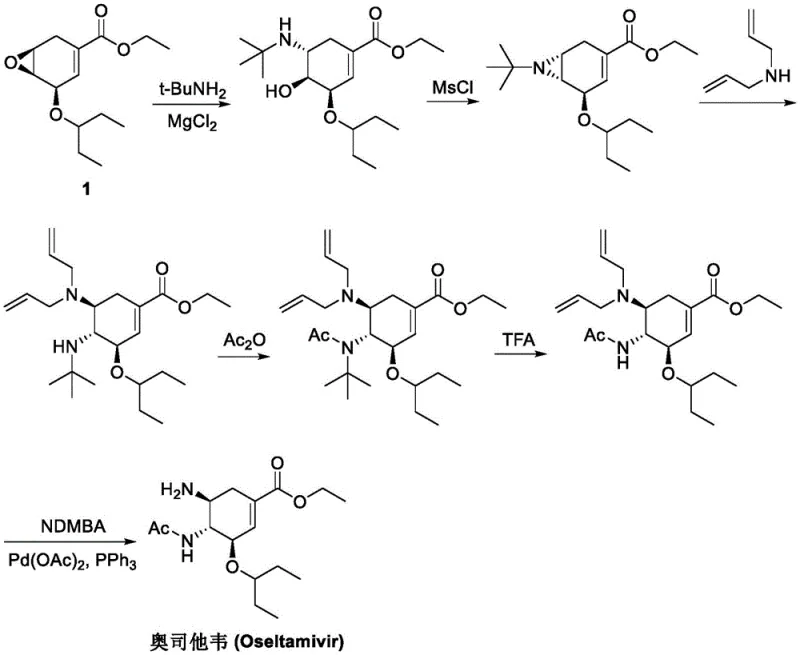
The Novel Approach
In stark contrast to these legacy methods, the novel approach outlined in patent CN111499536B introduces a sophisticated yet operationally simple strategy centered on benzylamine chemistry. This new route bypasses the need for hazardous azides and minimizes the reliance on expensive palladium-catalyzed deprotections by utilizing benzyl groups that can be cleanly removed via standard catalytic hydrogenation. The process begins with a highly efficient ring-opening of the epoxy intermediate using benzylamine in the presence of a Lewis acid catalyst, setting the stereochemistry early in the synthesis with excellent control.
Following the initial ring opening, the synthesis proceeds through a logical sequence of protection, activation, and substitution steps that maximize atom economy and minimize waste. The use of di-tert-butyl dicarbonate (Boc2O) for N-protection provides orthogonal stability, allowing for selective transformations elsewhere on the molecule without compromising the amine functionality. This modular approach not only simplifies the purification of intermediates but also ensures that the final API meets stringent quality standards. By replacing complex, multi-step sequences with a more direct and safer pathway, this method offers a compelling solution for commercial scale-up of complex pharmaceutical intermediates.
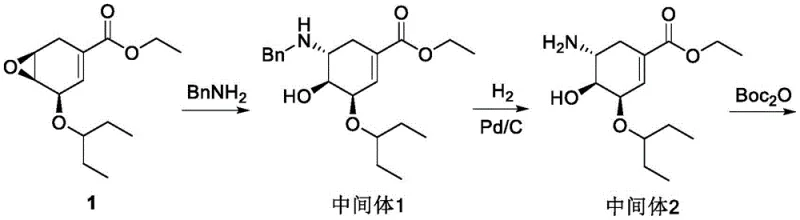
Mechanistic Insights into Benzylamine-Mediated Ring Opening and Protection
The success of this new synthetic route hinges on the precise mechanistic control exerted during the initial epoxide ring-opening and subsequent functionalization steps. In the first critical transformation, the epoxy intermediate (Formula 1) reacts with benzylamine under the catalysis of inorganic salts like magnesium chloride or zinc chloride. These Lewis acids coordinate with the epoxide oxygen, increasing the electrophilicity of the adjacent carbons and directing the nucleophilic attack of benzylamine to the desired position. This regioselective opening is crucial for establishing the (3R, 4R, 5S) stereochemistry required for the final oseltamivir structure, and the use of mild inorganic catalysts avoids the side reactions often seen with stronger acidic or basic conditions.
Following the installation of the first amine functionality, the process employs a strategic protection-deprotection sequence that is key to its efficiency. The free amine generated from hydrogenolysis is protected with a Boc group, which is stable under the subsequent sulfonylation conditions. The hydroxyl group is then activated via O-sulfonylation using reagents like p-toluenesulfonyl chloride or trifluoromethyl sulfonic anhydride, converting a poor leaving group into an excellent one. This activated intermediate then undergoes a second nucleophilic substitution with benzylamine, effectively installing the second nitrogen atom required for the final diamine scaffold. The elegance of this mechanism lies in the symmetry of using benzyl groups for both nitrogens, allowing for their simultaneous or sequential removal under identical hydrogenation conditions, thereby streamlining the workflow.
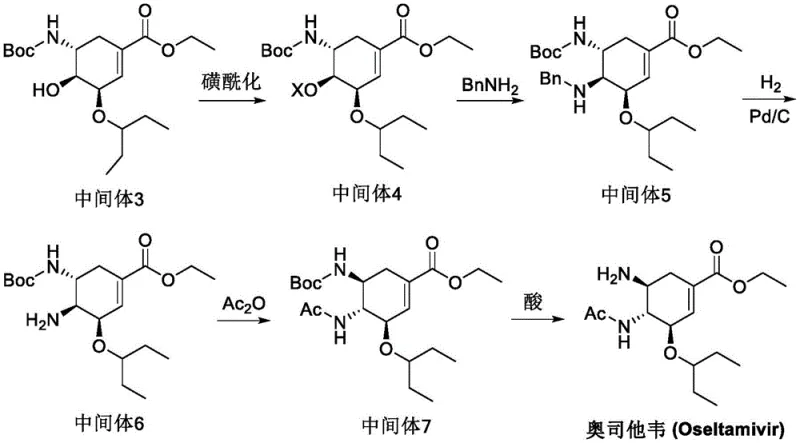
How to Synthesize Oseltamivir Efficiently
The implementation of this novel synthesis route requires careful attention to reaction parameters to ensure optimal yields and purity profiles. The process is divided into eight distinct operational steps, starting from the readily available epoxy intermediate and culminating in the free base of oseltamivir. Each step has been optimized in the patent examples to demonstrate robustness across different scales, utilizing common solvents such as toluene, dichloromethane, and alcohols. The detailed standardized synthesis steps below outline the critical conditions, including temperature ranges and molar ratios, necessary to replicate the high efficiency reported in the intellectual property.
- Perform ring-opening of the epoxy intermediate with benzylamine using an inorganic salt catalyst like MgCl2 to form Intermediate 1.
- Execute catalytic hydrogenation to remove the benzyl group, followed by N-Boc protection to yield Intermediate 3.
- Conduct O-sulfonylation, substitution with benzylamine, second hydrogenation, acetylation, and final acid deprotection to obtain oseltamivir.
Commercial Advantages for Procurement and Supply Chain Teams
For procurement managers and supply chain directors, the adoption of this new benzylamine-based synthesis route offers transformative benefits that extend far beyond simple chemical yield improvements. By fundamentally altering the reagent profile of oseltamivir production, this method addresses several critical pain points associated with the legacy supply chain, including raw material volatility, safety compliance costs, and production lead times. The shift towards safer, commodity-grade reagents creates a more resilient manufacturing ecosystem that is less susceptible to disruptions caused by the scarcity of specialized catalysts or hazardous materials.
- Cost Reduction in Manufacturing: The most immediate financial impact of this new process is the elimination of expensive and hazardous reagents. By removing the need for sodium azide, manufacturers avoid the substantial costs associated with specialized safety infrastructure, hazardous waste disposal, and regulatory compliance monitoring. Furthermore, the replacement of precious metal catalysts (like palladium used in allyl removal) with more economical inorganic salts and standard hydrogenation catalysts significantly lowers the direct material costs. This qualitative shift in the bill of materials allows for a leaner cost structure, making the production of high-purity oseltamivir more economically viable in competitive markets.
- Enhanced Supply Chain Reliability: The reliance on benzylamine and common sulfonyl chlorides drastically improves supply security. Unlike specialized chiral auxiliaries or unstable reagents that may have limited global suppliers, benzylamine is a bulk commodity chemical produced by numerous vendors worldwide. This abundance ensures that procurement teams can secure long-term contracts with favorable terms, reducing the risk of production stoppages due to raw material shortages. Additionally, the simplified reaction sequence reduces the number of intermediate isolation steps, which in turn shortens the overall manufacturing cycle time and accelerates the delivery of finished API to customers.
- Scalability and Environmental Compliance: From an environmental, health, and safety (EHS) perspective, this route is vastly superior to traditional methods. The absence of explosive azides and the reduction of heavy metal waste align perfectly with modern green chemistry principles and increasingly strict environmental regulations. The process operates under mild thermal conditions, typically between 50°C and 100°C for the key steps, which reduces energy consumption and simplifies reactor requirements. This ease of scale-up means that production can be expanded from pilot batches to multi-ton commercial runs with minimal engineering changes, ensuring a continuous and compliant supply of this essential antiviral medication.
Frequently Asked Questions (FAQ)
The following questions address common technical and commercial inquiries regarding the implementation of this new oseltamivir synthesis technology. These answers are derived directly from the experimental data and claims presented in patent CN111499536B, providing a factual basis for decision-making. Understanding these details is essential for R&D teams evaluating process transfer and for procurement specialists assessing the long-term viability of this supply source.
Q: How does this new benzylamine route improve safety compared to traditional sodium azide methods?
A: Traditional Route 3 relies on sodium azide, a highly toxic and explosive reagent that poses severe safety risks and environmental hazards. The novel method described in patent CN111499536B completely eliminates the use of azides, replacing them with safe, commodity chemicals like benzylamine and standard sulfonyl chlorides, significantly reducing production risk and waste treatment costs.
Q: What are the cost advantages of using benzylamine over allylamine or tert-butylamine routes?
A: Previous routes often require expensive transition metal catalysts (like Palladium) for multiple deprotection steps or costly reagents like tert-butylamine. This new process utilizes benzylamine, which serves as a versatile protecting group that can be easily removed via standard catalytic hydrogenation. This simplifies the catalyst system and reduces the reliance on precious metals, leading to substantial cost reductions in API manufacturing.
Q: Is this synthesis route scalable for commercial production of oseltamivir intermediates?
A: Yes, the process is specifically designed for industrial amplification. It operates under mild reaction conditions (temperatures ranging from -5°C to 100°C) and uses common organic solvents such as toluene, dichloromethane, and methanol. The high yields reported in the examples (often exceeding 90% per step) and the avoidance of hazardous reagents make it highly suitable for reliable oseltamivir intermediate supplier operations at the multi-ton scale.
Partnering with NINGBO INNO PHARMCHEM: Your Reliable Oseltamivir Intermediate Supplier
The technological advancements detailed in patent CN111499536B underscore the dynamic nature of antiviral drug manufacturing, where continuous process improvement is key to maintaining market leadership. NINGBO INNO PHARMCHEM stands at the forefront of this evolution, leveraging our extensive experience scaling diverse pathways from 100 kgs to 100 MT/annual commercial production to bring such innovative methods to life. Our state-of-the-art facilities are equipped to handle the specific requirements of this benzylamine route, ensuring that every batch meets stringent purity specifications through our rigorous QC labs and advanced analytical capabilities.
We invite global pharmaceutical partners to collaborate with us to fully realize the potential of this cost-effective and safe synthesis route. By engaging with our technical procurement team, you can request a Customized Cost-Saving Analysis tailored to your specific volume requirements. We encourage you to reach out today to obtain specific COA data and route feasibility assessments, ensuring that your supply chain for oseltamivir intermediates is built on a foundation of scientific excellence and commercial reliability.