
Advanced Synthetic Route for 3-Alkynyl Pyrrole Compounds via Copper and Palladium Catalysis
The pharmaceutical and fine chemical industries are constantly seeking robust methodologies for constructing nitrogen-containing heterocycles, particularly pyrrole derivatives, which serve as critical scaffolds in numerous bioactive molecules. Patent CN109485594B discloses a groundbreaking synthetic approach for 3-alkynyl pyrrole compounds, addressing long-standing challenges in regioselectivity and operational complexity. This innovative protocol utilizes a tandem sequence starting from easily accessible N-substituted piperidines, transforming them into valuable iodopyrrole intermediates via a copper-catalyzed oxidative aromatization, followed by a palladium-catalyzed cross-coupling with aryl alkynes. For R&D directors and procurement specialists, this technology represents a significant leap forward, offering a pathway to high-purity pharmaceutical intermediates with simplified supply chain logistics and reduced environmental impact through the use of molecular oxygen as a terminal oxidant.
The Limitations of Conventional Methods vs. The Novel Approach
The Limitations of Conventional Methods
Traditionally, the synthesis of alkynyl-substituted pyrroles has been fraught with significant technical hurdles that impede efficient commercial manufacturing. Conventional routes often suffer from poor regioselectivity, leading to complex mixtures of isomers that require costly and time-consuming purification steps, thereby drastically reducing overall process efficiency. Furthermore, many established methods rely on harsh reaction conditions, including extreme temperatures or the use of hazardous reagents, which pose safety risks and complicate waste management protocols. The reliance on specialized, pre-functionalized starting materials also limits the structural diversity achievable, restricting the ability of medicinal chemists to rapidly explore structure-activity relationships. These factors collectively contribute to elevated production costs and extended lead times, creating bottlenecks in the development of new drug candidates and functional materials.
The Novel Approach
In stark contrast, the methodology outlined in CN109485594B introduces a streamlined, two-step strategy that fundamentally reshapes the synthesis landscape for these valuable compounds. By leveraging inexpensive N-substituted piperidines as the primary feedstock, the process bypasses the need for complex precursor synthesis, significantly lowering raw material costs. The initial oxidative aromatization step proceeds under mild conditions (80°C) in an oxygen atmosphere, utilizing a catalytic system of copper acetate and DMAP, which ensures high atom economy and minimizes toxic waste generation. Subsequent coupling with aryl alkynes is achieved using a robust palladium catalyst system that tolerates a broad spectrum of functional groups. This novel approach not only simplifies the operational workflow but also enhances the scalability of the process, making it an ideal candidate for cost reduction in pharmaceutical intermediate manufacturing.
Mechanistic Insights into Copper-Catalyzed Oxidative Aromatization and Pd-Coupling
The core of this synthetic innovation lies in the efficient transformation of saturated piperidine rings into aromatic pyrrole systems. In the first stage, the N-substituted piperidine undergoes a copper-mediated oxidative dehydrogenation. The presence of iodine and DMAP facilitates the formation of an iodopyrrole intermediate through a series of deprotonation and oxidation events driven by molecular oxygen. This step is critical as it establishes the aromatic core while simultaneously installing a reactive iodine handle at the 3-position, setting the stage for further functionalization. The use of acetonitrile as a solvent optimizes the solubility of reactants and stabilizes the catalytic species, ensuring consistent reaction kinetics across different substrate batches.
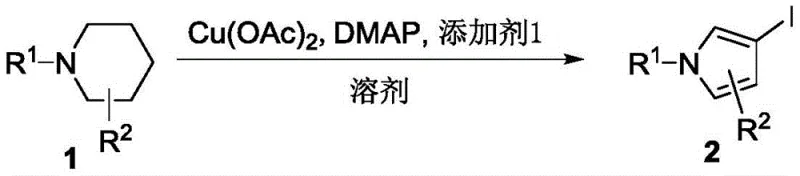
Following the formation of the iodopyrrole intermediate, the process transitions to a palladium-catalyzed cross-coupling reaction, akin to a Sonogashira coupling. Here, the carbon-iodine bond of the pyrrole reacts with the terminal alkyne in the presence of a palladium salt, triphenylphosphine ligand, and a base such as potassium carbonate. The addition of pivalic acid and tetrabutylammonium bromide acts as crucial additives that enhance catalytic turnover and stabilize the active palladium species. This mechanistic pathway allows for the precise installation of the alkynyl group with excellent regiocontrol, avoiding the formation of unwanted byproducts. The mild temperature range of 40-100°C preserves sensitive functional groups on the aromatic rings, ensuring the integrity of the final molecular architecture.

From an impurity control perspective, this dual-catalyst system offers distinct advantages. The mild oxidative conditions prevent over-oxidation or degradation of the pyrrole ring, a common issue in harsher aromatization protocols. Furthermore, the specificity of the palladium coupling minimizes homocoupling of the alkyne, a frequent side reaction in traditional methods. The result is a cleaner reaction profile that simplifies downstream processing, directly translating to higher purity specifications for the final API intermediate. This level of control is paramount for meeting the stringent quality standards required by global regulatory bodies for pharmaceutical applications.
How to Synthesize 3-Alkynyl Pyrrole Efficiently
The practical implementation of this synthesis involves a straightforward protocol that can be adapted for both laboratory discovery and pilot-scale production. The process begins with the preparation of the iodopyrrole intermediate by heating the N-substituted piperidine with copper acetate, iodine, and DMAP in acetonitrile under an oxygen atmosphere. Once the intermediate is isolated, it is subjected to the coupling conditions with the desired aryl alkyne using a palladium catalyst system in DMF. The detailed standardized synthesis steps, including specific molar ratios, reaction times, and work-up procedures optimized for maximum yield and purity, are provided in the guide below.
- Oxidative Aromatization: React N-substituted piperidine with Cu(OAc)2, I2, and DMAP in acetonitrile under oxygen at 80°C to form iodopyrrole.
- Sonogashira Coupling: React the resulting iodopyrrole with aryl alkyne using Pd(OAc)2, PPh3, PivOH, and K2CO3 in DMF at 90°C.
- Work-up and Purification: Quench reaction, extract with ethyl acetate, dry, and purify via silica gel chromatography.
Commercial Advantages for Procurement and Supply Chain Teams
For procurement managers and supply chain heads, the adoption of this synthetic route offers compelling strategic benefits that extend beyond mere chemical efficiency. The reliance on commodity chemicals such as piperidines, copper salts, and palladium catalysts ensures a stable and resilient supply chain, mitigating the risks associated with sourcing exotic or single-source reagents. The operational simplicity of the process, characterized by standard heating and stirring requirements, reduces the need for specialized reactor equipment, thereby lowering capital expenditure for manufacturing facilities. Additionally, the use of molecular oxygen as an oxidant eliminates the need for stoichiometric amounts of hazardous oxidizing agents, significantly reducing waste disposal costs and enhancing the overall environmental sustainability of the production process.
- Cost Reduction in Manufacturing: The economic viability of this method is driven by the use of low-cost, commercially available starting materials like N-phenyl piperidine and phenylacetylene derivatives. By eliminating the need for multi-step precursor synthesis and reducing the complexity of purification through high regioselectivity, the overall cost of goods sold is substantially decreased. The catalytic nature of both the copper and palladium steps means that expensive metals are used in minimal quantities, further optimizing the cost structure without compromising reaction efficiency or yield.
- Enhanced Supply Chain Reliability: The robustness of this chemistry against variations in substrate electronics ensures consistent performance across different batches, a critical factor for maintaining supply continuity. The tolerance for various substituents, including halogens and alkyl groups, allows manufacturers to utilize a flexible range of raw materials, reducing dependency on specific suppliers. This flexibility is crucial for mitigating supply chain disruptions and ensuring that production schedules are met reliably, even in volatile market conditions.
- Scalability and Environmental Compliance: The mild reaction conditions and use of common organic solvents facilitate easy scale-up from gram to ton quantities without significant re-optimization. The process aligns with green chemistry principles by utilizing oxygen as a clean oxidant and generating minimal hazardous waste, simplifying compliance with increasingly stringent environmental regulations. This scalability ensures that the method can support the growing demand for 3-alkynyl pyrrole derivatives in the pharmaceutical and agrochemical sectors.
Frequently Asked Questions (FAQ)
The following questions address common technical and commercial inquiries regarding the synthesis of 3-alkynyl pyrrole compounds based on the patented technology. These insights are derived directly from the experimental data and beneficial effects described in the patent documentation, providing clarity on the method's applicability and advantages for industrial partners.
Q: What are the primary advantages of this synthetic method over conventional pyrrole synthesis?
A: This method offers superior regioselectivity and operates under significantly milder conditions compared to traditional routes. It utilizes readily available N-substituted piperidines as starting materials, avoiding complex pre-functionalized precursors, and employs a green oxidative aromatization strategy using molecular oxygen.
Q: What is the substrate scope for the aromatic substituents in this reaction?
A: The process demonstrates excellent tolerance for a wide range of substituents on the phenyl ring, including electron-withdrawing groups like fluorine, chlorine, and bromine, as well as electron-donating groups such as methyl and methoxy. This versatility allows for the efficient production of diverse pharmaceutical intermediates.
Q: Is this synthetic route suitable for large-scale commercial manufacturing?
A: Yes, the method is highly amenable to scale-up due to its use of common solvents like acetonitrile and DMF, standard catalysts, and moderate reaction temperatures (80-90°C). The operational simplicity and robust yield profiles support reliable commercial production of high-purity intermediates.
Partnering with NINGBO INNO PHARMCHEM: Your Reliable 3-Alkynyl Pyrrole Supplier
At NINGBO INNO PHARMCHEM, we recognize the critical role that advanced synthetic methodologies play in accelerating drug discovery and development. Our team of expert chemists possesses extensive experience scaling diverse pathways from 100 kgs to 100 MT/annual commercial production, ensuring that the transition from laboratory bench to manufacturing plant is seamless and efficient. We are committed to delivering high-purity 3-alkynyl pyrrole intermediates that meet stringent purity specifications, supported by our rigorous QC labs and state-of-the-art analytical capabilities. Our dedication to quality and consistency makes us a trusted partner for global pharmaceutical companies seeking reliable sources of complex heterocyclic building blocks.
We invite you to collaborate with us to leverage this cutting-edge synthetic technology for your specific project needs. Our technical procurement team is ready to provide a Customized Cost-Saving Analysis tailored to your volume requirements and timeline. Please contact us today to request specific COA data and route feasibility assessments, and let us demonstrate how our expertise can optimize your supply chain and reduce your overall manufacturing costs.