
Advanced Purification Technology for Electronic Grade 3,3'4'4'-Biphenyltetracarboxylic Acid Monomers
Advanced Purification Technology for Electronic Grade 3,3'4'4'-Biphenyltetracarboxylic Acid Monomers
The escalating demand for high-performance flexible displays and advanced semiconductor packaging has placed unprecedented pressure on the supply chain for electronic-grade monomers. Specifically, the production of polyimide films with superior thermal stability and mechanical flexibility relies heavily on the purity of 3,3',4,4'-biphenyltetracarboxylic acid (BPDA). Recent technological advancements, notably detailed in Chinese patent CN114507130A, have introduced a transformative purification methodology that addresses the critical bottleneck of metal ion contamination. This innovation moves beyond traditional recrystallization techniques, leveraging a sophisticated amide-water solvent system combined with activated carbon adsorption to achieve purity levels exceeding 99.95% and total metal content below 0.5 ppm. For R&D directors and procurement specialists in the electronic materials sector, understanding this process is vital for securing a reliable electronic chemical supplier capable of meeting the rigorous standards of next-generation optoelectronic manufacturing.
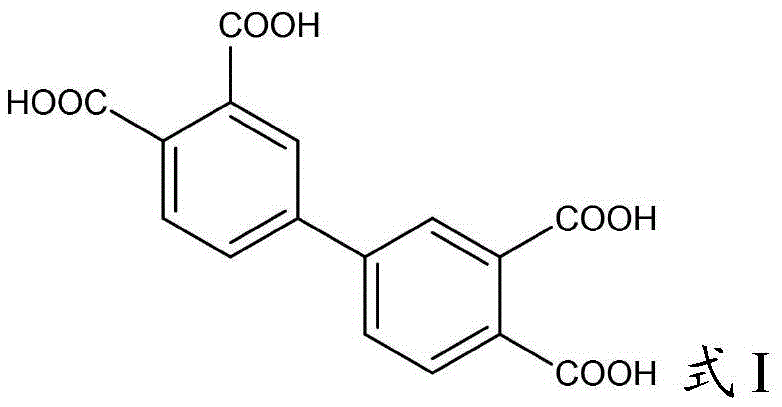
The Limitations of Conventional Methods vs. The Novel Approach
The Limitations of Conventional Methods
Historically, the purification of 3,3',4,4'-biphenyltetracarboxylic acid has relied on relatively rudimentary techniques such as boiling in purified water or refluxing in dilute acid solutions. While these methods can remove some bulk impurities, they fundamentally fail to address the stringent requirements of the modern electronic industry. Data from comparative studies indicates that water-based recrystallization typically yields products with purity levels stagnating between 99.5% and 99.7%, which is insufficient for high-end polyimide applications requiring greater than 99.9% purity. Furthermore, these conventional aqueous processes are notoriously ineffective at removing trace transition metal ions, often leaving residual metal content in the range of 11 to 22 ppm. Such elevated metal levels pose severe risks to the dielectric integrity of the resulting polyimide films, potentially leading to device failure in flexible screens or microelectronic components. Additionally, the use of strong acids in some traditional protocols introduces corrosion challenges and complicates waste treatment, further diminishing their viability for sustainable large-scale manufacturing.
The Novel Approach
The breakthrough methodology disclosed in the patent represents a paradigm shift by utilizing a binary solvent system comprising an amide solvent, such as N,N-dimethylformamide (DMF) or N,N-dimethylacetamide (DMAc), mixed with water. This specific solvent combination creates a unique solubility environment where the target biphenyl tetracarboxylic acid remains soluble at elevated temperatures (75-100°C) but precipitates efficiently upon controlled cooling, while organic impurities like trimellitic acid and phthalic acid remain in the mother liquor or are adsorbed. Crucially, this approach integrates a dedicated activated carbon treatment step performed at high temperatures, which dramatically enhances the adsorption capacity for metal ions compared to ambient treatments. By optimizing the mass ratio of the amide solvent to water between 1:1 and 1:4, the process maximizes the yield, consistently achieving over 93.5%, while simultaneously driving metal ion concentrations down to sub-ppm levels. This dual-action mechanism of selective solubility and aggressive adsorption ensures that the final refined product meets the exacting specifications required for a high-purity OLED material or flexible substrate precursor.
Mechanistic Insights into Amide-Water Solvent Crystallization
The efficacy of this purification strategy lies in the intricate interplay between solvent polarity, temperature-dependent solubility, and surface adsorption kinetics. In the initial dissolution phase, heating the crude product in the amide-water mixture to 75-100°C ensures complete solvation of the carboxylic acid groups through hydrogen bonding with the solvent molecules. Unlike pure water, the presence of the polar aprotic amide component disrupts the strong intermolecular hydrogen bonding network of the acid, preventing premature aggregation and allowing for a homogeneous solution. This homogeneity is critical because it prevents the occlusion of impurities within the crystal lattice during the subsequent growth phase. The addition of activated carbon at this elevated temperature is mechanistically significant; the increased thermal energy facilitates the diffusion of metal ions and planar organic impurities into the micropores of the carbon, where they are trapped via chemisorption and van der Waals forces. This step is the primary driver for reducing metal content from hundreds of ppb in the crude material to less than 0.5 ppm in the final product, a reduction factor that simple washing cannot achieve.
Following the removal of the carbon-loaded impurities via hot filtration, the introduction of seed crystals initiates a controlled nucleation process that is fundamental to achieving high purity. Without seeding, the supersaturated solution would likely undergo spontaneous nucleation, resulting in numerous small crystals that grow rapidly and trap solvent pockets and impurities. By introducing high-purity seed crystals (greater than 99.95% purity) at a specific temperature (65-85°C), the system is guided towards heterogeneous nucleation. The subsequent slow cooling rate of 0.03-0.15°C/min allows for the orderly deposition of 3,3',4,4'-biphenyltetracarboxylic acid molecules onto the seed lattice. This slow growth rate provides sufficient time for the rejection of impurity molecules from the growing crystal face, effectively purifying the solid phase. The final holding period at 5-10°C ensures maximum recovery of the product without compromising the crystal quality, resulting in a refined product with a bulk density of 0.6-0.7 g/cm³, which is optimal for downstream handling and reaction kinetics in polyimide synthesis.
How to Synthesize 3,3'4'4'-Biphenyltetracarboxylic Acid Efficiently
Implementing this purification protocol requires precise control over thermal gradients and solvent ratios to replicate the high yields and purity demonstrated in the patent examples. The process begins with the preparation of the extraction solvent, where N,N-dimethylformamide and water are mixed in a ratio of approximately 1:2 to ensure optimal solubility characteristics. The crude acid is then dissolved under vigorous stirring at temperatures approaching 90°C, followed by the immediate addition of activated carbon. It is imperative that the adsorption step maintains the elevated temperature for at least one hour to maximize metal ion capture before the mixture is filtered while hot to prevent premature crystallization. The filtrate is then carefully cooled to the seeding temperature, where high-quality seed crystals are introduced to dictate the crystal habit and size distribution.
- Dissolve the crude acid in a heated mixture of amide solvent (DMF/DMAc) and water at 75-100°C.
- Treat the solution with activated carbon to adsorb metal ions and organic impurities, followed by hot filtration.
- Induce crystallization by adding seed crystals and slowly cooling the filtrate to 5-10°C with precise temperature control.
Commercial Advantages for Procurement and Supply Chain Teams
For procurement managers and supply chain heads, the adoption of this advanced purification technology translates directly into enhanced supply security and significant cost optimization opportunities. The ability to consistently produce electronic-grade monomers with ultra-low metal content eliminates the need for downstream customers to perform additional, costly purification steps or to reject batches due to specification failures. This reliability is crucial for maintaining continuous production lines in the highly competitive flexible display market, where downtime is exceptionally expensive. Furthermore, the reagents utilized in this process, specifically DMF, DMAc, and activated carbon, are commodity chemicals with stable global supply chains, mitigating the risk of raw material shortages that often plague processes relying on exotic catalysts or specialized resins.
- Cost Reduction in Manufacturing: The elimination of complex ion-exchange resin columns or multiple acid-wash cycles significantly simplifies the operational workflow, leading to substantial cost savings in both consumables and waste disposal. By achieving high purity in a single crystallization pass with yields exceeding 93%, the process minimizes the need for re-processing off-spec material, thereby maximizing the throughput of the manufacturing facility. The use of widely available amide solvents also avoids the premium pricing associated with specialized purification agents, contributing to a more favorable cost structure for the final electronic chemical product.
- Enhanced Supply Chain Reliability: The robustness of the amide-water crystallization method ensures consistent batch-to-batch quality, which is a key metric for qualifying suppliers in the semiconductor and display industries. The process parameters, such as cooling rates and solvent ratios, are easily scalable from pilot to commercial production, reducing the lead time for high-purity electronic chemical intermediates. This scalability ensures that suppliers can rapidly ramp up production to meet surging demand for flexible electronics without compromising the stringent purity specifications required by end-users.
- Scalability and Environmental Compliance: From an environmental perspective, the process generates less hazardous waste compared to traditional acid-reflux methods, as the spent solvent can be more readily recovered and recycled. The reduced reliance on strong mineral acids lowers the corrosive load on equipment and decreases the neutralization costs associated with wastewater treatment. This alignment with green chemistry principles not only reduces operational costs but also enhances the sustainability profile of the supply chain, a factor increasingly weighted in vendor selection criteria by major multinational corporations.
Frequently Asked Questions (FAQ)
The following questions address common technical and commercial inquiries regarding the production and application of this refined monomer. These insights are derived directly from the technical disclosures and experimental data associated with the purification method, providing clarity for stakeholders evaluating this technology for their supply chains.
Q: Why is low metal content critical for 3,3'4'4'-biphenyltetracarboxylic acid in electronics?
A: In the synthesis of polyimides for flexible displays, trace metal ions can catalyze degradation or cause electrical leakage, compromising the dielectric properties and long-term reliability of the final film.
Q: How does the amide-water solvent system improve purity compared to water alone?
A: The mixed solvent system optimizes the solubility differential between the target acid and impurities like trimellitic acid, while facilitating effective adsorption of metal contaminants by activated carbon which is less efficient in pure aqueous systems.
Q: What is the role of seed crystals in this purification process?
A: Seed crystals provide controlled nucleation sites, preventing spontaneous rapid precipitation that traps impurities, thereby ensuring uniform crystal growth and higher final purity.
Partnering with NINGBO INNO PHARMCHEM: Your Reliable 3,3'4'4'-Biphenyltetracarboxylic Acid Supplier
At NINGBO INNO PHARMCHEM, we recognize that the transition from laboratory-scale innovation to industrial reality requires a partner with deep technical expertise and robust manufacturing capabilities. Our team possesses extensive experience scaling diverse pathways from 100 kgs to 100 MT/annual commercial production, ensuring that the sophisticated crystallization controls described in recent patents are faithfully replicated at scale. We maintain stringent purity specifications and operate rigorous QC labs equipped to detect trace metal impurities at the ppb level, guaranteeing that every batch of 3,3',4,4'-biphenyltetracarboxylic acid meets the exacting demands of the polyimide and flexible display industries.
We invite you to collaborate with us to optimize your supply chain for high-performance electronic materials. Our technical procurement team is ready to provide a Customized Cost-Saving Analysis tailored to your specific volume requirements and purity targets. Please contact us to request specific COA data and route feasibility assessments, and let us demonstrate how our advanced purification capabilities can drive value and reliability in your manufacturing operations.
Engineering Bottleneck?
Can't scale up this synthesis? Upload your target structure or CAS, and our CDMO team will evaluate the industrial feasibility within 24 hours. Request Evaluation →