
Scaling High-Purity (S)-Phenylethylene Glycol Production via Advanced Microbial Resolution
The pharmaceutical and fine chemical industries are constantly seeking robust methods to produce chiral intermediates with exceptional optical purity, a critical requirement for the synthesis of advanced active pharmaceutical ingredients and functional materials. Patent CN101302543A introduces a groundbreaking biocatalytic approach for the preparation of (S)-phenylethylene glycol, utilizing the asymmetric resolution capabilities of specific microorganisms to overcome the limitations of traditional chemical synthesis. This technology leverages the selective oxidation properties of Gluconobacter strains to differentiate between enantiomers in a racemic mixture, offering a pathway to high-value chiral building blocks that are essential for liquid crystal materials and complex drug synthesis. By shifting from harsh chemical reagents to biological catalysts, this method addresses the growing demand for greener manufacturing processes while maintaining rigorous quality standards required by global regulatory bodies. The implications for supply chain stability are profound, as biological fermentation offers a scalable and consistent alternative to resource-intensive chemical resolution techniques that often suffer from batch-to-batch variability.
The Limitations of Conventional Methods vs. The Novel Approach
The Limitations of Conventional Methods
Traditional chemical synthesis of optically pure phenylethylene glycol typically involves complex multi-step sequences that require the selective protection and deprotection of hydroxyl groups, introducing significant operational complexity and cost. These conventional routes often rely on toxic chiral catalysts and hazardous solvents to achieve stereochemical control, creating substantial environmental burdens and safety risks for manufacturing facilities. The need for protecting groups not only increases the number of reaction steps but also reduces the overall atom economy, leading to lower yields and higher waste generation that complicates downstream purification processes. Furthermore, chemical resolution methods frequently struggle to achieve the ultra-high optical purity levels demanded by modern pharmaceutical applications, often requiring repeated recrystallization steps that further erode process efficiency and profitability. The reliance on precious metal catalysts in some asymmetric hydrogenation routes also introduces supply chain vulnerabilities related to the availability and price volatility of these critical raw materials.
The Novel Approach
In contrast, the novel biocatalytic method described in the patent utilizes the inherent stereoselectivity of Gluconobacter microorganisms to selectively oxidize the unwanted (R)-enantiomer within a racemic mixture, leaving the desired (S)-phenylethylene glycol intact with high fidelity. This biological resolution eliminates the need for cumbersome protection-deprotection sequences, streamlining the production workflow and significantly reducing the consumption of auxiliary chemicals and solvents. The process operates under mild aqueous conditions, typically around neutral pH and moderate temperatures, which minimizes energy consumption and reduces the risk of thermal degradation of sensitive intermediates. By employing whole-cell biocatalysts, the method leverages natural enzymatic machinery to achieve specificity that is difficult to replicate with synthetic catalysts, resulting in superior enantiomeric excess values. This shift towards biomanufacturing represents a strategic advantage for producers seeking to differentiate their supply through sustainable and efficient production technologies that align with modern green chemistry principles.
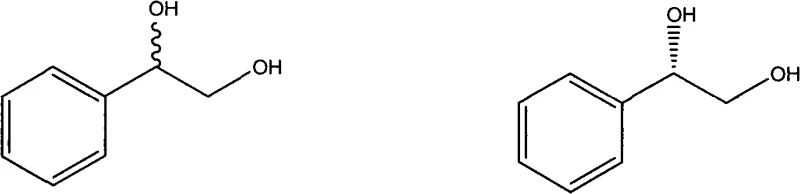
Mechanistic Insights into Gluconobacter-Mediated Asymmetric Oxidation
The core mechanism driving this high-efficiency resolution process relies on the specific enzymatic activity of Gluconobacter oxydans, which exhibits a strong preference for oxidizing the secondary hydroxyl group of the (R)-enantiomer over the (S)-enantiomer. This stereoselective oxidation converts the (R)-phenylethylene glycol into the corresponding ketone or acid derivative, which can be easily separated from the unreacted (S)-alcohol through standard extraction or crystallization techniques. The enzymatic active sites within the microbial cells provide a chiral environment that strictly discriminates between the two enantiomers based on their spatial configuration, ensuring that the desired product remains chemically unchanged while the impurity is transformed. Understanding this mechanistic pathway is crucial for process optimization, as factors such as oxygen transfer rates and cell density directly influence the activity of the membrane-bound dehydrogenases responsible for the oxidation. The high specificity of the biological system ensures that side reactions are minimized, leading to a cleaner reaction profile that simplifies downstream processing and enhances the overall quality of the final intermediate.
Impurity control in this biocatalytic system is inherently robust due to the high enantioselectivity of the microbial strain, which consistently delivers optical purity levels exceeding 99.9% e.e. under optimized conditions. The biological nature of the catalyst means that the reaction is highly specific to the target substrate, reducing the formation of structural byproducts that are common in non-enzymatic chemical transformations. By carefully controlling fermentation parameters such as pH and temperature, manufacturers can maintain the metabolic activity of the cells within a narrow window that maximizes selectivity while preventing cell lysis or enzyme denaturation. This level of control allows for the production of (S)-phenylethylene glycol that meets the stringent specifications required for use in sensitive applications like liquid crystal displays and chiral drug synthesis. The ability to achieve such high purity without extensive chromatographic purification represents a significant technical advantage, reducing both the time and cost associated with quality assurance and final product release.
How to Synthesize (S)-Phenylethylene Glycol Efficiently
Implementing this biocatalytic route requires a structured approach to fermentation and downstream processing to ensure consistent results and maximum yield. The process begins with the cultivation of the Gluconobacter oxydans strain in a nutrient-rich medium to generate sufficient biomass for the resolution reaction. Following cell harvest, the biocatalyst is introduced to a buffered solution containing the racemic substrate, where reaction conditions are tightly monitored to maintain optimal enzymatic activity. Detailed standardized synthesis steps are provided in the guide below to assist technical teams in replicating this high-performance protocol.
- Cultivate Gluconobacter oxydans DSM 2003 in a seed medium containing sorbitol and yeast extract at 28°C for 24 hours to prepare the inoculum.
- Transfer the seed culture to a fermentation medium and maintain specific pH levels between 5.5 and 6.5 while controlling the temperature at 28°C.
- Introduce racemic phenylethylene glycol substrate to the fermentation broth and allow selective oxidation to proceed for approximately 26 hours to achieve maximum optical purity.
Commercial Advantages for Procurement and Supply Chain Teams
For procurement managers and supply chain directors, the adoption of this microbial resolution technology offers compelling advantages related to cost structure and operational reliability. By eliminating the need for expensive chiral chemical catalysts and complex protection groups, the overall cost of goods sold can be significantly reduced while simplifying the raw material sourcing strategy. The reliance on fermentation-based production enhances supply chain resilience, as microbial strains can be maintained and scaled independently of volatile petrochemical feedstock markets. This biological approach also aligns with increasingly strict environmental regulations, reducing the burden of hazardous waste disposal and lowering the risk of compliance-related disruptions. The scalability of fermentation processes allows for flexible production volumes, enabling suppliers to respond rapidly to fluctuating market demands without the long lead times associated with building new chemical synthesis lines.
- Cost Reduction in Manufacturing: The elimination of toxic chiral catalysts and protecting agents removes significant cost drivers associated with raw material procurement and hazardous waste management. By streamlining the synthesis into a single biocatalytic step, manufacturers reduce labor costs and energy consumption related to heating and cooling complex reaction sequences. The high selectivity of the process minimizes the loss of valuable starting materials, improving overall material efficiency and reducing the cost per kilogram of the final active intermediate. Furthermore, the use of aqueous-based systems reduces the need for expensive organic solvents, contributing to substantial savings in both material costs and solvent recovery infrastructure.
- Enhanced Supply Chain Reliability: Biocatalytic production offers a stable and reproducible supply source that is less susceptible to the geopolitical and logistical risks associated with specialized chemical reagents. The ability to produce the chiral intermediate on-site using commercially available microbial strains reduces dependency on single-source suppliers for critical chiral auxiliaries. Fermentation processes are inherently scalable, allowing for rapid capacity expansion to meet surges in demand from downstream pharmaceutical or electronic material customers. This flexibility ensures continuous supply continuity, mitigating the risk of production stoppages that can occur with batch chemical processes requiring complex setup and teardown procedures.
- Scalability and Environmental Compliance: The green chemistry profile of this method facilitates easier regulatory approval and reduces the environmental footprint of the manufacturing facility. Operating under mild conditions minimizes energy usage and lowers the risk of safety incidents related to high-pressure or high-temperature chemical reactions. The reduction in hazardous waste generation simplifies waste treatment protocols and lowers compliance costs associated with environmental reporting and disposal. This sustainable manufacturing advantage enhances the brand value of the supplier, appealing to end customers who are increasingly prioritizing environmentally responsible sourcing in their supply chain audits.
Frequently Asked Questions (FAQ)
The following questions address common technical and commercial inquiries regarding the implementation and benefits of this microbial resolution technology. These answers are derived directly from the experimental data and claims presented in the patent documentation to ensure accuracy and relevance for industry professionals. Understanding these details is essential for evaluating the feasibility of integrating this method into existing production workflows.
Q: What is the optical purity achievable with this microbial resolution method?
A: According to patent CN101302543A, the method utilizing Gluconobacter microorganisms can achieve an optical purity of greater than 99.9% e.e. for (S)-phenylethylene glycol, significantly surpassing traditional chemical resolution limits.
Q: How does this biocatalytic process compare to chemical synthesis in terms of environmental impact?
A: Unlike chemical methods that require toxic chiral catalysts and complex protection-deprotection steps for hydroxyl groups, this biological method operates under mild conditions without hazardous heavy metals, drastically reducing toxic waste generation.
Q: What are the optimal reaction conditions for maximizing yield and purity?
A: The patent data indicates that maintaining a reaction temperature of 28°C, a pH range of 5.5 to 6.5, and a substrate concentration between 5 g/L and 10 g/L provides the optimal balance for high yield and exceptional enantiomeric excess.
Partnering with NINGBO INNO PHARMCHEM: Your Reliable (S)-Phenylethylene Glycol Supplier
NINGBO INNO PHARMCHEM stands at the forefront of chiral intermediate manufacturing, leveraging advanced biocatalytic technologies to deliver high-purity (S)-phenylethylene glycol for global markets. Our team possesses extensive experience scaling diverse pathways from 100 kgs to 100 MT/annual commercial production, ensuring that laboratory successes are seamlessly translated into industrial reality. We maintain stringent purity specifications and operate rigorous QC labs to guarantee that every batch meets the exacting standards required for pharmaceutical and electronic applications. Our commitment to technical excellence allows us to offer a reliable pharmaceutical intermediates supplier partnership that supports your long-term product development goals.
We invite you to engage with our technical procurement team to discuss how this innovative resolution method can optimize your supply chain and reduce costs in chiral intermediate manufacturing. Request a Customized Cost-Saving Analysis to understand the specific economic benefits for your project, and ask for specific COA data and route feasibility assessments to validate our capabilities. Our experts are ready to provide the detailed technical support needed to integrate this high-performance intermediate into your synthesis workflows efficiently.
Engineering Bottleneck?
Can't scale up this synthesis? Upload your target structure or CAS, and our CDMO team will evaluate the industrial feasibility within 24 hours. Request Evaluation →