
Advanced Macrocyclic Luminescent Materials for Commercial OLED Production
Patent CN110330508B introduces a groundbreaking class of luminescent small molecule materials based on macrocyclic units, addressing critical needs in the organic electroluminescent display industry. These innovative materials are engineered to possess high thermal stability and excellent electron and hole transport properties, which are essential for high-performance devices. The core breakthrough involves covalently linking various aromatic ring units to macrocyclic structures, resulting in superior fluorescence emission efficiency compared to traditional compounds. This technological advancement enables the industrial production of organic electroluminescent displays and cell imaging applications with significantly enhanced performance metrics and reliability. By focusing on solution-processable small molecules, the patent offers a viable and cost-effective alternative to traditional evaporation processes that often suffer from substantial material waste and high operational costs. The described compounds demonstrate remarkable potential for large-area OLED device fabrication, marking a significant step forward in the commercialization of next-generation display technologies.
The Limitations of Conventional Methods vs. The Novel Approach
The Limitations of Conventional Methods
Traditional OLED manufacturing heavily relies on vacuum evaporation processes which are inherently complex and costly for large-scale production environments globally. These conventional methods often result in significant material waste due to low utilization rates during the deposition phase, driving up the overall manufacturing expenses substantially for producers. Furthermore, the evaporation technique limits the scalability for large-area devices, making it difficult to produce expansive displays economically without compromising quality or yield. The high price of phosphorescent materials combined with their short service life further restricts widespread adoption in consumer electronics markets where cost sensitivity is high. Purification of luminescent polymers for solution processing has also been historically challenging, leading to persistent issues with batch reproducibility and consistent device performance across different production runs. Consequently, the industry has struggled to find a sustainable balance between high efficiency and cost-effective manufacturing for next-generation display technologies.
The Novel Approach
The novel approach presented in the patent utilizes macrocyclic units to create solution-processable small molecular compounds that effectively overcome traditional processing barriers and limitations. By introducing these specific structural units, the materials achieve high thermal and optical stability while maintaining excellent electron injection and transmission capabilities required for efficient operation. This method allows for the use of simpler solution processing techniques such as spin coating or ink-jet printing, which drastically reduce material waste compared to evaporation methods. The design facilitates easier purification processes, ensuring high batch reproducibility and consistent quality across large production runs without complex equipment. Additionally, the small molecule nature of the compounds avoids the reproducibility issues often associated with luminescent polymers in solution processing, offering a more robust alternative. This strategic shift enables the production of high-efficiency fluorescent small molecule materials suitable for widespread industrial application in OLED devices and imaging.
Mechanistic Insights into Macrocyclic Unit-Based Luminescence
The core mechanism involves the covalent linkage of aromatic ring units to macrocyclic structures, creating a robust framework for efficient electron and hole transport within the device. 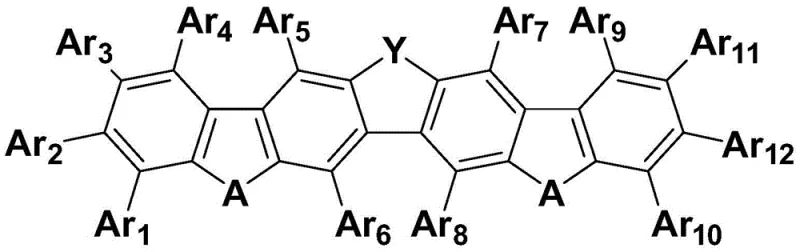 This structural arrangement enhances the thermal stability of the material, which is crucial for withstanding the operational heat generated in electroluminescent devices during extended use. The macrocyclic units act as efficient carriers for charge transport, ensuring balanced injection of electrons and holes into the light-emitting layer for optimal performance. Such balance is essential for maximizing the fluorescence quantum efficiency and achieving high luminous efficiency in the final device architecture. The versatility of the structure allows for modifications at various substitution positions, enabling fine-tuning of the emission color and energy levels to meet specific application requirements. This adaptability makes the material suitable for red, green, and blue tricolor fluorescent applications required for full-color displays in consumer electronics.
Impurity control is managed through the precise synthesis of the macrocyclic core and the subsequent coupling reactions to ensure high purity.  The use of specific catalysts and reaction conditions ensures high selectivity, minimizing the formation of side products that could quench luminescence and reduce efficiency. Purification steps involving column chromatography effectively remove residual catalysts and unreacted starting materials, leading to high-purity final products suitable for commercial use. The stability of the macrocyclic unit prevents degradation during the device operation, maintaining consistent color coordinates and brightness over time for reliable performance. This rigorous control over chemical structure and purity directly translates to improved device longevity and performance reliability in commercial applications worldwide. The resulting materials exhibit superior electroluminescent properties compared to similar molecules lacking the macrocyclic architecture and design features.
How to Synthesize FBTO-EHNa Efficiently
The synthesis of the target compound involves a conjugate coupling reaction between a dibromo seven-membered fused ring compound and aryl boric acid esters to form the final product. This process is typically conducted in an inert gas environment to prevent oxidation and ensure high yield of the desired product without contamination. The reaction conditions are optimized to facilitate the formation of the macrocyclic structure while maintaining the integrity of the aromatic units throughout the process. Detailed standardized synthesis steps are provided in the guide below to ensure reproducibility and safety during laboratory or pilot scale operations for manufacturers.  Adhering to these protocols allows manufacturers to achieve consistent quality and performance metrics required for commercial OLED production and supply.
- Dissolve alkylated dibromo seven-membered fused ring compound in tetrahydrofuran under inert gas.
- Add aryl boric acid ester and organic alkaline water solution, then stir the mixture thoroughly.
- Add palladium catalyst, raise temperature to reflux, and react for 5-24 hours before purification.
Commercial Advantages for Procurement and Supply Chain Teams
This technology offers substantial benefits for procurement and supply chain management by simplifying the manufacturing process and reducing dependency on complex equipment and specialized facilities. The shift to solution processing eliminates the need for expensive vacuum evaporation systems, leading to significant capital expenditure savings for production facilities and operators. Raw materials used in the synthesis are generally more accessible and stable, reducing the risk of supply chain disruptions caused by specialized reagent shortages or logistics issues. The improved yield and reduced waste associated with the new method contribute to a more sustainable and cost-effective production model overall for the industry. These factors combine to create a more resilient supply chain capable of meeting the growing demand for high-quality OLED materials globally without compromise.
- Cost Reduction in Manufacturing: The elimination of vacuum evaporation steps removes the need for high-energy consumption equipment and reduces material loss during deposition significantly. By utilizing solution processing techniques, manufacturers can achieve higher material utilization rates, directly lowering the cost per unit of the final display panel for clients. The simplified purification process further reduces operational costs associated with solvent usage and waste disposal management in the facility. These cumulative effects result in a more economically viable production process that enhances competitiveness in the global display market substantially.
- Enhanced Supply Chain Reliability: The use of stable and commercially available starting materials ensures a consistent supply of raw inputs for continuous production without interruption. The robustness of the synthesis method reduces the likelihood of batch failures, ensuring reliable delivery schedules to downstream device manufacturers and partners. This stability allows for better inventory planning and reduces the need for safety stock, optimizing working capital for the supply chain effectively. Consequently, partners can rely on a steady flow of high-quality materials to support their own production timelines without unexpected delays or issues.
- Scalability and Environmental Compliance: The solution-processable nature of the materials facilitates easy scale-up from laboratory to industrial production volumes without significant process re-engineering or investment. Reduced solvent waste and lower energy consumption align with increasingly strict environmental regulations, minimizing compliance risks for manufacturing partners and stakeholders. The ability to use printing techniques for deposition opens up new possibilities for large-area manufacturing that are not feasible with traditional evaporation methods currently. This scalability ensures that the technology can grow with market demand while maintaining a low environmental footprint and operational efficiency.
Frequently Asked Questions (FAQ)
The following questions address common technical and commercial inquiries regarding the macrocyclic luminescent materials and their applications in various industries. These answers are derived from the patent data to provide clarity on performance, synthesis, and integration into existing manufacturing workflows for clients. Understanding these aspects helps stakeholders make informed decisions about adopting this technology for their specific product lines and strategic goals. The information covers key areas of interest for R&D, procurement, and supply chain management teams evaluating the material for potential use.
Q: What are the advantages of macrocyclic units in OLED materials?
A: Macrocyclic units provide high thermal stability and excellent electron and hole transport properties, enhancing device longevity and efficiency.
Q: Is this material suitable for solution processing?
A: Yes, the small molecule design allows for solution processing techniques like spin coating, reducing waste compared to evaporation.
Q: What applications can these luminescent materials support?
A: They are applicable in organic electroluminescent displays and cell imaging due to high fluorescence emission efficiency.
Partnering with NINGBO INNO PHARMCHEM: Your Reliable FBTO-EHNa Supplier
NINGBO INNO PHARMCHEM stands ready to support your transition to advanced OLED materials with our extensive experience scaling diverse pathways from 100 kgs to 100 MT/annual commercial production. Our technical team possesses the expertise to optimize the synthesis of complex macrocyclic compounds, ensuring stringent purity specifications are met for every batch delivered. We operate rigorous QC labs that validate the thermal and optical properties of the materials, guaranteeing performance consistency for your display applications and devices. Our commitment to quality and scalability makes us an ideal partner for long-term supply agreements in the competitive electronic materials sector globally.
We invite you to contact our technical procurement team to request specific COA data and route feasibility assessments for your projects and needs. Our experts can provide a Customized Cost-Saving Analysis to demonstrate the economic benefits of switching to our solution-processable materials for your production. By collaborating with us, you can accelerate your product development cycle and secure a reliable source of high-performance luminescent small molecules for your supply. Let us help you engineer the next generation of display technology with confidence and efficiency for your business growth.
Engineering Bottleneck?
Can't scale up this synthesis? Upload your target structure or CAS, and our CDMO team will evaluate the industrial feasibility within 24 hours. Request Evaluation →