
Advancing Organic Electronics with High-Performance S-DBTTA Quaterthiophene Derivatives
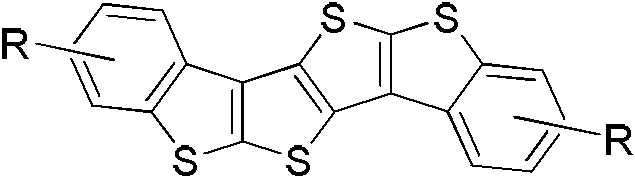
The rapid evolution of organic electronics has necessitated the development of robust semiconductor materials capable of sustaining high performance under ambient conditions. Patent CN102659810A introduces a groundbreaking quaterthiophene derivative, specifically [1]benzothieno[3''.2'':4',5']thieno[2'.3':4,5]thieno[2,3-b][1]benzothiophene, commonly referred to as S-DBTTA. This material represents a significant leap forward in the design of organic field-effect transistors (OFETs), addressing critical challenges related to stability and charge transport efficiency. The patent outlines a novel synthetic pathway that leverages the inherent stability of sulfur-containing heterocycles to create a rigid, planar molecular architecture. For R&D directors and procurement specialists in the electronic chemical sector, this development offers a viable route to high-mobility semiconductors that do not compromise on environmental stability. The integration of such materials into flexible displays and smart cards is no longer a theoretical possibility but a tangible manufacturing reality, driven by the precise chemical engineering detailed in this intellectual property.
The Limitations of Conventional Methods vs. The Novel Approach
The Limitations of Conventional Methods
Traditional synthesis routes for high-performance organic semiconductors often suffer from excessive complexity, relying on multi-step sequences that involve expensive catalysts and harsh reaction conditions. Many conventional acene-based materials are prone to rapid oxidation upon exposure to air, necessitating costly encapsulation processes that inflate the final device cost. Furthermore, the solubility issues associated with large conjugated systems often limit the ability to process these materials using solution-based techniques, forcing manufacturers to rely on vacuum deposition which is less scalable. The lack of structural rigidity in some linear thiophene oligomers can also lead to poor intermolecular packing, resulting in suboptimal charge carrier mobility. These factors collectively create a bottleneck in the commercial scale-up of complex organic semiconductors, making it difficult for supply chain heads to guarantee consistent quality and delivery timelines for large-volume production runs.
The Novel Approach
The methodology presented in the patent circumvents these historical limitations by employing a streamlined synthetic strategy centered on the thieno[3,2-b]thiophene core. By utilizing commercially available and cost-effective starting materials, the process drastically reduces the raw material expenditure associated with precursor synthesis. The introduction of methylthio groups serves a dual purpose: it enhances solubility during the intermediate stages and acts as a leaving group for the final cyclization, thereby eliminating the need for additional functionalization steps. This approach ensures a higher overall yield and purity, which is critical for achieving the stringent electronic specifications required in OFET applications. For a reliable electronic chemical supplier, this route offers a distinct competitive advantage by simplifying the manufacturing workflow while simultaneously enhancing the thermal and oxidative stability of the final product, thus facilitating cost reduction in display & optoelectronic materials manufacturing.
Mechanistic Insights into Suzuki Coupling and Oxidative Cyclization
The core of this synthetic innovation lies in the precise construction of the conjugated backbone through a palladium-catalyzed Suzuki coupling reaction. The process begins with the lithiation of thieno[3,2-b]thiophene, followed by quenching with dimethyl disulfide to install methylthio groups at the 2 and 5 positions. Subsequent bromination activates the 3 and 6 positions for cross-coupling with substituted phenylboronic acids. This step is crucial as it allows for the modular introduction of various aryl substituents, enabling the fine-tuning of electronic properties without altering the core synthetic protocol. The use of standard palladium catalysts such as tetrakis(triphenylphosphine)palladium ensures high selectivity and conversion rates, minimizing the formation of homocoupling byproducts that could act as charge traps in the final device. The resulting intermediate, a 2,5-dimethylthio-3,6-diarylthieno[3,2-b]thiophene derivative, possesses the necessary structural pre-organization for the final ring-closing step.
![Chemical structure of the 2,5-dimethylthio-3,6-diarylthieno[3,2-b]thiophene intermediate (Formula IV) prepared via Suzuki coupling](/insights/img/s-dbttt-semiconductor-material-supplier-20260314231601-01.png)
Following the Suzuki coupling, the synthesis proceeds through a sophisticated oxidative cyclization mechanism to form the final quaterthiophene structure. The methylthio groups are oxidized to sulfoxides using hydrogen peroxide or peracids, which then undergo an acid-catalyzed intramolecular cyclization in the presence of trifluoromethanesulfonic acid. This transformation effectively fuses the phenyl rings to the central thiophene core, creating the rigid [1]benzothieno[3''.2'':4',5']thieno[2'.3':4,5]thieno[2,3-b][1]benzothiophene skeleton. This rigidification is paramount for enhancing intermolecular π-π stacking interactions, which directly correlates to the observed high carrier mobility of 0.05 cm²V⁻¹s⁻¹. The final structure exhibits a deep HOMO level of -5.7 eV, providing exceptional resistance to ambient oxidation and ensuring long-term device stability. This mechanistic understanding allows for the commercial scale-up of complex quaterthiophene derivatives with predictable performance characteristics.
How to Synthesize S-DBTTA Efficiently
The synthesis of this high-purity organic semiconductor is designed to be robust and scalable, utilizing standard laboratory equipment that can be easily adapted for industrial reactors. The process involves three main stages: the preparation of the dimethylthio precursor, the Suzuki coupling to extend the conjugation, and the final oxidative cyclization to lock the planar structure. Each step has been optimized to maximize yield and minimize impurity formation, ensuring that the final product meets the rigorous purity specifications required for electronic applications. Detailed standard operating procedures regarding stoichiometry, temperature control, and workup protocols are essential for reproducing the high mobility and on-off ratios reported in the patent literature. For technical teams looking to implement this chemistry, the following guide outlines the critical operational parameters.
- Perform lithiation of thieno[3,2-b]thiophene with n-butyllithium followed by reaction with dimethyl disulfide to form the dimethylthio intermediate.
- Execute bromination using liquid bromine to generate the dibromo precursor, followed by Suzuki coupling with substituted phenylboronic acids.
- Conduct oxidative cyclization using hydrogen peroxide and trifluoromethanesulfonic acid to finalize the rigid quaterthiophene core structure.
Commercial Advantages for Procurement and Supply Chain Teams
From a procurement perspective, the synthetic route described in the patent offers substantial benefits regarding cost efficiency and supply chain resilience. The reliance on commercially available starting materials such as thieno[3,2-b]thiophene and phenylboronic acids mitigates the risk of raw material shortages that often plague specialized chemical manufacturing. Furthermore, the use of well-established reaction types like Suzuki coupling means that the process can be executed by contract manufacturing organizations with existing infrastructure, reducing the need for capital investment in specialized equipment. This accessibility translates directly into reduced lead time for high-purity organic semiconductors, allowing manufacturers to respond more agilely to market demands. The elimination of complex purification steps typically required for sensitive acenes further streamlines the production timeline, enhancing overall throughput.
- Cost Reduction in Manufacturing: The synthetic pathway eliminates the need for expensive transition metal catalysts often required in direct C-H activation methods, relying instead on more economical palladium systems that can be recovered and recycled. By avoiding the use of exotic reagents and harsh conditions that require specialized containment, the operational expenditure associated with safety and waste management is significantly lowered. The high yield of the cyclization step ensures that raw material utilization is maximized, reducing the cost per gram of the final active semiconductor material. These factors collectively contribute to a more favorable cost structure for the production of organic electronic components.
- Enhanced Supply Chain Reliability: Since the key building blocks are commodity chemicals with multiple global suppliers, the risk of supply disruption is minimized compared to routes relying on proprietary intermediates. The robustness of the reaction conditions allows for flexible manufacturing scheduling, as the process is not overly sensitive to minor fluctuations in temperature or pressure. This stability ensures consistent batch-to-batch quality, which is critical for maintaining the performance standards of downstream electronic devices. Procurement managers can therefore negotiate more favorable terms and secure long-term supply agreements with greater confidence in the continuity of production.
- Scalability and Environmental Compliance: The process generates minimal hazardous waste compared to traditional methods that might involve stoichiometric amounts of toxic oxidants or heavy metals. The solvents used, such as tetrahydrofuran and dioxane, are standard in the industry and can be efficiently recovered and reused, aligning with modern green chemistry principles. The scalability of the Suzuki coupling and oxidative cyclization steps has been demonstrated to be effective from gram to kilogram scales, facilitating a smooth transition from R&D to commercial production. This environmental and operational efficiency makes the technology highly attractive for large-scale manufacturing facilities aiming to reduce their carbon footprint.
Frequently Asked Questions (FAQ)
The following questions address common technical and commercial inquiries regarding the production and application of this quaterthiophene derivative. These answers are derived directly from the experimental data and beneficial effects described in the patent documentation, providing clarity on performance metrics and process capabilities. Understanding these details is essential for stakeholders evaluating the feasibility of integrating this material into their product lines. The information provided here serves as a foundational reference for further technical discussions and feasibility assessments.
Q: What are the key electronic properties of the S-DBTTA derivative?
A: The S-DBTTA derivative exhibits a HOMO energy level of approximately -5.7 eV and a large energy gap, providing excellent oxidation stability and air stability for OFET devices.
Q: How does the synthetic route impact production scalability?
A: The route utilizes commercially available raw materials and standard reactions like Suzuki coupling, significantly simplifying the process and enhancing scalability for industrial production.
Q: What performance metrics can be expected in OFET applications?
A: Devices utilizing this material demonstrate a carrier mobility of up to 0.05 cm²V⁻¹s⁻¹ and an on-off ratio greater than 10⁶, indicating high potential for flexible electronics.
Partnering with NINGBO INNO PHARMCHEM: Your Reliable S-DBTTA Supplier
NINGBO INNO PHARMCHEM stands at the forefront of fine chemical manufacturing, possessing the technical expertise to scale diverse pathways from 100 kgs to 100 MT/annual commercial production. Our commitment to quality is underscored by our stringent purity specifications and rigorous QC labs, ensuring that every batch of S-DBTTA meets the exacting standards required for high-performance OFET devices. We understand the critical nature of supply chain continuity in the electronics sector and have optimized our processes to deliver consistent quality without compromise. Our team of experienced chemists is ready to assist in adapting this patented route to meet specific volume and purity requirements, ensuring a seamless integration into your manufacturing workflow.
We invite you to engage with our technical procurement team to discuss how we can support your specific material needs. By requesting a Customized Cost-Saving Analysis, you can gain deeper insights into how our manufacturing capabilities can optimize your bill of materials. We encourage potential partners to contact us for specific COA data and route feasibility assessments to verify the compatibility of our S-DBTTA derivatives with your existing device architectures. Let us collaborate to drive the next generation of organic electronics forward with reliable, high-quality semiconductor materials.
Engineering Bottleneck?
Can't scale up this synthesis? Upload your target structure or CAS, and our CDMO team will evaluate the industrial feasibility within 24 hours. Request Evaluation →