
Advanced BTC-Mediated Cyclization for High-Purity N-formyl-4-chloroquinoline Derivatives Manufacturing
The pharmaceutical industry continuously seeks robust synthetic routes for critical heterocyclic intermediates that balance efficiency with environmental compliance. Patent CN101357902B introduces a significant advancement in the preparation of N-formyl-2H-4-chloroquinoline derivatives, which serve as pivotal building blocks for various bioactive quinoline drugs. This technology replaces traditional phosphorus-based chlorinating agents with bis(trichloromethyl) carbonate (BTC), also known as triphosgene, in conjunction with N,N-dimethylformamide (DMF). By generating the Vilsmeier reagent in situ under controlled low-temperature conditions, this method achieves superior reaction yields while drastically reducing the environmental burden associated with phosphorus waste disposal. For R&D directors and procurement specialists, understanding this shift from hazardous liquid reagents to safer solid alternatives is crucial for optimizing supply chain resilience and regulatory adherence in API manufacturing.
The Limitations of Conventional Methods vs. The Novel Approach
The Limitations of Conventional Methods
Historically, the synthesis of N-formyl-4-chloroquinoline derivatives has relied heavily on the use of phosphorus oxychloride (POCl3) combined with DMF to generate the necessary Vilsmeier-Haack reagent. While chemically effective, this conventional approach presents severe drawbacks for modern industrial applications, particularly concerning environmental safety and operational complexity. POCl3 is a corrosive liquid that reacts violently with water, releasing toxic hydrogen chloride and phosphoric acid fumes, which necessitates specialized corrosion-resistant equipment and rigorous safety protocols. Furthermore, the resulting wastewater contains high levels of phosphorus, contributing to eutrophication in natural water bodies and subjecting manufacturers to increasingly stringent environmental discharge regulations. The high reactivity of the POCl3-derived Vilsmeier reagent often leads to uncontrolled side reactions, resulting in inconsistent yields and difficult purification processes that increase the overall cost of goods sold.
The Novel Approach
The innovative methodology described in the patent data utilizes bis(trichloromethyl) carbonate (BTC) as a solid, stable, and safer alternative to POCl3 for generating the Vilsmeier reagent. This solid reagent allows for precise dosing and eliminates the handling risks associated with corrosive liquids, significantly enhancing workplace safety. The reaction proceeds through a controlled formation of the iminium salt intermediate at low temperatures between 0°C and 5°C, ensuring high selectivity before the cyclization step. By shifting to this BTC-mediated pathway, manufacturers can achieve reaction yields that are consistently high across a broad range of substituted substrates, including those with electron-withdrawing or electron-donating groups. This approach not only simplifies the downstream purification process but also aligns with green chemistry principles by removing phosphorus from the waste stream entirely, thereby reducing the long-term liability and cost associated with environmental compliance.
Mechanistic Insights into BTC-Mediated Vilsmeier-Haack Cyclization
The core of this synthetic transformation lies in the generation of a highly electrophilic Vilsmeier reagent from the reaction between BTC and DMF. Unlike the POCl3 system, which generates the reagent rapidly and exothermically, the BTC system allows for a more controlled release of the chloroiminium species. Initially, BTC reacts with DMF at 0-5°C to form the active chloroiminium salt and release carbon dioxide and chloride ions. This electrophile then attacks the electron-rich amino group of the substituted o-aminochalcone substrate. The subsequent intramolecular cyclization involves the nucleophilic attack of the enolizable ketone moiety onto the activated iminium carbon, followed by dehydration and aromatization to form the quinoline ring system. The presence of the chlorine atom at the 4-position is introduced directly during this cyclization process, driven by the chloride ions released from the BTC decomposition.
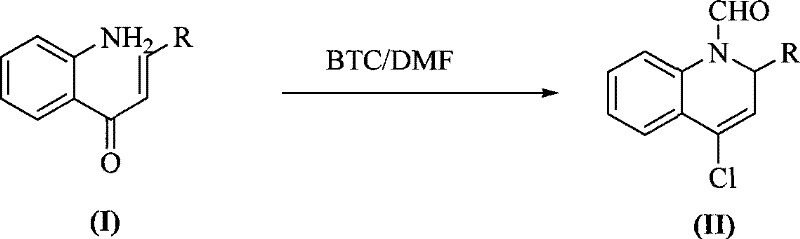
Controlling the impurity profile is critical for pharmaceutical intermediates, and this mechanism offers distinct advantages in that regard. The mild initial temperature of 0-5°C prevents the premature decomposition of the Vilsmeier reagent and minimizes polymerization or tar formation, which are common issues with harsher phosphorus reagents. Furthermore, the use of aromatic solvents like toluene or halogenated hydrocarbons provides a homogeneous reaction medium that facilitates heat transfer and mass transport during the exothermic cyclization phase. The final heating step to 80-100°C ensures complete conversion of the intermediate dihydroquinoline species into the fully aromatic N-formyl-4-chloroquinoline product. This precise thermal control results in a cleaner crude product, reducing the burden on chromatographic purification steps and ensuring that the final material meets the stringent purity specifications required for downstream drug synthesis.
How to Synthesize N-formyl-4-chloroquinoline Efficiently
Implementing this synthesis route requires careful attention to stoichiometry and thermal management to maximize efficiency and safety. The process begins with the preparation of the Vilsmeier reagent by dissolving BTC in a suitable organic solvent such as toluene and adding it dropwise to DMF maintained at 0-5°C. Once the reagent is formed, the substituted o-aminochalcone is introduced slowly to maintain the low temperature, preventing runaway exotherms. After an initial stirring period, the reaction mixture is heated to promote cyclization. The detailed standardized synthesis steps, including specific molar ratios and workup procedures validated by the patent examples, are outlined below to ensure reproducibility at scale.
- Prepare the Vilsmeier reagent by reacting bis(trichloromethyl) carbonate with DMF in an organic solvent like toluene at 0-5°C.
- Add the substituted o-aminochalcone substrate to the reagent mixture at 0-5°C and maintain this temperature for 0.5 to 2 hours.
- Heat the reaction mixture to 80-100°C for 1 to 15 hours to complete the cyclization, followed by aqueous workup and purification.
Commercial Advantages for Procurement and Supply Chain Teams
For procurement managers and supply chain heads, the transition to this BTC-based methodology represents a strategic opportunity to optimize both cost structures and operational reliability. The elimination of phosphorus-containing reagents fundamentally alters the waste management profile of the manufacturing process, leading to substantial cost savings in effluent treatment. Without the need for complex phosphorus removal systems, facilities can reduce their environmental compliance overhead and minimize the risk of regulatory penalties. Additionally, BTC is a widely available commodity chemical with a stable supply chain, unlike some specialized phosphorus reagents that may be subject to geopolitical restrictions or transportation hazards. This stability ensures consistent raw material availability, which is critical for maintaining uninterrupted production schedules for high-value pharmaceutical intermediates.
- Cost Reduction in Manufacturing: The switch to BTC eliminates the need for expensive corrosion-resistant reactors required for POCl3, allowing for the use of standard glass-lined or stainless steel equipment. This capital expenditure saving is compounded by the reduced cost of waste disposal, as the absence of phosphorus simplifies wastewater treatment protocols. Furthermore, the higher reaction yields observed with this method mean that less raw material is wasted per kilogram of product, directly improving the material cost efficiency. The simplified purification process also reduces solvent consumption and labor hours associated with chromatography, contributing to a lower overall cost of production without compromising quality.
- Enhanced Supply Chain Reliability: Utilizing solid BTC instead of liquid POCl3 significantly improves logistics and storage safety. Solid reagents are easier to transport and store with lower risk of leakage or accidental exposure, reducing insurance premiums and safety training costs. The robustness of the reaction across various substituted substrates means that a single manufacturing line can be adapted to produce a wide library of quinoline derivatives, enhancing flexibility in responding to market demand. This versatility reduces the need for dedicated campaign runs for different analogs, thereby optimizing asset utilization and shortening lead times for custom synthesis projects.
- Scalability and Environmental Compliance: The mild reaction conditions and the use of common solvents like toluene make this process highly scalable from pilot plant to commercial tonnage production. The exothermic nature of the reaction is manageable with standard cooling systems, reducing the engineering complexity required for scale-up. From an environmental perspective, the process aligns with global trends towards greener chemistry, making the final product more attractive to multinational pharmaceutical companies with strict sustainability mandates. This alignment facilitates smoother regulatory approvals and strengthens the supplier's position as a responsible partner in the global pharmaceutical supply chain.
Frequently Asked Questions (FAQ)
The following questions address common technical and commercial inquiries regarding the implementation of this BTC-mediated synthesis route. These answers are derived directly from the experimental data and beneficial effects reported in the patent literature, providing a factual basis for decision-making. Understanding these nuances helps stakeholders evaluate the feasibility of adopting this technology for their specific intermediate manufacturing needs.
Q: Why is BTC preferred over POCl3 for synthesizing quinoline derivatives?
A: BTC eliminates phosphorus pollution associated with POCl3, simplifies waste treatment, and often provides higher yields and broader substrate tolerance in Vilsmeier-Haack reactions.
Q: What are the optimal reaction conditions for this cyclization?
A: The optimal conditions involve forming the Vilsmeier reagent at 0-5°C, adding the substrate at the same temperature, and then heating to 90°C for approximately 3 hours in toluene.
Q: Can this method be scaled for industrial production?
A: Yes, the use of solid BTC and common solvents like toluene, combined with mild temperature profiles, makes this process highly suitable for commercial scale-up with improved safety profiles.
Partnering with NINGBO INNO PHARMCHEM: Your Reliable N-formyl-4-chloroquinoline Supplier
At NINGBO INNO PHARMCHEM, we recognize the critical importance of employing advanced, environmentally sustainable synthetic routes for high-value pharmaceutical intermediates. Our technical team has extensively evaluated the BTC-mediated cyclization technology and possesses the expertise to implement it effectively across diverse substrate scopes. We have extensive experience scaling diverse pathways from 100 kgs to 100 MT/annual commercial production, ensuring that the transition from lab-scale optimization to industrial manufacturing is seamless. Our facility is equipped with rigorous QC labs and adheres to stringent purity specifications, guaranteeing that every batch of N-formyl-4-chloroquinoline derivative meets the exacting standards required for API synthesis.
We invite potential partners to engage with our technical procurement team to discuss how this innovative synthesis route can benefit your specific project requirements. By leveraging our capabilities, you can access a Customized Cost-Saving Analysis that quantifies the potential efficiencies of switching to this greener methodology. We encourage you to contact us to request specific COA data and route feasibility assessments, allowing you to make informed decisions that enhance both the economic and environmental performance of your supply chain.