
Advanced Catalytic Carbonylation for Scalable Production of High-Purity Benzothiophene Derivatives
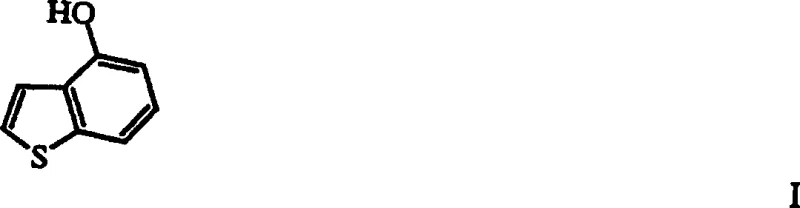
The pharmaceutical industry continuously seeks robust and scalable pathways for constructing complex heterocyclic scaffolds essential for modern therapeutics. Patent CN1123570C introduces a transformative methodology for the preparation of 4-hydroxybenzothiophene, a critical building block for antidiabetic agents such as thiazolidinedione derivatives. This intellectual property discloses a novel process comprising the ring carbonylation of specific allyl acetate derivatives followed by a saponification step, marking a significant departure from traditional multi-step syntheses. By leveraging palladium-catalyzed carbonylation, this technology enables the direct formation of the benzothiophene core under relatively mild conditions, addressing long-standing challenges in process efficiency and impurity control. For R&D directors and process chemists, this represents a viable strategy to streamline the manufacturing of high-value pharmaceutical intermediates while maintaining stringent quality standards required for active pharmaceutical ingredient (API) production.
The Limitations of Conventional Methods vs. The Novel Approach
The Limitations of Conventional Methods
Historically, the synthesis of 4-hydroxybenzothiophene has been fraught with operational complexities and inefficiencies that hinder large-scale commercialization. Prior art, such as the methods described by Iwasaki et al., typically necessitates a minimum of five distinct synthetic steps to construct the desired bicyclic system. These conventional routes often rely on harsh reaction conditions that demand specialized equipment and rigorous safety protocols, thereby inflating capital expenditure and operational costs. Furthermore, traditional methodologies frequently require high loadings of expensive catalysts to drive reactions to completion, which not only impacts the overall cost of goods but also complicates downstream purification processes due to heavy metal residue concerns. The cumulative effect of these factors results in a prolonged production timeline and reduced overall throughput, making it difficult for supply chain managers to guarantee consistent delivery schedules for critical drug intermediates in a competitive market environment.
The Novel Approach
In stark contrast to the cumbersome legacy processes, the methodology outlined in CN1123570C offers a streamlined and highly efficient alternative centered on a direct ring carbonylation strategy. This innovative approach utilizes a palladium-catalyzed system to cyclize readily available precursors, specifically compounds of Formula II, into the target 4-hydroxybenzothiophene structure with remarkable precision. A standout feature of this technology is its tolerance for crude starting materials; the patent explicitly demonstrates that the substrate, such as 1-(2-thienyl)allyl acetate, can be employed directly without the need for energy-intensive purification steps like distillation. This capability drastically reduces processing time and solvent consumption, aligning perfectly with green chemistry principles. By condensing the synthetic sequence and operating under milder thermal and pressure conditions, this novel route provides a compelling solution for cost reduction in pharmaceutical intermediate manufacturing while ensuring high purity profiles.
Mechanistic Insights into Pd-Catalyzed Ring Carbonylation
The core of this technological advancement lies in the sophisticated palladium-catalyzed carbonylation mechanism that facilitates the construction of the benzothiophene ring system. The reaction proceeds through the coordination of the allyl substrate to the palladium center, followed by the insertion of carbon monoxide to form an acyl-palladium intermediate. This key step is critically dependent on the selection of appropriate ligands, with the patent highlighting the efficacy of phosphine derivatives such as triphenylphosphine and bulky aryl phosphines like P(3,5-tBu-Ph)3. These ligands modulate the electronic and steric environment around the metal center, optimizing the rate of oxidative addition and reductive elimination cycles. The process is conducted in aromatic solvents like toluene at temperatures ranging from 60°C to 120°C, ensuring sufficient kinetic energy for the reaction while maintaining thermal stability of the sensitive intermediates involved in the catalytic cycle.
Impurity control is another pivotal aspect of this mechanism, particularly given the allowance for crude substrate usage. The robustness of the catalytic system ensures that minor impurities present in the non-purified starting material do not poison the catalyst or lead to significant side reactions. Following the carbonylation, the resulting ester intermediate undergoes saponification under basic conditions, typically using aqueous sodium hydroxide or sodium methylate in methanol. This hydrolysis step cleaves the protecting group to reveal the free phenolic hydroxyl moiety, yielding the final 4-hydroxybenzothiophene product. The ability to tolerate crude inputs suggests that the catalytic cycle is highly selective for the desired transformation, minimizing the formation of regioisomers or over-carbonylated byproducts that often plague complex heterocycle synthesis.
How to Synthesize 4-Hydroxybenzothiophene Efficiently
Implementing this synthesis route requires careful attention to catalyst preparation and reaction parameters to maximize yield and purity. The process begins with the generation of the substrate via Grignard addition to thiophene carboxaldehyde, followed by acylation, which can be telescoped to avoid isolation. The subsequent carbonylation step demands precise control over carbon monoxide pressure, ideally maintained between 35 to 60 bar, to drive the equilibrium towards the cyclic product. Detailed standardized operating procedures regarding catalyst activation, ligand ratios, and workup protocols are essential for reproducible results on a commercial scale. The following guide outlines the critical operational phases derived from the patent examples to assist technical teams in process validation.
- Prepare the substrate (Formula II) by reacting thiophene carboxaldehyde with vinyl-metal reagents and acid derivatives, optionally using the crude product without distillation.
- Conduct ring carbonylation using a palladium catalyst (e.g., Pd(OAc)2), phosphine ligands, and a base in an aromatic solvent under carbon monoxide pressure (20-70 bar) at 60-120°C.
- Perform saponification of the resulting ester intermediate using aqueous sodium hydroxide or sodium methylate to yield the final 4-hydroxybenzothiophene product.
Commercial Advantages for Procurement and Supply Chain Teams
For procurement managers and supply chain heads, the adoption of this patented methodology translates into tangible strategic benefits that extend beyond mere technical feasibility. The primary advantage stems from the drastic simplification of the manufacturing workflow, which directly correlates to reduced operational expenditures and enhanced margin potential. By eliminating the need for intermediate purification steps and reducing the total number of synthetic operations, manufacturers can significantly lower solvent usage, energy consumption, and labor hours. This leaner process architecture not only accelerates the time-to-market for new drug candidates but also fortifies the supply chain against disruptions by reducing dependency on complex, multi-vendor raw material streams. Consequently, organizations can achieve substantial cost savings while maintaining a agile and responsive production capability.
- Cost Reduction in Manufacturing: The economic impact of this process is driven by the elimination of expensive purification stages and the efficient use of catalysts. Traditional methods often incur high costs due to the loss of material during multiple isolation steps and the requirement for excessive catalyst loading to overcome inefficiencies. In contrast, this novel route allows for the use of crude substrates, effectively bypassing the cost associated with distillation and chromatography of intermediates. Furthermore, the high turnover number of the palladium catalyst means that less precious metal is required per kilogram of product, directly lowering the raw material cost basis. These factors combine to create a highly cost-competitive manufacturing profile that supports aggressive pricing strategies in the generic and specialty chemical markets.
- Enhanced Supply Chain Reliability: Supply continuity is paramount for pharmaceutical production, and this technology enhances reliability by simplifying the raw material landscape. The starting materials, such as thiophene carboxaldehyde and vinyl magnesium halides, are commodity chemicals available from multiple global suppliers, reducing the risk of single-source bottlenecks. The robustness of the reaction conditions means that production is less susceptible to minor fluctuations in raw material quality or environmental variables, ensuring consistent batch-to-batch output. This stability allows supply chain planners to forecast inventory levels with greater accuracy and reduce the need for excessive safety stock, thereby freeing up working capital and improving overall logistics efficiency.
- Scalability and Environmental Compliance: Scaling chemical processes often introduces unforeseen challenges, but this carbonylation route is designed with scalability in mind. The reaction conditions, involving moderate temperatures and pressures achievable in standard industrial autoclaves, facilitate a smooth transition from pilot plant to full commercial production without the need for exotic equipment. Additionally, the reduction in solvent volume and the avoidance of harsh reagents contribute to a smaller environmental footprint, aiding in compliance with increasingly stringent global environmental regulations. The ability to manage waste streams more effectively and reduce the generation of hazardous byproducts positions this method as a sustainable choice for long-term manufacturing partnerships.
Frequently Asked Questions (FAQ)
The following questions address common technical and commercial inquiries regarding the implementation of this benzothiophene synthesis technology. These insights are derived directly from the experimental data and claims presented in the patent documentation, providing a factual basis for decision-making. Understanding these nuances is crucial for technical teams evaluating the feasibility of integrating this route into existing production lines or for procurement specialists assessing supplier capabilities. The answers reflect the specific advantages and operational parameters defined within the intellectual property.
Q: Can crude starting materials be used in this benzothiophene synthesis?
A: Yes, the patent explicitly demonstrates that the substrate (Formula II), such as 1-(2-thienyl)allyl acetate, can be used in 'crude' form without prior purification like distillation, significantly simplifying the workflow.
Q: What are the optimal reaction conditions for the carbonylation step?
A: The process operates effectively at temperatures between 60°C and 120°C (preferably around 90°C) under a carbon monoxide pressure of 20 to 70 bar, using palladium catalysts and phosphine ligands.
Q: How does this method compare to conventional synthesis routes?
A: Unlike conventional methods requiring at least five steps and severe conditions with high catalyst loading, this novel approach achieves the target in fewer steps under milder conditions with high yields.
Partnering with NINGBO INNO PHARMCHEM: Your Reliable 4-Hydroxybenzothiophene Supplier
The technical potential of this palladium-catalyzed carbonylation route underscores the importance of partnering with a CDMO that possesses deep expertise in complex organic synthesis. NINGBO INNO PHARMCHEM stands at the forefront of this capability, offering extensive experience scaling diverse pathways from 100 kgs to 100 MT/annual commercial production. Our facility is equipped with state-of-the-art high-pressure reactors and rigorous QC labs capable of meeting stringent purity specifications required for pharmaceutical intermediates. We understand the critical nature of supply chain continuity and are committed to delivering high-quality 4-hydroxybenzothiophene derivatives that adhere to the highest industry standards, ensuring your drug development programs proceed without interruption.
We invite you to engage with our technical procurement team to discuss how we can tailor this synthesis route to your specific volume and quality requirements. By leveraging our process optimization capabilities, we can provide a Customized Cost-Saving Analysis that quantifies the economic benefits of switching to this advanced methodology. We encourage potential partners to request specific COA data and route feasibility assessments to validate the performance of our materials against your internal benchmarks. Let us collaborate to engineer a supply solution that drives efficiency and value for your organization.
Engineering Bottleneck?
Can't scale up this synthesis? Upload your target structure or CAS, and our CDMO team will evaluate the industrial feasibility within 24 hours. Request Evaluation →