
Industrial Scale-Up of Caspofungin Acetate Purification via Macroporous Resin Adsorption
Industrial Scale-Up of Caspofungin Acetate Purification via Macroporous Resin Adsorption
The pharmaceutical industry continuously seeks robust, scalable, and cost-effective methodologies for the isolation of complex peptide-based antifungal agents. Patent CN102153616A introduces a transformative separation and purification strategy specifically designed for cyclohexyl peptide compounds, with a primary focus on Caspofungin and its pharmaceutically acceptable salts. This technology addresses the critical bottlenecks associated with traditional preparative chromatography by leveraging the selective adsorption properties of macroporous resins. By shifting from high-pressure liquid chromatography (HPLC) systems to atmospheric pressure resin columns, manufacturers can achieve significant operational simplifications while maintaining stringent purity standards required for injectable antifungal therapies. The structural complexity of Caspofungin, characterized by a cyclic hexapeptide nucleus linked to a fatty acid side chain, demands precise control over separation conditions to prevent degradation and ensure consistent salt formation.
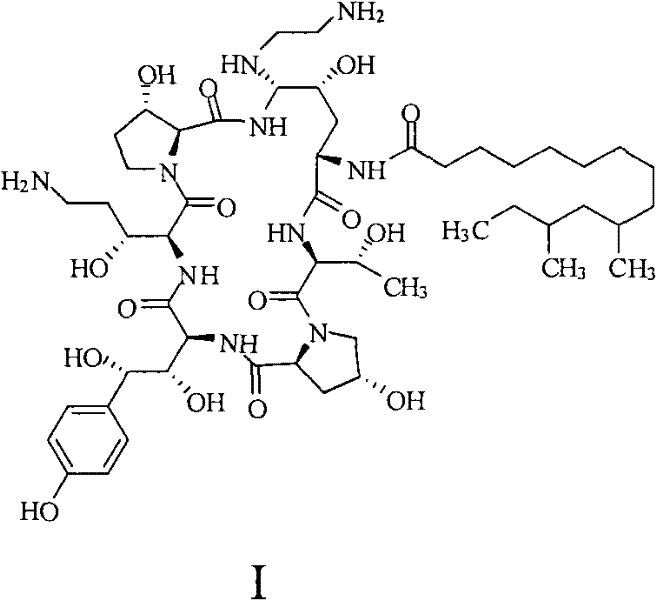
This innovation is particularly relevant for reliable pharmaceutical intermediates supplier networks aiming to optimize the downstream processing of echinocandin antifungals. The patent details a method that not only enhances the purity profile of the final active pharmaceutical ingredient (API) but also streamlines the workflow by integrating salt formation directly into the purification matrix. For R&D directors and process engineers, understanding the nuances of this resin-based approach is essential for evaluating its feasibility in large-scale manufacturing environments where throughput and cost-per-kilogram are paramount metrics of success.
The Limitations of Conventional Methods vs. The Novel Approach
The Limitations of Conventional Methods
Historically, the purification of Caspofungin has relied heavily on preparative reversed-phase chromatography utilizing C18 bonded silica columns, as documented in various prior art references including US5378804 and WO9747645. These conventional techniques impose severe constraints on industrial scalability due to their reliance on high-pressure pumping systems and expensive stationary phases. The requirement for chromatographic packing materials with high theoretical plate counts necessitates substantial capital investment in stainless steel columns and high-pressure pumps, which inherently increases the safety risk profile of the manufacturing facility. Furthermore, the mobile phases typically employed involve high proportions of organic solvents like acetonitrile mixed with acidic aqueous solutions, leading to significant solvent consumption and challenging waste disposal logistics. A critical drawback of these legacy methods is the necessity for freeze-drying (lyophilization) to isolate the product from the eluate, a process that is notoriously energy-intensive and time-consuming. Additionally, because the acidic modifier in the mobile phase may not always correspond to the desired pharmaceutical salt form, an additional ion-exchange step is often required to convert the free base or alternative salt into Caspofungin acetate, introducing further unit operations that increase the potential for product degradation and impurity generation.
The Novel Approach
In stark contrast to the high-pressure paradigm, the novel approach disclosed in CN102153616A utilizes macroporous adsorption resins, such as the HP series, SP series, or Amberlite XAD series, to achieve high-resolution separation under mild conditions. This method fundamentally alters the economics of cost reduction in pharmaceutical intermediates manufacturing by replacing costly silica-based packings with robust, polymeric resin beads that can be regenerated and reused multiple times. The process operates effectively at atmospheric or low pressure, allowing for the use of simpler glass or lined steel columns, thereby eliminating the safety hazards associated with high-pressure fluid dynamics. The elution strategy employs a gradient of organic solvents in acidic water, specifically tailored to desorb the target peptide while retaining impurities or vice versa, depending on the specific resin polarity selected. Crucially, by utilizing acetic acid as the pH modifier in the aqueous phase, the process facilitates the direct formation of Caspofungin acetate during the purification step, obviating the need for subsequent salt conversion procedures. The final isolation is achieved through concentration and crystallization using anti-solvents, a far more energy-efficient alternative to freeze-drying that significantly reduces the overall processing time and utility consumption.
Mechanistic Insights into Macroporous Resin Adsorption
The efficacy of this purification strategy relies on the intricate interplay between the hydrophobic surface area of the macroporous resin and the amphiphilic nature of the Caspofungin molecule. Macroporous resins possess a rigid polymeric structure with a well-defined pore size distribution, allowing for size-exclusion effects alongside hydrophobic interactions. When the crude Caspofungin solution, dissolved in dilute acetic acid, is loaded onto the column, the peptide molecules adsorb onto the resin matrix primarily through van der Waals forces and hydrophobic bonding between the fatty acid side chain of Caspofungin and the non-polar surface of the resin. Impurities with different polarity profiles, such as highly polar synthetic byproducts or unreacted starting materials, exhibit weaker adsorption affinities and are washed away during the initial rinsing phase with low-concentration organic solvents. The selectivity of the separation is finely tuned by adjusting the volume percentage of the organic modifier in the eluent; increasing the organic content reduces the polarity of the mobile phase, thereby weakening the hydrophobic interaction and triggering the desorption of the target compound. This mechanism ensures that Caspofungin is eluted in a narrow, concentrated band, distinct from closely related impurities, achieving the high purity levels necessary for parenteral administration without the need for ultra-high-pressure resolution.
From an impurity control perspective, the stability of the cyclic peptide backbone is preserved by avoiding the harsh conditions often encountered in silica-based chromatography, such as extreme pH shifts or shear forces. The use of mild acidic conditions (pH 2.5 to 3.0) maintains the protonation state of the amine groups within the peptide ring, preventing unwanted hydrolysis or aggregation. Furthermore, the ability to perform a secondary purification pass on the same resin column allows for the iterative removal of trace impurities that may co-elute in the first pass. This multi-stage adsorption capability is a distinct advantage over single-pass preparative HPLC, where column overloading can lead to peak broadening and reduced resolution. By optimizing the ratio of crude sample mass to resin volume, manufacturers can maximize the dynamic binding capacity of the column, ensuring that the process remains efficient even as batch sizes scale up from pilot to commercial production volumes.
How to Synthesize Caspofungin Acetate Efficiently
The implementation of this resin-based purification protocol requires careful attention to the preparation of the stationary phase and the composition of the mobile phase to ensure reproducible results. The process begins with the equilibration of the macroporous resin column using a dilute acetic acid solution, which primes the hydrophobic sites for optimal adsorption of the target peptide. Following the loading of the crude material, a sequential washing and elution strategy is employed to fractionate the components based on their differential affinity for the resin matrix. Detailed standard operating procedures regarding flow rates, solvent gradients, and crystallization conditions are critical for maintaining the integrity of the final product. For a comprehensive breakdown of the specific experimental parameters and step-by-step execution guidelines, please refer to the standardized synthesis protocol provided below.
- Load the crude Caspofungin solution onto a column packed with macroporous adsorption resin (e.g., HP20SS or Hz832) equilibrated with dilute acetic acid.
- Wash the column with acidic aqueous solution followed by a low-concentration organic solvent mixture to remove polar impurities and unbound materials.
- Elute the target Caspofungin using an aqueous solution containing 10% to 45% organic solvent, then concentrate and crystallize the product.
Commercial Advantages for Procurement and Supply Chain Teams
For procurement managers and supply chain directors, the transition from preparative HPLC to macroporous resin chromatography represents a strategic opportunity to enhance the resilience and cost-efficiency of the API supply chain. The elimination of high-pressure equipment not only reduces capital expenditure but also lowers the barrier to entry for contract manufacturing organizations (CMOs) looking to offer echinocandin production capabilities. The robustness of polymeric resins means that the stationary phase does not degrade rapidly under operational stress, allowing for extended campaign runs without the frequent column repacking required by silica-based systems. This durability translates directly into reduced downtime and higher overall equipment effectiveness (OEE), ensuring a more consistent supply of high-purity Caspofungin to meet market demand. Furthermore, the shift towards water-rich mobile phases aligns with green chemistry initiatives, reducing the environmental footprint of the manufacturing process and simplifying regulatory compliance regarding solvent emissions and waste disposal.
- Cost Reduction in Manufacturing: The substitution of expensive C18 silica packing with regenerable macroporous resin drastically lowers the recurring cost of consumables. Since the resin can be washed and activated for multiple cycles, the amortized cost per kilogram of purified product is significantly reduced compared to single-use or limited-life silica columns. Additionally, the removal of the freeze-drying step eliminates a major energy cost center, as thermal concentration and crystallization are thermodynamically more efficient processes. The direct formation of the acetate salt during purification also removes the need for separate ion-exchange resin beds and associated buffer preparations, further streamlining the bill of materials and reducing labor costs associated with additional unit operations.
- Enhanced Supply Chain Reliability: The simplicity of the equipment requirements—ordinary glass or lined columns versus high-pressure stainless steel vessels—means that the technology can be deployed across a wider range of manufacturing facilities, diversifying the potential supplier base. The reduced complexity of the process lowers the risk of mechanical failure and operational errors, leading to more predictable batch cycle times and improved on-time delivery performance. Moreover, the use of common organic solvents like ethanol or acetonitrile in lower concentrations ensures that raw material availability is less susceptible to market fluctuations compared to specialized chromatographic grades required for HPLC. This flexibility allows supply chain planners to secure raw materials more easily and maintain continuous production schedules even during periods of global chemical supply constraints.
- Scalability and Environmental Compliance: Scaling up macroporous resin processes is inherently linear and predictable, as the hydrodynamics at atmospheric pressure are easier to model and control than high-pressure turbulent flows. This facilitates a smoother technology transfer from laboratory benchtop to multi-ton commercial production, minimizing the scale-up risks that often delay product launches. From an environmental standpoint, the increased use of water as the primary solvent component reduces the volume of hazardous organic waste generated per batch. The ability to recover and recycle the organic modifiers from the eluate further minimizes waste discharge, supporting corporate sustainability goals and ensuring compliance with increasingly stringent environmental regulations governing pharmaceutical manufacturing effluents.
Frequently Asked Questions (FAQ)
The following questions address common technical and commercial inquiries regarding the implementation of this macroporous resin purification technology. These insights are derived directly from the experimental data and beneficial effects reported in the patent literature, providing a factual basis for decision-making. Understanding these details helps stakeholders evaluate the compatibility of this method with their existing infrastructure and quality management systems. For further technical clarification or custom process validation, our team is available to provide detailed route feasibility assessments.
Q: Why is macroporous resin preferred over C18 preparative chromatography for Caspofungin?
A: Macroporous resin offers significantly lower material costs compared to expensive C18 silica packing, operates at atmospheric pressure reducing safety risks, and allows for resin regeneration and reuse, drastically lowering operational expenditures.
Q: Does this method eliminate the need for freeze-drying?
A: Yes, unlike traditional methods that require lyophilization of eluates, this process allows for concentration and subsequent crystallization using anti-solvents, which is more energy-efficient and scalable for industrial production.
Q: What is the achievable purity level using this resin method?
A: The method described in patent CN102153616A demonstrates the ability to achieve pharmaceutical-grade purity exceeding 99%, with single impurity levels controlled below 0.1% after optimization and potential secondary purification steps.
Partnering with NINGBO INNO PHARMCHEM: Your Reliable Caspofungin Acetate Supplier
The technological advancements detailed in patent CN102153616A underscore the potential for significant process intensification in the production of complex antifungal peptides. At NINGBO INNO PHARMCHEM, we leverage our extensive experience scaling diverse pathways from 100 kgs to 100 MT/annual commercial production to bring such innovative purification strategies to life. Our state-of-the-art facilities are equipped to handle macroporous resin chromatography at an industrial scale, ensuring that we can meet the rigorous demand for high-purity Caspofungin acetate. We maintain stringent purity specifications through our rigorous QC labs, employing advanced analytical techniques to verify that every batch meets the exacting standards required for global pharmaceutical markets. Our commitment to quality assurance ensures that the transition from legacy chromatography methods to this advanced resin-based process is seamless and fully validated.
We invite procurement leaders and technical directors to engage with us to explore how this optimized purification route can enhance your supply chain efficiency. By requesting a Customized Cost-Saving Analysis, you can gain a clear understanding of the economic benefits specific to your volume requirements. We encourage you to contact our technical procurement team to obtain specific COA data and route feasibility assessments tailored to your project needs. Partnering with us ensures access to a reliable supply of critical antifungal intermediates backed by deep technical expertise and a commitment to continuous process improvement.
Engineering Bottleneck?
Can't scale up this synthesis? Upload your target structure or CAS, and our CDMO team will evaluate the industrial feasibility within 24 hours. Request Evaluation →