
Advanced Synthesis of Pyrroline Intermediates for High-Efficiency Arylpyrrole Insecticides
The global demand for high-efficacy agrochemicals continues to drive innovation in intermediate synthesis, particularly for arylpyrrole-based insecticides which offer potent control against a broad spectrum of pests including mites and nematodes. Patent CN1030765C presents a groundbreaking methodology for the preparation of critical pyrroline and glycine intermediates that serve as the foundational building blocks for these advanced crop protection agents. The disclosed technology specifically targets the synthesis of 4-halo-2-aryl-1-(alkoxymethyl)-5-(trifluoromethyl)pyrrole compounds, which are renowned for their stability and biological activity. By refining the halogenation and cyclization steps, this patent addresses long-standing challenges in yield optimization and impurity control that have historically plagued the commercial production of these complex heterocyclic structures. For R&D directors and procurement specialists alike, understanding the nuances of this synthetic route is essential for securing a reliable agrochemical intermediate supplier capable of meeting stringent quality standards. The process outlined not only enhances the chemical efficiency but also aligns with modern safety protocols by mitigating the use of highly toxic alkylating agents.
The Limitations of Conventional Methods vs. The Novel Approach
The Limitations of Conventional Methods
Traditional synthetic routes for generating 4-halo-2-aryl-1-(alkoxymethyl)-5-(trifluoromethyl)pyrrole derivatives often rely on direct halogenation strategies that suffer from poor regioselectivity and significant byproduct formation. Conventional methods frequently necessitate the use of hazardous reagents such as chloromethyl ethyl ether for the introduction of the alkoxymethyl group at the nitrogen position, posing severe safety risks and complicating waste disposal procedures in large-scale manufacturing environments. Furthermore, attempting to introduce multiple halogen atoms in a single step often leads to over-halogenation or incomplete substitution, resulting in a complex impurity profile that requires costly and time-consuming purification steps. These inefficiencies translate directly into higher production costs and inconsistent supply availability, creating bottlenecks for downstream formulation teams who require high-purity active ingredients. The reliance on aggressive reaction conditions without precise control mechanisms can also degrade sensitive functional groups, further reducing the overall mass balance and economic viability of the process.
The Novel Approach
The methodology described in CN1030765C introduces a sophisticated incremental halogenation strategy that fundamentally transforms the production landscape for these valuable intermediates. Instead of a brute-force approach, the process involves the gradual addition of halogen to the pyrroline precursor under controlled thermal conditions, allowing for the selective formation of the 4-halo-1-methylpyrrole intermediate before proceeding to side-chain halogenation. This stepwise progression ensures that the ring halogenation is completed with high fidelity prior to the radical-mediated halogenation of the N-methyl group, thereby minimizing cross-reactions and maximizing the yield of the desired 1-(halomethyl) species. Subsequent displacement of the halomethyl group with alkali metal alkoxides provides the final alkoxymethyl functionality without the need for dangerous ether reagents. This refined approach not only streamlines the synthetic workflow but also significantly enhances the safety profile of the manufacturing process, making it an ideal candidate for cost reduction in arylpyrrole manufacturing on a commercial scale.
Mechanistic Insights into Incremental Halogenation and Cyclization
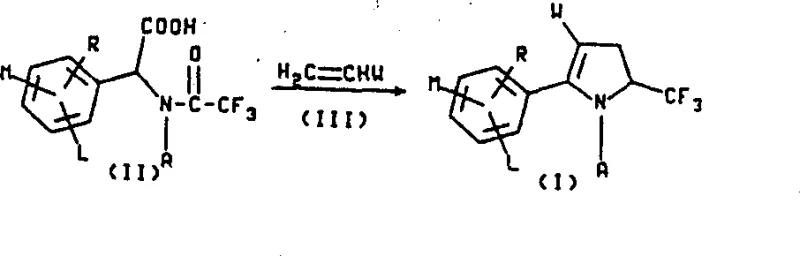
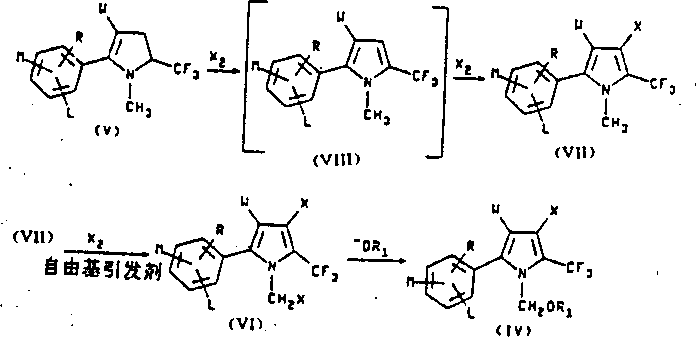
The core of this innovative synthesis lies in the precise manipulation of reaction kinetics during the halogenation phase, as illustrated in the reaction schemes provided within the patent documentation. The process begins with the formation of a pyrroline intermediate, typically achieved through the condensation of an N-trifluoroacetyl amino acid with an activated alkene such as acrylonitrile in the presence of an acid anhydride and an organic base. This cyclization step is critical for establishing the five-membered heterocyclic core with the correct stereochemistry and substitution pattern required for biological activity. Once the pyrroline scaffold is established, the introduction of halogen atoms is executed in distinct stages to ensure regiocontrol. The first stage involves electrophilic halogenation of the pyrroline ring at the 4-position, which is facilitated by the electron-rich nature of the double bond and the directing effects of the adjacent substituents.
Following the ring halogenation, the process transitions to a free-radical mechanism to functionalize the N-methyl group. By employing radical initiators such as benzoyl peroxide or azobisisobutyronitrile, often in conjunction with photochemical irradiation, the methyl group is selectively converted into a halomethyl group. This transformation is pivotal as it creates a reactive handle for the subsequent nucleophilic substitution with alkoxides. The mechanistic elegance of this route is its ability to differentiate between the halogenation potentials of the aromatic ring, the pyrroline double bond, and the aliphatic side chain through careful modulation of temperature and reagent stoichiometry. For instance, maintaining temperatures between 70°C and 120°C allows for efficient oxidation and halogenation rates without triggering undesirable decomposition pathways. This level of control is essential for producing high-purity pyrroline intermediates that meet the rigorous specifications demanded by the agrochemical industry.
How to Synthesize 4-Chloro-2-Aryl-1-(Ethoxymethyl)-5-(Trifluoromethyl)Pyrrole Efficiently
The practical execution of this synthesis requires adherence to specific operational parameters to ensure reproducibility and safety at scale. The initial preparation of the N-trifluoroacetyl amino acid precursor can be achieved via Strecker synthesis from aryl aldehydes or by direct trifluoroacetylation of commercially available arylglycines, providing flexibility in raw material sourcing. The cyclization reaction is typically conducted in proton-inert solvents like acetonitrile or dichloromethane, using acetic anhydride as the dehydrating agent and triethylamine as the base to scavenge generated acids. Detailed standardized synthesis steps for the subsequent halogenation and alkoxylation transformations are provided in the guide below, outlining the precise molar equivalents and thermal profiles necessary to achieve optimal results. Operators must pay close attention to the incremental addition of halogen sources to prevent exothermic runaways and ensure the formation of the correct intermediate species before proceeding to the radical step.
- Prepare the N-trifluoroacetyl amino acid precursor via Strecker synthesis or direct trifluoroacetylation of arylglycines.
- Cyclize the precursor with an activated alkene (e.g., acrylonitrile) in the presence of acid anhydride and organic base to form the pyrroline intermediate.
- Perform incremental halogenation on the pyrroline ring followed by radical halogenation of the N-methyl group, and finally alkoxylate to yield the final insecticide intermediate.
Commercial Advantages for Procurement and Supply Chain Teams
From a strategic procurement perspective, the adoption of the synthesis route detailed in CN1030765C offers substantial benefits that extend beyond mere chemical yield improvements. The elimination of hazardous chloromethyl alkyl ethers from the process flow significantly reduces the regulatory burden and safety infrastructure costs associated with handling toxic volatile organic compounds. This shift towards safer reagents simplifies the environmental compliance landscape, allowing manufacturing facilities to operate with greater flexibility and reduced risk of shutdowns due to safety violations. Furthermore, the incremental halogenation technique inherently produces a cleaner crude product, which minimizes the load on downstream purification units such as chromatography columns or crystallization tanks. This reduction in processing complexity translates directly into lower operational expenditures and shorter batch cycle times, enhancing the overall responsiveness of the supply chain to market fluctuations.
- Cost Reduction in Manufacturing: The streamlined synthetic pathway eliminates the need for expensive and hazardous specialized alkylating agents, replacing them with readily available alkali metal alkoxides and halogens. By improving the selectivity of the halogenation steps, the process reduces the formation of difficult-to-remove impurities, thereby lowering the cost of goods sold through reduced solvent usage and energy consumption during purification. The ability to utilize common industrial solvents like chlorobenzene and carbon tetrachloride further contributes to cost efficiency by leveraging existing supply chains and storage infrastructure without requiring specialized containment systems.
- Enhanced Supply Chain Reliability: The robustness of the incremental halogenation method ensures consistent batch-to-batch quality, which is critical for maintaining uninterrupted production schedules for finished agrochemical formulations. By avoiding reagents that are subject to strict transportation restrictions or seasonal availability issues, manufacturers can secure a more stable supply of raw materials. The process tolerance for a range of reaction temperatures and solvent choices provides operational flexibility, allowing production sites to adapt to local resource availability without compromising product integrity, thus reducing lead time for high-purity agrochemical intermediates.
- Scalability and Environmental Compliance: The reaction conditions described are amenable to large-scale batch processing, with thermal profiles that can be effectively managed using standard jacketed reactors. The avoidance of heavy metal catalysts and toxic ether reagents simplifies waste stream treatment, facilitating easier discharge compliance and reducing the environmental footprint of the manufacturing site. This alignment with green chemistry principles not only future-proofs the production asset against tightening environmental regulations but also enhances the brand reputation of the supplier as a responsible partner in the global agrochemical value chain.
Frequently Asked Questions (FAQ)
The following questions address common technical and commercial inquiries regarding the implementation of this patented synthesis route. These insights are derived directly from the experimental data and claims presented in the patent documentation, providing a factual basis for evaluating the technology's potential impact on your production capabilities. Understanding these details is crucial for technical teams assessing the feasibility of technology transfer or licensing agreements.
Q: What is the primary advantage of the incremental halogenation method described in CN1030765C?
A: The incremental addition of halogen significantly increases reaction yield and product purity compared to single-step halogenation, while avoiding the use of hazardous reagents like chloromethyl ethyl ether.
Q: Which solvents are preferred for the cyclization step of the pyrroline intermediate?
A: Proton-inert organic solvents such as acetonitrile, ethyl acetate, tetrahydrofuran, or dichloromethane are suitable, with acetonitrile being particularly preferred for optimal reaction kinetics.
Q: How does this process improve supply chain safety for agrochemical manufacturers?
A: By eliminating the need for toxic chloromethyl alkyl ethers in the alkylation step and utilizing standard radical initiators, the process reduces environmental hazards and simplifies waste treatment protocols.
Partnering with NINGBO INNO PHARMCHEM: Your Reliable Pyrroline Intermediates Supplier
At NINGBO INNO PHARMCHEM, we recognize the critical role that high-quality intermediates play in the development of next-generation crop protection solutions. Our team possesses extensive experience scaling diverse pathways from 100 kgs to 100 MT/annual commercial production, ensuring that the sophisticated chemistry described in CN1030765C can be translated into reliable industrial reality. We maintain stringent purity specifications and operate rigorous QC labs equipped with advanced analytical instrumentation to guarantee that every batch of pyrroline intermediate meets the exacting standards required for agrochemical registration. Our commitment to technical excellence allows us to navigate the complexities of halogenation chemistry with precision, delivering products that empower our clients to formulate more effective and safer insecticides.
We invite you to engage with our technical procurement team to discuss how our manufacturing capabilities can support your specific project requirements. By requesting a Customized Cost-Saving Analysis, you can gain deeper insights into how optimizing the synthesis of these key intermediates can improve your overall margin structure. We encourage potential partners to contact us for specific COA data and route feasibility assessments to verify the compatibility of our processes with your existing supply chain frameworks. Together, we can accelerate the delivery of innovative pest control solutions to the global market.
Engineering Bottleneck?
Can't scale up this synthesis? Upload your target structure or CAS, and our CDMO team will evaluate the industrial feasibility within 24 hours. Request Evaluation →