
Advanced Synthetic Route for Benzolactam Compounds: Enhancing Purity and Scalability in Herbicide Manufacturing
Advanced Synthetic Route for Benzolactam Compounds: Enhancing Purity and Scalability in Herbicide Manufacturing
The pharmaceutical and agrochemical industries are constantly seeking robust synthetic pathways that balance high yield with exceptional purity, particularly for complex heterocyclic structures. Patent CN103755658A introduces a significant advancement in the synthesis of benzolactam compounds, which serve as critical precursors for herbicides like Flumioxazin. This technology addresses long-standing challenges in chemo-selectivity and intermediate purification, offering a streamlined approach that is highly attractive for commercial scale-up. The core innovation lies in a strategic protection-deprotection sequence that ensures the precise formation of the target molecular architecture without generating excessive by-products. By utilizing specific imine intermediates, the process effectively masks reactive amine groups during critical alkylation steps, thereby enhancing the overall efficiency of the synthesis. This method not only simplifies the post-reaction work-up but also drastically improves the quality of the final active ingredient, meeting the stringent specifications required by global regulatory bodies.
The Limitations of Conventional Methods vs. The Novel Approach
The Limitations of Conventional Methods
Historically, the synthesis of flumioxazin and related benzolactam derivatives has been plagued by significant technical hurdles that impact both cost and quality. Prior art, such as the methods disclosed in US4640707 and EP0170191, relies on the direct reaction of 6-amino-7-fluoro-2H-1,4-benzoxazine-3(4H)-one with propargyl halides under strongly basic conditions. A major drawback of this approach is the lack of chemo-selectivity; the substrate contains a primary amine group that is highly reactive, leading to the formation of poly-propargylated by-products alongside the desired mono-alkylated product. This side reaction not only consumes expensive starting materials and reagents but also creates a complex mixture that is difficult to separate. Furthermore, alternative methods like those in JP5097826A attempt to mitigate this by using large amounts of alkyl ketones for protection, but this results in oily liquid intermediates that are notoriously difficult to refine. These oily substances complicate the purification process, often requiring extensive chromatography or recrystallization, which drives up manufacturing costs and reduces the overall throughput of the production line.
The Novel Approach
In stark contrast to these legacy techniques, the method described in CN103755658A employs a sophisticated yet practical strategy to overcome selectivity issues. The process begins by converting the reactive primary amine of the starting material into a stable imine derivative (Compound IV) using aldehydes or orthoformates. This temporary protection group effectively deactivates the amine nitrogen, preventing unwanted side reactions during the subsequent N-alkylation step. Once the propargyl group is successfully installed on the lactam nitrogen, the imine protecting group can be easily removed under mild acidic or basic conditions to reveal the free amine. A key advantage of this route is the physical state of the intermediates; unlike the oily residues of previous methods, the imine intermediates generated here are typically solids. This solid state allows for simple filtration and washing, removing impurities early in the process and ensuring that the final benzolactam compound is obtained with high purity and yield. This shift from liquid to solid intermediates represents a fundamental improvement in process operability and economic viability.
Mechanistic Insights into Imine-Mediated Selective Alkylation
The success of this synthetic route hinges on the precise control of nucleophilicity within the benzoxazine ring system. In the first step, the condensation of the amino-benzoxazine (Compound I) with an aldehyde (Compound II) or orthoformate (Compound III) forms an imine or imine-ether linkage at the 6-position. This transformation converts the strongly nucleophilic primary amine into a less reactive imine nitrogen. When this protected intermediate (Compound IV) is subjected to alkylation conditions using a propargyl halide (Compound V) and a base, the only available nucleophilic site is the lactam nitrogen at the 4-position. The presence of a phase transfer catalyst, such as tetrabutylammonium bromide, further facilitates the reaction by transporting the anionic lactam species into the organic phase where the alkylating agent resides. This ensures that the propargyl group is attached exclusively to the desired position, eliminating the formation of N,N-dipropargyl impurities that plague direct alkylation methods. The reaction conditions are mild, typically ranging from -30°C to 60°C, which preserves the integrity of the sensitive fluorine substituent on the aromatic ring.
Following the alkylation, the removal of the protecting group is achieved through hydrolysis, regenerating the primary amine to yield Compound VII. This step is crucial for the subsequent formation of the final herbicide active ingredient. The ability to toggle the reactivity of the amine group on and off provides chemists with a powerful tool for constructing complex molecules with high fidelity. The mechanism avoids the use of harsh reagents or extreme temperatures that could degrade the heterocyclic core. Moreover, the by-products of the deprotection step, such as the corresponding aldehyde or alcohol, are generally volatile or water-soluble, making them easy to separate from the solid product. This clean reaction profile minimizes the burden on downstream purification units, reducing solvent consumption and waste generation. The result is a highly efficient catalytic cycle of protection, reaction, and deprotection that maximizes atom economy and operational safety in a manufacturing environment.
How to Synthesize Benzolactam Compounds Efficiently
The synthesis of these high-value intermediates requires careful attention to stoichiometry and reaction parameters to ensure optimal performance. The process is divided into two main stages: the formation of the protected intermediate and the subsequent alkylation and deprotection. Operators must maintain strict control over temperature and molar ratios, particularly during the exothermic condensation and alkylation phases. The use of appropriate solvents like toluene or DMF is essential to dissolve the reactants while facilitating the phase transfer catalysis. Detailed standard operating procedures regarding the addition rates of reagents and the specific work-up protocols for isolating the solid intermediates are critical for reproducibility. For a comprehensive guide on the exact experimental conditions, reagent grades, and isolation techniques validated by the patent data, please refer to the standardized synthesis steps provided below.
- React compound (I) with compound (II) or (III) under solvent or solvent-free conditions to form the protected imine intermediate (IV).
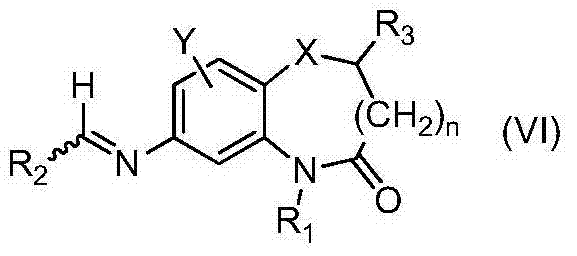
- Perform N-alkylation on compound (IV) using compound (V) in the presence of an acid binding agent and phase transfer catalyst to generate compound (VI).
- Hydrolyze compound (VI) under acidic or basic catalysis to remove the protecting group, yielding the free amine compound (VII) for further derivatization.
Commercial Advantages for Procurement and Supply Chain Teams
For procurement managers and supply chain directors, the adoption of this synthetic methodology offers tangible benefits that extend beyond mere chemical elegance. The primary advantage lies in the drastic simplification of the purification workflow. By generating solid intermediates instead of oily mixtures, the need for energy-intensive distillation or complex chromatographic separation is significantly reduced. This translates directly into lower processing costs and shorter batch cycle times, allowing manufacturers to respond more quickly to market demand. Furthermore, the high selectivity of the reaction means that raw material utilization is optimized; less starting material is wasted on forming by-products, which stabilizes the cost of goods sold. The reliance on common, commercially available reagents such as propargyl bromide and simple aldehydes ensures that the supply chain remains robust and less susceptible to disruptions caused by specialty chemical shortages.
- Cost Reduction in Manufacturing: The elimination of difficult-to-remove oily by-products fundamentally changes the cost structure of producing flumioxazin precursors. Traditional methods often require multiple recrystallizations or extensive solvent exchanges to achieve acceptable purity levels, which consumes vast amounts of energy and solvents. In this new process, the solid nature of the imine intermediate allows for simple filtration and washing, effectively purifying the material before the final step. This reduction in unit operations leads to substantial cost savings in utilities and waste disposal. Additionally, the higher yield resulting from improved chemo-selectivity means that more product is obtained per kilogram of input, further driving down the effective price per unit of the active pharmaceutical or agrochemical ingredient.
- Enhanced Supply Chain Reliability: Supply continuity is a critical metric for any large-scale chemical buyer. This synthetic route enhances reliability by utilizing stable, storable solid intermediates. Unlike oily liquids which can degrade or polymerize over time, solid imines can be stockpiled and quality-checked before being pushed to the next stage of synthesis. This decoupling of process steps provides a buffer against production fluctuations. Moreover, the reagents involved are commodity chemicals with established global supply networks, reducing the risk of bottlenecks associated with exotic catalysts or specialized protecting groups. The robustness of the reaction conditions also means that the process can be transferred between different manufacturing sites with minimal re-validation, ensuring a flexible and resilient supply base for high-purity agrochemical intermediates.
- Scalability and Environmental Compliance: Scaling a chemical process from the laboratory to multi-ton production often reveals hidden inefficiencies, but this method is inherently designed for scale. The use of heterogeneous mixtures (solid precipitating from liquid) is easier to manage in large reactors than homogeneous oily solutions. The mild reaction temperatures reduce the load on heating and cooling systems, lowering the carbon footprint of the manufacturing facility. From an environmental perspective, the reduction in solvent usage and the avoidance of heavy metal catalysts align with modern green chemistry principles. The waste streams generated are simpler to treat, facilitating compliance with increasingly stringent environmental regulations. This makes the technology not only economically attractive but also sustainable for long-term commercial operation in the competitive herbicide manufacturing sector.
Frequently Asked Questions (FAQ)
The following questions address common technical and commercial inquiries regarding the implementation of this benzolactam synthesis technology. These answers are derived directly from the experimental data and claims presented in the patent documentation, providing a clear understanding of the process capabilities and limitations. Understanding these details is essential for R&D teams evaluating the feasibility of technology transfer and for procurement specialists assessing the quality consistency of the supply.
Q: How does this new method improve upon conventional flumioxazin synthesis?
A: Conventional methods often suffer from low chemo-selectivity during propargylation, leading to poly-alkylated by-products. This patent introduces an imine protection strategy that blocks the primary amine, ensuring selective N-alkylation and significantly reducing impurity profiles.
Q: What are the physical properties of the intermediates in this process?
A: Unlike prior art methods that produce difficult-to-refine oily liquids, this process generates solid intermediates. This physical state facilitates easier filtration, washing, and drying, directly contributing to higher final product purity and simplified post-processing.
Q: Is this process suitable for large-scale commercial production?
A: Yes, the process utilizes mild reaction conditions (-30°C to 140°C) and common organic solvents like toluene and DMF. The use of solid intermediates and straightforward work-up procedures makes it highly scalable for industrial manufacturing of agrochemical intermediates.
Partnering with NINGBO INNO PHARMCHEM: Your Reliable Benzolactam Compounds Supplier
At NINGBO INNO PHARMCHEM, we recognize the critical role that high-quality intermediates play in the success of your final agrochemical products. Our team of expert chemists has extensively analyzed the synthetic pathway described in CN103755658A and possesses the technical capability to execute this route with precision. We have extensive experience scaling diverse pathways from 100 kgs to 100 MT/annual commercial production, ensuring that your supply needs are met with consistency and reliability. Our facilities are equipped with rigorous QC labs that enforce stringent purity specifications, guaranteeing that every batch of benzolactam compound meets the highest industry standards. We understand that impurity profiles can make or break a regulatory filing, and our advanced analytical capabilities allow us to detect and control trace impurities effectively.
We invite you to collaborate with us to leverage this advanced synthetic technology for your supply chain. By partnering with NINGBO INNO PHARMCHEM, you gain access to a Customized Cost-Saving Analysis tailored to your specific volume requirements and quality targets. Our technical procurement team is ready to provide specific COA data and route feasibility assessments to demonstrate how we can optimize your sourcing strategy. Whether you require pilot-scale quantities for field trials or full commercial volumes for market launch, we are committed to delivering value through superior chemistry and dependable service. Contact us today to discuss how our benzolactam intermediates can enhance the efficiency and profitability of your herbicide manufacturing operations.