
Advanced Rhodium-Catalyzed C-H Activation for Efficient Acylsilicon Isoindolone Production
The pharmaceutical and fine chemical industries are constantly seeking more efficient pathways to construct complex heterocyclic scaffolds, particularly those containing silicon-carbon bonds which offer unique electronic properties for drug design. Patent CN113201006B introduces a groundbreaking methodology for synthesizing acylsilicon-substituted isoindol-1-one analogs through a rhodium-catalyzed hydrocarbon activation reaction. This innovation represents a significant leap forward in organic synthesis, moving away from cumbersome traditional methods towards a more atom-economical and direct approach. By leveraging the power of transition metal catalysis, specifically rhodium, this technique enables the direct functionalization of inert C-H bonds in N-substituted benzamides. The result is a streamlined process that not only simplifies the synthetic route but also enhances the overall sustainability of producing these valuable intermediates. For R&D directors and procurement managers alike, this patent signals a new era of cost-effective and high-purity manufacturing capabilities for specialized organic molecules.
The Limitations of Conventional Methods vs. The Novel Approach
The Limitations of Conventional Methods
Historically, the synthesis of acylsilane derivatives and their subsequent incorporation into isoindolone frameworks has been plagued by significant inefficiencies and operational challenges. Traditional linear synthesis methods often require multiple discrete steps, including pre-functionalization of the aromatic ring, which drastically reduces the overall atom economy of the process. These conventional routes frequently necessitate the use of harsh reaction conditions, such as extremely high temperatures or strongly acidic/basic environments, which can lead to the decomposition of sensitive functional groups and lower overall yields. Furthermore, the generation of stoichiometric amounts of waste byproducts during these multi-step sequences poses a substantial environmental burden and increases the cost of waste disposal. For supply chain managers, these factors translate into longer lead times, higher raw material consumption, and increased difficulty in maintaining consistent quality control across large batches. The economic viability of such traditional methods is often compromised when scaling up to commercial quantities, making them less attractive for modern pharmaceutical manufacturing.
The Novel Approach
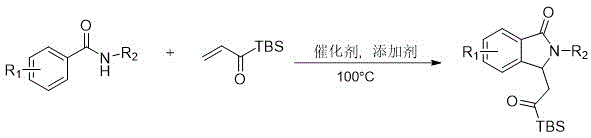
In stark contrast, the method disclosed in patent CN113201006B offers a sophisticated and elegant solution by utilizing a rhodium-catalyzed C-H activation strategy. This novel approach allows for the direct coupling of N-substituted benzamides with alpha,beta-unsaturated acylsilanes, effectively bypassing the need for pre-functionalized starting materials. The reaction proceeds under relatively mild conditions, typically involving heating at 100°C in common organic solvents like acetonitrile or toluene, which significantly reduces energy consumption and operational hazards. The use of a directing group, specifically the amide moiety, ensures high regioselectivity, minimizing the formation of unwanted isomers and simplifying the purification process. This direct construction of the isoindol-1-one core not only shortens the synthetic timeline but also dramatically improves the overall yield and purity of the final product. By adopting this advanced catalytic cycle, manufacturers can achieve substantial cost reduction in pharmaceutical intermediate manufacturing while adhering to stricter environmental regulations.
Mechanistic Insights into Rhodium-Catalyzed C-H Activation
The core of this transformative technology lies in the intricate mechanism of rhodium-catalyzed C-H bond activation, which facilitates the formation of carbon-carbon bonds with exceptional precision. The catalytic cycle typically initiates with the coordination of the rhodium(III) center to the oxygen atom of the amide directing group on the benzamide substrate. This coordination brings the metal center into close proximity with the ortho-C-H bond, facilitating its cleavage through a concerted metalation-deprotonation (CMD) pathway or a similar electrophilic substitution mechanism. This step generates a stable five-membered rhodacycle intermediate, which is the key species responsible for the high regioselectivity observed in the reaction. Subsequently, the alpha,beta-unsaturated acylsilane coordinates to the rhodium center and undergoes migratory insertion into the Rh-C bond. This insertion step is critical as it establishes the new carbon-carbon linkage that forms the backbone of the isoindolone structure. The presence of the acylsilane moiety adds a layer of complexity due to the unique electronic properties of the silicon-carbonyl bond, which can stabilize certain intermediates and influence the reactivity profile.
Following the insertion step, the catalytic cycle proceeds through a series of transformations that ultimately lead to the release of the product and regeneration of the active catalyst. The intermediate undergoes cyclization, often facilitated by the nucleophilic attack of the amide nitrogen or a related intramolecular process, to close the isoindolone ring. The final step involves the oxidation of the rhodium species, typically mediated by the silver or copper additive present in the reaction mixture, which restores the rhodium(III) oxidation state and completes the catalytic turnover. This redox neutral or oxidative nature of the cycle ensures that the catalyst remains active throughout the prolonged reaction time of 36 hours. From an impurity control perspective, the high specificity of the C-H activation step means that side reactions such as homocoupling or polymerization of the alkene are minimized. This mechanistic robustness is crucial for R&D teams aiming to produce high-purity OLED material or pharmaceutical intermediates where trace impurities can have detrimental effects on downstream applications.
How to Synthesize Acylsilicon-Substituted Isoindol-1-One Efficiently
Implementing this rhodium-catalyzed protocol requires careful attention to reaction parameters to maximize yield and reproducibility. The process begins with the preparation of the reaction mixture under an inert atmosphere to prevent catalyst deactivation by oxygen or moisture. Precise stoichiometry is essential, with the patent recommending a molar ratio of benzamide to acylsilane ranging from 1:2.0 to 1:4.0 to drive the equilibrium towards product formation. The choice of solvent plays a pivotal role, with polar aprotic solvents like acetonitrile showing superior performance in solubilizing the ionic additives and stabilizing the charged intermediates. While the general procedure is robust, optimization of temperature and reaction time may be necessary for substrates with bulky substituents or electron-withdrawing groups. For detailed operational protocols and safety guidelines, please refer to the standardized synthesis steps provided below.
- Under an argon atmosphere, sequentially add N-substituted benzamide, alpha,beta-unsaturated acylsilane, rhodium catalyst (e.g., [Cp*RhCl2]2), additive (e.g., Ag2CO3), and solvent (e.g., acetonitrile) into a clean pressure bottle.
- Place the reaction mixture in an oil bath maintained at 100°C and stir continuously for 36 hours to ensure complete conversion via C-H activation.
- Upon completion, remove the solvent under reduced pressure and purify the resulting crude residue using silica gel column chromatography to isolate the target acylsilicon-substituted isoindol-1-one product.
Commercial Advantages for Procurement and Supply Chain Teams
For procurement managers and supply chain heads, the adoption of this rhodium-catalyzed C-H activation technology offers compelling strategic advantages that go beyond mere technical novelty. The primary benefit lies in the drastic simplification of the supply chain for raw materials. By eliminating the need for pre-halogenated or pre-functionalized benzene derivatives, companies can source cheaper and more readily available commodity chemicals as starting materials. This shift significantly reduces the dependency on specialized upstream suppliers who often charge premiums for halogenated intermediates. Furthermore, the reduction in the number of synthetic steps directly correlates to a reduction in processing time and labor costs. Fewer unit operations mean less equipment occupancy time, lower utility consumption, and reduced manpower requirements, all of which contribute to a leaner and more cost-efficient manufacturing process. The ability to produce complex heterocycles in a single pot also minimizes the risk of material loss during transfer and purification stages, thereby improving the overall mass balance of the production line.
- Cost Reduction in Manufacturing: The elimination of expensive pre-functionalization steps and the use of catalytic amounts of rhodium rather than stoichiometric reagents leads to significant raw material savings. Although rhodium is a precious metal, its recovery and recycling in heterogeneous or homogeneous systems can mitigate the initial cost impact, resulting in a lower cost per kilogram of the final product compared to traditional multi-step syntheses. Additionally, the mild reaction conditions reduce energy costs associated with heating and cooling, further enhancing the economic viability of the process.
- Enhanced Supply Chain Reliability: Sourcing N-substituted benzamides and alpha,beta-unsaturated acylsilanes is generally more straightforward than sourcing specialized halogenated precursors, which may be subject to regulatory restrictions or supply volatility. This increased availability of starting materials ensures a more stable and resilient supply chain, reducing the risk of production delays due to raw material shortages. The robustness of the reaction also means that batch-to-batch variability is minimized, ensuring consistent quality for downstream customers.
- Scalability and Environmental Compliance: The reaction's compatibility with standard organic solvents and moderate temperatures makes it highly scalable from gram to ton quantities without requiring exotic high-pressure equipment. From an environmental standpoint, the improved atom economy and reduced waste generation align perfectly with green chemistry principles, helping companies meet increasingly stringent environmental regulations. This compliance not only avoids potential fines but also enhances the corporate sustainability profile, which is becoming a key factor in supplier selection for major pharmaceutical companies.
Frequently Asked Questions (FAQ)
The following questions address common technical and commercial inquiries regarding the implementation of this rhodium-catalyzed synthesis method. These answers are derived directly from the technical specifications and experimental data provided in the patent documentation, ensuring accuracy and relevance for potential partners. Understanding these nuances is critical for evaluating the feasibility of integrating this technology into existing production workflows. We encourage technical teams to review these points carefully to assess the alignment with their specific project requirements.
Q: What are the primary advantages of this Rh-catalyzed method over traditional linear synthesis?
A: This method utilizes direct C-H activation, which significantly improves atom economy and avoids the harsh reaction conditions and multi-step sequences associated with traditional linear synthesis of acylsilanes.
Q: Which catalysts and additives are compatible with this transformation?
A: The process effectively employs Rhodium(III) catalysts such as dichloro(pentamethylcyclopentadienyl)rhodium(III) alongside silver or copper additives like silver carbonate to facilitate the oxidative coupling.
Q: Is this synthetic route suitable for large-scale commercial production?
A: Yes, the reaction operates under relatively mild thermal conditions (100°C) and uses commercially available solvents, making it highly amenable to scale-up for industrial pharmaceutical intermediate manufacturing.
Partnering with NINGBO INNO PHARMCHEM: Your Reliable Acylsilicon-Substituted Isoindol-1-One Supplier
At NINGBO INNO PHARMCHEM, we recognize the transformative potential of advanced C-H activation technologies in reshaping the landscape of pharmaceutical intermediate production. Our team of expert chemists possesses extensive experience scaling diverse pathways from 100 kgs to 100 MT/annual commercial production, ensuring that the transition from laboratory discovery to industrial reality is seamless and efficient. We are committed to delivering high-purity acylsilicon-substituted isoindol-1-one analogs that meet the most stringent purity specifications required by the global pharmaceutical industry. Our state-of-the-art rigorous QC labs are equipped to perform comprehensive analysis, guaranteeing that every batch conforms to the highest standards of quality and consistency. By leveraging our expertise in rhodium catalysis and process optimization, we can help you unlock the full commercial potential of this innovative synthetic route.
We invite you to collaborate with us to explore how this technology can drive value for your organization. Contact our technical procurement team today to request a Customized Cost-Saving Analysis tailored to your specific volume requirements. We are ready to provide specific COA data and route feasibility assessments to support your R&D and supply chain planning. Let us be your partner in navigating the complexities of modern chemical synthesis and achieving your commercial goals with confidence and reliability.