
Revolutionizing Alpha-Quaternary Amino Acid Production with Visible-Light Photocatalysis and Ambient CO2
Revolutionizing Alpha-Quaternary Amino Acid Production with Visible-Light Photocatalysis and Ambient CO2
The pharmaceutical and fine chemical industries are constantly seeking greener, more efficient pathways to construct complex molecular architectures, particularly alpha-quaternary carbon amino acids which serve as critical building blocks for bioactive peptides and natural products. Patent CN108752232B introduces a groundbreaking synthetic methodology that leverages visible-light photocatalysis to achieve the selective hydrocarboxylation of enamides and imines. This innovation represents a paradigm shift from traditional high-energy processes to mild, sustainable chemistry driven by ambient carbon dioxide. By utilizing organic photocatalysts such as 4CzIPN under blue LED irradiation at room temperature, this technology enables the direct incorporation of CO2 into organic frameworks with exceptional efficiency. For R&D directors and process chemists, this offers a robust alternative to legacy methods, providing a reliable alpha-quaternary carbon amino acid supplier pathway that aligns with modern green chemistry principles while maintaining high yields and selectivity.
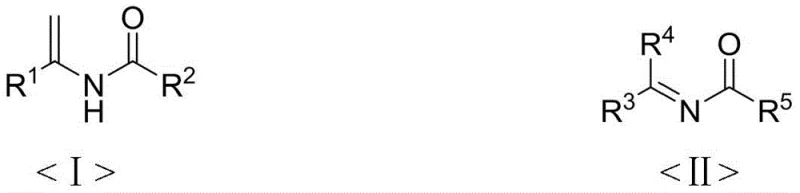
The significance of this patent lies in its ability to overcome the inherent thermodynamic stability of CO2, traditionally a challenge in organic synthesis. The described protocol operates under 1 atmosphere of CO2, eliminating the need for specialized high-pressure equipment often required for carboxylation reactions. Furthermore, the reaction proceeds at room temperature, drastically reducing energy consumption compared to thermal catalytic processes. This technological advancement not only streamlines the synthesis of valuable amino acid derivatives but also opens new avenues for the late-stage functionalization of complex molecules. As the industry moves towards decarbonization, adopting such CO2-utilization technologies becomes a strategic imperative for maintaining competitiveness and regulatory compliance in the global supply chain.
The Limitations of Conventional Methods vs. The Novel Approach
The Limitations of Conventional Methods
Historically, the synthesis of alpha-quaternary amino acids has been dominated by the Strecker reaction, a century-old protocol that relies heavily on the use of toxic cyanide anions as precursors for the carboxyl group. While effective, this approach presents severe safety hazards, requiring stringent containment measures and generating hazardous waste streams that are costly to treat and dispose of. Additionally, many alternative transition-metal catalyzed carboxylation methods necessitate harsh reaction conditions, including high temperatures, strong bases, or ultraviolet light, which can lead to substrate decomposition and poor functional group tolerance. These limitations restrict the applicability of conventional methods, particularly when dealing with sensitive pharmaceutical intermediates that require mild handling to preserve stereochemical integrity and prevent side reactions. The reliance on expensive bimetallic reagents further exacerbates the cost burden, making large-scale production economically challenging for many manufacturers.
The Novel Approach
In stark contrast, the novel photocatalytic approach detailed in CN108752232B utilizes visible light to drive the reaction, offering a much milder and safer operational profile. By employing organic photocatalysts like 4CzIPN, the method avoids the use of heavy metals, thereby simplifying downstream purification and reducing the risk of metal contamination in the final product. The reaction demonstrates remarkable versatility, successfully converting a wide array of enamide and imine substrates into the desired alpha-quaternary amino acids with high yields. As illustrated in the reaction schemes, the process tolerates various substituents, including halogens, alkyl groups, and heterocycles, without compromising efficiency. This broad substrate scope ensures that the method can be adapted for cost reduction in pharmaceutical intermediate manufacturing across diverse chemical spaces, providing a flexible platform for synthesizing complex amino acid derivatives that were previously difficult to access.

Mechanistic Insights into Visible-Light Photocatalytic Carboxylation
The core of this transformative technology lies in the intricate interplay between the photocatalyst, the reducing agent, and the substrate under visible light irradiation. Mechanistic studies indicate that the organic photocatalyst 4CzIPN, upon excitation by blue LEDs, undergoes a single-electron transfer process with the reducing agent, typically diisopropylethylamine. This generates a highly reactive radical species capable of activating the enamide or imine substrate. The resulting radical intermediate then reacts with CO2, which acts as an electrophile, to form a carboxylated radical anion. Subsequent protonation and reduction steps yield the final alpha-quaternary amino acid product. This radical-mediated pathway bypasses the high activation energy barriers associated with thermal carboxylation, allowing the reaction to proceed smoothly at room temperature. Understanding this mechanism is crucial for R&D teams aiming to optimize reaction parameters or adapt the protocol for novel substrates, as it highlights the importance of redox potentials and radical stability in determining reaction success.
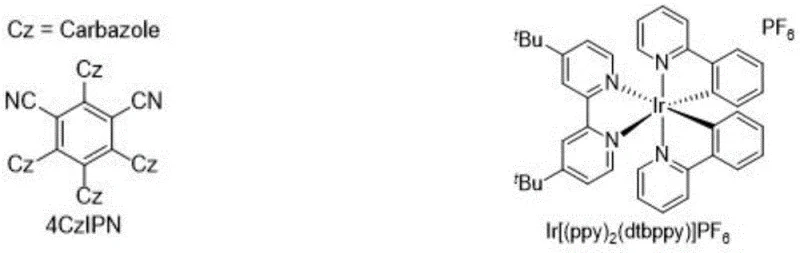
Furthermore, the choice of photocatalyst plays a pivotal role in controlling impurity profiles and maximizing yield. The patent data reveals that 4CzIPN exhibits superior activity compared to various iridium-based complexes, likely due to its favorable excited-state redox potential and long lifetime. This specificity helps minimize side reactions such as direct reduction of the substrate, which can occur in the absence of CO2. By carefully tuning the catalyst loading and the stoichiometry of the base and reducing agent, manufacturers can achieve high selectivity for the carboxylation product over reduced by-products. This level of control is essential for producing high-purity OLED material or pharmaceutical intermediates where trace impurities can have significant downstream effects. The mechanistic clarity provided by this patent empowers process chemists to implement rigorous quality control measures, ensuring consistent batch-to-batch reproducibility essential for commercial supply chains.
How to Synthesize Alpha-Quaternary Carbon Amino Acid Efficiently
Implementing this photocatalytic synthesis requires precise attention to reaction conditions to maximize efficiency and yield. The standard protocol involves charging a dry reaction vessel with the substrate, photocatalyst, and base, followed by the introduction of CO2 and the reducing agent in a polar solvent. The mixture is then irradiated with blue LEDs for a defined period, typically around 4 hours, before quenching and purification. Detailed procedural nuances, such as the exclusion of oxygen and the specific order of reagent addition, are critical for success. For laboratories and pilot plants looking to adopt this technology, adhering to the optimized conditions described in the patent examples ensures the best outcomes. The following guide outlines the standardized steps derived from the patent data to facilitate immediate implementation.
- Charge a dry reaction vessel with the enamide or imine substrate, an organic photocatalyst such as 4CzIPN, and a base like Cs2CO3 under inert atmosphere.
- Introduce CO2 gas at 1 atm pressure, add a reducing agent such as diisopropylethylamine and a polar solvent like DMF, then irradiate with blue LEDs at room temperature.
- Upon completion, quench the reaction mixture with aqueous acid, extract the product, and purify via flash column chromatography to obtain the target alpha-quaternary amino acid.
Commercial Advantages for Procurement and Supply Chain Teams
From a commercial perspective, this photocatalytic method offers substantial advantages that directly address key pain points in chemical procurement and supply chain management. The elimination of toxic cyanide reagents not only enhances workplace safety but also significantly reduces the regulatory burden and costs associated with hazardous waste disposal. Operating at ambient pressure and temperature removes the need for capital-intensive high-pressure reactors, lowering the barrier to entry for scale-up and allowing for more flexible manufacturing setups. These factors collectively contribute to a more resilient and cost-effective supply chain, capable of responding rapidly to market demands without the delays often caused by complex safety protocols or specialized equipment maintenance.
- Cost Reduction in Manufacturing: The replacement of expensive transition metal catalysts with organic dyes like 4CzIPN drastically lowers raw material costs. Furthermore, the mild reaction conditions reduce energy consumption for heating and cooling, leading to lower utility bills. The simplified workup procedure, which avoids complex metal scavenging steps, streamlines the production process, resulting in faster turnaround times and reduced labor costs. These cumulative efficiencies translate into significant cost savings, making the final amino acid intermediates more competitive in the global market.
- Enhanced Supply Chain Reliability: The use of readily available starting materials such as enamides and imines, combined with common solvents like DMF, ensures a stable supply of inputs. The robustness of the reaction against various functional groups means that supply disruptions for specific specialized substrates can be mitigated by switching to alternative analogs without re-optimizing the entire process. This flexibility enhances supply chain continuity, ensuring that downstream pharmaceutical production schedules are met consistently without unexpected delays caused by raw material shortages.
- Scalability and Environmental Compliance: The successful demonstration of gram-scale synthesis confirms the method's potential for commercial scale-up of complex pharmaceutical intermediates. The green nature of the process, utilizing CO2 as a feedstock and avoiding toxic reagents, aligns perfectly with increasingly stringent environmental regulations. This proactive compliance reduces the risk of future regulatory shutdowns and enhances the company's sustainability profile, which is becoming a critical factor in supplier selection for major multinational corporations.
Frequently Asked Questions (FAQ)
To assist stakeholders in evaluating the feasibility of this technology, we have compiled answers to common questions regarding safety, scalability, and application. These insights are derived directly from the technical data provided in the patent, ensuring accuracy and relevance for decision-makers. Understanding these aspects is vital for integrating this synthesis route into existing production pipelines and leveraging its full commercial potential.
Q: How does this photocatalytic method improve safety compared to traditional Strecker synthesis?
A: Traditional Strecker synthesis relies on highly toxic cyanide anions as precursors, posing severe safety and environmental hazards. This patented method utilizes benign CO2 gas and visible-light photocatalysis, completely eliminating the need for toxic cyanide reagents and harsh high-pressure conditions, thereby significantly enhancing operational safety and reducing hazardous waste disposal costs.
Q: Is this synthesis method scalable for industrial production of pharmaceutical intermediates?
A: Yes, the patent explicitly demonstrates successful scale-up to gram-scale reactions without significant loss in yield. The use of ambient pressure (1 atm CO2) and room temperature conditions simplifies reactor requirements, making it highly suitable for commercial scale-up of complex pharmaceutical intermediates without the need for expensive high-pressure autoclaves.
Q: What is the substrate scope for this alpha-quaternary amino acid synthesis?
A: The method exhibits broad substrate tolerance, effectively processing various enamide and imine compounds. It accommodates diverse functional groups including electron-donating and electron-withdrawing substituents on aryl rings, as well as heteroarenes like thiophenes and furans, ensuring versatility for synthesizing a wide range of high-purity API intermediates.
Partnering with NINGBO INNO PHARMCHEM: Your Reliable Alpha-Quaternary Carbon Amino Acid Supplier
At NINGBO INNO PHARMCHEM, we recognize the transformative potential of visible-light photocatalysis in modern organic synthesis. As a leading CDMO partner, we possess extensive experience scaling diverse pathways from 100 kgs to 100 MT/annual commercial production, ensuring that innovative laboratory methods like CN108752232B can be seamlessly translated into industrial reality. Our facilities are equipped with state-of-the-art photoreactors and rigorous QC labs capable of meeting stringent purity specifications required by the global pharmaceutical industry. We are committed to delivering high-quality intermediates that adhere to the highest standards of safety and efficacy, supporting our clients' drug development programs with reliable and scalable supply solutions.
We invite you to explore how this advanced synthesis method can optimize your production costs and enhance your product portfolio. Contact our technical procurement team today to request a Customized Cost-Saving Analysis tailored to your specific needs. We are ready to provide specific COA data and comprehensive route feasibility assessments to demonstrate the viability of this technology for your projects. Let us partner with you to drive innovation and efficiency in your supply chain, ensuring a competitive edge in the fast-evolving chemical landscape.