
Advanced Synthesis of Oseltamivir Genotoxic Impurity Standards for Rigorous Quality Control
The global pharmaceutical landscape places immense pressure on the quality control of antiviral medications, particularly Oseltamivir phosphate, a cornerstone treatment for influenza. Patent CN115490591A addresses a critical gap in this supply chain by disclosing a robust preparation method for a specific genotoxic intermediate impurity, designated as Compound I. This compound, chemically known as (3R,4R,5S)-4-chloro-5-hydroxy-3-(pentan-3-yloxy)-cyclohex-1-ene-1-carboxylic acid ethyl ester, possesses a chloroalkane structure that triggers significant toxicological alerts. The ability to synthesize this impurity with high purity is not merely an academic exercise but a regulatory necessity for ensuring the safety of the final Active Pharmaceutical Ingredient (API). By establishing a reliable source for this reference standard, manufacturers can implement rigorous analytical protocols to monitor and minimize genotoxic risks, thereby safeguarding public health and maintaining compliance with stringent international pharmacopoeia standards.
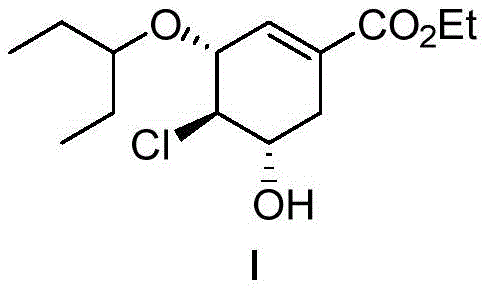
The Limitations of Conventional Methods vs. The Novel Approach
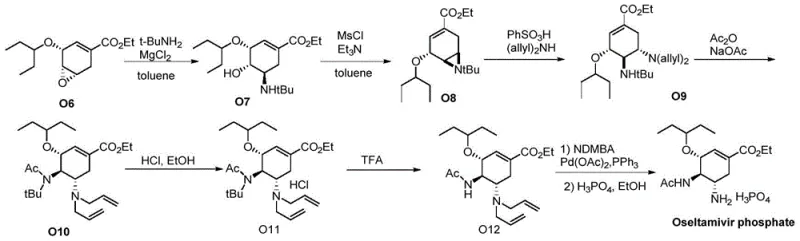
The Limitations of Conventional Methods
Traditional synthesis routes for Oseltamivir, such as the widely recognized non-azide pathway reported in earlier literature, are notoriously complex and prone to generating a myriad of by-products. As illustrated in the comprehensive synthetic roadmap, the initial steps involve intricate transformations that can inadvertently produce trace amounts of halogenated species. Isolating these specific impurities from the crude reaction mixture for characterization and standardization is often fraught with difficulties, including low recovery rates and co-elution with structurally similar analogs. Furthermore, conventional methods for synthesizing chloro-intermediates frequently rely on aggressive chlorinating agents or extreme thermal conditions, which can degrade sensitive functional groups like the ester and ether moieties present in the Oseltamivir scaffold. This lack of selectivity complicates the purification process, making it challenging to obtain the ultra-high purity levels required for analytical reference standards used in HPLC and GC-MS quantification.
The Novel Approach
The methodology outlined in patent CN115490591A represents a paradigm shift towards precision impurity synthesis. Instead of attempting to isolate the impurity from a messy API production batch, this approach constructs the impurity directly from a dedicated precursor, Compound II, via a controlled ring-opening reaction. The use of anhydrous magnesium chloride in conjunction with specific organic amines, such as diallylamine or benzylamine, creates a highly selective catalytic environment. This system facilitates the cleavage of the bicyclic framework under remarkably mild temperatures, typically ranging from 40°C to 80°C. The result is a streamlined process that minimizes side reactions and degradation, yielding the target chloro-hydroxy compound with exceptional clarity. This targeted synthesis ensures that the resulting reference material is free from confounding contaminants, providing a solid foundation for accurate quality control assays in GMP manufacturing environments.
Mechanistic Insights into MgCl2-Catalyzed Ring Opening
The core of this innovative synthesis lies in the Lewis acid-mediated activation of the bicyclic starting material. Anhydrous magnesium chloride acts as a potent Lewis acid, coordinating with the oxygen atoms within the epoxide or ketone functionalities of Compound II. This coordination significantly increases the electrophilicity of the adjacent carbon centers, rendering them susceptible to nucleophilic attack. The organic amine, serving as a nucleophile or a base to generate a reactive chloride species in situ, attacks the activated carbon center with high stereoselectivity. This precise interaction dictates the opening of the strained ring system, leading to the formation of the specific (3R,4R,5S) stereochemistry observed in Compound I. The choice of solvent, preferably toluene, plays a crucial role in stabilizing the transition state and solubilizing the magnesium complexes, ensuring that the reaction proceeds smoothly without precipitating inactive salts that could halt the catalytic cycle.
Controlling the impurity profile during this synthesis is achieved through careful modulation of reaction parameters and workup procedures. The patent specifies a distinct post-treatment protocol involving neutralization with citric acid followed by extraction and washing with dilute hydrochloric acid. This acidic wash is instrumental in removing residual amines and basic by-products that could otherwise contaminate the final product. Additionally, the use of mild temperatures prevents the elimination of the chloride group or the hydrolysis of the ethyl ester, which are common degradation pathways in chloro-organic chemistry. By maintaining the reaction within the 50-60°C window and utilizing a nitrogen atmosphere, oxidative side reactions are suppressed. This meticulous control over the chemical environment ensures that the final isolated oil retains the structural integrity required for a certified reference material, with purity levels consistently reaching above 98% as demonstrated in the experimental examples.
How to Synthesize Oseltamivir Intermediate Impurity Efficiently
The preparation of this critical quality control standard involves a sequence of precise operational steps designed to maximize yield and purity while maintaining safety. The process begins with the activation of the catalyst system, followed by the controlled addition of the substrate and a rigorous purification workflow. For detailed laboratory protocols and specific molar ratios, please refer to the standardized synthesis guide below.
- Prepare a catalyst solution by stirring anhydrous magnesium chloride and an organic amine (such as diallylamine) in toluene under nitrogen protection at 20-30°C for 4-8 hours.
- Dissolve the starting material, Compound II ((1S,5R,6S)-5-(pentan-3-yloxy)-7-oxo-bicyclo[4.1.0]hept-3-ene-3-carboxylate), in toluene and add this solution to the catalyst mixture.
- Heat the reaction mixture to 50-60°C and maintain overnight. After completion, cool, neutralize with citric acid, extract, and purify the crude product via acid washing to achieve high purity.
Commercial Advantages for Procurement and Supply Chain Teams
For procurement specialists and supply chain managers, the adoption of this patented synthesis method offers substantial strategic benefits beyond mere technical feasibility. The ability to source high-purity impurity standards reliably is a bottleneck in the pharmaceutical supply chain, often leading to delays in batch release and regulatory filings. This novel method resolves those bottlenecks by providing a scalable and reproducible route to Compound I. The use of commercially available and inexpensive reagents like magnesium chloride and common organic amines drastically reduces the raw material cost compared to exotic catalytic systems. Furthermore, the mild reaction conditions translate to lower energy consumption and reduced wear on reactor vessels, contributing to overall operational efficiency. By securing a stable supply of this reference standard, companies can mitigate the risk of production stoppages caused by failed quality control tests due to the lack of appropriate calibration standards.
- Cost Reduction in Manufacturing: The economic advantages of this process are driven by the simplicity of the reagent profile and the elimination of complex purification steps. Traditional methods often require expensive chromatography columns or multiple recrystallizations to achieve analytical grade purity. In contrast, this method utilizes straightforward liquid-liquid extractions and acid washes, which are easily scalable from benchtop to industrial volumes. The high selectivity of the MgCl2-amine system minimizes the formation of difficult-to-remove by-products, thereby increasing the overall mass balance and reducing waste disposal costs. This efficiency directly impacts the bottom line by lowering the cost per gram of the reference standard, allowing quality control laboratories to operate with greater budgetary flexibility.
- Enhanced Supply Chain Reliability: Supply chain resilience is significantly bolstered by the robustness of this synthetic route. The reliance on commodity chemicals rather than specialized, single-source catalysts reduces the vulnerability to supplier disruptions. The reaction tolerates minor variations in temperature and mixing rates without compromising the stereochemical outcome, making it suitable for manufacture in diverse geographic locations. This flexibility ensures that pharmaceutical companies can maintain continuous quality control operations even during periods of global logistical strain. Moreover, the stability of the intermediates and the final product simplifies storage and transportation requirements, further enhancing the reliability of the supply chain for this critical analytical material.
- Scalability and Environmental Compliance: From an environmental and scaling perspective, the process aligns well with modern green chemistry principles. The avoidance of heavy metal catalysts and hazardous chlorinating gases reduces the environmental footprint of the synthesis. The solvent system, primarily based on toluene or ethyl acetate, allows for efficient recovery and recycling, minimizing volatile organic compound (VOC) emissions. Scalability is inherent in the design, as the exothermic nature of the ring-opening is manageable under the specified conditions, allowing for safe scale-up to multi-kilogram batches. This ensures that as the demand for Oseltamivir fluctuates with seasonal flu trends, the supply of necessary quality control standards can be rapidly adjusted to meet production needs without extensive re-validation.
Frequently Asked Questions (FAQ)
The following questions address common technical and commercial inquiries regarding the production and application of this Oseltamivir intermediate impurity. These insights are derived directly from the experimental data and claims presented in the patent documentation, providing clarity for R&D and procurement teams evaluating this technology for integration into their quality assurance workflows.
Q: What is the primary application of Compound I described in patent CN115490591A?
A: Compound I serves as a critical reference standard for quality control in the manufacturing of Oseltamivir phosphate. Specifically, it is used to detect and quantify a genotoxic impurity containing a chloroalkane structure that arises during the early stages of the synthesis route.
Q: How does the novel preparation method improve upon traditional impurity synthesis?
A: The patented method utilizes mild reaction conditions (40-80°C) and a specific Lewis acid catalyst system (anhydrous MgCl2 with organic amines). This approach avoids harsh reagents, simplifies post-treatment, and consistently yields the impurity standard with purity exceeding 98%, which is essential for accurate analytical calibration.
Q: Why is controlling this specific chloroalkane impurity vital for pharmaceutical safety?
A: The impurity contains a chloroalkane structural alert, classifying it as a potential genotoxic impurity. Regulatory guidelines such as ICH M7 require strict control and monitoring of such substances to ensure patient safety. Having a high-purity reference standard allows manufacturers to accurately measure and limit this impurity to safe thresholds.
Partnering with NINGBO INNO PHARMCHEM: Your Reliable Oseltamivir Phosphate Impurity Supplier
NINGBO INNO PHARMCHEM stands at the forefront of custom synthesis and impurity management, offering unparalleled expertise in translating complex patent methodologies into commercial reality. Our facility is equipped with state-of-the-art reactors and analytical instrumentation capable of handling the precise requirements of Lewis acid-catalyzed reactions described in CN115490591A. We possess extensive experience scaling diverse pathways from 100 kgs to 100 MT/annual commercial production, ensuring that your supply of critical reference standards remains uninterrupted. Our commitment to quality is underscored by our stringent purity specifications and rigorous QC labs, which utilize advanced chromatographic techniques to verify the identity and purity of every batch of Oseltamivir impurities we produce.
We invite pharmaceutical partners to collaborate with us to secure their quality control supply chains. By leveraging our technical capabilities, you can ensure compliance with global regulatory standards while optimizing your operational costs. Please contact our technical procurement team to request a Customized Cost-Saving Analysis tailored to your specific volume requirements. We are ready to provide specific COA data and route feasibility assessments to demonstrate how our manufacturing excellence can support your Oseltamivir phosphate production goals.