
Advanced Ruthenium-Catalyzed C-H Acylation for High-Purity Pharmaceutical Intermediates Manufacturing
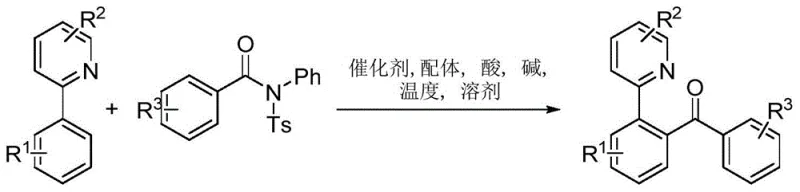
The pharmaceutical and fine chemical industries are constantly seeking more efficient and sustainable pathways to construct complex molecular scaffolds, particularly nitrogen-containing heterocyclic diarylketones which serve as critical building blocks for bioactive molecules. Patent CN112300061B introduces a groundbreaking preparation method that leverages transition metal catalysis to achieve direct C-H acylation, marking a significant departure from traditional synthetic routes. This technology utilizes N,N-phenyl-p-toluenesulfonylbenzamide derivatives as novel acylating agents, reacting with 2-phenylpyridine compounds under the influence of a ruthenium catalyst system. The innovation lies not only in the high yield and selectivity achieved but also in the utilization of amides, which are abundant, stable, and environmentally benign compared to conventional acyl sources. For R&D directors and procurement managers alike, this patent represents a pivotal shift towards greener, more cost-effective manufacturing processes that do not compromise on the purity or structural integrity required for high-value pharmaceutical intermediates.
The Limitations of Conventional Methods vs. The Novel Approach
The Limitations of Conventional Methods
Historically, the synthesis of diarylketone compounds has relied heavily on classical Friedel-Crafts acylation reactions, which, while effective, suffer from severe drawbacks that hinder modern industrial application. These traditional methods typically require harsh reaction conditions involving strong Lewis acids such as aluminum chloride or corrosive reagents like thionyl chloride and phosphorus trichloride to activate the acylating agent. Such aggressive chemical environments often lead to poor regioselectivity, resulting in complex mixtures of isomers that are difficult and expensive to separate. Furthermore, the stoichiometric use of these acids generates substantial amounts of hazardous chemical waste, creating significant environmental disposal challenges and increasing the overall cost of compliance. Alternative methods like carbonyl insertion coupling reactions necessitate the use of toxic carbon monoxide gas, posing serious safety risks and requiring specialized high-pressure equipment, while oxidation reactions often demand stoichiometric oxidants that further complicate post-reaction workup and reduce atomic economy.
The Novel Approach
In stark contrast, the methodology disclosed in CN112300061B offers a sophisticated solution by employing a ruthenium-catalyzed C-H activation strategy that operates under remarkably mild conditions. By utilizing readily available amides as the acyl source, this novel approach eliminates the need for pre-functionalized and hazardous reagents like acid chlorides or anhydrides. The reaction proceeds smoothly in anhydrous organic solvents at temperatures ranging from 80°C to 130°C, avoiding the extreme thermal or acidic stress that can degrade sensitive functional groups on the substrate. This method achieves high selectivity for the target mono-acylated product, effectively suppressing competing double-acylation side reactions that plague older techniques. The use of a directing group strategy, where the pyridine nitrogen coordinates with the metal center, ensures precise ortho-functionalization, thereby streamlining the purification process and significantly enhancing the overall efficiency of the synthetic route for producing high-purity pharmaceutical intermediates.
Mechanistic Insights into Ruthenium-Catalyzed C-H Acylation
The core of this technological advancement lies in the intricate catalytic cycle driven by ruthenium complexes, which facilitates the cleavage of inert C-H bonds with exceptional precision. The mechanism initiates with the coordination of the ruthenium catalyst to the nitrogen atom of the 2-phenylpyridine substrate, acting as a directing group that positions the metal center in close proximity to the ortho-C-H bond. This coordination lowers the activation energy required for C-H bond cleavage, allowing for the formation of a stable ruthenacycle intermediate. Subsequently, the amide acylating agent interacts with this organometallic species, likely undergoing oxidative addition or ligand exchange to transfer the acyl group to the ruthenium center. The presence of carboxylic acid additives plays a crucial role in facilitating proton shuttling and stabilizing the active catalytic species, while the phosphine ligands modulate the electronic and steric environment of the metal to optimize reactivity. This carefully balanced system ensures that the acyl group is inserted selectively into the C-H bond rather than reacting indiscriminately, which is the key to achieving the high yields reported in the patent examples.
From an impurity control perspective, this mechanism offers distinct advantages over electrophilic aromatic substitution. Because the reaction is driven by the specific coordination geometry of the catalyst-substrate complex, it inherently avoids the random poly-acylation often seen in Friedel-Crafts chemistry. The use of N,N-phenyl-p-toluenesulfonylbenzamide as the acyl source is particularly strategic; the sulfonyl group acts as a good leaving group that facilitates the acyl transfer while remaining stable enough to prevent premature decomposition. This stability minimizes the formation of side products derived from reagent degradation. Furthermore, the mild basic conditions employed (using carbonates or phosphates) prevent acid-catalyzed rearrangements or decompositions of sensitive moieties such as esters or vinyl groups, which might otherwise be compromised in harsher acidic media. This results in a cleaner crude reaction profile, reducing the burden on downstream purification units and ensuring that the final API intermediate meets stringent quality specifications with minimal effort.
How to Synthesize Nitrogen-Containing Heterocyclic Diarylketones Efficiently
Implementing this synthesis route requires careful attention to the stoichiometry of the catalytic system and the exclusion of moisture to maintain catalyst activity. The process begins by charging a reactor with the ruthenium precursor, such as dichlorobis(4-methylisopropylphenyl)ruthenium dimer, along with the appropriate phosphine ligand and carboxylic acid additive. The choice of solvent is critical, with anhydrous toluene, tert-butanol, or acetone proving optimal for solubilizing the reactants while supporting the catalytic cycle. Once the catalyst system is established, the 2-phenylpyridine substrate and the amide acylating agent are introduced, and the mixture is heated under an inert atmosphere. The detailed standardized synthesis steps, including specific molar ratios and workup procedures, are outlined in the guide below to ensure reproducibility and safety during scale-up operations.
- Prepare the reaction mixture by combining the 2-phenylpyridine substrate, N,N-phenyl-p-toluenesulfonylbenzamide acylating agent, ruthenium catalyst, phosphine ligand, carboxylic acid additive, and inorganic base in an anhydrous organic solvent.
- Purge the reactor with inert gas (nitrogen) to remove oxygen and moisture, then heat the mixture to a temperature range of 80°C to 130°C.
- Maintain stirring for 16 to 24 hours to ensure complete conversion, followed by purification via column chromatography or recrystallization to isolate the high-purity diarylketone product.
Commercial Advantages for Procurement and Supply Chain Teams
For procurement managers and supply chain heads, the adoption of this ruthenium-catalyzed amide acylation process translates into tangible operational benefits that extend far beyond the laboratory bench. The shift from hazardous acid chlorides to stable, commodity-grade amides fundamentally alters the risk profile and cost structure of the manufacturing process. By eliminating the need for corrosive reagents and toxic gases, facilities can reduce their expenditure on specialized containment equipment and hazardous waste disposal services. The robustness of the reaction conditions allows for the use of standard stainless steel reactors without the need for exotic lining materials required for strong acid handling. This compatibility with existing infrastructure significantly lowers the barrier to entry for commercial scale-up, enabling faster time-to-market for new drug candidates. Furthermore, the high selectivity of the reaction reduces the consumption of raw materials by minimizing the loss of valuable starting materials to side products, directly impacting the cost of goods sold.
- Cost Reduction in Manufacturing: The economic impact of switching to amide-based acylation is profound, primarily driven by the elimination of expensive and hazardous activating agents. Traditional methods often require stoichiometric amounts of Lewis acids and subsequent quenching steps that generate large volumes of saline waste, incurring high disposal fees. In this new process, the catalyst loading is low, and the amide reagents are generally cheaper and more shelf-stable than their acid chloride counterparts, reducing inventory spoilage risks. Additionally, the simplified workup procedure, often requiring only standard extraction or crystallization rather than complex neutralization and washing sequences, reduces labor hours and solvent consumption. These factors combine to deliver substantial cost savings in fine chemical manufacturing, making the production of complex diarylketones more economically viable for large-volume applications.
- Enhanced Supply Chain Reliability: Supply chain resilience is bolstered by the use of widely available and non-regulated raw materials. Acid chlorides and carbon monoxide are subject to strict transportation and storage regulations due to their toxicity and reactivity, which can lead to logistical delays and supply disruptions. In contrast, the amides and ruthenium catalysts used in this process are commercially accessible from multiple global suppliers, ensuring a steady flow of materials even during market fluctuations. The mild reaction conditions also mean that the process is less sensitive to minor variations in utility supply, such as cooling water temperature fluctuations, enhancing overall plant reliability. This stability allows for more accurate production planning and reduces the risk of batch failures that could disrupt the supply of critical pharmaceutical intermediates to downstream customers.
- Scalability and Environmental Compliance: Scaling this process from gram to ton scale is facilitated by its inherent safety and environmental profile. The absence of exothermic hazards associated with acid chloride additions and the lack of toxic gas evolution make the reaction safer to run in large vessels. From an environmental standpoint, the atom economy is superior to traditional oxidation or coupling methods, aligning with increasingly stringent global environmental regulations. The reduction in chemical waste generation simplifies the permitting process for new manufacturing lines and supports corporate sustainability goals. This eco-friendly profile not only mitigates regulatory risk but also enhances the brand value of the final product, appealing to end-users who prioritize green chemistry principles in their sourcing decisions for active pharmaceutical ingredients.
Frequently Asked Questions (FAQ)
The following questions address common technical and commercial inquiries regarding the implementation of this patented technology. These answers are derived directly from the experimental data and beneficial effects described in the patent documentation, providing clarity on the practical aspects of adopting this synthesis route. Understanding these details is essential for technical teams evaluating the feasibility of integrating this method into their existing production workflows.
Q: What are the primary advantages of using amides over acid chlorides in this synthesis?
A: Amides are significantly more stable, safer to handle, and cheaper than acid chlorides. They eliminate the need for hazardous reagents like thionyl chloride and reduce the generation of corrosive acidic waste, aligning with green chemistry principles.
Q: Can this ruthenium-catalyzed process be scaled for industrial production?
A: Yes, the process utilizes mild reaction conditions (80°C-130°C) and commercially available ruthenium catalysts. The absence of toxic gases like CO and the use of robust solvents like toluene make it highly suitable for large-scale commercial manufacturing.
Q: What is the regioselectivity profile of this C-H acylation method?
A: The method exhibits high regioselectivity directed by the pyridine nitrogen atom, which coordinates with the ruthenium center to activate the ortho-C-H bond specifically, minimizing the formation of unwanted isomers and simplifying downstream purification.
Partnering with NINGBO INNO PHARMCHEM: Your Reliable Nitrogen-Containing Heterocyclic Diarylketone Supplier
At NINGBO INNO PHARMCHEM, we recognize the transformative potential of advanced C-H activation technologies in modernizing the production of high-value chemical intermediates. As a leading CDMO partner, we possess extensive experience scaling diverse pathways from 100 kgs to 100 MT/annual commercial production, ensuring that innovative laboratory methods like the one described in CN112300061B can be successfully translated into robust industrial processes. Our state-of-the-art facilities are equipped to handle ruthenium-catalyzed reactions with the utmost precision, adhering to stringent purity specifications and rigorous QC labs to guarantee that every batch meets the exacting standards required by the global pharmaceutical industry. We are committed to delivering consistent quality and reliability, serving as a trusted extension of your R&D and supply chain teams.
We invite you to explore how this cutting-edge synthesis method can optimize your manufacturing costs and improve your supply chain security. Our technical team is ready to provide a Customized Cost-Saving Analysis tailored to your specific project needs, demonstrating the economic benefits of switching to this greener acylation protocol. Please contact our technical procurement team today to request specific COA data for similar compounds and discuss route feasibility assessments for your target molecules. Let us partner with you to bring your next generation of pharmaceutical intermediates to market faster, safer, and more efficiently.