
Advanced Rhodium-Catalyzed Synthesis of Chiral 2,3-Dihydrobenzo[b]thiophene 1,1-Dioxide Derivatives
The pharmaceutical industry continuously seeks robust synthetic routes for complex heterocyclic scaffolds that serve as critical backbones for bioactive molecules. Patent CN112430228B introduces a groundbreaking methodology for the preparation of chiral 2,3-dihydrobenzo[b]thiophene 1,1-dioxide derivatives, a structural motif prevalent in potent therapeutics such as TACE inhibitors, hypoglycemic agents, and HIV-1 reverse transcriptase inhibitors. This patent discloses a highly efficient rhodium-catalyzed asymmetric conjugate addition strategy that overcomes significant historical bottlenecks in accessing these chiral sulfones. Unlike traditional methods that rely on harsh conditions, this novel approach utilizes organoboron reagents and a bespoke chiral diene ligand to achieve exceptional stereocontrol. The technology represents a paradigm shift for reliable pharmaceutical intermediate supplier networks, enabling the production of high-purity compounds with quaternary carbon centers that were previously inaccessible via standard hydrogenation techniques.
![General reaction scheme for the synthesis of chiral 2,3-dihydrobenzo[b]thiophene 1,1-dioxide derivatives using rhodium catalysis](/insights/img/chiral-dihydrobenzothiophene-dioxide-synthesis-supplier-20260306055121-07.png)
The Limitations of Conventional Methods vs. The Novel Approach
The Limitations of Conventional Methods
Historically, the asymmetric synthesis of 2,3-dihydrobenzo[b]thiophene 1,1-dioxide derivatives has been plagued by severe technical constraints that hindered both research flexibility and commercial viability. The predominant existing methods, such as those reported by Pfaltz and Zhang, rely heavily on enantioselective hydrogenation using chiral iridium or rhodium complexes. These conventional pathways necessitate high-pressure hydrogen environments, which introduce significant safety hazards and require expensive, specialized reactor infrastructure that increases capital expenditure. Furthermore, the intrinsic mechanism of hydrogenation limits the structural diversity of the products; specifically, it is chemically challenging to synthesize derivatives containing quaternary carbon atoms or保留 unsaturated bond structures using these reduction methods. This limitation restricts the chemical space available to medicinal chemists, forcing them to abandon promising molecular architectures simply because the synthetic route cannot support the necessary steric complexity or functional group tolerance required for next-generation drug candidates.
The Novel Approach
The methodology outlined in patent CN112430228B fundamentally disrupts these limitations by employing a rhodium-catalyzed asymmetric 1,4-addition of organoboron reagents to the 2,3-dihydrobenzo[b]thiophene 1,1-dioxide core. This innovative route operates under mild thermal conditions, typically between 90°C and 120°C, eliminating the need for dangerous high-pressure hydrogen gas. The process demonstrates remarkable substrate universality, successfully accommodating arylboronic acids and vinyl boronates to generate a diverse array of derivatives, including those with sterically demanding quaternary carbon centers. By shifting from a reduction-based strategy to a constructive addition strategy, the invention allows for the precise installation of complex side chains while maintaining high enantiomeric excess. This breakthrough not only simplifies the synthetic workflow but also drastically expands the library of accessible chiral building blocks, providing a powerful tool for cost reduction in pharmaceutical intermediate manufacturing by streamlining the production of high-value targets.
Mechanistic Insights into Rhodium-Catalyzed Asymmetric Conjugate Addition
The core of this technological advancement lies in the sophisticated interplay between the rhodium(I) catalyst and the specially designed chiral diene ligand. The catalytic cycle initiates with the transmetallation of the organoboron reagent to the rhodium center, facilitated by the basic conditions provided by the solvent system. The chiral diene ligand, derived from a bicyclo[2.2.2]octane framework, creates a rigid and well-defined chiral pocket around the metal center. This steric environment dictates the facial selectivity of the subsequent migratory insertion step, where the rhodium-aryl or rhodium-vinyl species adds to the electron-deficient double bond of the sulfone substrate. The precision of this ligand design is critical, as it ensures that the incoming nucleophile approaches the substrate from a specific trajectory, thereby locking in the desired stereochemistry with high fidelity. This mechanistic elegance allows the reaction to proceed with excellent regioselectivity and enantioselectivity, even when dealing with substrates that possess significant steric bulk near the reaction site.
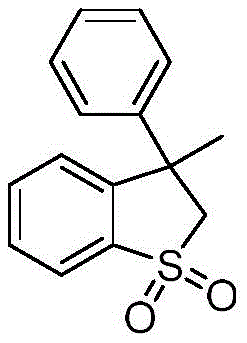
Furthermore, the reaction conditions are meticulously optimized to suppress the formation of unwanted byproducts and racemic mixtures, ensuring a clean impurity profile essential for regulatory compliance. The use of a biphasic solvent system comprising 1,4-dioxane and water plays a dual role: it solubilizes the inorganic bases and organoboron species while facilitating the hydrolysis of the rhodium intermediate to release the final product and regenerate the active catalyst. This aqueous compatibility is a significant green chemistry advantage, reducing the reliance on purely organic solvents and simplifying the downstream workup process. The ability to tolerate various functional groups on both the boron reagent and the sulfone substrate without compromising yield or optical purity highlights the robustness of this catalytic system. For R&D teams, understanding this mechanism provides confidence in scaling the process, as the clear definition of the catalytic cycle allows for predictable troubleshooting and optimization during technology transfer to larger reactors.
How to Synthesize Chiral 2,3-Dihydrobenzo[b]thiophene 1,1-Dioxide Efficiently
The practical implementation of this synthesis route is designed for operational simplicity and reproducibility, making it an ideal candidate for both laboratory discovery and pilot plant operations. The protocol involves dissolving the 2,3-dihydrobenzo[b]thiophene 1,1-dioxide substrate, the chosen organoboron reagent, the rhodium catalyst, and the chiral diene ligand in a mixed solvent of 1,4-dioxane and water under an inert nitrogen atmosphere. The reaction mixture is then heated to temperatures ranging from 90°C to 120°C, depending on the specific reactivity of the substrates, and stirred magnetically for a period of 12 to 24 hours. Upon completion, the reaction is worked up by dilution with ethyl acetate, followed by filtration through celite to remove metal residues and drying agents. The detailed standardized synthesis steps, including precise molar ratios and purification parameters, are provided below to ensure consistent results.
- Mix 2,3-dihydrobenzo[b]thiophene 1,1-dioxide, organoboron reagent, Rh catalyst, and chiral diene ligand in 1,4-dioxane/water under nitrogen.
- Heat the mixture to 90-120°C with magnetic stirring for 12-24 hours to complete the asymmetric conjugate addition.
- Work up the reaction by filtering through celite, removing the aqueous phase, and purifying the crude product via silica gel chromatography.
Commercial Advantages for Procurement and Supply Chain Teams
From a strategic procurement perspective, the adoption of this rhodium-catalyzed methodology offers substantial advantages over legacy hydrogenation processes, particularly regarding supply chain resilience and total cost of ownership. The elimination of high-pressure hydrogenation equipment removes a major bottleneck in manufacturing capacity, allowing production to occur in standard glass-lined or stainless steel reactors that are widely available in the fine chemical industry. This flexibility significantly reduces the barrier to entry for multiple suppliers, fostering a more competitive market environment that drives down costs for the end buyer. Moreover, the starting materials, specifically the organoboron reagents and the sulfone precursors, are commercially abundant and inexpensive, ensuring a stable supply chain that is less susceptible to the volatility often associated with specialized gaseous reagents or exotic catalysts. This stability is crucial for long-term project planning and inventory management.
- Cost Reduction in Manufacturing: The process achieves significant cost efficiencies by removing the need for expensive high-pressure reactors and the associated safety infrastructure required for handling hydrogen gas. Additionally, the high selectivity of the reaction minimizes the formation of difficult-to-separate impurities, which reduces the consumption of solvents and silica gel during the purification stage. The ability to synthesize complex quaternary carbon structures in a single step also shortens the overall synthetic sequence, lowering labor costs and increasing throughput. These factors combine to deliver a markedly lower cost of goods sold (COGS) for the final chiral intermediate compared to multi-step alternative routes.
- Enhanced Supply Chain Reliability: By utilizing robust and readily available organoboron chemistry, the manufacturing process becomes less dependent on fragile supply lines for specialized gases or sensitive catalysts that may have long lead times. The reaction conditions are mild and tolerant, reducing the risk of batch failures due to minor fluctuations in temperature or pressure, which enhances overall yield consistency. This reliability ensures that procurement managers can secure high-purity pharmaceutical intermediates with predictable delivery schedules, mitigating the risk of production delays that could impact downstream API synthesis timelines.
- Scalability and Environmental Compliance: The use of a 1,4-dioxane and water solvent system aligns well with modern environmental, health, and safety (EHS) standards, facilitating easier waste treatment and solvent recovery compared to processes relying on chlorinated solvents or volatile organic compounds. The scalability of the reaction is proven by its successful execution in standard laboratory glassware without specialized pressure vessels, indicating a smooth path to commercial scale-up of complex pharmaceutical intermediates. This ease of scale-up allows manufacturers to rapidly respond to increased demand without requiring extensive capital investment in new facility construction.
Frequently Asked Questions (FAQ)
The following questions address common technical and commercial inquiries regarding the implementation of this patented synthesis technology. These answers are derived directly from the experimental data and beneficial effects described in the patent documentation, providing clarity on the method's capabilities and limitations. Understanding these details is essential for technical teams evaluating the feasibility of integrating this route into their existing manufacturing portfolios.
Q: What are the limitations of traditional hydrogenation methods for this scaffold?
A: Conventional asymmetric hydrogenation often requires high-pressure hydrogen environments and struggles to synthesize derivatives containing quaternary carbon atoms or unsaturated bond structures, limiting substrate versatility.
Q: How does the Rh-catalyzed method improve stereoselectivity?
A: By utilizing a specialized chiral diene ligand with a rhodium catalyst, the process achieves high enantiomeric excess (up to 94% ee) under mild thermal conditions without needing high-pressure equipment.
Q: Is this synthesis route suitable for large-scale production?
A: Yes, the method uses readily available organoboron reagents and operates at moderate temperatures (90-120°C) in a biphasic solvent system, making it highly amenable to commercial scale-up and cost-effective manufacturing.
Partnering with NINGBO INNO PHARMCHEM: Your Reliable Chiral 2,3-Dihydrobenzo[b]thiophene 1,1-Dioxide Supplier
At NINGBO INNO PHARMCHEM, we recognize the transformative potential of the synthetic route described in patent CN112430228B for the production of advanced pharmaceutical intermediates. As a leading CDMO partner, we possess extensive experience scaling diverse pathways from 100 kgs to 100 MT/annual commercial production, ensuring that your transition from benchtop discovery to full-scale manufacturing is seamless and efficient. Our state-of-the-art facilities are equipped to handle rhodium-catalyzed reactions with the utmost precision, adhering to stringent purity specifications and operating within rigorous QC labs to guarantee the highest quality standards for every batch. We are committed to delivering chiral sulfone intermediates that meet the exacting requirements of the global pharmaceutical industry.
We invite you to collaborate with our technical team to explore how this innovative chemistry can optimize your supply chain and reduce your overall development costs. Please contact our technical procurement team today to request a Customized Cost-Saving Analysis tailored to your specific project needs. We are ready to provide specific COA data and comprehensive route feasibility assessments to demonstrate how our expertise can accelerate your timeline to market while maintaining the highest levels of quality and reliability.