
Revolutionizing 2-Furanone Production: A Cost-Effective Copper-Catalyzed Strategy for Global Supply Chains
Introduction to Advanced 2-Furanone Synthesis Technology
The pharmaceutical and agrochemical industries are constantly seeking robust, scalable, and cost-efficient synthetic routes for high-value heterocyclic scaffolds. Patent CN115477627A introduces a groundbreaking methodology for the synthesis of polysubstituted 2-furanone compounds, a structural motif pervasive in bioactive molecules ranging from selective COX-2 inhibitors to advanced acaricides. This technology leverages a copper-catalyzed carbene insertion and intramolecular cyclization strategy, utilizing beta-enaminones and alpha-diazoesters as versatile building blocks. The significance of this innovation lies not only in its chemical elegance but also in its potential to disrupt existing supply chains by offering a more sustainable and economically viable alternative to precious metal-catalyzed processes. As a reliable pharmaceutical intermediate supplier, understanding the nuances of such patented technologies is crucial for maintaining competitive advantage in the global market.
The 2-furanone skeleton is a privileged structure found in numerous natural products and synthetic drugs, including the antibiotic dehydroandrographolide and the anti-inflammatory agent rofecoxib. Its presence in agrochemicals, such as spirodiclofen, further underscores its versatility. However, traditional synthetic approaches often suffer from limitations regarding substrate scope, reaction severity, and catalyst cost. The method disclosed in CN115477627A addresses these pain points by employing a dual-metal system where copper acts as the primary catalyst and silver serves as an accelerator, enabling the construction of complex molecular architectures under relatively mild thermal conditions. This approach opens new avenues for the rapid assembly of diverse chemical libraries essential for modern drug discovery programs.
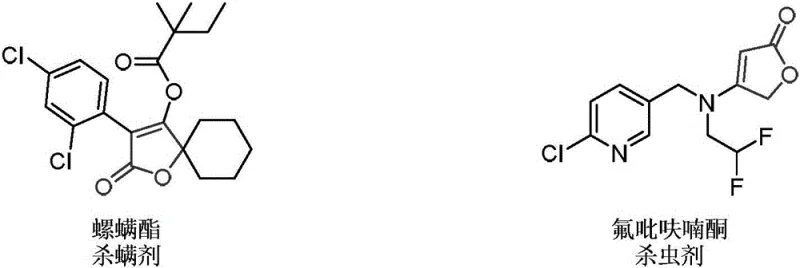
Furthermore, the strategic design of this synthesis allows for significant structural diversity at multiple positions on the furanone ring. By varying the substituents on the beta-enaminone and alpha-diazoester precursors, chemists can access a wide array of derivatives with tailored physicochemical properties. This modularity is particularly valuable for R&D directors aiming to optimize lead compounds for potency, selectivity, and metabolic stability. The ability to introduce functional groups such as halogens, alkoxy groups, and varied aryl systems without compromising yield or purity makes this technology a powerful tool in the medicinal chemist's arsenal. Consequently, adopting this methodology can accelerate the timeline from hit identification to candidate selection, providing a tangible strategic benefit to pharmaceutical development pipelines.
The Limitations of Conventional Methods vs. The Novel Approach
The Limitations of Conventional Methods
Historically, the construction of the 2-furanone core has relied heavily on transition metal catalysis, often involving palladium or rhodium complexes. While effective, these conventional methods present substantial challenges for large-scale manufacturing. Palladium catalysts are notoriously expensive, subject to volatile market pricing, and pose significant environmental hazards due to their toxicity. Moreover, the removal of residual palladium from the final active pharmaceutical ingredient (API) is a rigorous and costly process, requiring specialized scavengers and extensive purification steps to meet stringent regulatory limits. Additionally, many traditional protocols require harsh reaction conditions, such as high temperatures or strong bases, which can limit substrate compatibility and lead to the formation of unwanted by-products, thereby reducing overall process efficiency and increasing waste generation.
Another critical limitation of existing methodologies is the reliance on specialized or difficult-to-prepare starting materials. Some routes necessitate the use of terminal alkynes or specific activated esters that may not be commercially available off-the-shelf, requiring multi-step pre-synthesis. This increases the overall step count, lowers the cumulative yield, and complicates the supply chain logistics. For procurement managers, this translates to higher raw material costs and increased risk of supply disruption. Furthermore, the narrow scope of some older reactions restricts the chemical space that can be explored, hindering the ability to rapidly generate analogues for structure-activity relationship (SAR) studies. These cumulative inefficiencies create a compelling case for the adoption of newer, more streamlined synthetic technologies that prioritize both economic and operational excellence.
The Novel Approach
In stark contrast to these legacy methods, the novel approach detailed in patent CN115477627A utilizes a copper-silver catalytic system that fundamentally reshapes the economic and operational landscape of 2-furanone production. By substituting precious metals with earth-abundant copper salts, the process achieves a drastic reduction in catalyst costs while maintaining high catalytic activity. The reaction proceeds through a carbene insertion mechanism followed by spontaneous intramolecular cyclization, a pathway that is both atom-economical and highly efficient. This method operates under mild heating conditions, typically ranging from 10°C to 120°C, which significantly reduces energy consumption compared to high-temperature alternatives. The use of common organic solvents such as dichloromethane, DMF, or acetonitrile further enhances the practicality of the process for industrial application.
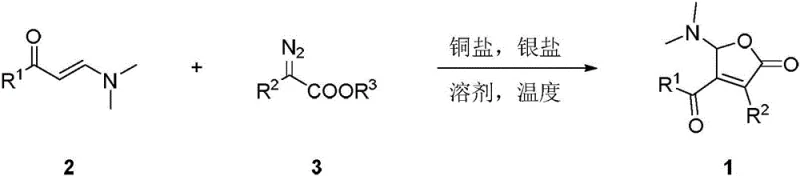
The versatility of this novel approach is exemplified by its broad substrate scope. The reaction tolerates a wide variety of functional groups on both the enaminone and diazoester components, allowing for the synthesis of complex, multi-substituted furanones in a single step. This convergent synthesis strategy minimizes the number of unit operations required, directly impacting the cost of goods sold (COGS). For supply chain heads, the simplicity of the operation—often involving simple mixing and heating in standard reactor vessels—means that existing infrastructure can be utilized without the need for specialized equipment. The robustness of the reaction conditions also implies a wider operating window, reducing the risk of batch failures and ensuring consistent product quality. This reliability is paramount for securing long-term supply contracts with major pharmaceutical and agrochemical clients who demand unwavering consistency.
Mechanistic Insights into Copper-Catalyzed Cyclization
The success of this synthetic methodology hinges on the intricate interplay between the copper catalyst and the diazo compound. The mechanism initiates with the coordination of the copper salt to the alpha-diazoester, facilitating the extrusion of nitrogen gas to generate a reactive copper-carbene intermediate. This electrophilic species is then intercepted by the nucleophilic beta-enaminone, specifically at the electron-rich double bond. The subsequent rearrangement and intramolecular attack of the carbonyl oxygen onto the activated carbon center drive the formation of the five-membered lactone ring. The silver salt plays a crucial role as a promoter, likely by stabilizing the carbene intermediate or facilitating the turnover of the copper catalyst, thereby enhancing the overall reaction rate and yield. Understanding this mechanistic pathway is vital for R&D teams looking to further optimize reaction parameters or adapt the chemistry to novel substrates.
From an impurity control perspective, this mechanism offers distinct advantages. The concerted nature of the cyclization tends to favor the formation of the desired 2-furanone regioisomer over potential side products. However, careful control of reaction stoichiometry and temperature is essential to minimize the formation of dimerization by-products from the diazo compound or hydrolysis products from the enaminone. The patent data suggests that optimizing the molar ratio of the copper catalyst to the substrate (typically between 1:0.01 and 1:1) is key to balancing reaction speed with selectivity. Furthermore, the choice of solvent can influence the stability of the intermediates; polar aprotic solvents like DMSO or DMF often provide superior results by stabilizing charged transition states. Rigorous monitoring of these parameters ensures that the final product meets the high-purity specifications required for downstream pharmaceutical applications.
How to Synthesize Polysubstituted 2-Furanone Efficiently
Implementing this synthesis in a laboratory or pilot plant setting requires precise adherence to the optimized protocols outlined in the patent. The process begins with the preparation of the two key building blocks: the beta-enaminone and the alpha-diazoester. The beta-enaminone is typically synthesized by condensing an acetophenone derivative with 1,1-dimethoxy-N,N-dimethylmethylamine in toluene at elevated temperatures, a straightforward transformation that yields the requisite nucleophile in high purity. Simultaneously, the alpha-diazoester is prepared via a diazo transfer reaction using p-toluenesulfonyl azide and a base like DBU in acetonitrile. Once these precursors are secured, the core cyclization reaction can be executed by combining them with the copper and silver salts in the chosen solvent system.
- Prepare beta-enaminone precursors by reacting acetophenone derivatives with 1,1-dimethoxy-N,N-dimethylmethylamine in toluene at 110°C.
- Synthesize alpha-diazoester precursors via diazo transfer reaction of phenylacetates using p-toluenesulfonyl azide and DBU base.
- Combine precursors with copper salt catalyst and silver salt accelerator in solvent (e.g., DCM, DMF) and heat to 10-120°C to induce cyclization.
Following the reaction completion, standard workup procedures involving aqueous quenching, extraction, and silica gel chromatography are employed to isolate the target 2-furanone. The simplicity of the purification process is another notable advantage, as the by-products are generally polar and easily separated from the lipophilic product. For those seeking to scale this process, it is recommended to conduct small-scale screening to identify the optimal solvent and temperature combination for the specific substrate pair, as steric and electronic factors can influence the ideal conditions. The detailed standardized synthesis steps provided in the full technical documentation ensure reproducibility and safety, particularly when handling diazo compounds which require careful management due to their potential instability.
Commercial Advantages for Procurement and Supply Chain Teams
For procurement managers and supply chain leaders, the adoption of this copper-catalyzed technology represents a strategic opportunity to optimize costs and mitigate risks associated with raw material sourcing. The shift from precious metal catalysts to base metals like copper eliminates the exposure to the volatile pricing of palladium and rhodium, leading to substantial cost savings in the bill of materials. Additionally, the reduced toxicity of copper simplifies waste management protocols and lowers the environmental compliance burden, which is increasingly critical in the current regulatory landscape. The use of readily available starting materials further enhances supply chain resilience, reducing the dependency on niche suppliers and minimizing the risk of production delays caused by raw material shortages.
- Cost Reduction in Manufacturing: The elimination of expensive palladium catalysts and the associated heavy metal scavenging steps results in a significantly leaner manufacturing process. By utilizing inexpensive copper and silver salts, the direct material costs are drastically lowered. Furthermore, the mild reaction conditions reduce energy consumption, contributing to lower utility costs per kilogram of product. The high atom economy of the reaction minimizes waste generation, which in turn reduces the costs associated with waste disposal and treatment. These cumulative efficiencies translate into a more competitive pricing structure for the final intermediate, allowing customers to achieve better margins in their own downstream processes.
- Enhanced Supply Chain Reliability: The reliance on commodity chemicals such as acetophenones and simple esters ensures a stable and continuous supply of raw materials. Unlike specialized reagents that may have long lead times or single-source dependencies, the precursors for this synthesis are widely produced by the global chemical industry. This abundance mitigates the risk of supply disruptions and allows for flexible sourcing strategies. Moreover, the robustness of the reaction conditions means that the process is less sensitive to minor variations in raw material quality, further enhancing the reliability of the supply chain. For supply chain heads, this translates to predictable lead times and the ability to scale production volumes rapidly in response to market demand.
- Scalability and Environmental Compliance: The operational simplicity of this method makes it highly amenable to scale-up from gram to multi-ton quantities. The reaction does not require exotic equipment or extreme pressures, allowing it to be run in standard glass-lined or stainless steel reactors found in most multipurpose chemical plants. From an environmental perspective, the use of less toxic metals and the generation of fewer hazardous by-products align with the principles of green chemistry. This facilitates easier regulatory approval and reduces the environmental footprint of the manufacturing site. The ability to produce high-purity intermediates with minimal environmental impact is a key differentiator in today's sustainability-focused market.
Frequently Asked Questions (FAQ)
The following questions address common technical and commercial inquiries regarding the implementation of this synthesis technology. These insights are derived directly from the experimental data and beneficial effects described in patent CN115477627A, providing a clear understanding of the method's capabilities and limitations. Understanding these details is essential for technical teams evaluating the feasibility of integrating this route into their existing manufacturing portfolios.
Q: What are the primary advantages of this copper-catalyzed method over traditional palladium routes?
A: The primary advantage is the replacement of expensive and toxic palladium catalysts with earth-abundant copper salts, which drastically reduces raw material costs and simplifies heavy metal removal processes in GMP manufacturing.
Q: Can this synthesis method tolerate diverse functional groups for drug discovery?
A: Yes, the method demonstrates excellent functional group tolerance, accommodating substituents such as halogens, methoxy groups, and various aryl rings, making it highly suitable for generating diverse libraries for medicinal chemistry.
Q: Is this process scalable for industrial production of agrochemical intermediates?
A: The patent indicates the method is operationally simple with mild reaction conditions and readily available starting materials, suggesting strong potential for scale-up from gram-level laboratory synthesis to multi-ton commercial production.
Partnering with NINGBO INNO PHARMCHEM: Your Reliable Polysubstituted 2-Furanone Supplier
At NINGBO INNO PHARMCHEM, we recognize the transformative potential of the copper-catalyzed synthesis of polysubstituted 2-furanones for the pharmaceutical and agrochemical sectors. Our team of expert chemists has extensively evaluated this technology and confirmed its viability for large-scale production. We possess extensive experience scaling diverse pathways from 100 kgs to 100 MT/annual commercial production, ensuring that our clients receive a consistent and high-quality supply of critical intermediates. Our state-of-the-art facilities are equipped with rigorous QC labs capable of meeting stringent purity specifications, guaranteeing that every batch adheres to the highest industry standards. We are committed to delivering value through technical excellence and operational reliability.
We invite you to collaborate with us to leverage this advanced synthetic route for your next project. Whether you require custom synthesis services or bulk supply of 2-furanone derivatives, our technical procurement team is ready to assist. Please contact us to request a Customized Cost-Saving Analysis tailored to your specific volume requirements. We encourage you to reach out for specific COA data and route feasibility assessments to determine how this innovative technology can enhance your supply chain efficiency and reduce your overall manufacturing costs. Let us be your partner in driving innovation and growth in the fine chemical industry.