
Scalable Visible Light Catalysis for High-Purity N-Formyl Amide Manufacturing
The pharmaceutical and fine chemical industries are constantly seeking greener, more efficient pathways to synthesize critical structural motifs like N-formyl amides, which serve as pivotal intermediates in drug discovery and agrochemical development. A significant breakthrough in this domain is documented in Chinese Patent CN115745822A, which discloses a novel preparation method for N-formyl amide compounds catalyzed by visible light. This technology represents a paradigm shift from energy-intensive thermal processes to mild, photochemical transformations. By leveraging inexpensive LED light sources as the energy driver and earth-abundant copper salts as catalysts, this method addresses long-standing challenges regarding reaction severity and environmental impact. For R&D directors and procurement specialists, understanding this patent is crucial as it outlines a route that potentially lowers production costs while enhancing safety profiles through the use of oxygen as the terminal oxidant instead of hazardous chemical oxidizers.
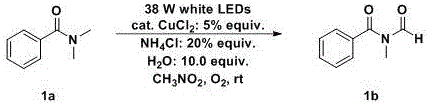
The limitations of conventional methods for synthesizing N-formyl amides have historically hindered large-scale adoption due to safety and cost concerns. Prior art, such as the Drago课题组 method from 1990, relied on cobalt complexes and high-pressure oxygen atmospheres, creating significant operational hazards and requiring expensive transition metals. Similarly, the Trudell approach utilized chromium trioxide and excess periodic acid at low temperatures, generating toxic heavy metal waste and demanding rigorous safety protocols for handling strong oxidants. Furthermore, methods employing Dess-Martin periodinane (DMP) or IBX, while effective, are prohibitively expensive for commercial scale-up and often limited to specific secondary amide substrates. These traditional thermal reactions typically require high activation energies, necessitating elevated temperatures that can degrade sensitive functional groups, thereby narrowing the substrate scope and complicating impurity profiles in complex molecule synthesis.
In stark contrast, the novel approach detailed in the patent utilizes a visible light-driven catalytic system that operates under remarkably mild conditions. The core innovation lies in the use of 38 W white LEDs to excite the catalytic species, allowing the reaction to proceed efficiently at room temperature without external heating. This photochemical strategy significantly reduces energy consumption and eliminates the thermal degradation risks associated with older methods. The system employs copper chloride, a commercially available and cost-effective catalyst, alongside ammonium chloride as a benign additive. Crucially, molecular oxygen serves as the sole oxidant, producing water as the only byproduct, which aligns perfectly with green chemistry principles. This methodology not only expands the substrate scope to include both aromatic and aliphatic amides but also simplifies the post-reaction workup, making it highly attractive for industrial applications where waste disposal costs are a major factor.
Mechanistic Insights into CuCl2-Catalyzed Visible Light Oxidation
The mechanistic pathway of this transformation involves a sophisticated interplay between photo-excitation and copper redox cycling. Upon irradiation with visible light, the copper catalyst likely undergoes a ligand-to-metal charge transfer or interacts with the amide substrate to generate a reactive radical species at the alpha-position of the nitrogen atom. This alpha-amino radical is then trapped by molecular oxygen, leading to the formation of a peroxy intermediate that subsequently collapses to yield the N-formyl group. The presence of ammonium chloride and water plays a critical role in stabilizing intermediates and facilitating proton transfer steps, ensuring high conversion rates. For R&D teams, understanding this mechanism is vital for troubleshooting; for instance, the requirement for oxygen saturation indicates that mass transfer of the gas into the liquid phase is a rate-limiting step, suggesting that reactor design for scale-up must prioritize efficient gas-liquid mixing to maintain optimal reaction kinetics and prevent the accumulation of partially oxidized byproducts.
Impurity control in this photochemical system is inherently superior to thermal methods due to the high selectivity of the radical generation step. Traditional thermal oxidations often lack specificity, leading to over-oxidation or degradation of sensitive moieties on the aromatic ring or aliphatic chain. However, the mild energy input from LEDs ensures that only the specific C-H bond adjacent to the nitrogen is activated, preserving other functional groups such as halogens, nitro groups, or esters present on the substrate. The patent data demonstrates excellent tolerance for electron-withdrawing and electron-donating substituents, with isolated yields ranging from moderate to excellent across diverse structures. This chemoselectivity minimizes the formation of side products, thereby reducing the burden on downstream purification processes like column chromatography or recrystallization, which directly translates to higher overall process efficiency and reduced solvent usage in a manufacturing setting.
How to Synthesize N-Formyl Amide Efficiently
Implementing this synthesis requires careful attention to the reaction setup to maximize photon flux and oxygen availability. The standard protocol involves charging a reaction vessel with the amide substrate, copper chloride catalyst, and ammonium chloride in nitromethane solvent. For tertiary amides, the addition of water is essential to facilitate the hydrolysis step inherent in the formylation mechanism. The mixture is then subjected to irradiation from 38 W white LEDs under an oxygen atmosphere at room temperature for approximately 72 hours. Following the reaction, the mixture is quenched with saturated sodium sulfite to remove residual oxidants, extracted with ethyl acetate, and purified via silica gel chromatography. The detailed standardized synthesis steps see the guide below.
- Prepare the reaction mixture by combining the amide substrate, copper chloride catalyst (5% equiv.), ammonium chloride additive, and nitromethane solvent in a Schlenk tube.
- Introduce water (10.0 equiv.) if using tertiary amides, then seal the vessel and purge with oxygen gas to establish an oxidative atmosphere.
- Irradiate the mixture with 38 W white LEDs at room temperature for 72 hours, then quench with sodium sulfite and purify via column chromatography.
Commercial Advantages for Procurement and Supply Chain Teams
From a procurement perspective, this technology offers substantial opportunities for cost optimization and supply chain resilience. The replacement of precious metal catalysts like cobalt or expensive stoichiometric oxidants like DMP with commodity copper chloride drastically reduces raw material costs. Copper salts are globally available in bulk quantities with stable pricing, shielding manufacturers from the volatility often seen in the markets for rare earth or noble metals. Furthermore, the use of oxygen from the air or simple oxygen cylinders eliminates the need to purchase, store, and dispose of hazardous chemical oxidants, which often carry high regulatory compliance costs and transportation fees. This shift to benign reagents simplifies the procurement process and reduces the administrative burden associated with managing controlled or dangerous substances in the supply chain.
Enhanced supply chain reliability is another critical benefit derived from the simplicity and robustness of this method. The reaction conditions are mild and do not require specialized high-pressure or high-temperature equipment, meaning that production can be easily transferred between different manufacturing sites or contract organizations without significant capital investment in new infrastructure. The broad substrate scope ensures that a single platform technology can be used to produce a wide variety of N-formyl amide intermediates, allowing for greater flexibility in production scheduling and inventory management. This versatility reduces the risk of bottlenecks when switching between different product campaigns, ensuring a steady flow of materials to downstream synthesis steps and minimizing lead times for high-purity pharmaceutical intermediates.
Scalability and environmental compliance are seamlessly integrated into this process, addressing the increasing regulatory pressure on chemical manufacturers to reduce their carbon footprint. The energy efficiency of LED lighting compared to thermal heating elements results in lower utility costs and a smaller environmental impact. Additionally, the atom economy of using oxygen as the oxidant means less chemical waste is generated per kilogram of product, simplifying waste treatment and lowering disposal fees. The ability to run reactions at room temperature also enhances process safety, reducing the risk of thermal runaways and allowing for larger batch sizes with confidence. These factors collectively contribute to a more sustainable manufacturing profile, which is increasingly becoming a key differentiator in securing contracts with environmentally conscious multinational corporations.
Frequently Asked Questions (FAQ)
The following questions address common technical and commercial inquiries regarding the implementation of this visible light catalytic method. These answers are derived directly from the experimental data and technical specifications provided in the patent documentation, ensuring accuracy for process development teams evaluating this technology for adoption. Understanding these details is essential for assessing the feasibility of integrating this route into existing production workflows and for anticipating potential challenges during scale-up activities.
Q: What are the advantages of visible light catalysis over traditional thermal methods for N-formyl amides?
A: Visible light catalysis operates at room temperature with low activation energy, avoiding the harsh conditions, high temperatures, and expensive metal catalysts required by conventional thermal oxidation methods.
Q: Is this method suitable for both aromatic and aliphatic amide substrates?
A: Yes, the patent demonstrates broad substrate compatibility, successfully converting various aromatic and aliphatic secondary and tertiary amides into N-formyl derivatives with good yields.
Q: What oxidant is used in this green synthesis protocol?
A: The process utilizes molecular oxygen (O2) as a green, atom-economical oxidant, eliminating the need for hazardous stoichiometric oxidants like periodic acid or chromium reagents.
Partnering with NINGBO INNO PHARMCHEM: Your Reliable N-Formyl Amide Supplier
NINGBO INNO PHARMCHEM stands at the forefront of adopting advanced synthetic methodologies to deliver high-quality chemical solutions. We possess extensive experience scaling diverse pathways from 100 kgs to 100 MT/annual commercial production, ensuring that the transition from laboratory discovery to industrial manufacturing is seamless and efficient. Our commitment to quality is underpinned by stringent purity specifications and rigorous QC labs that utilize state-of-the-art analytical instrumentation to verify every batch. By leveraging technologies like the visible light catalysis described in CN115745822A, we can offer clients a reliable N-formyl amide supplier partnership that balances cost-effectiveness with uncompromising quality standards.
We invite potential partners to engage with our technical procurement team to discuss how this innovative synthesis route can be tailored to your specific project needs. Whether you require a Customized Cost-Saving Analysis for your current supply chain or need to review specific COA data and route feasibility assessments for new targets, our experts are ready to assist. Contact us today to explore how our advanced manufacturing capabilities can support your drug development pipeline and help you achieve your commercial goals with speed and precision.