
Advanced Synthesis of Silicon Stereocenter Chiral Compounds for Commercial Pharmaceutical Applications
Advanced Synthesis of Silicon Stereocenter Chiral Compounds for Commercial Pharmaceutical Applications
The landscape of organosilicon chemistry is undergoing a significant transformation with the introduction of patent CN108558927B, which discloses a robust method for synthesizing silicon stereocenter chiral compounds. This technology addresses long-standing challenges in the field, specifically the difficulty in achieving high enantioselectivity and broad substrate compatibility when constructing chiral silicon centers. Unlike carbon analogs, silicon atoms possess a larger atomic radius and unique coordination capabilities, which historically led to issues with racemization and low chemical selectivity. The disclosed invention leverages a palladium-catalyzed intermolecular carbon-hydrogen bond asymmetric alkenylation strategy, utilizing alkyldiarylazaheteroarylsilanes as key starting materials. This approach not only streamlines the synthetic route but also ensures the production of high-value chiral silanes under remarkably mild conditions, positioning it as a critical advancement for the pharmaceutical intermediates sector.
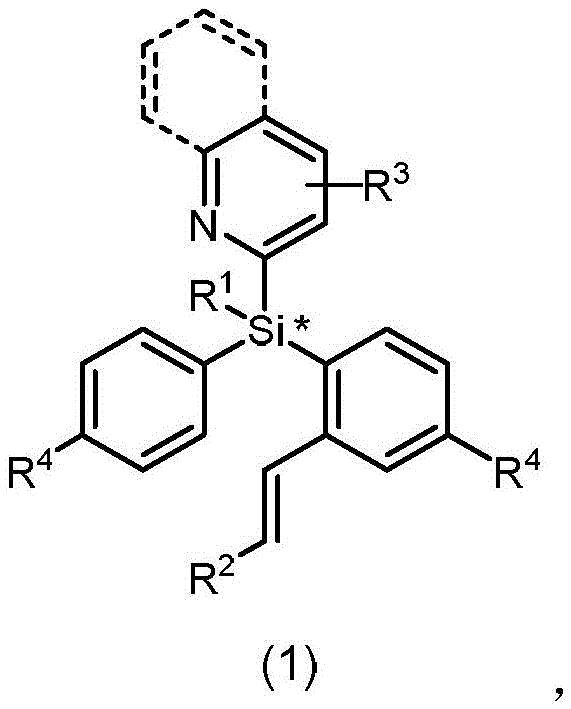
For research and development directors focusing on purity and structural feasibility, the general formula presented in the patent highlights the versatility of the resulting molecules. The structure accommodates a wide range of substituents, including alkyl groups at the R1 position and various ester, aryl, or amide groups at the R2 position. This modularity is essential for drug discovery teams who require diverse libraries of chiral building blocks. The presence of the nitrogen-containing heterocycle acts as a crucial directing group, facilitating the selective activation of the C-H bond adjacent to the silicon atom. This specific architectural feature is what enables the high degree of stereocontrol observed in the final products, making these compounds viable candidates for use as chiral auxiliaries, resolving agents, or direct active pharmaceutical ingredients.
The Limitations of Conventional Methods vs. The Novel Approach
The Limitations of Conventional Methods
Historically, the synthesis of silicon stereocenter chiral compounds has been plagued by significant technical hurdles that hindered their widespread adoption in commercial fine chemical manufacturing. Traditional methods often relied on resolution of racemic mixtures, which inherently limits the maximum theoretical yield to 50 percent and generates substantial waste. Furthermore, existing catalytic systems frequently suffered from poor substrate applicability, meaning that slight changes in the molecular structure could lead to a complete failure of the reaction or a drastic drop in enantiomeric excess. Many prior art processes required harsh reaction conditions, stringent exclusion of moisture and oxygen, and expensive, specialized ligands that were difficult to source on a kilogram scale. These factors combined to create a high barrier to entry for producing high-purity silicon stereocenter compounds, resulting in prohibitive costs and supply chain bottlenecks for downstream users.
The Novel Approach
The methodology described in CN108558927B represents a paradigm shift by employing a direct C-H functionalization strategy that bypasses the need for pre-functionalized substrates. By utilizing a palladium catalyst in conjunction with inexpensive, monoprotected chiral amino acid ligands, the process achieves high enantioselectivity without the need for complex ligand synthesis. The reaction proceeds efficiently with a variety of olefins, including acrylates and styrenes, demonstrating exceptional chemical selectivity. Crucially, the protocol operates under mild thermal conditions, typically between 60°C and 100°C, and does not strictly require dehydration or deoxygenation, simplifying the engineering controls needed for reactor setup. This novel approach effectively solves the problems of low stereoselectivity and poor substrate scope, offering a practical and reliable pathway for the commercial scale-up of complex pharmaceutical intermediates.
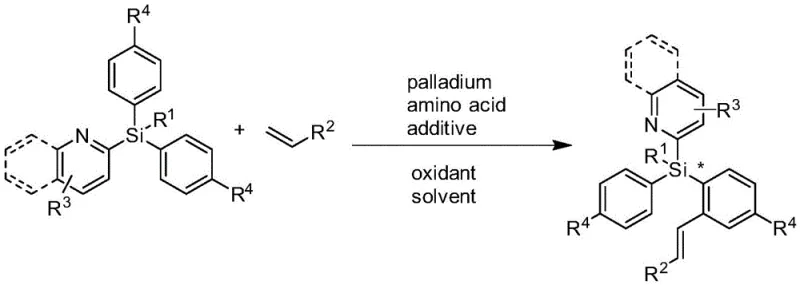
Mechanistic Insights into Palladium-Catalyzed Asymmetric Alkenylation
The core of this technological breakthrough lies in the intricate catalytic cycle driven by the palladium complex. The mechanism initiates with the coordination of the palladium species to the nitrogen atom of the aza-heterocyclic directing group on the silane substrate. This coordination brings the metal center into close proximity with the ortho-C-H bond on the phenyl ring attached to the silicon, facilitating a concerted metalation-deprotonation (CMD) process. This step is critical as it forms a stable palladacycle intermediate, locking the conformation of the molecule and setting the stage for stereochemical induction. The use of chiral amino acid ligands, such as Fmoc-Phe-OH or Boc-Val-OH as shown in the patent examples, creates a chiral environment around the palladium center. This chiral pocket dictates the facial selectivity during the subsequent migratory insertion of the olefin, ensuring that the new carbon-silicon bond is formed with the desired spatial orientation.
Following the olefin insertion, the catalytic cycle proceeds through a beta-hydride elimination step, which releases the alkenylated product and generates a palladium-hydride species. The regeneration of the active palladium(II) catalyst is achieved through the action of an oxidant, such as silver carbonate or molecular oxygen, which re-oxidizes the reduced palladium species back to its active state. This redox neutral or oxidative catalytic manifold is highly efficient and minimizes the formation of side products. From an impurity control perspective, the high chemoselectivity of the C-H activation step means that other functional groups on the olefin or the silane remain untouched. This reduces the burden on downstream purification processes, allowing for the isolation of high-purity silicon stereocenter compounds with minimal chromatographic effort. The robustness of this mechanism against varying electronic properties of substituents further underscores its utility in diverse synthetic applications.
How to Synthesize Silicon Stereocenter Chiral Compounds Efficiently
The synthesis protocol outlined in the patent provides a clear roadmap for laboratory and pilot-scale production. The process begins with the preparation of the alkyldiarylazaheteroarylsilane precursor, which can be synthesized via standard lithiation and silylation techniques. Once the substrate is ready, it is dissolved in a polar aprotic or protic solvent such as isopropanol or 1,4-dioxane. The catalytic system is then assembled by adding the palladium salt, the specific chiral amino acid ligand, and a copper or base additive. The olefin coupling partner is introduced in a molar excess to drive the equilibrium towards product formation. Detailed standardized synthesis steps are provided in the guide below to ensure reproducibility and safety.
- Prepare the reaction mixture by combining alkyldiarylazaheteroarylsilane substrate, palladium catalyst (e.g., Pd(OAc)2), chiral amino acid ligand, and additive in a suitable solvent.
- Introduce the olefin coupling partner and oxidant (such as silver carbonate or oxygen) to the reaction vessel under mild heating conditions between 60-100°C.
- Maintain stirring for 36-72 hours to ensure complete conversion, followed by purification via flash column chromatography to isolate the high-enantiomeric excess product.
Commercial Advantages for Procurement and Supply Chain Teams
For procurement managers and supply chain heads, the economic implications of this patent are profound. The shift towards a catalytic C-H activation method eliminates the need for stoichiometric amounts of expensive chiral reagents or multi-step protection/deprotection sequences that characterize older synthetic routes. By utilizing commodity chemicals like acrylic esters and simple amino acid derivatives as ligands, the raw material costs are significantly reduced. Furthermore, the tolerance of the reaction to ambient conditions regarding moisture and oxygen means that manufacturers do not need to invest in specialized glass-lined reactors with rigorous inert gas purging systems. This lowers the capital expenditure required for production facilities and reduces the operational overhead associated with maintaining strict anhydrous environments. The simplified workflow translates directly into cost reduction in pharmaceutical intermediate manufacturing, allowing for more competitive pricing in the global market.
- Cost Reduction in Manufacturing: The utilization of cheap, commercially available chiral amino acids as ligands replaces the need for bespoke, high-cost phosphine ligands often used in asymmetric catalysis. Additionally, the use of oxygen or silver carbonate as terminal oxidants is far more economical than traditional stoichiometric oxidants. The elimination of complex purification steps due to high selectivity further drives down processing costs, resulting in substantial overall savings for large-volume production runs without compromising on quality.
- Enhanced Supply Chain Reliability: The starting materials, including various substituted styrenes and acrylates, are bulk commodities with stable global supply chains. This reduces the risk of production delays caused by the scarcity of exotic reagents. The robustness of the reaction conditions ensures consistent batch-to-batch quality, which is critical for maintaining long-term contracts with downstream pharmaceutical clients. By reducing lead time for high-purity silicon stereocenter compounds, suppliers can respond more agilely to market demands and fluctuations.
- Scalability and Environmental Compliance: The mild reaction temperatures and the absence of toxic heavy metal waste streams (beyond the catalytic palladium which can be recovered) align well with green chemistry principles. The process generates minimal waste compared to resolution-based methods, simplifying wastewater treatment and disposal. This environmental efficiency facilitates easier regulatory approval for commercial plants and supports the sustainability goals of modern chemical enterprises, ensuring long-term viability and compliance with increasingly strict environmental regulations.
Frequently Asked Questions (FAQ)
The following questions address common technical and commercial inquiries regarding the implementation of this synthesis technology. These answers are derived directly from the experimental data and specifications provided in the patent documentation, ensuring accuracy and relevance for technical decision-makers. Understanding these details is crucial for evaluating the feasibility of integrating this method into existing production lines.
Q: What are the key advantages of this Pd-catalyzed method over traditional silane synthesis?
A: This method utilizes inexpensive monoprotected chiral amino acids as ligands and operates under mild conditions without strict dehydration requirements, significantly simplifying the operational complexity compared to traditional methods that often suffer from poor substrate applicability and low stereoselectivity.
Q: What types of olefins are compatible with this silicon stereocenter synthesis?
A: The process demonstrates broad substrate scope, successfully accommodating various commercially available olefins including acrylates (methyl, ethyl, butyl), substituted styrenes (methoxy, nitro, fluoro, chloro), and acrylamides, allowing for diverse functionalization of the silicon center.
Q: Is this process suitable for large-scale commercial manufacturing?
A: Yes, the protocol uses cheap and readily available raw materials, avoids complex anhydrous/anaerobic setups, and employs simple post-processing techniques like flash column chromatography, making it highly scalable for industrial production of fine chemical intermediates.
Partnering with NINGBO INNO PHARMCHEM: Your Reliable Silicon Stereocenter Chiral Compound Supplier
As the demand for chiral organosilicon materials grows in the pharmaceutical and agrochemical sectors, having a partner with deep technical expertise is essential. NINGBO INNO PHARMCHEM possesses extensive experience scaling diverse pathways from 100 kgs to 100 MT/annual commercial production, ensuring that your supply needs are met with precision and consistency. Our rigorous QC labs and commitment to stringent purity specifications guarantee that every batch of silicon stereocenter compounds meets the highest international standards. We understand the critical nature of chiral purity in drug development and are equipped to handle the complexities of asymmetric synthesis at an industrial level.
We invite you to collaborate with us to leverage this advanced Pd-catalyzed technology for your next project. Our technical procurement team is ready to provide a Customized Cost-Saving Analysis tailored to your specific volume requirements. Please contact us to request specific COA data and route feasibility assessments, and let us demonstrate how our optimized manufacturing processes can enhance your supply chain efficiency and product quality.