
Advanced Titanocene-Catalyzed Synthesis of Bis-Indolylmethane Derivatives for Commercial Scale-Up
The pharmaceutical and fine chemical industries are constantly seeking robust methodologies for constructing complex heterocyclic scaffolds, particularly bis-indolylmethane derivatives, which serve as pivotal intermediates in the synthesis of bioactive alkaloids and potential therapeutic agents exhibiting anti-tumor and antiviral properties. Patent CN103467354A introduces a groundbreaking catalytic system that addresses the longstanding inefficiencies in this domain by utilizing titanocene dichloride as a central catalyst. This innovation represents a significant leap forward in synthetic organic chemistry, offering a pathway that is not only operationally simple but also remarkably efficient and environmentally benign. By leveraging a synergistic combination of a titanium-based catalyst, specific ligands, and organic bases, this method achieves high yields under exceptionally mild conditions, thereby setting a new benchmark for the reliable pharmaceutical intermediates supplier market. The technology effectively bridges the gap between academic novelty and industrial applicability, ensuring that high-purity bis-indolylmethane derivatives can be produced with consistent quality and reduced environmental impact.
The Limitations of Conventional Methods vs. The Novel Approach
The Limitations of Conventional Methods
Historically, the synthesis of bis-indolylalkyl compounds has relied heavily on Brønsted or Lewis acid catalysts, many of which suffer from severe practical drawbacks that hinder their adoption in large-scale manufacturing. Early methods utilizing montmorillonite K-10 required excessive catalyst loading and cumbersome solvent elution processes for separation, leading to significant waste generation and increased processing costs. Furthermore, solid acid catalysts like sulfated titania necessitate harsh preparation conditions involving extremely air-sensitive titanium tetrachloride and high-temperature calcination, creating substantial safety hazards and logistical challenges for procurement teams. Other approaches employing expensive transition metal complexes, such as iridium or indium salts, impose prohibitive raw material costs, while enzymatic routes often demand impractically long reaction times of up to 72 hours and large volumes of organic solvents. These conventional techniques frequently involve toxic reagents like N-substituted sulfonylimines or require complex recovery procedures using large amounts of ether, rendering them unsuitable for cost reduction in pharmaceutical intermediates manufacturing where efficiency and safety are paramount.
The Novel Approach
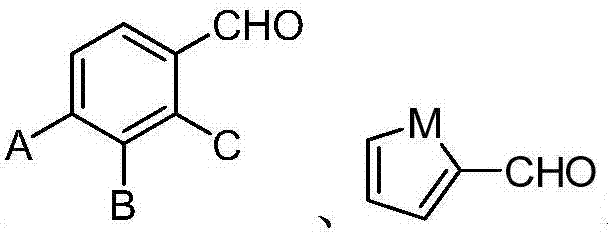
In stark contrast to these legacy technologies, the novel approach detailed in the patent utilizes a sophisticated yet accessible catalytic system centered around titanocene dichloride, which is inexpensive, non-toxic, and remarkably stable against air and moisture. This method facilitates the direct condensation of indole and various aldehydes under mild thermal conditions, typically around 50°C, achieving completion within a mere 0.5 to 2 hours. The inclusion of specific ligands such as 8-hydroxyquinoline or catechol, alongside organic bases like aniline or pyridine, creates a highly active catalytic environment that promotes rapid electrophilic substitution without the need for hazardous activators. This streamlined process eliminates the requirement for complex catalyst pre-treatment or inert atmosphere handling, significantly simplifying the operational workflow. As illustrated in the general reaction scheme below, the versatility of this system allows for a broad substrate scope, accommodating various substituted aldehydes to produce diverse bis-indolylmethane derivatives with excellent yields.
Mechanistic Insights into Titanocene-Catalyzed Electrophilic Substitution
The efficacy of this synthetic route lies in the unique electronic properties of the titanocene dichloride catalyst, which acts as a potent Lewis acid to activate the carbonyl group of the aldehyde towards nucleophilic attack by the indole ring. The coordination of the ligand, such as 8-hydroxyquinoline, to the titanium center likely stabilizes the active catalytic species and modulates its electrophilicity, preventing premature deactivation or side reactions that often plague metal-catalyzed processes. Simultaneously, the organic base plays a crucial role in facilitating proton transfer steps during the reaction cycle, ensuring the regeneration of the aromatic system in the final product and maintaining the overall neutrality of the reaction medium. This delicate balance between the metal center, ligand, and base creates a highly efficient catalytic cycle that drives the reaction to completion rapidly while minimizing the formation of polymeric byproducts or oligomers that typically arise from uncontrolled indole polymerization under strong acidic conditions.
From an impurity control perspective, the mildness of the reaction conditions is instrumental in preserving the structural integrity of sensitive functional groups present on the aldehyde substrates, such as nitro, methoxy, or halogen substituents. Unlike harsh acidic environments that might promote hydrolysis or rearrangement of these groups, the neutral to slightly basic environment maintained by the amine base ensures high chemoselectivity. This results in a cleaner crude reaction profile, which significantly reduces the burden on downstream purification processes like column chromatography. The ability to tolerate a wide range of electronic environments on the aromatic ring, from electron-donating methoxy groups to electron-withdrawing nitro groups, demonstrates the robustness of the catalytic system. This mechanistic understanding is critical for R&D directors aiming to adapt this chemistry for the commercial scale-up of complex pharmaceutical intermediates, as it guarantees consistent product quality and minimizes batch-to-batch variability.
How to Synthesize Bis-Indolylphenylmethane Efficiently
To implement this advanced synthesis in a laboratory or pilot plant setting, operators follow a straightforward protocol that begins with dissolving the aldehyde and indole precursors in a suitable organic solvent such as acetonitrile. The specific example of synthesizing bis-indolylphenylmethane serves as a model for this process, where precise stoichiometric ratios of the catalyst, ligand, and base are added to the reaction mixture to initiate the transformation. The reaction is then heated to a moderate temperature of 50°C, allowing the catalytic cycle to proceed efficiently over a short duration of approximately one hour. Upon completion, the reaction is quenched with a saturated bicarbonate solution, and the product is extracted using ethyl acetate, dried, and purified to yield the target compound as a high-purity solid. The detailed standardized synthesis steps for this specific derivative are outlined in the guide below, providing a clear roadmap for technical teams to replicate these results.
- Dissolve the selected aldehyde and indole in an organic solvent such as acetonitrile, maintaining a molar ratio between 1: 2 and 1:4.
- Introduce the catalytic system comprising titanocene dichloride (1-5 mol%), a specific ligand like 8-hydroxyquinoline, and a base such as aniline.
- Heat the reaction mixture to 50°C for 0.5 to 2 hours, followed by standard aqueous workup and column chromatography purification.
Commercial Advantages for Procurement and Supply Chain Teams
For procurement managers and supply chain heads, the adoption of this titanocene-catalyzed methodology offers profound strategic benefits that extend far beyond simple chemical yield improvements. The shift away from precious metal catalysts like iridium or rare earth metals like indium and dysprosium translates directly into substantial cost savings, as titanocene dichloride is a commodity chemical with a stable and abundant global supply chain. Furthermore, the elimination of complex catalyst preparation steps, such as the high-temperature calcination required for solid acid catalysts, drastically simplifies the manufacturing workflow, reducing both energy consumption and equipment wear. This operational simplicity enhances supply chain reliability by minimizing the number of unit operations and potential failure points, ensuring that production schedules can be met consistently without the delays associated with specialized catalyst synthesis or recovery.
- Cost Reduction in Manufacturing: The economic advantage of this process is driven primarily by the replacement of expensive and scarce metal catalysts with affordable titanocene dichloride, which is commercially available at a fraction of the cost of iridium or indium salts. Additionally, the mild reaction conditions eliminate the need for energy-intensive heating or cooling systems, further lowering utility costs associated with production. The high atom economy and reduced solvent usage during workup contribute to a leaner manufacturing process, avoiding the expenses linked to the disposal of large volumes of hazardous waste solvents like ether used in older recovery methods. By streamlining the synthesis into a one-pot procedure with minimal purification requirements, manufacturers can achieve significant reductions in overall production costs while maintaining high profit margins.
- Enhanced Supply Chain Reliability: The reliance on air- and water-stable reagents removes the logistical burdens associated with handling moisture-sensitive materials, which often require specialized storage and transportation infrastructure. This stability ensures that raw materials can be sourced from a wider range of suppliers without the risk of degradation during transit, thereby securing the supply chain against disruptions. The broad substrate scope of the reaction means that a single catalytic platform can be used to produce a diverse library of derivatives, allowing manufacturers to respond flexibly to changing market demands without retooling or requalifying new processes. This versatility is crucial for maintaining continuity of supply in the fast-paced pharmaceutical sector, where timeline adherence is critical for downstream drug development.
- Scalability and Environmental Compliance: Scaling this process from gram to ton quantities is facilitated by the absence of exothermic hazards and the use of common organic solvents that are easily managed in standard reactor vessels. The non-toxic nature of the catalyst and the avoidance of heavy metal contaminants simplify the regulatory compliance landscape, making it easier to meet stringent environmental standards for pharmaceutical intermediates. The reduced generation of hazardous waste and the potential for solvent recycling align with green chemistry principles, enhancing the sustainability profile of the manufacturing site. This environmental compatibility not only mitigates regulatory risks but also appeals to increasingly eco-conscious stakeholders and partners in the global chemical supply chain.
Frequently Asked Questions (FAQ)
The following questions address common technical and commercial inquiries regarding the implementation of this patented synthesis method, drawing directly from the experimental data and comparative analysis provided in the source documentation. These insights are designed to clarify the operational benefits and technical feasibility for stakeholders evaluating this technology for integration into their existing production portfolios. Understanding these nuances is essential for making informed decisions about process adoption and resource allocation.
Q: What are the primary advantages of using titanocene dichloride over traditional Lewis acids?
A: Unlike traditional Lewis acids such as InCl3 or expensive iridium complexes, titanocene dichloride is significantly cheaper, non-toxic, and stable to air and moisture, eliminating the need for inert atmosphere handling and reducing operational costs.
Q: How does this method improve reaction efficiency compared to prior art?
A: This novel approach reduces reaction times drastically from up to 72 hours in enzymatic methods to merely 0.5-2 hours, while operating at a mild temperature of 50°C, thereby enhancing throughput and energy efficiency.
Q: Is this synthesis method suitable for large-scale pharmaceutical production?
A: Yes, the method utilizes readily available starting materials and avoids hazardous reagents like N-sulfonylimides, making it highly scalable and compliant with stringent environmental and safety regulations required for commercial API intermediate manufacturing.
Partnering with NINGBO INNO PHARMCHEM: Your Reliable Bis-Indolylmethane Derivatives Supplier
At NINGBO INNO PHARMCHEM, we recognize the transformative potential of this titanocene-catalyzed technology in advancing the production of high-value pharmaceutical intermediates. As a premier CDMO partner, we possess extensive experience scaling diverse pathways from 100 kgs to 100 MT/annual commercial production, ensuring that the theoretical benefits of this patent are fully realized in a practical industrial setting. Our state-of-the-art facilities are equipped with rigorous QC labs capable of meeting stringent purity specifications, guaranteeing that every batch of bis-indolylmethane derivatives delivered meets the exacting standards required by global pharmaceutical clients. We are committed to leveraging our technical expertise to optimize this process further, ensuring maximum efficiency and consistency for your supply chain.
We invite you to collaborate with us to explore how this innovative synthesis route can enhance your product portfolio and reduce your overall manufacturing costs. Our technical procurement team is ready to provide a Customized Cost-Saving Analysis tailored to your specific volume requirements and quality targets. Please contact us today to request specific COA data and comprehensive route feasibility assessments, and let us demonstrate how our commitment to technological excellence can drive value for your organization.