
Advanced Photocatalytic Synthesis of Selenoesters for Commercial Pharmaceutical Intermediates
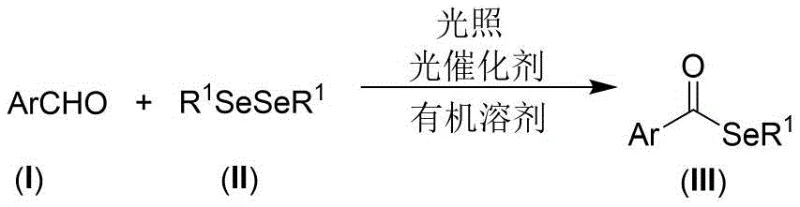
The landscape of organoselenium chemistry is undergoing a significant transformation driven by the urgent need for sustainable and efficient synthetic methodologies in the pharmaceutical and fine chemical sectors. Patent CN115385835A introduces a groundbreaking photocatalytic strategy for the synthesis of selenoester compounds, utilizing visible light as a renewable energy source to drive the coupling of aromatic aldehydes and diselenides. This innovation addresses critical bottlenecks in traditional organoselenium synthesis, offering a pathway to high-purity intermediates under exceptionally mild conditions. By leveraging an Iridium-based photocatalyst, specifically Ir(p-CF3ppy)3, the method achieves remarkable conversion rates without the need for thermal activation or stoichiometric metal oxidants. For R&D directors and process chemists, this represents a pivotal shift towards greener chemistry that maintains rigorous standards for product quality and impurity profiles. The technology not only streamlines the synthetic route but also aligns with global regulatory trends demanding reduced environmental footprints in chemical manufacturing. As we delve into the technical specifics, it becomes clear that this photocatalytic protocol offers a robust solution for producing complex selenoesters essential for drug discovery and material science applications.
The Limitations of Conventional Methods vs. The Novel Approach
The Limitations of Conventional Methods
Historically, the construction of the selenoester motif has relied heavily on classical nucleophilic acyl substitution reactions involving activated carboxylic acid derivatives such as acid chlorides or anhydrides. These traditional pathways often necessitate the generation of selenolate nucleophiles using strong bases or reactive metal reagents, which introduces significant safety hazards and operational complexities. The handling of pyrophoric reagents and the generation of stoichiometric amounts of metal salt waste pose severe challenges for environmental compliance and waste management protocols in large-scale facilities. Furthermore, the harsh reaction conditions required for these transformations frequently lead to poor functional group tolerance, limiting the scope of substrates that can be successfully employed without protecting group strategies. The need for low temperatures or anhydrous conditions further escalates energy consumption and infrastructure costs, making these processes economically inefficient for commercial production. Consequently, the industry has long sought a methodology that circumvents these drawbacks while delivering high yields and purity.
The Novel Approach
The photocatalytic method disclosed in the patent data revolutionizes this landscape by enabling the direct oxidative coupling of readily available aromatic aldehydes with diselenides under ambient conditions. By utilizing visible light irradiation, typically from standard fluorescent lamps, the system activates the photocatalyst to generate reactive radical species that facilitate the bond formation without external heating. This approach completely eliminates the requirement for pre-activated acid derivatives or hazardous metal reductants, thereby simplifying the raw material supply chain and reducing the overall cost of goods sold. The reaction proceeds smoothly at room temperature in common organic solvents like dichloromethane, demonstrating exceptional compatibility with a diverse array of functional groups including halogens, nitro groups, and heterocycles. This mildness ensures that sensitive moieties remain intact, significantly reducing the formation of by-products and simplifying downstream purification processes. Ultimately, this novel strategy provides a scalable, safe, and environmentally benign alternative that is perfectly suited for modern continuous flow or batch manufacturing environments.
Mechanistic Insights into Photocatalytic Oxidative Coupling
The core of this synthetic breakthrough lies in the sophisticated interplay between the Iridium photocatalyst and the visible light source, which orchestrates a radical-mediated oxidation mechanism. Upon irradiation, the Ir(p-CF3ppy)3 catalyst absorbs photons to reach an excited state, possessing sufficient redox potential to interact with the diselenide substrate. This interaction likely induces homolytic cleavage of the Se-Se bond or facilitates a single-electron transfer process, generating selenium-centered radicals that are highly reactive towards the carbonyl carbon of the aldehyde. The subsequent formation of a radical intermediate is followed by hydrogen atom abstraction or further oxidation to yield the final selenoester product, regenerating the ground-state catalyst to close the catalytic cycle. This mechanism avoids the high-energy transition states associated with thermal pathways, allowing the reaction to proceed with high efficiency even at low catalyst loadings of 1 mol%. Understanding this cycle is crucial for process optimization, as it highlights the importance of light intensity and oxygen exclusion to maintain catalyst longevity and prevent side reactions.
From an impurity control perspective, the mild nature of this photocatalytic system inherently suppresses common degradation pathways often seen in thermal syntheses. The absence of strong acids, bases, or high temperatures minimizes the risk of aldol condensations, over-oxidation to carboxylic acids, or decomposition of the sensitive selenium-carbon bond. The high selectivity observed across various substrates, as evidenced by the clean conversion of electron-rich and electron-deficient aldehydes, suggests a robust mechanistic pathway that is insensitive to electronic perturbations on the aromatic ring. This predictability is vital for GMP manufacturing, where consistent impurity profiles are mandatory for regulatory approval. Furthermore, the use of column chromatography with standard petroleum ether and ethyl acetate mixtures indicates that the by-product profile is simple, likely consisting mainly of unreacted starting materials or minor selenium species that are easily separated. This level of control ensures that the final selenoester intermediates meet the stringent purity specifications required for downstream pharmaceutical applications.
How to Synthesize Selenoester Compounds Efficiently
Implementing this photocatalytic protocol in a laboratory or pilot plant setting requires careful attention to reaction setup and light source positioning to ensure uniform irradiation. The general procedure involves charging a reaction vessel with the aromatic aldehyde and diselenide in a molar ratio favoring the aldehyde, typically around 2:1, to drive the equilibrium towards the product. The addition of the Iridium catalyst and the establishment of an inert nitrogen atmosphere are critical steps to prevent catalyst deactivation by oxygen quenching. Once the mixture is prepared, placing the vessel in close proximity to a visible light source, such as a 23W compact fluorescent lamp, initiates the reaction which typically reaches completion within 20 hours at room temperature. Detailed standardized synthesis steps for specific derivatives are outlined in the guide below, ensuring reproducibility and safety during scale-up operations.
- Combine aromatic aldehyde and diselenide compound in an organic solvent such as dichloromethane within a reaction vessel equipped with a magnetic stirrer.
- Add the photocatalyst Ir(p-CF3ppy)3 to the mixture and purge the system with nitrogen gas to ensure an inert atmosphere.
- Irradiate the reaction mixture with a visible light source (e.g., 23W fluorescent lamp) at room temperature for approximately 20 hours, then purify the crude product via column chromatography.
Commercial Advantages for Procurement and Supply Chain Teams
For procurement managers and supply chain leaders, the adoption of this photocatalytic technology translates into tangible strategic benefits regarding cost stability and sourcing flexibility. The reliance on commodity chemicals like benzaldehyde derivatives and diphenyl diselenide means that raw materials are globally available from multiple vendors, mitigating the risk of supply disruptions associated with exotic reagents. The elimination of expensive transition metal scavengers and complex waste treatment procedures associated with traditional heavy metal catalysis significantly reduces the operational expenditure per kilogram of product. Moreover, the ability to run reactions at room temperature drastically lowers energy consumption compared to processes requiring reflux or cryogenic cooling, contributing to a lower carbon footprint and reduced utility costs. These factors combined create a resilient supply chain model that is less susceptible to volatile energy markets and regulatory changes regarding chemical waste disposal.
- Cost Reduction in Manufacturing: The economic viability of this process is underpinned by the use of earth-abundant starting materials and the avoidance of costly stoichiometric oxidants or activators. By removing the need for specialized equipment capable of handling extreme temperatures or pressures, capital expenditure for new production lines is substantially minimized. The high yields reported across a broad substrate scope mean that less raw material is wasted, directly improving the atom economy and reducing the cost of goods sold. Additionally, the simplified workup procedure involving standard solvent evaporation and chromatography reduces labor hours and solvent usage, further driving down the total manufacturing cost without compromising on quality.
- Enhanced Supply Chain Reliability: Sourcing reliability is significantly improved as the key reagents, aromatic aldehydes and diselenides, are established bulk chemicals with mature global supply chains. Unlike proprietary catalysts or unstable intermediates that may have long lead times, these inputs can be procured rapidly from qualified suppliers to meet just-in-time manufacturing schedules. The robustness of the reaction conditions also means that production is less likely to be halted by minor fluctuations in environmental controls or utility availability. This stability allows for more accurate forecasting and inventory management, ensuring that critical pharmaceutical intermediates are available when needed for downstream API synthesis.
- Scalability and Environmental Compliance: Scaling this process from gram to ton quantities is straightforward due to the absence of exothermic hazards or gas evolution that often complicate batch scale-up. The use of visible light can be adapted to flow chemistry reactors, which offer superior light penetration and heat dissipation, enabling continuous manufacturing modes that enhance throughput. From an environmental standpoint, the green nature of the reaction aligns with increasingly strict global regulations on volatile organic compounds and heavy metal discharge. This compliance reduces the administrative burden of environmental permitting and ensures long-term operational continuity in regions with rigorous ecological standards.
Frequently Asked Questions (FAQ)
The following questions address common technical and commercial inquiries regarding the implementation of this photocatalytic selenoester synthesis technology. These answers are derived directly from the experimental data and beneficial effects described in the patent documentation to provide clarity for potential partners. Understanding these aspects is essential for evaluating the feasibility of integrating this method into existing production workflows.
Q: What are the primary advantages of this photocatalytic method over traditional selenoester synthesis?
A: Unlike traditional methods that often require harsh conditions, metal reagents, or pre-functionalized acid derivatives, this photocatalytic approach operates at room temperature using visible light. It eliminates the need for toxic metal waste disposal and offers superior functional group compatibility, resulting in higher yields and a greener process profile.
Q: What is the substrate scope for this selenoester synthesis reaction?
A: The method demonstrates excellent versatility, accommodating a wide range of aromatic aldehydes including those with electron-donating groups (like methyl and methoxy), electron-withdrawing groups (like chloro and nitro), and heterocyclic systems such as furan and thiophene. Additionally, various diselenides, including diaryl and dialkyl variants, are effectively converted into the corresponding selenoesters.
Q: Is this process suitable for large-scale commercial production?
A: Yes, the process is highly amenable to scale-up due to its mild reaction conditions (room temperature) and the use of inexpensive, commercially available starting materials. The elimination of cryogenic conditions or high-pressure equipment simplifies reactor requirements, facilitating safer and more cost-effective manufacturing at the 100 kg to multi-ton scale.
Partnering with NINGBO INNO PHARMCHEM: Your Reliable Selenoester Supplier
At NINGBO INNO PHARMCHEM, we recognize the transformative potential of this photocatalytic technology in advancing the synthesis of high-value organoselenium intermediates. As a dedicated CDMO partner, we possess extensive experience scaling diverse pathways from 100 kgs to 100 MT/annual commercial production, ensuring that your transition from lab bench to market is seamless and efficient. Our state-of-the-art facilities are equipped with advanced photoreactors and rigorous QC labs capable of meeting stringent purity specifications for complex pharmaceutical intermediates. We are committed to leveraging this innovative chemistry to deliver cost-effective solutions that accelerate your drug development timelines while maintaining the highest standards of quality and safety.
We invite you to engage with our technical procurement team to discuss how this novel synthetic route can be tailored to your specific project requirements. By requesting a Customized Cost-Saving Analysis, you can gain deeper insights into the economic benefits of switching to this green methodology for your supply chain. We encourage you to contact us today to obtain specific COA data and route feasibility assessments that demonstrate our capability to be your trusted partner in the manufacture of high-purity selenoesters.