
Scalable Production Of Difluorophenyl Alkyl Ethers Via Novel Etherification Technology
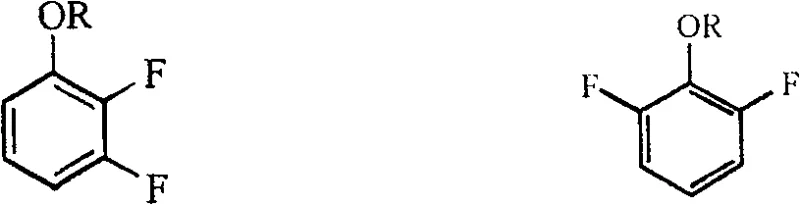
The global demand for fluorinated intermediates continues to surge, driven by their critical role in modern pharmaceutical and agrochemical architectures. Patent CN100584814C introduces a transformative preparation method for difluorophenyl alkyl ethers, specifically targeting the simultaneous production of 2,3-difluorophenyl alkyl ether and 2,6-difluorophenyl alkyl ether. This technology represents a significant departure from legacy synthesis routes, utilizing 1,2,3-trifluorobenzene (TFB) as a readily available starting material. By employing a direct etherification strategy with alkali metal or alkaline earth metal alkoxides, the process achieves high conversion rates under remarkably mild conditions. For R&D directors and procurement specialists seeking a reliable difluorophenyl alkyl ether supplier, this patent outlines a pathway that drastically simplifies the supply chain while maintaining rigorous purity standards essential for drug substance manufacturing.
The Limitations of Conventional Methods vs. The Novel Approach
The Limitations of Conventional Methods
Historically, the synthesis of specific fluorinated anisoles and phenetoles has been plagued by complex multi-step sequences and prohibitive costs. Traditional methodologies, such as those disclosed in earlier literature, often rely on the use of expensive organometallic reagents to effect deprotonation at the 1-position of ortho-difluorobenzenes. These organometallic species are not only costly but also introduce significant safety hazards due to their pyrophoric nature and sensitivity to moisture. Furthermore, subsequent oxidation or electrophilic substitution steps required to install the hydroxyl or alkoxy group often proceed with poor regioselectivity, leading to difficult-to-separate impurity profiles. Another existing route involves the reaction of diazomethane with fluorophenols, which poses severe toxicity and explosion risks, rendering it unsuitable for large-scale commercial operations. These legacy processes result in extended lead times, elevated waste generation, and inconsistent batch-to-batch quality, creating substantial bottlenecks for manufacturers aiming for cost reduction in pharmaceutical intermediate manufacturing.
The Novel Approach
In stark contrast, the methodology described in CN100584814C leverages a direct nucleophilic aromatic substitution mechanism that bypasses the need for hazardous organometallics entirely. By reacting commercially sourced 1,2,3-trifluorobenzene directly with alkali metal alkoxides (such as sodium methoxide or potassium ethoxide) or alcohols in the presence of a base, the process achieves efficient fluorine displacement. This one-pot etherification strategy allows for the concurrent formation of both 2,3 and 2,6 isomers, which are subsequently separated via fractional distillation. The reaction conditions are exceptionally温和 (mild), typically operating between 30°C and 95°C, which minimizes thermal degradation and side reactions. This approach not only streamlines the operational workflow but also significantly lowers the barrier to entry for commercial scale-up of complex fluorinated intermediates, offering a robust solution for high-volume production needs.
Mechanistic Insights into Alkali-Promoted Etherification
The core chemical transformation relies on a classic nucleophilic aromatic substitution (SnAr) mechanism, facilitated by the strong electron-withdrawing effects of the adjacent fluorine atoms on the benzene ring. When 1,2,3-trifluorobenzene is exposed to a strong nucleophile like a methoxide or ethoxide ion, the electron density at the ipso-carbon is sufficiently depleted to allow for attack. The reaction proceeds through a Meisenheimer complex intermediate, where the negative charge is delocalized across the ring, stabilized by the electronegative fluorine substituents. The subsequent elimination of a fluoride ion restores aromaticity, yielding the desired alkyl ether. The presence of multiple fluorine atoms creates competing reactive sites, which explains the formation of both 2,3 and 2,6 isomers. However, the kinetic control afforded by the moderate reaction temperatures (preferably 30°C to 95°C) ensures that the formation of high-boiling poly-ether byproducts is kept below 15%, preserving the overall mass balance and yield efficiency.
Impurity control is meticulously managed through the choice of solvent and base stoichiometry. The patent specifies the use of solvents like toluene, which provides an optimal medium for the reaction while facilitating easy removal during workup. By maintaining the molar ratio of the alkoxide to the trifluorobenzene between 1.5 and 2.5 equivalents, the process ensures complete consumption of the starting material without excessive excess that could drive secondary substitution reactions. Post-reaction, the mixture undergoes a straightforward aqueous wash to remove inorganic salts, followed by drying and solvent stripping. The final purification step utilizes vacuum fractional distillation at pressures between 20mmHg and 30mmHg. This precise control over pressure and temperature allows for the sharp separation of the 2,6-isomer (boiling around 90-110°C) from the 2,3-isomer (boiling around 105-125°C), consistently delivering products with purity levels exceeding 99% as confirmed by gas chromatography.
How to Synthesize Difluorophenyl Alkyl Ether Efficiently
The synthesis protocol detailed in the patent offers a reproducible framework for generating high-quality fluorinated ethers suitable for downstream coupling reactions. The process begins with the preparation of the alkoxide species or the selection of a pre-formed alkali metal alkoxide salt, which is then mixed with the aromatic substrate in an inert solvent. Reaction monitoring is typically conducted via gas chromatography to determine the endpoint, which is generally reached within 11 hours depending on the specific temperature profile employed. Following the reaction, a standard extractive workup removes inorganic byproducts, and the crude oil is subjected to high-efficiency rectification.
- React 1,2,3-trifluorobenzene with alkali metal alkoxides or alcohols in the presence of a base at 30-95°C.
- Perform aqueous workup to remove salts and separate the organic layer containing the crude ether mixture.
- Purify the mixture via fractional distillation under reduced pressure (20-30mmHg) to isolate high-purity isomers.
Commercial Advantages for Procurement and Supply Chain Teams
For procurement managers and supply chain heads, the adoption of this etherification technology translates into tangible strategic benefits regarding cost stability and operational reliability. The shift away from proprietary or hazardous reagents towards commodity chemicals fundamentally alters the cost structure of the supply chain. By eliminating the dependency on sensitive organometallic reagents, manufacturers can source raw materials from a broader, more competitive vendor base, thereby mitigating supply risk and price volatility. Furthermore, the simplified unit operations reduce the capital expenditure required for specialized containment systems, allowing for more flexible production scheduling and faster turnaround times for custom orders.
- Cost Reduction in Manufacturing: The elimination of expensive organometallic reagents and the associated cryogenic or strictly anhydrous conditions required for their handling results in substantial cost savings. The process utilizes common bases like potassium hydroxide or sodium alkoxides, which are available in bulk quantities at fraction of the cost of specialty lithiation reagents. Additionally, the mild reaction temperatures reduce energy consumption for heating and cooling, while the high selectivity minimizes the loss of valuable starting materials to tar or polymeric byproducts, directly improving the overall process economics.
- Enhanced Supply Chain Reliability: Utilizing 1,2,3-trifluorobenzene as a feedstock leverages a well-established supply chain for fluorinated aromatics, ensuring consistent availability even during market fluctuations. The robustness of the reaction conditions means that production is less susceptible to minor variations in utility supply or environmental conditions, guaranteeing on-time delivery for critical project milestones. This reliability is crucial for pharmaceutical clients who require uninterrupted supply of key intermediates to maintain their own regulatory filings and production schedules.
- Scalability and Environmental Compliance: The process generates minimal hazardous waste compared to traditional routes, as the primary byproduct is inorganic fluoride salt which is easily managed in wastewater treatment streams. The absence of heavy metal catalysts or toxic diazomethane simplifies regulatory compliance and reduces the burden on EHS departments. This green chemistry profile facilitates easier permitting for capacity expansion, enabling seamless scale-up from pilot kilogram quantities to multi-ton commercial production without the need for extensive process re-validation.
Frequently Asked Questions (FAQ)
The following questions address common technical inquiries regarding the implementation and optimization of this difluorophenyl alkyl ether synthesis route. These insights are derived directly from the experimental data and claims within the patent documentation, providing a clear understanding of the process capabilities and limitations for potential partners.
Q: What are the primary advantages of this etherification method over traditional organometallic routes?
A: Unlike conventional methods requiring expensive organometallic reagents and harsh deprotonation conditions, this patent utilizes mild etherification with commercially available alkoxides, significantly lowering raw material costs and safety risks.
Q: How is the separation of 2,3 and 2,6 isomers achieved efficiently?
A: The process employs fractional distillation under vacuum (20-30mmHg), leveraging the distinct boiling point differences between the 2,3 and 2,6 isomers to achieve purities exceeding 99%.
Q: Can this process be scaled for industrial production of pharmaceutical intermediates?
A: Yes, the reaction conditions are mild (0-120°C) and utilize common solvents like toluene, making it highly suitable for large-scale commercial manufacturing with minimal equipment requirements.
Partnering with NINGBO INNO PHARMCHEM: Your Reliable Difluorophenyl Alkyl Ether Supplier
At NINGBO INNO PHARMCHEM, we recognize the critical importance of high-purity fluorinated building blocks in the development of next-generation therapeutics. Our technical team possesses extensive experience scaling diverse pathways from 100 kgs to 100 MT/annual commercial production, ensuring that the transition from laboratory discovery to industrial manufacturing is seamless. We adhere to stringent purity specifications and operate rigorous QC labs equipped with advanced analytical instrumentation to verify every batch against the highest industry standards. Our commitment to quality assurance means that every gram of 2,3-difluorophenyl alkyl ether or 2,6-difluorophenyl alkyl ether we supply meets the exacting requirements necessary for GMP API synthesis.
We invite you to collaborate with us to optimize your supply chain for these vital intermediates. Our experts are ready to provide a Customized Cost-Saving Analysis tailored to your specific volume requirements and purity needs. Please contact our technical procurement team today to request specific COA data and comprehensive route feasibility assessments, and let us demonstrate how our advanced manufacturing capabilities can support your long-term strategic goals.