
Advanced Manufacturing of Cyclic Sultones for Next-Generation Lithium-Ion Battery Electrolytes
The landscape of lithium-ion battery technology is constantly evolving, driven by the relentless demand for higher energy density and longer cycle life. Central to this advancement is the development of superior non-aqueous electrolyte additives, among which cyclic sulfonic acid esters, commonly known as sultones, play a pivotal role. Patent CN103833723A introduces a groundbreaking manufacturing methodology that addresses the longstanding inefficiencies in producing these critical compounds. This intellectual property outlines a robust pathway for synthesizing both hydroxysultones and unsaturated sultones, such as 1,3-propylene sultone, starting from readily available dihydroxy sulfonates. For industry leaders seeking a reliable electrolyte additive supplier, understanding this technological shift is paramount, as it promises not only enhanced product performance but also a more sustainable and economically viable supply chain for next-generation energy storage materials.
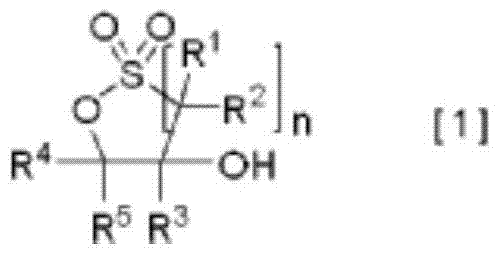
The Limitations of Conventional Methods vs. The Novel Approach
The Limitations of Conventional Methods
Historically, the industrial production of key sultone intermediates has been plagued by significant technical and economic hurdles that hinder cost reduction in battery chemical manufacturing. Traditional routes often rely on complex multi-step sequences involving hazardous bromination reactions, which suffer from poor atomic efficiency as the bromine atoms ultimately become waste. Furthermore, established methods frequently necessitate the use of prohibitively expensive catalysts, such as rubidium-based systems, or harsh reagents like 1,3-dibromo-5,5-dimethylhydantoin, which drive up operational expenditures. A critical failure point in legacy processes is the thermal instability during dehydrobromination steps; operating under solvent-free and high-temperature conditions often leads to decomposition and gelation, resulting in low yields and inconsistent product quality that fails to meet the stringent purity specifications required for high-performance electronic chemicals.
The Novel Approach
In stark contrast, the methodology disclosed in the patent leverages a direct and efficient transformation of dihydroxy sulfonates into cyclic sulfites, which serve as versatile precursors for the target sultones. This innovative strategy bypasses the need for expensive halogenating agents and rare metal catalysts, instead utilizing cost-effective thionyl halides under controlled conditions. The process is designed to be highly adaptable, allowing for continuous one-pot operations that seamlessly integrate cyclization and hydrolysis steps. By shifting the synthetic paradigm to this milder, solution-phase chemistry, manufacturers can achieve stable production on a technical scale, effectively mitigating the risks of thermal decomposition and ensuring a consistent supply of high-purity cyclic sulfonic acid esters essential for modern battery formulations.
Mechanistic Insights into Thionyl Halide-Mediated Cyclization
The core of this technological breakthrough lies in the precise mechanistic control exerted during the reaction between dihydroxy sulfonates and thionyl halides. The first operational stage involves the formation of a cyclic sulfite intermediate through a nucleophilic substitution mechanism, where the hydroxyl groups of the sulfonate salt attack the sulfur center of the thionyl halide. This step is critically dependent on the stoichiometric balance and the presence of catalytic amounts of nitrogen-containing bases, such as DMF or pyridine, which activate the thionyl species without promoting side reactions. The subsequent hydrolysis or alcoholysis of this cyclic sulfite intermediate proceeds via a ring-opening and reclosure mechanism that installs the necessary hydroxyl functionality, yielding the hydroxysultone with high regioselectivity. This controlled pathway ensures that the structural integrity of the sulfonate backbone is maintained throughout the transformation, preventing the formation of isomeric byproducts that often contaminate products from radical-based halogenation routes.
Furthermore, the transition from hydroxysultone to unsaturated sultone is achieved through a sophisticated elimination sequence that preserves the delicate cyclic structure. By reacting the hydroxysultone with acid halides or anhydrides to form a leaving group, followed by treatment with a mild base, the system facilitates a clean dehydrohalogenation or dehydration. This mechanistic finesse is crucial for impurity control, as it avoids the aggressive conditions that typically lead to polymerization or ring-opening degradation. The ability to tune reaction parameters, such as temperature ranges between -20°C and 100°C, allows for the optimization of kinetic versus thermodynamic control, ensuring that the final unsaturated sultone product possesses the exceptional purity profile demanded by R&D directors for use in sensitive electrochemical environments.
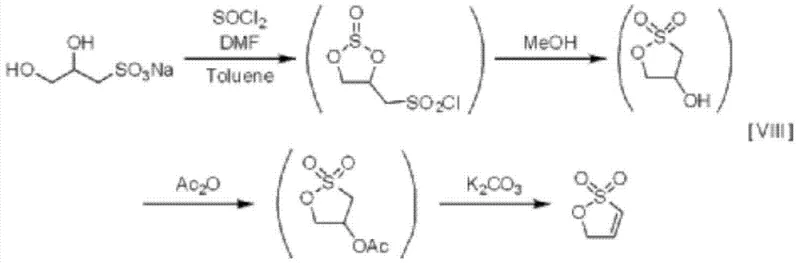
How to Synthesize 1,3-Propylene Sultone Efficiently
The practical implementation of this synthesis route offers a streamlined workflow that significantly reduces processing time and equipment requirements. The process begins with the suspension of a dihydroxy propanesulfonate salt in a suitable organic solvent, followed by the controlled addition of thionyl chloride to generate the cyclic sulfite intermediate. Without isolating this intermediate, water or alcohol is introduced to effect hydrolysis, directly yielding the hydroxysultone precursor. For the final conversion to the unsaturated derivative, the reaction mixture is treated with an acylating agent and a base to induce elimination. Detailed standardized synthesis steps see the guide below.
- React dihydroxy sulfonate salts with thionyl halides to form cyclic sulfite intermediates.
- Hydrolyze the cyclic sulfite with water or alcohol to obtain hydroxysultone.
- Treat hydroxysultone with acid halides or anhydrides followed by base treatment to yield unsaturated sultone.
Commercial Advantages for Procurement and Supply Chain Teams
For procurement managers and supply chain heads, the adoption of this patented methodology translates into tangible strategic benefits that extend beyond simple chemical yield. The elimination of scarce and expensive reagents, such as rubidium catalysts and complex brominating agents, fundamentally alters the cost structure of sultone production, making it less susceptible to volatile raw material markets. Moreover, the capability to execute multiple reaction steps in a single vessel drastically simplifies the manufacturing footprint, reducing the need for extensive intermediate storage and handling infrastructure. This consolidation of unit operations not only lowers capital expenditure but also enhances supply chain reliability by minimizing the number of potential failure points in the production line, ensuring a more consistent and predictable delivery schedule for critical battery components.
- Cost Reduction in Manufacturing: The economic viability of this process is underpinned by the substitution of high-cost inputs with commodity chemicals like thionyl chloride and sodium sulfite derivatives. By removing the dependency on precious metal catalysts and reducing the stoichiometric waste associated with traditional bromination, the overall variable cost per kilogram of product is significantly decreased. Additionally, the high atom efficiency of the cyclization reaction means that a greater proportion of the raw material mass is converted into the final valuable product, further driving down the effective cost of goods sold and improving margin potential for large-scale commercial operations.
- Enhanced Supply Chain Reliability: The reliance on widely available and stable raw materials ensures that production schedules are not disrupted by the supply constraints often associated with specialty reagents. The robustness of the reaction conditions, which tolerate a broader range of temperatures and solvent systems compared to sensitive organometallic routes, allows for greater flexibility in manufacturing planning. This resilience is critical for maintaining continuity of supply in the fast-paced electronics sector, where delays in component availability can have cascading effects on downstream battery assembly and device manufacturing timelines.
- Scalability and Environmental Compliance: From an environmental and regulatory perspective, this method offers a cleaner alternative to legacy processes that generate significant halogenated waste streams. The reduction in hazardous byproducts simplifies waste treatment protocols and lowers the environmental compliance burden, facilitating easier permitting for capacity expansion. The inherent safety of operating at moderate temperatures and pressures also supports safer scale-up from pilot plants to multi-ton commercial facilities, enabling manufacturers to rapidly respond to surging market demand for electric vehicle batteries without compromising on safety or sustainability standards.

Frequently Asked Questions (FAQ)
The following questions address common technical and commercial inquiries regarding the implementation of this advanced sultone synthesis technology. These insights are derived directly from the experimental data and comparative analysis presented in the patent documentation, providing a factual basis for evaluating the process feasibility. Understanding these nuances is essential for stakeholders assessing the integration of this method into existing production portfolios or new facility designs.
Q: What are the primary advantages of this new sultone synthesis method over conventional bromination routes?
A: The new method eliminates the use of expensive brominating agents and rubidium catalysts, significantly reducing raw material costs and waste generation while improving atomic efficiency.
Q: Can this process be scaled for industrial production of battery additives?
A: Yes, the patent explicitly demonstrates that the method allows for stable production on a technical scale, utilizing mild reaction conditions that minimize decomposition and gelation risks common in older thermal methods.
Q: How does the one-pot synthesis approach impact overall yield and purity?
A: By performing cyclization and hydrolysis continuously in a single vessel, the process avoids intermediate isolation losses, leading to higher overall yields and a cleaner impurity profile suitable for sensitive electronic applications.
Partnering with NINGBO INNO PHARMCHEM: Your Reliable 1,3-Propylene Sultone Supplier
As the global demand for high-performance energy storage solutions accelerates, the need for a dependable partner capable of delivering complex chemical intermediates at scale has never been more critical. NINGBO INNO PHARMCHEM stands at the forefront of this industry, leveraging deep expertise in process chemistry to bridge the gap between laboratory innovation and industrial reality. Our team possesses extensive experience scaling diverse pathways from 100 kgs to 100 MT/annual commercial production, ensuring that the theoretical benefits of advanced patents like CN103833723A are fully realized in practical manufacturing settings. We maintain stringent purity specifications and operate rigorous QC labs to guarantee that every batch of cyclic sultone meets the exacting standards required for lithium-ion battery electrolytes.
We invite you to collaborate with us to optimize your supply chain and secure a competitive advantage in the battery materials market. Our technical procurement team is ready to provide a Customized Cost-Saving Analysis tailored to your specific volume requirements and quality targets. Please contact us today to request specific COA data and route feasibility assessments, and let us demonstrate how our commitment to technical excellence can support your long-term growth and innovation goals in the electronic chemicals sector.