
Revolutionizing Spiro-Dienone Production: A Catalyst-Free, Oxygen-Promoted Strategy for High-Purity Pharmaceutical Intermediates
Revolutionizing Spiro-Dienone Production: A Catalyst-Free, Oxygen-Promoted Strategy for High-Purity Pharmaceutical Intermediates
The landscape of pharmaceutical intermediate manufacturing is constantly evolving, driven by the urgent need for greener, more efficient synthetic pathways that align with global sustainability goals. A groundbreaking development in this sector is detailed in Chinese Patent CN113461700B, which discloses a novel application of oxygen-promoted dearomatization reactions for constructing spiro-dienone skeletons. This technology represents a paradigm shift from traditional oxidative methods, offering a streamlined, one-step approach to generating high-value biologically active structures. For R&D directors and procurement specialists alike, this innovation addresses critical pain points regarding purity, cost, and environmental compliance. By leveraging molecular oxygen as the sole oxidant in a benign solvent system, this method eliminates the need for stoichiometric heavy metal oxidants or complex catalytic systems, thereby simplifying downstream processing and significantly enhancing the overall safety profile of the manufacturing process.
The Limitations of Conventional Methods vs. The Novel Approach
The Limitations of Conventional Methods
Historically, the construction of cyclohexadienone and spiro-dienone cores has relied heavily on harsh chemical oxidants or transition metal catalysts that pose significant challenges for large-scale production. Traditional protocols often utilize reagents such as hypervalent iodine compounds, lead tetraacetate, or various metal-based oxidants which generate substantial amounts of toxic waste and require rigorous purification steps to meet stringent pharmaceutical impurity standards. Furthermore, many existing methods suffer from limited substrate scope, poor atom economy, and the necessity for strictly anhydrous or cryogenic conditions that drive up energy consumption and operational expenditures. The presence of residual metals in the final product is a particular concern for API manufacturers, necessitating expensive scavenging technologies and extensive analytical testing to ensure compliance with ICH Q3D guidelines. These factors collectively contribute to prolonged lead times and inflated production costs, creating a bottleneck in the supply chain for complex drug intermediates.
The Novel Approach
In stark contrast to these legacy techniques, the methodology described in CN113461700B introduces a remarkably elegant solution by employing molecular oxygen as the primary driving force for dearomatization. This catalyst-free protocol utilizes phenol-containing diarylmethane compounds as readily available starting materials, transforming them directly into spiro-dienone derivatives under mild thermal conditions. The reaction proceeds efficiently in n-butanol, a green solvent that is not only cost-effective but also facilitates easier product isolation compared to halogenated or polar aprotic solvents. By removing the dependency on external catalysts and hazardous oxidants, this new approach drastically reduces the chemical footprint of the synthesis. The operational simplicity of merely heating the reaction mixture under an oxygen atmosphere allows for a more robust and reproducible process, making it an ideal candidate for reliable pharmaceutical intermediate supplier networks aiming to optimize their manufacturing portfolios.
Mechanistic Insights into Oxygen-Promoted Dearomatization
The core of this technological breakthrough lies in the unique ability of molecular oxygen to facilitate the oxidative dearomatization of phenolic substrates without auxiliary activation. Mechanistically, the reaction likely proceeds through a radical pathway where the phenolic hydroxyl group interacts with dissolved oxygen to generate reactive oxygen species or phenoxyl radicals. These intermediates then undergo intramolecular cyclization or coupling with the adjacent aromatic ring to form the characteristic spirocyclic quaternary center. This direct activation strategy bypasses the need for pre-functionalization or metal coordination, resulting in a cleaner reaction profile with fewer side products. The absence of metal catalysts means there is no risk of metal-induced decomposition or complexation issues that often plague transition-metal catalyzed cycles. Consequently, the impurity profile of the crude product is significantly simplified, allowing for higher purity specifications to be achieved with minimal purification effort.
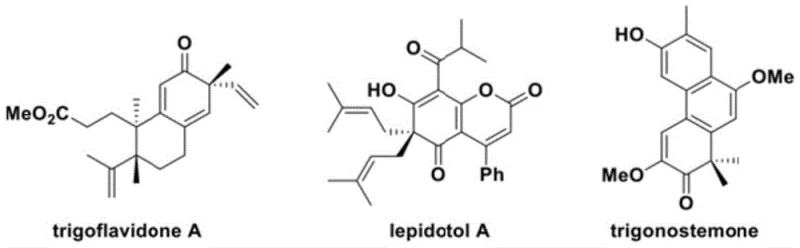
Furthermore, the tolerance of this system towards various functional groups is exceptional, accommodating both electron-withdrawing and electron-donating substituents on the aromatic rings without significant loss in efficiency. This broad substrate versatility is crucial for medicinal chemists who require diverse libraries of analogs for structure-activity relationship (SAR) studies. The mechanistic robustness ensures that minor variations in substrate electronics do not derail the reaction, providing a consistent yield across a wide range of derivatives. From a quality control perspective, the predictable nature of this oxidative transformation allows for precise monitoring of reaction progress, typically via thin-layer chromatography, ensuring that the process stops exactly at the desired conversion point. This level of control is essential for maintaining batch-to-batch consistency, a key requirement for any commercial scale-up of complex pharmaceutical intermediates intended for regulatory submission.
How to Synthesize Spiro-Dienone Efficiently
Implementing this synthesis route in a laboratory or pilot plant setting is straightforward and requires standard equipment, making it highly accessible for process development teams. The protocol involves dissolving the specific phenol-containing diarylmethane precursor in n-butanol within a sealed reaction vessel to maintain the oxidative environment. An oxygen balloon is attached to the system to ensure a constant supply of the oxidant, and the mixture is heated to an optimal temperature, typically around 80°C, with continuous stirring. Reaction monitoring is performed until the starting material is fully consumed, after which standard workup procedures involving silica gel chromatography yield the pure spiro-dienone product. The detailed standardized synthesis steps are provided in the guide below.
- Dissolve the phenol-containing diarylmethane starting material in green solvent n-butanol within a sealed reaction vessel.
- Introduce molecular oxygen by attaching an oxygen-filled balloon to the reaction system to maintain an oxidative atmosphere.
- Heat the reaction mixture to 80°C with continuous stirring until TLC indicates complete consumption of the starting material, then purify via silica gel chromatography.
Commercial Advantages for Procurement and Supply Chain Teams
For procurement managers and supply chain heads, the adoption of this oxygen-promoted technology translates into tangible strategic benefits that extend beyond simple chemical efficiency. The elimination of expensive and potentially supply-constrained catalysts removes a significant variable from the raw material sourcing equation, stabilizing costs and reducing dependency on specialized chemical vendors. Moreover, the use of n-butanol as a solvent aligns with green chemistry initiatives, potentially lowering waste disposal fees and simplifying environmental permitting processes. The mild reaction conditions also imply lower energy consumption compared to processes requiring cryogenic cooling or high-pressure reactors, contributing to a reduced carbon footprint for the manufacturing facility. These factors collectively enhance the overall resilience of the supply chain, ensuring a more reliable flow of high-purity intermediates to downstream API production lines.
- Cost Reduction in Manufacturing: The catalyst-free nature of this process fundamentally alters the cost structure of spiro-dienone production by removing the expense of precious metal ligands and the associated purification costs. Without the need for metal scavengers or extensive washing steps to remove trace metals, the downstream processing becomes significantly leaner and faster. This reduction in unit operations directly lowers labor and utility costs, while the high atom economy of using oxygen as the oxidant minimizes reagent waste. Consequently, manufacturers can achieve substantial cost savings in pharmaceutical intermediate manufacturing, allowing for more competitive pricing strategies in the global market without compromising on quality margins.
- Enhanced Supply Chain Reliability: Relying on molecular oxygen and commodity solvents like n-butanol mitigates the risk of supply disruptions often associated with specialized reagents. Oxygen is universally available, and n-butanol is a bulk chemical with a stable supply chain, ensuring that production schedules are not held hostage by vendor lead times. This reliability is critical for maintaining continuous manufacturing operations and meeting tight delivery windows for multinational clients. By simplifying the bill of materials, companies can reduce inventory holding costs and improve cash flow, creating a more agile and responsive supply network capable of adapting to fluctuating market demands for complex organic scaffolds.
- Scalability and Environmental Compliance: The inherent safety and simplicity of this method make it exceptionally well-suited for scaling from gram-scale discovery to multi-ton commercial production. The absence of hazardous oxidants reduces the risk of thermal runaways or exothermic events, facilitating safer operation in large-scale reactors. Additionally, the generation of water as the primary byproduct of oxygen reduction aligns perfectly with increasingly stringent environmental regulations regarding effluent discharge. This eco-friendly profile not only future-proofs the manufacturing process against tightening regulatory frameworks but also enhances the corporate sustainability image, which is becoming a key differentiator in B2B negotiations with environmentally conscious pharmaceutical partners.
Frequently Asked Questions (FAQ)
The following questions address common technical and commercial inquiries regarding the implementation of this oxygen-promoted dearomatization technology. These insights are derived directly from the experimental data and beneficial effects reported in the patent literature, providing a clear understanding of the process capabilities. Understanding these details helps stakeholders evaluate the feasibility of integrating this route into their existing production workflows for generating high-value spirocyclic compounds.
Q: Does this synthesis method require expensive transition metal catalysts?
A: No, the patented process (CN113461700B) operates without any external catalyst, utilizing molecular oxygen as the sole oxidant, which eliminates heavy metal contamination risks.
Q: What are the optimal reaction conditions for maximum yield?
A: Experimental data indicates that using n-butanol as the solvent at a temperature of 80°C under an oxygen atmosphere provides the highest yields, often exceeding 80%.
Q: Is this process scalable for industrial production of API intermediates?
A: Yes, the mild reaction conditions, absence of hazardous reagents, and use of common solvents like n-butanol make this method highly suitable for commercial scale-up.
Partnering with NINGBO INNO PHARMCHEM: Your Reliable Spiro-Dienone Supplier
At NINGBO INNO PHARMCHEM, we recognize the transformative potential of this catalyst-free oxidative strategy for the next generation of pharmaceutical intermediates. As a leading CDMO partner, we possess extensive experience scaling diverse pathways from 100 kgs to 100 MT/annual commercial production, ensuring that innovative academic discoveries are successfully translated into robust industrial processes. Our state-of-the-art facilities are equipped to handle oxygen-sensitive reactions safely and efficiently, while our rigorous QC labs enforce stringent purity specifications to guarantee that every batch meets the highest international standards. We are committed to delivering high-purity spiro-dienone intermediates that empower our clients to accelerate their drug development timelines with confidence.
We invite you to collaborate with us to leverage this advanced synthetic technology for your specific project needs. Our technical procurement team is ready to provide a Customized Cost-Saving Analysis tailored to your volume requirements, demonstrating how this green chemistry approach can optimize your budget. Please contact us today to request specific COA data and route feasibility assessments, and let us help you secure a sustainable and cost-effective supply of these critical building blocks for your pharmaceutical pipeline.