
Advanced Synthesis of 1,8-Diformylcarbazole for High-Performance OLED and Pharmaceutical Applications
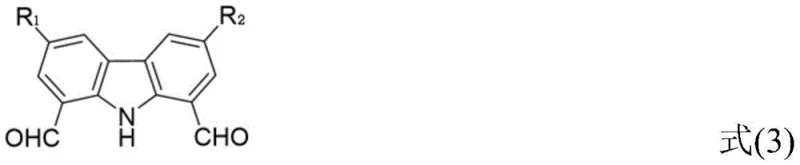
The global demand for high-performance organic optoelectronic materials continues to surge, driven by the rapid expansion of the OLED display and lighting markets. At the heart of many advanced conjugated polymers and hole-transport materials lies the critical intermediate 1,8-diformylcarbazole. However, accessing this molecule has historically been fraught with safety hazards and inefficiencies. The recent disclosure in patent CN111875534B introduces a transformative approach that fundamentally alters the synthesis landscape for this valuable scaffold. By leveraging a specific amino-protection strategy combined with controlled lithiation, this method eliminates the need for explosive ozonides and highly toxic cyanide reagents that plagued previous generations of synthetic routes. For procurement leaders and R&D directors alike, this represents a pivotal shift towards safer, more sustainable, and economically viable manufacturing protocols.
Furthermore, the implications of this technological breakthrough extend far beyond mere academic interest; it offers a tangible pathway to securing supply chains for next-generation electronic chemicals. The protocol described ensures that the target molecule can be produced with exceptional purity, often exceeding 99%, which is a non-negotiable requirement for semiconductor and display applications. As we analyze the technical nuances of this patent, it becomes clear that the integration of 2-(trimethylsilyl)ethoxymethyl (SEM) protection is the key enabler for this efficiency. This report delves deep into the mechanistic advantages and commercial viability of this novel route, positioning it as a cornerstone for future cost reduction in electronic chemical manufacturing.
The Limitations of Conventional Methods vs. The Novel Approach
The Limitations of Conventional Methods
Historically, the synthesis of 1,8-disubstituted carbazoles has been a formidable challenge due to the steric hindrance and electronic properties of the carbazole core. Early attempts, such as those by the Brown research group in 2005, relied on multi-step sequences involving Buchwald-Hartwig coupling followed by harsh reduction and oxidation cycles using lithium aluminum hydride and manganese dioxide. These processes are not only labor-intensive but also generate significant amounts of hazardous waste, complicating disposal and increasing operational costs. Subsequent efforts by the Takagi group in 2013 utilized the Rosenmund-von Braun reaction with copper cyanide to install nitrile groups prior to reduction; however, the use of CuCN introduces severe toxicity risks that are increasingly unacceptable in modern green chemistry frameworks. Moreover, the Brooker group's 2018 approach, while shorter, depended on ozonolysis, a reaction known for generating unstable and potentially explosive ozonide intermediates that require specialized, expensive equipment to handle safely. Collectively, these legacy methods suffer from poor atom economy, high safety risks, and difficult purification profiles that hinder their adoption in large-scale industrial settings.
The Novel Approach
In stark contrast, the methodology outlined in CN111875534B circumvents these pitfalls through a clever two-step sequence that prioritizes safety and operational simplicity. The core innovation lies in the initial protection of the carbazole nitrogen atom with a SEM group, which stabilizes the molecule against the aggressive conditions required for subsequent functionalization. This protection allows for the use of n-butyllithium to effect a clean halogen-lithium exchange at the 1 and 8 positions, followed by immediate quenching with N,N-dimethylformamide (DMF) to install the aldehyde functionalities. Unlike the oxidative methods of the past, this reductive formylation pathway operates under mild temperatures and avoids the generation of explosive byproducts entirely. The result is a streamlined process that delivers total yields exceeding 80% with minimal impurity formation, drastically simplifying the downstream purification requirements. This robustness makes the new route an ideal candidate for the commercial scale-up of complex organic intermediates needed for the electronics sector.
Mechanistic Insights into SEM-Protection and Lithiation-Formylation
To fully appreciate the technical superiority of this method, one must examine the specific role of the SEM protecting group in facilitating the reaction cascade. The process begins with the treatment of a 1,8-dihalocarbazole precursor with a strong base, such as sodium hydride, in an anhydrous solvent like DMF.  This initial deprotonation generates a nucleophilic nitrogen anion, which subsequently attacks 2-(trimethylsilyl)ethoxymethyl chloride (SEMCl) to form the N-SEM protected intermediate. The choice of the SEM group is critical because it possesses unique stability characteristics; it is robust enough to withstand the strongly basic conditions of the subsequent lithiation step yet can be easily removed under mild acidic conditions or with fluoride sources like tetrabutylammonium fluoride (TBAF). This orthogonal stability prevents unwanted side reactions at the nitrogen center, ensuring that the reactive organolithium species generated in the next step interacts exclusively with the electrophile at the desired carbon positions.
Following protection, the intermediate undergoes a precise halogen-lithium exchange upon treatment with n-butyllithium at cryogenic temperatures, typically ranging from -78°C to -20°C. 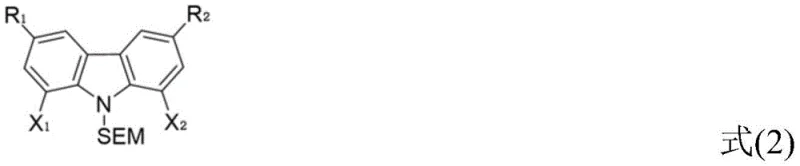 This low-temperature control is essential to prevent metal-halogen exchange at unintended sites or decomposition of the sensitive organolithium species. Once the dilithio species is formed, the addition of DMF serves as the formyl source, trapping the carbanions to yield the dialdehyde framework after aqueous workup. The final step involves the removal of the SEM group, which can be conveniently achieved in the same pot using dilute hydrochloric acid under reflux, thereby merging the quenching and deprotection stages into a single unit operation. This telescoping of steps not only reduces solvent consumption but also minimizes product loss during isolation, contributing directly to the high overall yield and purity observed in the patent examples. Such mechanistic elegance is what defines a truly scalable process for a reliable display & optoelectronic materials supplier.
How to Synthesize 1,8-Diformylcarbazole Efficiently
The practical execution of this synthesis requires careful attention to moisture exclusion and temperature control to maximize the efficiency of the lithiation step. The patent details a standardized protocol where the 1,8-dihalocarbazole is first dissolved in dry DMF and treated with sodium hydride under a nitrogen atmosphere to ensure complete deprotonation before the addition of SEMCl. After the protection is confirmed, the intermediate is isolated or used directly in tetrahydrofuran (THF) for the lithiation, where strict temperature maintenance below -50°C is recommended during the addition of n-butyllithium. The detailed standardized synthesis steps are provided in the guide below for technical reference.
- Protect the nitrogen atom of 1,8-dihalocarbazole using SEMCl and a strong base in anhydrous DMF to form the N-SEM protected intermediate.
- Perform halogen-lithium exchange on the protected intermediate using n-BuLi at low temperature, followed by quenching with DMF to introduce formyl groups.
- Quench the reaction and remove the SEM protecting group using dilute hydrochloric acid or TBAF, followed by recrystallization to obtain the final product.
Commercial Advantages for Procurement and Supply Chain Teams
For procurement managers and supply chain directors, the transition to this new synthetic route offers compelling economic and logistical benefits that extend well beyond the laboratory bench. By eliminating the need for precious metal catalysts like palladium or toxic reagents like copper cyanide, the raw material costs are significantly reduced, leading to a more favorable cost of goods sold (COGS) structure. Furthermore, the avoidance of hazardous ozonolysis removes the requirement for specialized explosion-proof infrastructure, allowing production to occur in standard multipurpose reactors without costly safety retrofits. This flexibility enhances supply chain resilience by enabling manufacturing across a broader range of facilities, thereby reducing the risk of bottlenecks associated with specialized equipment availability. Additionally, the simplified workup procedure, which relies on recrystallization rather than extensive column chromatography, drastically cuts down on solvent usage and processing time, further driving down operational expenses.
- Cost Reduction in Manufacturing: The elimination of expensive transition metal catalysts and the reduction in solvent consumption through telescoped steps create substantial opportunities for cost optimization. Without the need for rigorous heavy metal scavenging processes typically required for Pd-catalyzed couplings, the downstream purification burden is lightened, resulting in lower utility and material costs per kilogram of product. This economic efficiency allows suppliers to offer more competitive pricing structures while maintaining healthy margins, a critical factor in the price-sensitive electronics market.
- Enhanced Supply Chain Reliability: The reliance on commodity chemicals such as n-butyllithium, DMF, and SEMCl ensures that raw material sourcing remains stable and unaffected by the geopolitical volatility often associated with rare earth metals or specialized catalysts. Since the reagents are widely available from multiple global vendors, the risk of supply disruption is minimized, guaranteeing consistent production schedules. This reliability is paramount for clients who require just-in-time delivery of high-purity OLED material to keep their own fabrication lines running without interruption.
- Scalability and Environmental Compliance: The process generates significantly less hazardous waste compared to traditional methods, aligning with increasingly stringent environmental regulations and corporate sustainability goals. The ability to perform deprotection and quenching in a single step reduces the volume of wastewater and organic waste, simplifying compliance reporting and lowering waste disposal fees. Moreover, the robustness of the reaction conditions means that scaling from pilot plant to full commercial production involves minimal re-optimization, accelerating the time-to-market for new derivatives based on this core scaffold.
Frequently Asked Questions (FAQ)
The following questions address common technical and commercial inquiries regarding the implementation of this synthesis method in an industrial context. These answers are derived directly from the experimental data and comparative examples provided in the patent documentation to ensure accuracy and relevance for decision-makers. Understanding these details is crucial for evaluating the feasibility of adopting this technology for your specific application needs.
Q: Why is the SEM protection strategy superior to traditional methods for 1,8-diformylcarbazole?
A: Traditional methods often rely on toxic reagents like CuCN or dangerous ozonolysis. The SEM protection strategy described in CN111875534B avoids high-risk explosives and toxic heavy metals, offering a significantly safer profile while maintaining high yields above 80%.
Q: What purity levels can be achieved with this new synthesis route?
A: The patent demonstrates that this method can consistently achieve purity levels exceeding 99%, with some embodiments reaching greater than 99.95%. This high purity is critical for electronic applications where trace impurities can degrade device performance.
Q: Is this process scalable for industrial production?
A: Yes, the process utilizes mild conditions, common solvents like THF and DMF, and avoids complex purification steps like column chromatography in the final stage. The simplified workup involving recrystallization makes it highly suitable for commercial scale-up.
Partnering with NINGBO INNO PHARMCHEM: Your Reliable 1,8-Diformylcarbazole Supplier
The technical advancements detailed in CN111875534B underscore the immense potential of 1,8-diformylcarbazole as a building block for high-value applications in OLEDs and pharmaceuticals. At NINGBO INNO PHARMCHEM, we possess the extensive experience scaling diverse pathways from 100 kgs to 100 MT/annual commercial production required to bring this innovative chemistry to the global market. Our state-of-the-art facilities are equipped to handle the specific safety and purity requirements of this process, ensuring that every batch meets stringent purity specifications through our rigorous QC labs. We understand that consistency is key in the electronics industry, and our commitment to quality assurance guarantees that the material you receive will perform reliably in your final devices.
We invite you to collaborate with us to leverage this superior synthetic route for your next project. Our technical procurement team is ready to provide a Customized Cost-Saving Analysis tailored to your volume requirements, demonstrating exactly how this method can improve your bottom line. Please contact us today to request specific COA data and route feasibility assessments, and let us help you secure a stable, high-quality supply of this critical intermediate.