
Advanced Visible-Light Mediated Synthesis of 2-Acyl-9H-pyrrolo[1,2-a]indoles for Pharmaceutical Applications
The pharmaceutical industry continuously seeks efficient pathways to access complex heterocyclic scaffolds that serve as critical building blocks for bioactive molecules. Patent CN110590788B introduces a groundbreaking methodology for the synthesis of 2-acyl-9H-pyrrolo[1,2-a]indole compounds, a structural motif prevalent in numerous therapeutic agents exhibiting anti-tumor and anti-diabetic properties. This innovation leverages visible light photocatalysis to drive a tandem radical cyclization between N-propargyl indole derivatives and acyl chlorides. By utilizing mild reaction conditions and readily available starting materials, this process addresses significant bottlenecks in the manufacturing of high-purity pharmaceutical intermediates. The technology represents a paradigm shift from traditional thermal or transition-metal-heavy protocols, offering a sustainable and robust alternative for the production of these valuable polycyclic indoles.
The Limitations of Conventional Methods vs. The Novel Approach
The Limitations of Conventional Methods
Historically, the construction of the pyrrolo[1,2-a]indole skeleton has relied heavily on methodologies that impose severe constraints on process scalability and safety. Conventional approaches often necessitate the use of harsh reaction conditions, including elevated temperatures and strong oxidizing agents, which can lead to the degradation of sensitive functional groups and the formation of complex impurity profiles. Furthermore, existing literature primarily discloses tandem cyclizations involving phosphorus, sulfur, or sulfonyl-centered radicals, leaving a significant gap in the efficient generation of carbon-centered acyl radicals for this specific scaffold. The reliance on expensive transition metal catalysts or difficult-to-handle radical precursors not only inflates the cost of goods but also complicates the downstream purification processes required to meet stringent regulatory standards for residual metals in active pharmaceutical ingredients.
The Novel Approach
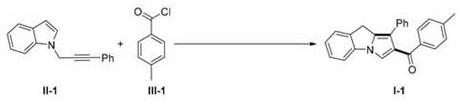
In stark contrast, the novel visible-light mediated protocol described in the patent data utilizes acyl chlorides as versatile radical precursors, enabling a direct and efficient route to the target 2-acyl products. This method operates under significantly milder thermal conditions, typically around 100°C, and employs benign blue LED irradiation to drive the reaction forward. The use of acyl chlorides, which are commercially abundant and structurally diverse, allows for the rapid exploration of chemical space without the need for specialized radical initiators. This approach not only simplifies the operational workflow but also enhances the overall atom economy of the synthesis. By replacing aggressive chemical oxidants with photon energy, the process minimizes waste generation and improves the safety profile of the manufacturing operation, making it an ideal candidate for green chemistry initiatives in fine chemical production.
![General reaction scheme showing visible light mediated synthesis of 2-acyl-9H-pyrrolo[1,2-a]indoles from N-propargyl indoles and acyl chlorides](/insights/img/2-acyl-pyrrolo-indole-synthesis-pharma-supplier-20260303085219-01.png)
Mechanistic Insights into Visible Light-Mediated Radical Cyclization
The core of this technological advancement lies in the intricate photoredox catalytic cycle initiated by the excitation of the iridium photocatalyst, specifically [Ir(ppy)3], under blue LED irradiation. Upon absorbing photons, the catalyst enters an excited state capable of engaging in single-electron transfer (SET) processes with the acyl chloride substrate. This interaction facilitates the homolytic cleavage of the carbon-chlorine bond, generating a reactive acyl radical species along with a chloride anion. This acyl radical then undergoes a regioselective addition to the electron-rich triple bond of the N-propargyl indole moiety. The resulting vinyl radical intermediate subsequently triggers an intramolecular cyclization event, closing the five-membered ring to form the fused pyrrolo[1,2-a]indole core. Finally, an isomerization step restores aromaticity or stabilizes the system, yielding the final 2-acyl product while regenerating the ground-state photocatalyst to sustain the cycle.
From a quality control perspective, the mild nature of this radical mechanism plays a pivotal role in impurity management. Unlike high-temperature thermal reactions that often promote non-selective radical polymerization or decomposition pathways, the controlled generation of radicals via photocatalysis ensures high chemoselectivity. The specific choice of [Ir(ppy)3] as the catalyst, as opposed to ruthenium-based alternatives or organic dyes like Eosin Y, provides the optimal redox potential to drive the reaction efficiently without over-oxidizing the sensitive indole nitrogen or the newly formed ketone functionality. This precision minimizes the formation of side products such as oligomers or dehalogenated byproducts, thereby streamlining the purification process and ensuring that the final API intermediate meets the rigorous purity specifications required by global regulatory bodies.
How to Synthesize 2-Acyl-9H-pyrrolo[1,2-a]indoles Efficiently
To implement this synthesis effectively in a laboratory or pilot plant setting, strict adherence to the optimized parameters outlined in the patent is essential. The process begins with the precise charging of the N-propargyl indole substrate and the acyl chloride coupling partner into a sealed reactor, typically a Schlenk tube or a dedicated photo-reactor vessel. The reaction mixture must be thoroughly degassed and maintained under an inert atmosphere, preferably argon, to prevent the quenching of radical intermediates by atmospheric oxygen. The selection of the solvent is critical, with acetonitrile demonstrating superior performance in solubilizing the reactants and facilitating the photocatalytic cycle compared to other polar aprotic solvents. Detailed standardized operating procedures regarding the specific stoichiometry, light intensity, and workup protocols are provided below to ensure reproducible high-yielding results.
- Sequentially add N-propargyl indole compound, acyl chloride compound, photocatalyst [Ir(ppy)3], base (Et3N), and organic solvent (CH3CN) into a reactor under inert atmosphere.
- Place the reactor in an oil bath heated to 100°C and stir under illumination with a 5W blue LED lamp for 20 to 30 hours.
- Upon completion, wash the mixture with saturated brine, extract the aqueous phase with ethyl acetate, dry over anhydrous sodium sulfate, and purify the residue via silica gel column chromatography.
Commercial Advantages for Procurement and Supply Chain Teams
For procurement managers and supply chain directors, the adoption of this visible-light mediated synthesis offers transformative benefits that extend beyond mere technical feasibility. The elimination of expensive and scarce transition metal catalysts, such as palladium or platinum complexes often found in cross-coupling alternatives, directly translates to significant cost reduction in API manufacturing. By utilizing earth-abundant or recyclable photocatalysts and common industrial solvents like acetonitrile, the raw material costs are drastically minimized. Furthermore, the operational simplicity of the reaction—requiring only standard heating and LED lighting equipment rather than high-pressure hydrogenation reactors or cryogenic setups—reduces the capital expenditure required for facility upgrades. This accessibility allows for a more agile supply chain capable of responding rapidly to fluctuating market demands for complex heterocyclic intermediates.
- Cost Reduction in Manufacturing: The economic viability of this process is underpinned by the use of acyl chlorides, which are commodity chemicals available at competitive prices from a vast network of global suppliers. The avoidance of specialized radical initiators or stoichiometric oxidants removes a major cost driver associated with traditional radical cyclizations. Additionally, the high selectivity of the reaction reduces the burden on downstream purification; fewer side reactions mean less solvent consumption during chromatography or crystallization steps, leading to substantial savings in waste disposal and solvent recovery costs. The overall process efficiency ensures a higher throughput per batch, optimizing the utilization of reactor volume and labor resources.
- Enhanced Supply Chain Reliability: Supply chain resilience is significantly bolstered by the broad substrate tolerance of this methodology. The ability to accommodate a wide array of substituents on both the indole and the acyl chloride components means that manufacturers are not locked into a single, potentially fragile supply line for specific precursors. If a particular substituted indole becomes unavailable, the robust nature of the chemistry allows for the rapid qualification of alternative analogues without requiring a complete process redevelopment. This flexibility mitigates the risk of production stoppages due to raw material shortages. Moreover, the mild reaction conditions reduce the wear and tear on processing equipment, ensuring longer asset life and more consistent production schedules.
- Scalability and Environmental Compliance: Scaling photochemical reactions has historically been a challenge, but the use of low-power blue LEDs and moderate temperatures (90-110°C) makes this process highly amenable to continuous flow chemistry technologies. Flow reactors can provide uniform irradiation and excellent heat transfer, allowing for the safe commercial scale-up of complex pharmaceutical intermediates from kilogram to multi-ton quantities. From an environmental standpoint, the process aligns with green chemistry principles by reducing energy consumption through the use of efficient LED light sources and minimizing hazardous waste generation. The absence of heavy metal residues in the final product simplifies the environmental compliance documentation and accelerates the regulatory approval timeline for new drug candidates incorporating this scaffold.
Frequently Asked Questions (FAQ)
The following questions address common technical and commercial inquiries regarding the implementation of this visible-light mediated synthesis. These answers are derived directly from the experimental data and optimization studies presented in the patent documentation, providing a reliable foundation for decision-making. Understanding these nuances is crucial for R&D teams evaluating the technology for integration into their existing pipelines and for procurement specialists assessing the long-term viability of the supply source.
Q: What are the primary advantages of this visible-light mediated method over traditional synthesis?
A: This method utilizes visible light catalysis to generate acyl radicals under mild conditions (100°C), avoiding the stringent requirements of high temperatures, strong oxidants, or expensive transition metal catalysts typically needed for acyl radical generation. It offers a wider substrate scope and simpler operation.
Q: Which photocatalyst provides the optimal yield for this transformation?
A: According to the optimization data in patent CN110590788B, the iridium-based photocatalyst [Ir(ppy)3] demonstrates superior catalytic activity compared to [Ru(bpy)3Cl2] or Eosin Y, delivering the highest isolated yields for the target 2-acyl-9H-pyrrolo[1,2-a]indole products.
Q: Is this synthetic route suitable for diverse substrate structures?
A: Yes, the method exhibits excellent substrate adaptability. It tolerates various substituents on both the N-propargyl indole moiety (including halogens, alkyl, and alkoxy groups) and the acyl chloride component (including aryl, heteroaryl, and substituted phenyl groups), making it highly versatile for library synthesis.
Partnering with NINGBO INNO PHARMCHEM: Your Reliable 2-Acyl-9H-pyrrolo[1,2-a]indole Supplier
At NINGBO INNO PHARMCHEM, we recognize the strategic value of advanced synthetic methodologies like the one described in CN110590788B for accelerating drug discovery and development. As a premier CDMO partner, we possess extensive experience scaling diverse pathways from 100 kgs to 100 MT/annual commercial production, ensuring that your transition from bench-scale innovation to industrial reality is seamless. Our state-of-the-art facilities are equipped with specialized photochemical reactors and rigorous QC labs capable of meeting stringent purity specifications for even the most complex heterocyclic structures. We are committed to delivering high-purity 2-acyl-9H-pyrrolo[1,2-a]indole derivatives that adhere to the highest international quality standards, supporting your mission to bring life-saving therapies to market faster.
We invite you to leverage our technical expertise to optimize your supply chain and reduce time-to-market. Our team is ready to provide a Customized Cost-Saving Analysis tailored to your specific project requirements, demonstrating how this visible-light technology can lower your overall cost of goods. Please contact our technical procurement team today to request specific COA data for our catalog compounds or to discuss route feasibility assessments for your proprietary targets. Let us be your partner in turning complex chemical challenges into commercial successes.