
Advanced Silicon-Centered Spiro-Bisoxazoline Ligands for High-Precision Asymmetric Synthesis and Commercial Manufacturing
The landscape of asymmetric catalysis is continuously evolving, driven by the demand for higher enantiomeric purity and more efficient synthetic routes in the production of complex pharmaceutical intermediates. Patent CN115385948A introduces a groundbreaking class of spirobis-dihydrobenzothiazole-bisoxazoline compounds, characterized by a unique silicon-centered spiro backbone. Unlike traditional carbon-centered spiro ligands, these novel structures leverage the distinct tetrahedral geometry and electronic properties of the silicon atom to create a highly rigid and tunable chiral environment. This structural innovation addresses critical limitations in existing ligand libraries, particularly in reactions where conventional scaffolds fail to induce sufficient stereocontrol. For research and development teams focused on process optimization, this technology represents a significant leap forward, offering a versatile platform for developing next-generation catalytic systems that meet the stringent purity requirements of modern drug manufacturing.
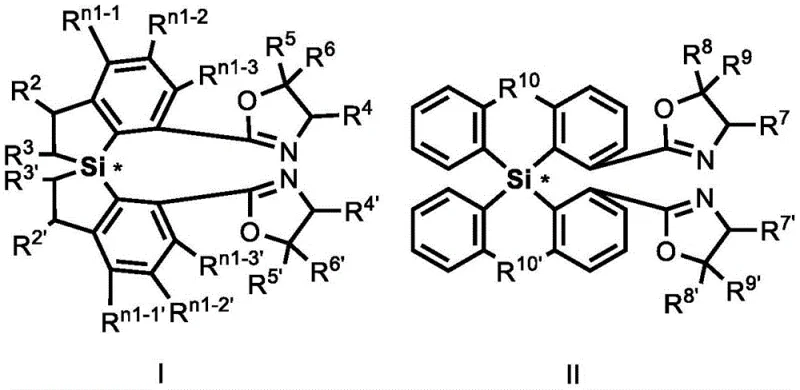
The Limitations of Conventional Methods vs. The Novel Approach
The Limitations of Conventional Methods
Historically, the field of asymmetric catalysis has relied heavily on carbon-centered spirocyclic ligands, such as spiroindane bisoxazolines, which have served as workhorses for various transformations. However, these traditional scaffolds often encounter intrinsic limitations when applied to specific challenging substrates, particularly in carbene insertion reactions involving heteroatom-hydrogen bonds. The rigidity and steric bulk of carbon-based spiro frameworks can sometimes be insufficient to differentiate between competing transition states, leading to moderate enantiomeric excess or requiring excessive catalyst loading to achieve acceptable conversion rates. Furthermore, the synthetic accessibility of highly substituted carbon-spiro ligands can be cumbersome, involving multiple protection and deprotection steps that increase waste generation and reduce overall atom economy. These factors collectively contribute to higher production costs and longer development timelines, creating bottlenecks for procurement and supply chain managers aiming to streamline the manufacturing of high-value fine chemicals.
The Novel Approach
The introduction of silicon as the central spiro atom fundamentally alters the steric and electronic landscape of the ligand, providing a solution to the aforementioned challenges. The silicon-carbon bonds are longer than carbon-carbon bonds, which subtly expands the chiral pocket and allows for better accommodation of bulky substrates without sacrificing stereocontrol. Patent CN115385948A details how these silicon-centered ligands demonstrate superior performance in palladium and copper-catalyzed asymmetric insertion reactions, achieving yields and ee values that surpass those of their carbon counterparts. The synthetic route described in the patent is also notably streamlined, utilizing efficient palladium-catalyzed carbonylation and intramolecular cyclization steps that minimize the number of isolation procedures. This operational simplicity not only enhances the feasibility of large-scale production but also ensures a consistent supply of high-quality ligands, directly addressing the need for cost reduction in fine chemical manufacturing and improving the reliability of the supply chain for critical chiral building blocks.
Mechanistic Insights into Silicon-Centered Spiro Ligand Catalysis
The exceptional catalytic performance of these spiro-bisoxazoline ligands stems from their ability to form highly stable and well-defined metal complexes with transition metals such as palladium and copper. In the context of carbene insertion reactions, the ligand coordinates to the metal center to create a chiral environment that dictates the approach of the diazo compound and the subsequent insertion into the O-H or N-H bond. The rigid spiro-silicon backbone locks the two oxazoline rings in a specific orientation, preventing unfavorable conformational changes that could lead to racemic background reactions. This rigidity is crucial for maintaining high enantioselectivity, as it ensures that the reactive carbene intermediate is shielded on one face, forcing the substrate to attack from the preferred direction. Detailed mechanistic studies suggest that the electronic donation from the silicon center may also stabilize the metal-carbene species, enhancing the turnover frequency and allowing the reaction to proceed under milder conditions. This level of control is essential for R&D directors who require reproducible results and minimal impurity profiles when scaling up sensitive pharmaceutical intermediates.
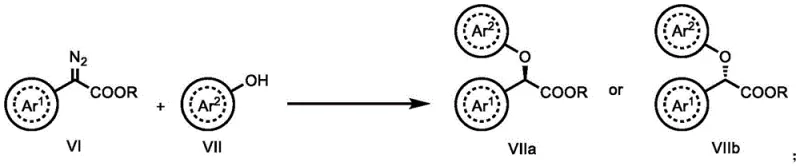
Furthermore, the versatility of this ligand system extends beyond simple insertion reactions, offering potential applications in a wide array of asymmetric transformations. The ability to fine-tune the steric environment by modifying the substituents on the oxazoline rings or the aromatic wings of the spiro framework allows chemists to optimize the catalyst for specific substrate classes. This modularity is a key advantage in process chemistry, where a single ligand scaffold can be adapted to solve diverse synthetic problems without the need to develop entirely new chemical entities from scratch. The robustness of the silicon-carbon bonds also contributes to the thermal and chemical stability of the ligand, ensuring that it remains intact under the rigorous conditions often encountered in industrial reactors. By understanding these mechanistic nuances, technical teams can better leverage this technology to design more efficient synthetic routes, ultimately reducing the environmental footprint and improving the economic viability of producing complex chiral molecules.
How to Synthesize Spiro-Bis-Dihydrobenzothiazole-Bisoxazoline Efficiently
The synthesis of these advanced ligands follows a logical and scalable sequence that begins with the functionalization of the dihydrobenzothiazole precursor. The initial step involves the activation of the hydroxyl groups via triflation, converting them into excellent leaving groups that facilitate subsequent nucleophilic substitutions. This is followed by a palladium-catalyzed carbonylation amidation reaction, where carbon monoxide is inserted into the carbon-triflate bond in the presence of 2-aminoethanol to form the key amide intermediate. This step is critical as it installs the nitrogen and oxygen atoms required for the oxazoline ring formation. The final closure of the spiro-bisoxazoline structure is achieved through an intramolecular cyclization mediated by a sulfonyl chloride and a base, which promotes the dehydration and ring-closing process. The detailed standardized synthesis steps for this process are outlined in the guide below, providing a clear roadmap for laboratory and pilot-scale execution.
- Triflation of the dihydrobenzothiazole precursor using trifluoromethanesulfonic anhydride and base in dichloromethane.
- Palladium-catalyzed carbonylation amidation with 2-aminoethanol under CO pressure to form the amide intermediate.
- Intramolecular cyclization using sulfonyl chloride and base to close the oxazoline rings and finalize the spiro-ligand structure.
Commercial Advantages for Procurement and Supply Chain Teams
From a commercial perspective, the adoption of this silicon-centered ligand technology offers substantial benefits for procurement and supply chain operations, primarily driven by the efficiency and robustness of the synthetic methodology. The streamlined synthesis reduces the number of unit operations required, which directly translates to lower capital expenditure and reduced operational complexity in manufacturing facilities. By minimizing the reliance on exotic reagents and utilizing standard industrial solvents like dichloromethane and toluene, the process aligns well with existing infrastructure, facilitating a smoother transition from development to commercial production. This compatibility significantly mitigates the risks associated with technology transfer, ensuring that supply continuity is maintained even during periods of high demand. Additionally, the high catalytic activity of the resulting metal complexes means that lower catalyst loadings can be employed, which reduces the consumption of precious metals like palladium and copper, further driving down the raw material costs associated with the production of high-purity intermediates.
- Cost Reduction in Manufacturing: The elimination of complex multi-step sequences found in traditional ligand synthesis leads to a drastic simplification of the production workflow. By avoiding extensive protection and deprotection strategies, manufacturers can achieve substantial cost savings through reduced labor hours, lower solvent consumption, and decreased waste disposal fees. The high yield and selectivity of the reactions also mean that less starting material is wasted, optimizing the overall atom economy of the process. These efficiencies compound over large production volumes, resulting in a significantly lower cost of goods sold for the final chiral intermediates, making them more competitive in the global marketplace without compromising on quality standards.
- Enhanced Supply Chain Reliability: The use of commercially available and stable starting materials ensures that the supply chain is resilient against disruptions caused by raw material shortages. The robust nature of the silicon-centered scaffold means that the ligands have a longer shelf life and are less prone to degradation during storage and transport, reducing the incidence of out-of-specification batches. This reliability is crucial for maintaining consistent production schedules and meeting delivery commitments to downstream pharmaceutical clients. Furthermore, the scalability of the synthesis allows for flexible production planning, enabling suppliers to quickly ramp up capacity in response to market fluctuations, thereby securing a steady flow of critical materials for drug development pipelines.
- Scalability and Environmental Compliance: The synthetic route is designed with green chemistry principles in mind, utilizing catalytic processes that generate minimal byproducts and avoid the use of highly toxic reagents where possible. The ability to run reactions at moderate temperatures and pressures reduces energy consumption, contributing to a lower carbon footprint for the manufacturing process. This alignment with environmental regulations simplifies the permitting process for new production lines and enhances the sustainability profile of the supply chain. As regulatory bodies increasingly scrutinize the environmental impact of chemical manufacturing, adopting such eco-efficient technologies provides a strategic advantage, ensuring long-term compliance and reducing the risk of future regulatory penalties or operational shutdowns.
Frequently Asked Questions (FAQ)
The following questions address common technical and commercial inquiries regarding the implementation of spiro-bis-dihydrobenzothiazole-bisoxazoline ligands in industrial settings. These insights are derived directly from the experimental data and embodiments disclosed in the patent, providing a factual basis for decision-making. Understanding these aspects helps stakeholders evaluate the feasibility of integrating this technology into their existing workflows and assess the potential return on investment. The answers cover key areas such as structural advantages, scalability, and specific application performance, offering a comprehensive overview for technical and business leaders alike.
Q: What distinguishes these silicon-centered spiro ligands from traditional carbon-centered analogues?
A: The silicon center introduces unique bond angles and electronic properties compared to carbon, offering enhanced rigidity and distinct steric environments that improve enantioselectivity in challenging carbene insertion reactions.
Q: Can these ligands be scaled for industrial pharmaceutical intermediate production?
A: Yes, the patent describes robust synthetic methods using commercially available reagents and standard conditions like Pd-catalyzed carbonylation, which are amenable to scale-up from laboratory to commercial tonnage.
Q: What specific reactions benefit most from this ligand class?
A: They exhibit exceptional performance in asymmetric insertion of diazo carbenes into O-H bonds of phenols and N-H bonds of amines, achieving high yields and enantiomeric excess (ee) values up to 99%.
Partnering with NINGBO INNO PHARMCHEM: Your Reliable Spiro-Bis-Dihydrobenzothiazole-Bisoxazoline Supplier
At NINGBO INNO PHARMCHEM, we recognize the transformative potential of advanced chiral ligands like the spiro-bis-dihydrobenzothiazole-bisoxazoline series in accelerating drug discovery and process development. As a leading CDMO partner, we possess extensive experience scaling diverse pathways from 100 kgs to 100 MT/annual commercial production, ensuring that your transition from bench-scale innovation to full-scale manufacturing is seamless and efficient. Our state-of-the-art facilities are equipped with rigorous QC labs capable of verifying stringent purity specifications, guaranteeing that every batch of ligand or intermediate meets the highest international standards. We understand that consistency is key in pharmaceutical manufacturing, and our dedicated technical team works closely with clients to optimize reaction parameters and troubleshoot any scale-up challenges, ensuring a reliable supply of high-performance catalytic materials.
We invite you to collaborate with us to unlock the full potential of this cutting-edge technology for your specific applications. By leveraging our expertise in asymmetric synthesis and process chemistry, we can help you achieve significant improvements in yield and enantioselectivity while optimizing your overall production costs. Please contact our technical procurement team today to request a Customized Cost-Saving Analysis tailored to your project needs. We are ready to provide specific COA data and route feasibility assessments to support your R&D and manufacturing goals, ensuring that you stay ahead in the competitive landscape of fine chemical and pharmaceutical production.