
Revolutionizing N-(3-cyanopropyl) Formamide Production: A Metal-Free, One-Pot Strategy for Commercial Scale-Up
The landscape of pharmaceutical intermediate manufacturing is constantly evolving, driven by the urgent need for greener, more cost-effective, and operationally simpler synthetic routes. A significant breakthrough in this domain is documented in Chinese Patent CN109776308B, which details a novel methodology for the synthesis of N-(3-cyanopropyl) formamide compounds. These versatile molecules serve as critical building blocks in medicinal chemistry, possessing both formamide and cyano functional groups that offer high reactivity for downstream diversification. The patented technology represents a paradigm shift from traditional multi-step or metal-dependent processes to a streamlined, one-pot tandem reaction. By leveraging a unique combination of tert-butyl nitrite (TBN) and specific oxoammonium salt oxidants, this approach achieves the direct transformation of readily available N-aryl substituted piperidines into valuable formamide derivatives. For R&D directors and procurement strategists alike, this innovation promises not only enhanced chemical efficiency but also substantial reductions in production costs and environmental footprint, positioning it as a highly attractive route for the commercial scale-up of complex pharmaceutical intermediates.
The Limitations of Conventional Methods vs. The Novel Approach
The Limitations of Conventional Methods
Historically, the construction of N-(3-cyanopropyl) formamide scaffolds has relied on synthetic pathways that are fraught with significant economic and technical inefficiencies. Traditional routes often involve the condensation of succinonitrile with formamide in the presence of silylating agents, or substitution reactions utilizing bromobutyronitrile, which can generate hazardous waste streams and require stringent safety controls. More critically, advanced methods have frequently depended on palladium-catalyzed hydrogenation-formylation sequences. While effective, these transition metal-catalyzed processes introduce severe bottlenecks for large-scale manufacturing. The reliance on precious metals like palladium necessitates the implementation of rigorous and expensive metal scavenging protocols to meet the strict residual metal limits imposed by global regulatory bodies for API intermediates. Furthermore, these catalytic systems often suffer from poor functional group tolerance, requiring protecting group strategies that add steps, reduce overall yield, and increase the generation of chemical waste. The harsh reaction conditions often associated with these legacy methods also pose challenges for energy consumption and process safety, making them less desirable in a modern, sustainability-focused supply chain.
The Novel Approach
In stark contrast to these cumbersome legacy techniques, the methodology disclosed in CN109776308B offers a remarkably elegant and efficient solution through a metal-free oxidative ring-opening strategy. This novel approach utilizes a one-pot tandem reaction sequence that directly converts N-aryl piperidines into the target formamides without the need for isolation of intermediates. The core of this transformation relies on the synergistic action of tert-butyl nitrite (TBN) as a nitrosating agent and stable oxoammonium salts, such as 2,2,6,6-tetramethyl-1-piperidine oxide tetrafluoroborate (TEMPO-BF4), serving as the stoichiometric oxidant. 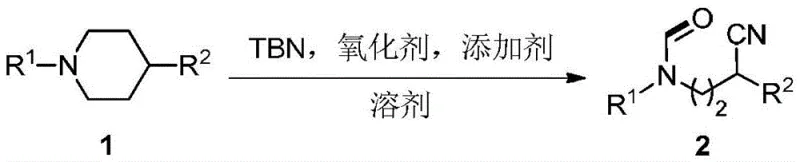 The reaction proceeds under exceptionally mild conditions, typically at temperatures below 60°C and under a simple air atmosphere, eliminating the need for inert gas protection or high-pressure equipment. This operational simplicity translates directly into reduced capital expenditure and lower operating costs. Moreover, the protocol demonstrates exceptional substrate versatility, accommodating a broad spectrum of electronic and steric environments on the aryl ring, including methyl, chloro, cyano, and methoxy substituents, as well as fused aromatic systems like naphthalene. This robustness ensures that the process can be applied to a diverse library of analogues, making it a powerful tool for process chemists aiming to optimize lead compounds for clinical development.
Mechanistic Insights into TBN-Mediated Oxidative Ring Opening
To fully appreciate the technical sophistication of this synthesis, one must delve into the mechanistic underpinnings that drive this transformative ring-opening event. The reaction is initiated by the interaction of the tertiary amine nitrogen of the piperidine substrate with tert-butyl nitrite (TBN), generating an unstable N-nitroso intermediate in situ. This activation step is crucial as it renders the adjacent C-H bonds more susceptible to subsequent oxidative cleavage. The presence of the oxoammonium salt oxidant, specifically the TEMPO derivative, facilitates a single-electron transfer or hydride abstraction process that leads to the formation of an iminium ion species. Unlike traditional radical pathways that might lead to uncontrolled decomposition, this mediated oxidation ensures a high degree of chemoselectivity. The subsequent nucleophilic attack by water or solvent molecules, followed by further oxidation and rearrangement, ultimately results in the cleavage of the piperidine ring and the installation of the formyl group. This intricate cascade occurs seamlessly within a single reaction vessel, showcasing the power of tandem catalysis to simplify complex molecular constructions. The inclusion of activated 4A molecular sieves plays a pivotal role in this mechanism by sequestering trace water that might otherwise hydrolyze sensitive intermediates prematurely or deactivate the nitrosating agent, thereby ensuring high conversion rates and product purity.
From an impurity control perspective, this mechanism offers distinct advantages over metal-catalyzed alternatives. The absence of transition metals eliminates the risk of metal-induced side reactions, such as dehalogenation or homocoupling, which are common pitfalls in palladium chemistry. Furthermore, the mild thermal profile of the reaction (25-60°C) suppresses thermal degradation pathways that often plague high-temperature processes. The use of specific counterions in the oxidant, such as tetrafluoroborate or perchlorate, enhances the solubility and reactivity of the oxoammonium species in polar aprotic solvents like acetonitrile, leading to cleaner reaction profiles. Analytical data from the patent examples indicates that the resulting products, such as N-(3-cyanopropyl)-N-phenylformamide, are obtained with high structural fidelity, as evidenced by consistent NMR and MS characterization across various substrates. This level of control is paramount for pharmaceutical applications where the impurity profile of an intermediate can dictate the success of the entire drug substance manufacturing campaign. By understanding these mechanistic nuances, process engineers can better optimize parameters such as reagent stoichiometry and addition rates to maximize yield and minimize the formation of difficult-to-remove byproducts.
How to Synthesize N-(3-cyanopropyl) Formamide Efficiently
Implementing this synthesis in a laboratory or pilot plant setting requires careful attention to reagent quality and reaction monitoring to ensure reproducibility and safety. The protocol is designed to be user-friendly, utilizing standard glassware and commercially available reagents that do not require specialized handling infrastructure. The key to success lies in the precise preparation of the reaction mixture, particularly the activation of the molecular sieves and the controlled addition of the nitrosating agent. Detailed standardized operating procedures for this specific transformation are outlined below, providing a clear roadmap for technical teams to follow.
- Dissolve the N-aryl substituted piperidine substrate in a polar aprotic solvent such as acetonitrile within a reaction vessel.
- Add the oxidant (TEMPO-BF4 or TEMPO-ClO4), tert-butyl nitrite (TBN), and activated 4A molecular sieves to the mixture under an air atmosphere.
- Stir the reaction at mild temperatures (25-60°C) for approximately 1 hour, followed by aqueous workup and silica gel chromatography purification.
Commercial Advantages for Procurement and Supply Chain Teams
For procurement managers and supply chain leaders, the adoption of this patented synthesis route offers compelling strategic advantages that extend far beyond simple chemical yield. The most significant impact is observed in the realm of cost reduction in pharmaceutical intermediate manufacturing. By completely eliminating the requirement for expensive transition metal catalysts like palladium, the process removes a major cost driver from the bill of materials. More importantly, it obviates the need for downstream purification steps dedicated to heavy metal removal, such as treatment with silica-thiol or other scavengers, which are not only costly in terms of materials but also result in product loss and increased processing time. This streamlining of the workflow leads to substantial cost savings and improved overall process economics. Additionally, the use of commodity chemicals like TBN and TEMPO salts, which are produced on a large industrial scale, ensures a stable and predictable supply chain, mitigating the risks associated with sourcing specialized catalytic ligands that may be subject to market volatility.
Enhanced supply chain reliability is another critical benefit derived from this technology. The reaction conditions are remarkably robust, operating effectively under an ambient air atmosphere rather than requiring stringent inert gas protection. This simplifies the engineering requirements for production reactors, allowing for faster turnaround times between batches and reducing the dependency on complex utility systems. The mild temperature range (25-60°C) further contributes to energy efficiency, lowering the carbon footprint of the manufacturing process and aligning with corporate sustainability goals. From a logistics perspective, the stability of the reagents and the simplicity of the workup procedure facilitate easier transportation and storage, reducing the potential for delays caused by hazardous material handling restrictions. These factors combined create a resilient supply chain capable of meeting tight production schedules and adapting quickly to fluctuating market demands for high-value intermediates.
Scalability and environmental compliance are seamlessly integrated into this process design, addressing two of the most pressing challenges in modern chemical manufacturing. The one-pot nature of the reaction minimizes the number of unit operations, which directly correlates to reduced solvent consumption and waste generation. This aligns perfectly with the principles of green chemistry, making it easier to obtain necessary environmental permits and maintain compliance with increasingly strict regulatory standards. The ability to scale this reaction from gram-scale laboratory experiments to multi-ton commercial production is supported by the inherent safety of the reagents and the lack of exothermic hazards typically associated with high-energy catalytic cycles. Consequently, manufacturers can confidently invest in capacity expansion knowing that the underlying technology is safe, efficient, and environmentally sound, ensuring long-term viability and competitiveness in the global marketplace.
Frequently Asked Questions (FAQ)
The following questions address common technical and commercial inquiries regarding the implementation of this synthesis technology. These insights are derived directly from the experimental data and technical specifications provided in the patent literature, offering a transparent view of the process capabilities. Understanding these details is essential for stakeholders evaluating the feasibility of integrating this route into their existing manufacturing portfolios.
Q: What are the primary advantages of this synthesis method over traditional palladium-catalyzed routes?
A: This method eliminates the need for expensive transition metal catalysts like palladium, thereby removing the costly and complex heavy metal scavenging steps required for pharmaceutical grade purity. Additionally, it operates under mild conditions (below 60°C) in a one-pot process, significantly simplifying operational complexity.
Q: What is the substrate scope for this oxidative ring-opening reaction?
A: The protocol demonstrates excellent compatibility with a wide range of N-aryl substituted piperidines. It tolerates various substituents on the phenyl ring including electron-donating groups like methyl and methoxy, as well as electron-withdrawing groups such as chloro and cyano, and even extended aromatic systems like naphthyl.
Q: Is this process suitable for large-scale industrial manufacturing?
A: Yes, the process is highly amenable to scale-up due to its use of readily available raw materials, ambient air atmosphere, and mild thermal conditions. The one-pot nature reduces unit operations, making it economically viable for commercial production of fine chemical intermediates.
Partnering with NINGBO INNO PHARMCHEM: Your Reliable N-(3-cyanopropyl) Formamide Supplier
At NINGBO INNO PHARMCHEM, we recognize the transformative potential of the synthetic methodology described in CN109776308B for the production of high-value pharmaceutical intermediates. As a leading CDMO partner, we possess the technical expertise and infrastructure required to translate this innovative laboratory protocol into a robust, commercial-scale manufacturing process. Our team has extensive experience scaling diverse pathways from 100 kgs to 100 MT/annual commercial production, ensuring that your supply needs are met with consistency and precision. We are committed to delivering products that meet stringent purity specifications, utilizing our rigorous QC labs to verify that every batch adheres to the highest quality standards required by the global pharmaceutical industry. Our state-of-the-art facilities are equipped to handle the specific reagents and conditions of this metal-free oxidation, guaranteeing a safe and efficient production environment.
We invite you to collaborate with us to leverage this advanced synthesis technology for your next project. By partnering with NINGBO INNO PHARMCHEM, you gain access to a Customized Cost-Saving Analysis tailored to your specific volume requirements and quality targets. Our technical procurement team is ready to provide you with specific COA data and comprehensive route feasibility assessments to demonstrate how this metal-free approach can optimize your supply chain. Contact us today to discuss how we can support your development timelines and help you bring your critical intermediates to market faster and more economically.