
Advanced Manganese-Catalyzed Synthesis of Polysubstituted Azatricyclazine Derivatives for Commercial Scale-up
Advanced Manganese-Catalyzed Synthesis of Polysubstituted Azatricyclazine Derivatives for Commercial Scale-up
The pharmaceutical and fine chemical industries are constantly seeking robust, cost-effective methodologies for constructing complex nitrogen-containing heterocycles, which serve as critical scaffolds in drug discovery and agrochemical development. Patent CN108484602B introduces a groundbreaking preparation method for polysubstituted azatricyclazine derivatives, specifically targeting the imidazo[5,1,2-cd]indolizine core. This innovation addresses the longstanding challenges of synthesizing these valuable intermediates by employing a廉价 (inexpensive) manganese-catalyzed oxidative cyclization strategy. Unlike traditional routes that rely on scarce precious metals, this protocol utilizes abundant manganese salts in conjunction with air as a green oxidant, offering a sustainable pathway for generating diverse molecular architectures. For R&D directors and procurement specialists, this technology represents a significant opportunity to optimize supply chains for high-purity pharmaceutical intermediates while drastically reducing the environmental footprint of synthetic operations.
The Limitations of Conventional Methods vs. The Novel Approach
The Limitations of Conventional Methods
Historically, the construction of the azatricyclazine framework has been fraught with synthetic inefficiencies that hinder commercial viability. Traditional approaches often necessitate the use of transition metal catalysts based on palladium, rhodium, or other precious metals, which not only inflate raw material costs but also introduce severe regulatory hurdles regarding residual metal limits in final API products. Furthermore, conventional strategies frequently involve multi-step sequences requiring the pre-functionalization of starting materials, such as the synthesis of complex imidazo[1,2-a]pyridines or 2-amino-6-ynylpyridines, leading to cumulative yield losses and increased waste generation. These methods often suffer from narrow substrate scope, failing to accommodate sensitive functional groups or sterically hindered substituents, thereby limiting the chemical space available for medicinal chemists to explore during lead optimization phases.
The Novel Approach
The methodology disclosed in CN108484602B revolutionizes this landscape by enabling a direct, one-pot cyclization between readily available substituted aminopyridines and dialkyl butynedioates. 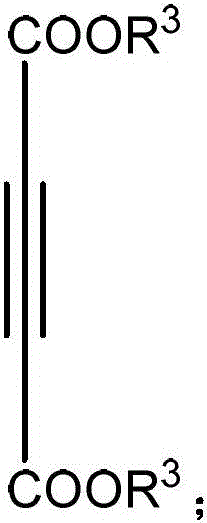 As illustrated in the general structure, this approach allows for extensive diversification at the R1, R2, and R3 positions, facilitating the rapid generation of compound libraries. By leveraging a manganese catalyst system under mild heating (typically around 70°C) and ambient air atmosphere, the process eliminates the need for inert gas protection and expensive oxidants. This shift from precious metal catalysis to base metal catalysis not only aligns with green chemistry principles but also simplifies the downstream purification process, as the removal of manganese residues is significantly less burdensome than removing palladium, thus ensuring higher purity specifications for the final reliable pharmaceutical intermediate supplier outputs.
Mechanistic Insights into Manganese-Catalyzed Oxidative Cyclization
The core of this technological advancement lies in the efficient activation of C-H bonds and subsequent cyclization mediated by the manganese catalyst. The reaction mechanism likely involves the generation of radical species initiated by the interaction between the manganese salt (such as manganese acetate dihydrate) and the peroxide oxidant (e.g., di-tert-butyl peroxide). This radical species abstracts a hydrogen atom or activates the amino-pyridine substrate, creating a reactive intermediate that undergoes nucleophilic attack or radical addition onto the electron-deficient alkyne bond of the butynedioic acid ester. The subsequent intramolecular cyclization closes the ring system to form the fused tricyclic core. The use of ligands like 2,2'-bipyridine plays a crucial role in stabilizing the metal center and modulating its redox potential, ensuring high turnover numbers and preventing catalyst deactivation. This mechanistic pathway is highly selective, minimizing side reactions such as polymerization of the alkyne or over-oxidation of the sensitive amine functionalities, which are common pitfalls in non-catalyzed thermal reactions.
From an impurity control perspective, the mild reaction conditions are paramount. High-temperature processes often lead to decomposition products or isomeric byproducts that are difficult to separate. In this manganese-catalyzed system, the reaction proceeds smoothly at 70°C in solvents like acetonitrile, maintaining the integrity of labile functional groups such as esters and halogens. The specificity of the catalyst ensures that the cyclization occurs regioselectively, predominantly yielding the desired imidazo[5,1,2-cd]indolizine skeleton rather than alternative isomers. This high degree of chemoselectivity translates directly to simpler work-up procedures; often, a straightforward concentration followed by column chromatography is sufficient to isolate the product in high purity. For quality control teams, this means a cleaner impurity profile and more consistent batch-to-batch reproducibility, which are critical metrics for validating a commercial scale-up of complex pharmaceutical intermediates.
How to Synthesize Polysubstituted Azatricyclazine Derivatives Efficiently
Implementing this synthesis route in a laboratory or pilot plant setting requires careful attention to reagent ratios and reaction monitoring to maximize yield. The standard protocol involves mixing the substituted aminopyridine and the dialkyl butynedioate in a molar ratio ranging from 1:2 to 1:5, ensuring an excess of the alkyne component to drive the equilibrium forward. The catalyst loading is remarkably low, often effective at just 2 mol%, paired with an equivalent amount of ligand. The reaction is conducted in an open vessel to allow oxygen from the air to participate as the terminal oxidant, highlighting the operational simplicity of the method. Detailed standardized synthesis steps see the guide below.
- Mix substituted aminopyridine, dialkyl butynedioate, manganese catalyst (e.g., Mn(OAc)2·2H2O), ligand (e.g., 2,2'-bipyridine), and oxidant (e.g., DTBP) in an organic solvent like acetonitrile.
- Heat the reaction mixture to 70°C under an air atmosphere for approximately 16 hours to facilitate the oxidative cyclization.
- Cool the reaction to room temperature, concentrate the solution, and purify the crude product via column chromatography to obtain the target derivative.
Commercial Advantages for Procurement and Supply Chain Teams
For procurement managers and supply chain heads, the adoption of this manganese-catalyzed technology offers transformative economic and logistical benefits. The primary driver for cost reduction is the substitution of expensive noble metal catalysts with abundant, low-cost manganese salts. This switch eliminates the volatility associated with precious metal pricing and removes the necessity for specialized scavenging resins used to lower metal residuals in APIs, thereby streamlining the manufacturing budget. Additionally, the use of air as an oxidant removes the cost and safety hazards associated with storing and handling hazardous chemical oxidants. The overall process efficiency is enhanced by the one-pot nature of the reaction, which reduces solvent consumption, labor hours, and equipment occupancy time compared to multi-step traditional routes.
- Cost Reduction in Manufacturing: The economic impact of this process is substantial due to the elimination of precious metals and the simplification of the synthetic sequence. By avoiding multi-step preparations of complex starting materials, manufacturers can reduce the total number of unit operations, leading to lower utility costs and reduced waste disposal fees. The high yields reported in the patent examples, often exceeding 80% for various substrates, ensure that raw material utilization is optimized, minimizing the cost per kilogram of the final active ingredient. Furthermore, the mild conditions reduce energy consumption for heating and cooling, contributing to a leaner manufacturing cost structure that enhances competitiveness in the global market.
- Enhanced Supply Chain Reliability: The reliance on commodity chemicals significantly bolsters supply chain resilience. Substituted aminopyridines and dialkyl acetylenedicarboxylates are widely available from multiple global vendors, reducing the risk of single-source bottlenecks. The robustness of the reaction conditions means that production is less susceptible to disruptions caused by stringent environmental regulations on hazardous reagents. This stability allows for more accurate forecasting and inventory management, ensuring that critical pharmaceutical intermediates are available when needed for downstream drug formulation. The ability to source raw materials easily also facilitates rapid scaling in response to market demand surges.
- Scalability and Environmental Compliance: Scaling this reaction from gram to ton scale is facilitated by the absence of sensitive reagents and the use of standard solvents like acetonitrile or toluene. The open-air operation simplifies reactor design, as there is no need for complex pressure vessels or inert gas blanketing systems. From an environmental standpoint, the process generates less hazardous waste, aligning with increasingly strict global emissions standards. The reduced heavy metal load in the effluent simplifies wastewater treatment, lowering compliance costs and enhancing the company's sustainability profile, which is increasingly important for partnerships with major multinational pharmaceutical corporations.
Frequently Asked Questions (FAQ)
The following questions address common technical and commercial inquiries regarding the implementation of this patented synthesis method. These answers are derived directly from the experimental data and beneficial effects described in the patent documentation, providing clarity for technical teams evaluating this route for adoption. Understanding these nuances is essential for making informed decisions about process integration and resource allocation.
Q: What are the key advantages of this manganese-catalyzed method over traditional precious metal catalysis?
A: This method replaces expensive precious metal catalysts like palladium or rhodium with inexpensive manganese salts, significantly reducing raw material costs. Furthermore, it utilizes air as the terminal oxidant instead of stoichiometric heavy metal oxidants, aligning with green chemistry principles and simplifying waste treatment.
Q: What is the substrate scope for the R1 and R2 positions in the azatricyclazine scaffold?
A: The process demonstrates excellent functional group tolerance. R1 can be hydrogen, alkyl, alkenyl, aryl, substituted arenes (including electron-withdrawing groups like CF3 and halogens), or alkoxy groups. R2 similarly accommodates diverse substituents, allowing for the synthesis of a wide library of derivatives for SAR studies.
Q: Is this synthesis route suitable for large-scale industrial production?
A: Yes, the reaction conditions are mild (70°C) and operationally simple (one-pot, open to air), which minimizes safety risks associated with high pressure or inert atmospheres. The use of common solvents like acetonitrile and the absence of sensitive catalysts make it highly amenable to scale-up from kilograms to metric tons.
Partnering with NINGBO INNO PHARMCHEM: Your Reliable Polysubstituted Azatricyclazine Derivatives Supplier
At NINGBO INNO PHARMCHEM, we recognize the strategic value of advanced synthetic methodologies like the manganese-catalyzed cyclization described in CN108484602B. Our team of expert chemists possesses extensive experience scaling diverse pathways from 100 kgs to 100 MT/annual commercial production, ensuring that the transition from laboratory discovery to industrial manufacturing is seamless and efficient. We are committed to delivering high-purity pharmaceutical intermediates that meet stringent purity specifications, utilizing our rigorous QC labs to verify every batch against the highest industry standards. Our infrastructure is designed to handle complex heterocyclic syntheses with precision, guaranteeing supply continuity for your critical drug development programs.
We invite you to collaborate with us to leverage this cutting-edge technology for your specific project needs. Contact our technical procurement team today to request a Customized Cost-Saving Analysis tailored to your volume requirements. We are ready to provide specific COA data and comprehensive route feasibility assessments to demonstrate how our manufacturing capabilities can accelerate your timeline to market while optimizing your overall production costs.