Homosalate
- CAS No.118-56-9
- GradeIndustrial / Pharmaceutical
- Availability● In Stock
Homosalate (CAS 118-56-9) is an oil-soluble UV-B filter widely used in sun-care and cosmetic formulations for effective photoprotection and solubilization of solid UV filters.
Request Bulk PricingProduct Technical Details
Product Overview
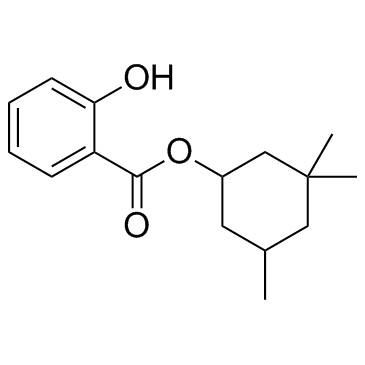
Homosalate is a widely recognized organic ultraviolet (UV) absorber primarily utilized as a UV-B filter in personal care and cosmetic applications. Chemically identified as 3,3,5-trimethylcyclohexyl 2-hydroxybenzoate, it offers excellent compatibility with common cosmetic lipids and ethanol, making it a versatile ingredient in sunscreen formulations. With regulatory approval across major global markets—including the EU (max 10%), USA (max 15%), Japan (max 10%), and Australia (max 15%)—Homosalate supports compliant, high-performance sun protection products.
Specifications
| Molecular Formula | C₁₆H₂₂O₃ |
|---|---|
| Molecular Weight | 262.344 g/mol |
| Appearance | Colorless to pale yellow liquid |
| Assay (HPLC) | 95.00–110.00% |
| Specific Gravity @25°C | 1.049–1.053 |
| Refractive Index @20°C | 1.516–1.519 |
| Individual Impurities | ≤0.50% |
| Total Impurities | ≤2.00% |
Industrial Applications
Homosalate serves dual roles in cosmetic science: as a primary UV-B absorber and as a solubilizing agent for challenging solid UV filters such as Avobenzone (Butyl Methoxydibenzoylmethane) and Ethylhexyl Triazone. Its oil-soluble nature ensures seamless integration into emulsion-based and anhydrous sunscreen systems.
- Enhances SPF efficacy in broad-spectrum sunscreen formulations
- Improves stability and clarity of multi-filter UV systems
- Miscible with ethanol and common cosmetic oils, but immiscible with water
- Complies with international regulatory limits for safe topical use
Stored in tightly sealed containers in a cool, dry environment, Homosalate maintains its performance integrity throughout shelf life. Supplied in 180 kg drums, it is ideal for large-scale cosmetic manufacturing requiring consistent quality and regulatory documentation, including Certificates of Analysis (COA).