
Advanced Manufacturing of Oseltamivir Enantiomers: Technical Breakthroughs and Commercial Scalability
Advanced Manufacturing of Oseltamivir Enantiomers: Technical Breakthroughs and Commercial Scalability
The pharmaceutical industry continuously demands higher standards for chiral purity, particularly for antiviral agents where the biological activity is strictly dependent on stereochemistry. Patent CN108047076B introduces a sophisticated preparation method for an oseltamivir enantiomer that addresses critical challenges in quality control and impurity management. This technical disclosure outlines a multi-step synthesis starting from epoxide derivatives, utilizing precise stereochemical inversion to achieve the desired configuration. For R&D directors and procurement specialists, understanding this pathway is essential for securing a reliable pharmaceutical intermediates supplier capable of delivering high-purity materials. The method not only enhances the ability to monitor the quality of oseltamivir phosphate but also provides a robust framework for manufacturing the enantiomer as a reference standard or a specific chiral building block. By leveraging this patented approach, manufacturers can ensure that their supply chain is resilient against the complexities of chiral synthesis, ultimately supporting the production of safer and more effective antiviral medications.
The Limitations of Conventional Methods vs. The Novel Approach
The Limitations of Conventional Methods
Traditional synthetic routes for oseltamivir and its related isomers often struggle with achieving high stereoselectivity without resorting to expensive chiral catalysts or complex resolution processes. Many conventional methods rely on starting materials that already possess the desired chirality, which can be cost-prohibitive and subject to supply chain volatility. Furthermore, older techniques frequently involve harsh reaction conditions that lead to racemization, resulting in a mixture of isomers that are difficult and costly to separate. This lack of selectivity increases the impurity burden, requiring extensive downstream purification that drives up manufacturing costs and extends lead times. In the context of cost reduction in API manufacturing, these inefficiencies represent a significant bottleneck, as the removal of trace enantiomeric impurities often demands specialized chromatography or repeated crystallization steps. Consequently, the industry has long sought a more direct and controllable method to access specific oseltamivir enantiomers without compromising on yield or operational safety.
The Novel Approach
The methodology described in the patent offers a transformative solution by employing a strategic epoxide ring-opening strategy to dictate stereochemistry. Instead of relying on pre-existing chiral centers that may be expensive to source, this route builds the required configuration through a controlled nucleophilic attack. The use of sodium azide to attack the epoxide from the back ensures a predictable inversion of configuration, providing a high degree of control over the molecular architecture. This approach simplifies the synthetic logic, reducing the number of steps required to establish the core chiral framework of the molecule. 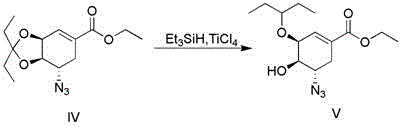 By streamlining the pathway, the novel approach significantly reduces the accumulation of byproducts and simplifies the workup procedures. For supply chain heads, this translates to a more predictable production schedule and reduced dependency on scarce chiral pool materials. The ability to generate the enantiomer from simpler, achiral or readily available precursors enhances the commercial scale-up of complex pharmaceutical intermediates, making the process more economically viable for large-scale operations.
Mechanistic Insights into Stereoselective Epoxide Opening and Reduction
The core of this synthesis lies in the precise manipulation of stereochemistry during the ring-opening of the epoxide intermediate. In the initial step, the epoxide derivative (Compound II) is subjected to nucleophilic attack by sodium azide in the presence of ammonium chloride. This reaction is not merely a substitution but a stereospecific event where the azide ion attacks the epoxide ring from the side opposite to the leaving group, resulting in a complete inversion of configuration at the reaction center. 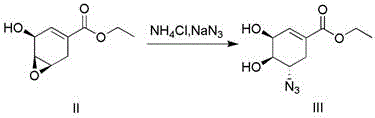 This mechanism is critical for R&D teams focused on purity and impurity profiles, as it ensures that the resulting Compound III possesses the exact stereochemical orientation required for the subsequent transformation into the target enantiomer. The reaction conditions, typically conducted in alcohol solvents at elevated temperatures (40-85°C), are optimized to facilitate this inversion while minimizing side reactions such as elimination or polymerization. Understanding this mechanistic detail allows chemists to fine-tune the reaction parameters to maximize the enantiomeric excess, which is a key quality attribute for any pharmaceutical intermediate intended for regulatory submission.
Following the establishment of the chiral center, the synthesis proceeds through a series of protection and reduction steps that maintain the integrity of the stereochemistry. The protection of the hydroxyl groups in Compound III to form Compound IV is essential to prevent unwanted side reactions during the subsequent reduction phase. The selective reduction of Compound IV using triethylsilane and titanium tetrachloride is a particularly elegant step that demonstrates high chemoselectivity. This reduction targets specific functional groups without affecting the sensitive azide moiety or the ester group, preserving the molecular complexity required for the final drug structure. The control of temperature during this step, often maintained between -78°C and 10°C, is vital to prevent over-reduction or decomposition of the intermediate. For technical teams, this level of control underscores the importance of precise process engineering in achieving consistent batch-to-batch quality, ensuring that the final oseltamivir enantiomer meets the stringent specifications required for clinical and commercial use.
How to Synthesize Oseltamivir Enantiomer Efficiently
Implementing this synthesis route requires a thorough understanding of the reaction kinetics and the specific handling requirements of the reagents involved. The process begins with the preparation of the epoxide starting material, which must be of high purity to ensure the success of the stereochemical inversion. The reaction with sodium azide should be monitored closely to ensure complete conversion while avoiding the formation of regioisomers. Following the isolation of Compound III, the protection step must be optimized to achieve quantitative yield, as any loss of material at this stage can impact the overall efficiency of the process. The subsequent reduction and cyclization steps demand strict control over moisture and temperature to maintain the activity of the Lewis acid catalyst and the stability of the intermediates. Detailed standard operating procedures for each stage are essential for technology transfer and scale-up, ensuring that the laboratory success can be replicated in a manufacturing environment with high fidelity and safety.
- Dissolve the epoxide starting material (Compound II) in an alcohol solvent and react with sodium azide and ammonium chloride to achieve stereochemical inversion, yielding Compound III.
- Protect the hydroxyl groups of Compound III using a catalyst to form Compound IV, followed by selective reduction with triethylsilane and titanium tetrachloride to obtain Compound V.
- Perform Staudinger reduction on Compound V to cyclize into Compound VI, followed by a second inversion and acetylation to yield Compound VII, and finally reduce to the target oseltamivir enantiomer (Formula I).
Commercial Advantages for Procurement and Supply Chain Teams
From a commercial perspective, this patented synthesis route offers substantial benefits for procurement managers and supply chain leaders looking to optimize their sourcing strategies for antiviral intermediates. The use of readily available starting materials and common reagents significantly reduces the raw material costs associated with the production of the oseltamivir enantiomer. By avoiding the need for expensive chiral catalysts or rare natural products, the process achieves a drastic simplification of the supply chain, reducing the risk of disruptions caused by the scarcity of specialized inputs. This accessibility of raw materials ensures a more stable and continuous supply, which is crucial for maintaining production schedules in the fast-paced pharmaceutical market. Furthermore, the robustness of the reaction conditions allows for flexible manufacturing schedules, enabling producers to respond quickly to fluctuations in market demand without compromising on quality or delivery times.
- Cost Reduction in Manufacturing: The elimination of complex resolution steps and the use of cost-effective reagents lead to significant cost savings in the overall manufacturing process. By streamlining the synthetic route and improving the overall yield through high selectivity, the process reduces the amount of waste generated and the energy consumed per unit of product. This efficiency translates directly into a lower cost of goods sold, allowing for more competitive pricing in the global market. Additionally, the simplified purification requirements reduce the consumption of solvents and chromatography media, further contributing to the economic viability of the process. These factors combined make the production of high-purity oseltamivir enantiomers more accessible and affordable for downstream drug manufacturers.
- Enhanced Supply Chain Reliability: The reliance on commodity chemicals and standard reaction conditions enhances the reliability of the supply chain. Unlike processes that depend on proprietary catalysts or specialized equipment, this method can be implemented in a wide range of manufacturing facilities with standard chemical processing capabilities. This flexibility reduces the dependency on single-source suppliers for critical reagents, mitigating the risk of supply chain bottlenecks. For supply chain heads, this means greater confidence in the continuity of supply, ensuring that production targets can be met consistently. The ability to source materials from multiple vendors also provides leverage in negotiations, further optimizing the procurement strategy and reducing overall supply chain costs.
- Scalability and Environmental Compliance: The process is designed with scalability in mind, allowing for seamless transition from laboratory scale to commercial production. The reaction conditions are compatible with large-scale reactors, and the workup procedures are straightforward, facilitating efficient handling of large volumes. Moreover, the reduction in waste generation and the use of less hazardous reagents contribute to better environmental compliance. This alignment with green chemistry principles not only reduces the environmental footprint of the manufacturing process but also helps companies meet increasingly stringent regulatory requirements. The combination of scalability and environmental responsibility makes this route an attractive option for sustainable pharmaceutical manufacturing.
Frequently Asked Questions (FAQ)
The following questions address common technical and commercial inquiries regarding the synthesis and supply of oseltamivir enantiomers. These answers are derived from the technical details provided in the patent documentation and are intended to clarify the capabilities and advantages of this specific manufacturing route. Understanding these aspects is crucial for stakeholders involved in the procurement and development of antiviral intermediates. By addressing these key areas, we aim to provide transparency and build confidence in the technical feasibility and commercial viability of the proposed synthesis method.
Q: What is the primary advantage of using the epoxide opening method for oseltamivir enantiomer synthesis?
A: The primary advantage lies in the precise control of stereochemistry. By utilizing sodium azide to attack the epoxide ring from the back, the process ensures a complete configuration inversion, which is critical for generating the specific enantiomer required for rigorous quality control and impurity profiling of the final oseltamivir phosphate drug product.
Q: How does the titanium tetrachloride reduction step impact the overall yield and purity?
A: The use of titanium tetrachloride in conjunction with triethylsilane allows for a highly selective reduction of the protected intermediate. This specificity minimizes the formation of side products and over-reduced impurities, thereby significantly enhancing the purity profile of the subsequent intermediates and reducing the burden on downstream purification processes.
Q: Is this synthesis route suitable for large-scale commercial production?
A: Yes, the route is designed with scalability in mind. The reaction conditions, such as the use of common alcohol solvents and manageable temperature ranges (e.g., -5°C to 85°C), are compatible with standard industrial reactor setups. Furthermore, the robustness of the stereochemical inversion steps ensures consistent quality even when scaling from kilogram to multi-ton production volumes.
Partnering with NINGBO INNO PHARMCHEM: Your Reliable Oseltamivir Enantiomer Supplier
At NINGBO INNO PHARMCHEM, we recognize the critical importance of high-quality intermediates in the development and production of life-saving antiviral medications. Our team of experts possesses extensive experience scaling diverse pathways from 100 kgs to 100 MT/annual commercial production, ensuring that your project needs are met with precision and efficiency. We are committed to delivering products that meet stringent purity specifications, supported by our rigorous QC labs and state-of-the-art analytical capabilities. Our dedication to quality and reliability makes us a trusted partner for pharmaceutical companies seeking to secure their supply chain for complex chiral intermediates. By leveraging our technical expertise and manufacturing capacity, we help our clients accelerate their development timelines and bring their products to market faster.
We invite you to collaborate with us to explore how our advanced synthesis capabilities can support your specific project requirements. Our technical procurement team is ready to provide a Customized Cost-Saving Analysis tailored to your production volumes and quality needs. We encourage you to reach out to us to request specific COA data and route feasibility assessments for your target molecules. By partnering with NINGBO INNO PHARMCHEM, you gain access to a reliable supply chain partner dedicated to your success in the competitive pharmaceutical landscape.
Engineering Bottleneck?
Can't scale up this synthesis? Upload your target structure or CAS, and our CDMO team will evaluate the industrial feasibility within 24 hours. Request Evaluation →