
Revolutionizing Indoxacarb Production with High-Efficiency Cinchonine Derivative Catalysts for Commercial Scale
Revolutionizing Indoxacarb Production with High-Efficiency Cinchonine Derivative Catalysts for Commercial Scale
The global agrochemical industry is constantly seeking more efficient pathways to produce high-value chiral pesticides, and the synthesis of Indoxacarb stands as a prime example of this technological evolution. Patent CN114105972B introduces a groundbreaking advancement in this field by disclosing a novel class of cinchonine derivatives that serve as highly efficient organocatalysts. These new catalysts address the long-standing limitations of traditional methods by significantly enhancing both the yield and the enantioselectivity of the asymmetric alpha-hydroxylation reaction required to produce the key Indoxacarb intermediate. By modifying the hydroxyl group at the C-9 position of the cinchonine skeleton through amidation, the inventors have created a catalytic system that pushes the S-isomer content from a mediocre 50 percent to an impressive level exceeding 90 percent. This leap in optical purity is not merely a laboratory curiosity but a critical industrial breakthrough that directly impacts the efficacy and environmental profile of the final insecticide product.
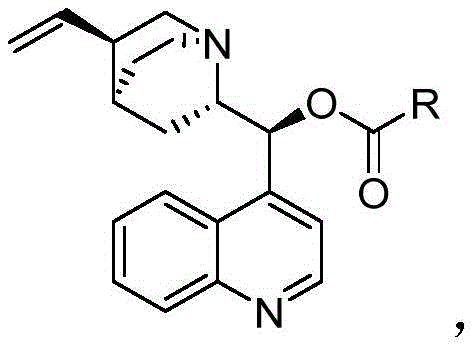
For procurement specialists and supply chain managers, the implications of this patent are profound, as it offers a reliable agrochemical intermediate supplier pathway that mitigates the risks associated with low-efficiency catalysis. The ability to achieve such high enantiomeric excess with minimal catalyst loading translates directly into reduced raw material consumption and simplified downstream processing. Furthermore, the synthesis of these novel catalysts is straightforward, utilizing readily available starting materials like cinchonine and simple acylating agents, which ensures a stable and continuous supply chain for the catalyst itself. This stability is crucial for maintaining production schedules in the face of fluctuating market demands for high-end pest control solutions.
The Limitations of Conventional Methods vs. The Novel Approach
The Limitations of Conventional Methods
Historically, the industrial production of Indoxacarb has relied heavily on the use of unmodified cinchona alkaloids, such as cinchonine, as catalysts for the critical alpha-hydroxylation step. While these natural alkaloids provided a foundational method for introducing chirality, their performance was inherently limited, typically resulting in an enantiomeric excess (ee) of only about 50 percent. This low selectivity meant that the resulting product was nearly racemic, requiring extensive and costly resolution processes to isolate the biologically active S-enantiomer. Such inefficiencies not only drove up the cost of goods sold but also generated significant chemical waste, posing challenges for environmental compliance and sustainability goals. Additionally, many alternative chiral catalysts proposed in prior art, such as complex metal-salen complexes or phosphine Schiff bases, suffered from issues related to toxicity, high cost, and difficult preparation conditions, making them less attractive for large-scale manufacturing.
The Novel Approach
The novel approach detailed in the patent data fundamentally shifts the paradigm by employing structurally modified cinchonine derivatives that are specifically tuned for this transformation. By introducing amide or carbamate functionalities at the C-9 position, the steric and electronic environment of the catalyst is optimized to favor the formation of the desired S-isomer with much greater precision. This structural modification allows the reaction to proceed with high efficiency even at very low catalyst loadings, often as low as 0.02 molar equivalents. The result is a process that not only delivers superior optical purity but also operates under milder conditions using common organic solvents like toluene. This simplicity in operation, combined with the high performance of the catalyst, represents a significant upgrade over the legacy DuPont process and other existing technologies, offering a clear path toward cost reduction in agrochemical intermediates manufacturing.
Mechanistic Insights into Asymmetric Alpha-Hydroxylation Catalysis
To fully appreciate the value of this technology for R&D directors, one must understand the mechanistic nuances that enable such high selectivity. The catalytic cycle likely involves the formation of a chiral ion pair or a hydrogen-bonding network between the modified cinchonine derivative and the substrate, 5-chloro-1-indanone-2-methyl formate. The bulky substituents introduced at the C-9 position, such as the dimethylamino or dichlorophenyl groups found in catalysts 1a and 1c, create a rigid chiral pocket that effectively shields one face of the substrate from the oxidant. This steric hindrance forces the peroxide oxidant to attack exclusively from the less hindered face, thereby ensuring the formation of the S-configured hydroxyl group. The robustness of this interaction is evidenced by the consistent high ee values observed across different derivatives, suggesting a highly reliable and predictable stereochemical outcome.

Furthermore, the impurity profile of the reaction is significantly improved due to the high specificity of the new catalysts. In conventional processes, the formation of the R-isomer and other side products necessitates complex purification steps that can degrade overall yield. With the novel derivatives, the suppression of the R-isomer formation is so effective that the crude product often meets high-purity specifications with minimal workup. This reduction in impurity generation is a critical factor for pharmaceutical and agrochemical grade materials, where strict regulatory limits on isomeric purity must be met. The mechanism thus supports not just higher yields, but also a cleaner process that aligns with modern green chemistry principles by minimizing waste and energy consumption associated with purification.
How to Synthesize High-Optical-Purity Indoxacarb Intermediate Efficiently
The practical implementation of this technology involves a streamlined two-stage process: first, the preparation of the catalyst, and second, its application in the hydroxylation reaction. The synthesis of the catalyst is designed to be scalable, involving a simple nucleophilic substitution or addition reaction under basic conditions. Once the catalyst is secured, the hydroxylation reaction is performed by dissolving the substrate and catalyst in a solvent like toluene, cooling the mixture, and carefully adding the oxidant. The detailed standardized synthesis steps see the guide below, which outlines the precise molar ratios and temperature controls necessary to replicate the high success rates reported in the patent examples.
- Prepare the novel cinchonine derivative catalyst by reacting cinchonine with dimethylcarbamoyl chloride or substituted isocyanates under basic conditions.
- Combine 5-chloro-1-indanone-2-methyl formate, the novel catalyst, and an organic solvent like toluene in a reactor.
- Add a peroxide oxidant such as tert-butyl peroxide at low temperatures to initiate asymmetric alpha-hydroxylation, yielding the S-isomer with high enantiomeric excess.
Commercial Advantages for Procurement and Supply Chain Teams
For procurement managers and supply chain heads, the adoption of this novel catalytic technology offers substantial strategic benefits that extend beyond simple chemical efficiency. The primary advantage lies in the drastic simplification of the supply chain for chiral catalysts; since the new derivatives are synthesized from abundant natural cinchonine in a single step, the risk of supply disruption is minimized compared to sourcing complex synthetic ligands. This ease of preparation ensures a steady availability of the catalyst, which is essential for maintaining continuous production lines. Moreover, the high activity of the catalyst means that less material is required per batch, leading to significant inventory cost savings and reduced storage requirements. These factors combine to create a more resilient and cost-effective supply chain for the production of high-value agrochemical intermediates.
- Cost Reduction in Manufacturing: The economic impact of switching to this new catalyst system is driven by multiple factors that collectively lower the total cost of production. Firstly, the extremely low catalyst loading required, often less than 0.05 molar equivalents, means that the cost contribution of the chiral catalyst to the final product is negligible. Secondly, the high enantioselectivity eliminates the need for expensive and yield-loss-prone resolution steps, such as recrystallization or chiral chromatography, which are typically required when using less selective catalysts. Finally, the use of common solvents and mild reaction conditions reduces energy consumption and waste disposal costs, further enhancing the overall economic viability of the process for commercial scale-up of complex agrochemical intermediates.
- Enhanced Supply Chain Reliability: Reliability in the supply of key intermediates is paramount for meeting global agricultural demands, and this technology significantly de-risks the production process. The starting material, cinchonine, is a naturally occurring alkaloid with a stable and well-established supply chain, ensuring that the production of the catalyst is not bottlenecked by scarce synthetic precursors. Additionally, the robustness of the catalytic reaction, which tolerates standard industrial conditions and reagents, reduces the likelihood of batch failures due to sensitive operational parameters. This reliability allows manufacturers to plan production schedules with greater confidence, reducing lead time for high-purity agrochemical intermediates and ensuring timely delivery to downstream formulators.
- Scalability and Environmental Compliance: Scaling chemical processes from the laboratory to industrial production often introduces unforeseen challenges, but the simplicity of this catalytic system facilitates a smooth transition. The reaction does not require exotic equipment or extreme conditions, making it compatible with existing manufacturing infrastructure. From an environmental perspective, the high atom economy and reduced waste generation align with increasingly stringent global regulations on chemical manufacturing. The ability to produce high-purity products with minimal byproducts simplifies wastewater treatment and reduces the environmental footprint of the facility, supporting corporate sustainability goals and regulatory compliance without compromising on output volume.
Frequently Asked Questions (FAQ)
The following questions address common technical and commercial inquiries regarding the implementation of this novel cinchonine derivative technology. These answers are derived directly from the experimental data and technical specifications provided in the patent documentation, ensuring accuracy and relevance for decision-makers. Understanding these details is crucial for evaluating the feasibility of integrating this process into your existing manufacturing portfolio.
Q: How does the novel cinchonine derivative improve upon traditional cinchonine catalysts?
A: Traditional cinchonine catalysts typically yield an enantiomeric excess (ee) of around 50 percent for this reaction. The novel derivatives described in patent CN114105972B, specifically through C-9 position amidation, boost the S-isomer content to over 90 percent, drastically reducing the need for downstream purification.
Q: What are the optimal reaction conditions for this asymmetric hydroxylation?
A: The process operates efficiently at low temperatures, preferably between -5°C and 0°C, using toluene as the solvent. The catalyst loading is remarkably low, ranging from 0.01 to 0.05 molar equivalents, which significantly lowers material costs compared to stoichiometric chiral auxiliaries.
Q: Is this catalytic system suitable for large-scale industrial production?
A: Yes, the synthesis of the catalyst itself is a simple one-step derivatization from readily available cinchonine, and the catalytic reaction uses common solvents and oxidants. The high turnover and selectivity make it highly viable for scaling up to meet the global demand for high-purity indoxacarb.
Partnering with NINGBO INNO PHARMCHEM: Your Reliable Cinchonine Derivative Supplier
At NINGBO INNO PHARMCHEM, we recognize the transformative potential of the catalytic technologies described in patent CN114105972B and are fully equipped to support your transition to this superior manufacturing method. As a leading CDMO partner, we possess extensive experience scaling diverse pathways from 100 kgs to 100 MT/annual commercial production, ensuring that your move to high-purity indoxacarb intermediates is seamless and efficient. Our state-of-the-art facilities and rigorous QC labs allow us to meet stringent purity specifications consistently, providing you with a reliable source of high-quality chiral catalysts and intermediates that drive your business forward.
We invite you to engage with our technical team to explore how this innovative catalytic route can optimize your production costs and enhance your product quality. By requesting a Customized Cost-Saving Analysis, you can gain a clear understanding of the economic benefits specific to your operation. We encourage you to contact our technical procurement team today to obtain specific COA data and route feasibility assessments, and let us demonstrate our commitment to being your trusted partner in advanced agrochemical synthesis.