
Revolutionizing Isoxazole Production: A Green Aqueous Micellar Catalysis Approach for Commercial Scale
Revolutionizing Isoxazole Production: A Green Aqueous Micellar Catalysis Approach for Commercial Scale
The pharmaceutical and fine chemical industries are currently undergoing a paradigm shift towards sustainable manufacturing practices, driven by stringent environmental regulations and the economic necessity of reducing waste. A pivotal development in this arena is detailed in patent CN113582937A, which discloses a novel green preparation method for water-soluble vitamin E-involved isoxazole compounds. This technology represents a significant departure from traditional synthetic routes by utilizing an aqueous micellar catalysis system mediated by TPGS-750-M (tocopherol methoxypolyethylene glycol succinate). For R&D directors and procurement managers seeking reliable pharmaceutical intermediate suppliers, this methodology offers a compelling value proposition: it replaces hazardous organic solvents with water, eliminates the need for expensive transition metal catalysts, and operates under mild room temperature conditions. The ability to synthesize complex heterocyclic scaffolds like isoxazoles with high efficiency and minimal environmental footprint addresses critical pain points in modern API manufacturing, positioning this technology as a cornerstone for future green chemistry initiatives.
The Limitations of Conventional Methods vs. The Novel Approach
The Limitations of Conventional Methods
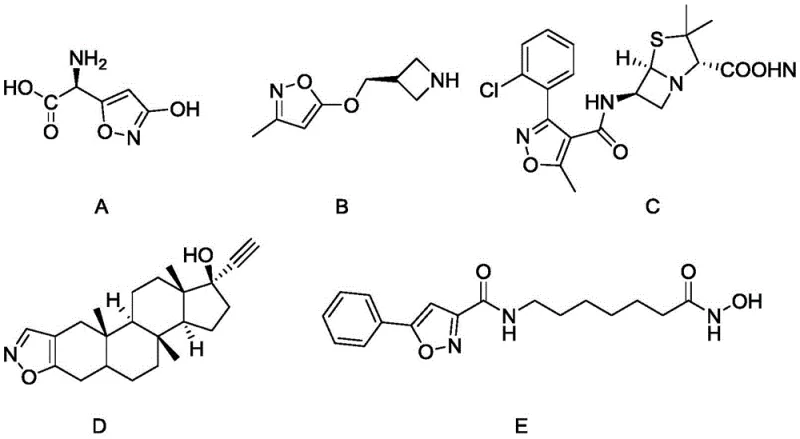
Historically, the construction of the isoxazole scaffold, a privileged structure found in numerous bioactive molecules ranging from neurotoxins to antibiotics, has relied heavily on methodologies that are increasingly viewed as unsustainable. Traditional approaches often involve the use of homogeneous metal catalysts such as palladium or copper, which not only incur high raw material costs but also necessitate rigorous and expensive downstream processing to remove trace heavy metals to meet pharmacopeial standards. Furthermore, many classical protocols require the use of volatile organic compounds (VOCs) as solvents, posing significant safety hazards and generating substantial quantities of hazardous waste that require specialized disposal. Conditions often involve elevated temperatures or the use of strong, corrosive reagents, which can lead to poor atom economy and the formation of difficult-to-separate impurities. These factors collectively contribute to extended production lead times and inflated manufacturing costs, creating bottlenecks for supply chain heads responsible for ensuring the continuity of high-purity pharmaceutical intermediates.
The Novel Approach
In stark contrast to these legacy methods, the technology described in patent CN113582937A introduces a streamlined, metal-free protocol that leverages the unique properties of nanomicelles formed by TPGS-750-M in water. This approach facilitates the reaction between aldoxime compounds and terminal alkynes in the presence of N-chlorosuccinimide (NCS) and a base, proceeding efficiently at room temperature. By shifting the reaction medium from organic solvents to an aqueous environment, the process drastically reduces the ecological burden and simplifies the work-up procedure. The micellar environment acts as a nanoreactor, concentrating the hydrophobic reactants within the core of the micelle, thereby accelerating reaction kinetics without the need for external heating. This innovation not only enhances the safety profile of the operation but also significantly lowers the barrier to entry for commercial scale-up, making it an attractive option for cost reduction in pharmaceutical intermediate manufacturing.
Mechanistic Insights into NCS-Mediated Oxidative Cyclization in Micelles
The success of this green synthesis lies in the synergistic interplay between the oxidant, the base, and the surfactant matrix. Mechanistically, the reaction is believed to proceed via the in situ generation of a reactive nitrile oxide species or a chlorinated intermediate from the aldoxime substrate, facilitated by N-chlorosuccinimide under basic conditions. The TPGS-750-M surfactant plays a dual role: firstly, it solubilizes the organic reactants in water, creating a homogeneous-like reaction environment despite the heterogeneous nature of the mixture; secondly, the lipophilic core of the micelle provides a confined space that increases the effective local concentration of the reactants, promoting the 1,3-dipolar cycloaddition or oxidative cyclization with the alkyne. This confinement effect is crucial for achieving high regioselectivity and yield, as it minimizes side reactions that typically occur in bulk solvent. For R&D teams, understanding this mechanism is vital for optimizing reaction parameters such as surfactant loading and stoichiometry to ensure consistent batch-to-batch reproducibility.
From an impurity control perspective, the aqueous micellar system offers distinct advantages over traditional organic solvent systems. The mild reaction conditions (room temperature) prevent thermal degradation of sensitive functional groups, which is a common source of impurities in high-temperature processes. Additionally, the absence of transition metals eliminates the risk of metal-catalyzed side reactions, such as homocoupling of alkynes, which can be difficult to purge in later stages. The simplicity of the work-up, involving extraction with ethyl acetate followed by column chromatography, allows for the efficient removal of succinimide byproducts and unreacted starting materials. This results in a final product with high purity, often exceeding 98% as demonstrated in the patent examples, thereby reducing the need for extensive recrystallization or preparative HPLC purification steps that erode overall yield and increase production costs.
How to Synthesize 3,5-Diphenylisoxazole Efficiently
The practical implementation of this technology is straightforward and amenable to standard laboratory and pilot plant equipment. The general procedure involves preparing a fresh aqueous solution of the surfactant TPGS-750-M, typically at a concentration of 2 wt.%, which serves as the reaction medium. The aldoxime substrate and N-chlorosuccinimide are introduced into this mixture and stirred to allow for the initial activation step. Subsequently, the base, preferably triethylamine, and the terminal alkyne are added, and the reaction is allowed to proceed at ambient temperature for a period ranging from 6 to 16 hours, depending on the specific electronic nature of the substrates. Detailed standardized synthesis steps for specific derivatives are provided in the guide below, illustrating the robustness of the method across a wide range of substituents.
- Prepare a 2 wt.% aqueous solution of the surfactant TPGS-750-M.
- Mix aldoxime substrate and N-chlorosuccinimide (NCS) in the surfactant solution and stir at room temperature.
- Add base (e.g., triethylamine) and alkyne compound, reacting at room temperature for 6-16 hours followed by extraction and purification.
Commercial Advantages for Procurement and Supply Chain Teams
For procurement managers and supply chain leaders, the adoption of this aqueous micellar catalysis technology translates into tangible strategic benefits that extend beyond mere regulatory compliance. The elimination of expensive noble metal catalysts like palladium or gold directly impacts the bill of materials, resulting in substantial cost savings on raw materials. Furthermore, the removal of heavy metal scavenging agents and the associated filtration steps simplifies the manufacturing workflow, reducing labor costs and equipment downtime. The use of water as the primary solvent not only lowers solvent procurement costs but also mitigates the risks associated with the storage and handling of flammable organic liquids, thereby lowering insurance premiums and facility safety requirements. These factors combine to create a more resilient and cost-effective supply chain for high-purity pharmaceutical intermediates.
- Cost Reduction in Manufacturing: The economic argument for this technology is robust, primarily driven by the substitution of costly reagents and solvents with inexpensive, commodity chemicals. By utilizing N-chlorosuccinimide and triethylamine in water, the process avoids the volatility and price fluctuations associated with organic solvents and precious metal catalysts. Additionally, the potential for recycling the TPGS-750-M surfactant from the aqueous phase after product extraction offers a pathway to further reduce operating expenses over time. This circular approach to reagent usage aligns with lean manufacturing principles, ensuring that every dollar spent on raw materials contributes maximally to the final product value without being lost to waste streams or expensive purification protocols.
- Enhanced Supply Chain Reliability: Supply chain continuity is often threatened by the reliance on specialized reagents that may have limited suppliers or long lead times. The reagents employed in this method—aldoximes, alkynes, NCS, and common bases—are widely available from multiple global chemical distributors, reducing the risk of single-source dependency. The mild reaction conditions also mean that the process is less susceptible to disruptions caused by utility failures, such as loss of heating or cooling capacity, as the reaction proceeds efficiently at room temperature. This inherent robustness ensures that production schedules can be maintained with greater predictability, allowing supply chain heads to promise reliable delivery dates to their downstream customers without the buffer of excessive safety stock.
- Scalability and Environmental Compliance: Scaling chemical processes from the bench to the ton-scale often introduces unforeseen challenges, particularly regarding heat transfer and mixing in exothermic reactions. However, the isothermal nature of this room-temperature aqueous reaction significantly de-risks the scale-up process, as there is no need for complex heating or cooling jackets to manage thermal runaway. Moreover, the environmental compliance aspect cannot be overstated; by achieving near-zero discharge of organic solvents and avoiding heavy metal contamination, facilities can operate with a smaller environmental footprint. This ease of compliance reduces the administrative burden of waste reporting and permitting, facilitating faster approval for commercial scale-up of complex pharmaceutical intermediates in regulated markets.
Frequently Asked Questions (FAQ)
The following questions address common technical and commercial inquiries regarding the implementation of this green synthesis technology. These insights are derived directly from the experimental data and beneficial effects described in the patent documentation, providing a clear understanding of the method's capabilities and limitations. Understanding these nuances is essential for technical teams evaluating the feasibility of integrating this route into their existing manufacturing portfolios.
Q: What are the primary advantages of using TPGS-750-M in isoxazole synthesis?
A: The use of TPGS-750-M enables the reaction to proceed in water rather than toxic organic solvents, significantly reducing environmental impact and waste disposal costs while maintaining high yields and purity.
Q: Does this method require expensive transition metal catalysts?
A: No, this protocol utilizes N-chlorosuccinimide (NCS) and a base under metal-free conditions, eliminating the need for costly palladium or copper catalysts and the associated heavy metal removal steps.
Q: Is the surfactant TPGS-750-M recyclable in this process?
A: Yes, the patent data indicates that the surfactant in the aqueous phase can be recovered and recycled through extraction processes, further enhancing the economic and environmental sustainability of the method.
Partnering with NINGBO INNO PHARMCHEM: Your Reliable Isoxazole Derivatives Supplier
At NINGBO INNO PHARMCHEM, we recognize that the transition to greener, more efficient synthetic routes is not just a regulatory requirement but a strategic imperative for maintaining competitiveness in the global market. As a leading CDMO partner, we possess extensive experience scaling diverse pathways from 100 kgs to 100 MT/annual commercial production, ensuring that innovative laboratory methods like the TPGS-750-M mediated isoxazole synthesis can be seamlessly translated into robust industrial processes. Our state-of-the-art facilities are equipped with rigorous QC labs capable of meeting stringent purity specifications, guaranteeing that every batch of isoxazole intermediate delivered meets the highest quality standards required by top-tier pharmaceutical companies. We are committed to leveraging our technical expertise to help clients navigate the complexities of process optimization and regulatory filing.
We invite you to collaborate with us to explore how this advanced aqueous micellar catalysis technology can be tailored to your specific project needs. Our technical procurement team is ready to provide a Customized Cost-Saving Analysis that quantifies the potential economic benefits of switching to this metal-free protocol for your specific molecule. We encourage you to contact us today to request specific COA data for our catalog isoxazoles or to discuss route feasibility assessments for your proprietary candidates. By partnering with NINGBO INNO PHARMCHEM, you gain access to a supply chain that is not only reliable and cost-effective but also aligned with the future of sustainable chemical manufacturing.