
Scalable Synthesis of Key Fipronil Intermediate: Technical Breakthroughs and Commercial Viability
Scalable Synthesis of Key Fipronil Intermediate: Technical Breakthroughs and Commercial Viability
The global demand for high-performance agrochemicals continues to drive innovation in the synthesis of critical intermediates, particularly for broad-spectrum insecticides like Fipronil. Patent CN101693691B introduces a robust and highly efficient methodology for preparing 5-amino-3-cyano-1-((2,6-dichloro-4-trifluoromethyl) phenyl)-1H-pyrazole, a pivotal building block in modern pest control chemistry. This technical insight report analyzes the novel three-step cascade reaction that replaces traditional, less efficient pathways with a streamlined process characterized by mild operating conditions and superior yield profiles. By leveraging diazotization chemistry followed by precise cyanation and cyclization, this route offers a compelling value proposition for supply chain stakeholders seeking reliability and cost optimization. The strategic implementation of this patent technology enables manufacturers to achieve stringent purity specifications while minimizing waste generation, aligning with modern green chemistry principles. For R&D directors and procurement managers, understanding the mechanistic advantages of this approach is crucial for evaluating long-term sourcing strategies and production feasibility. The following analysis details the chemical logic, operational benefits, and commercial implications of adopting this advanced synthetic route for large-scale agrochemical intermediate manufacturing.
The Limitations of Conventional Methods vs. The Novel Approach
The Limitations of Conventional Methods
Historically, the synthesis of pyrazole-based insecticide intermediates has relied heavily on routes involving hydrazine derivatives or complex esterification sequences that often suffer from significant inefficiencies. Traditional methods, such as the reaction of phenylhydrazine with fumaronitrile derivatives, frequently encounter issues with low first-step yields which inevitably drag down the total recovery of the final product. Furthermore, these legacy processes often require harsh reaction conditions, including elevated temperatures and the use of heavy metal catalysts like cupric chloride, which introduce substantial challenges in downstream purification and waste treatment. The presence of transition metals necessitates expensive removal steps to meet regulatory standards for agricultural products, thereby inflating the overall cost of goods sold. Additionally, the use of hydrazine poses safety and handling concerns in a large-scale industrial environment, requiring specialized equipment and rigorous safety protocols that can slow down production throughput. The accumulation of byproducts in these conventional routes also complicates the crystallization process, often resulting in lower purity profiles that require multiple recrystallization cycles to meet market specifications. These cumulative inefficiencies create bottlenecks in the supply chain, leading to longer lead times and reduced flexibility for manufacturers responding to market fluctuations.
The Novel Approach
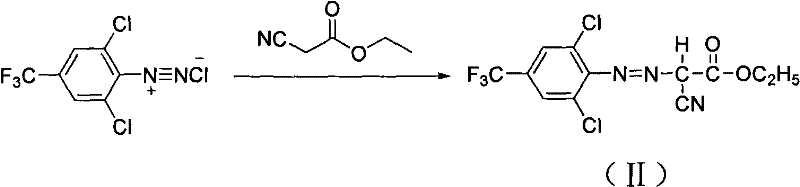
In stark contrast, the methodology disclosed in CN101693691B presents a paradigm shift by utilizing a diazonium salt coupling strategy that bypasses the need for hazardous hydrazine reagents and harsh metal catalysts. This innovative route initiates with the diazotization of 2,6-dichloro-4-trifluoromethyl aniline, followed by a coupling reaction with ethyl cyanoacetate to form a stable azo intermediate under mild conditions. The subsequent steps involve a carefully controlled cyanation and hydroxymethylation sequence that builds the necessary carbon framework without generating excessive thermal stress on the molecule. By operating at near-ambient temperatures, typically between 20°C and 40°C, the process significantly reduces energy consumption and minimizes the risk of thermal degradation of sensitive intermediates. The elimination of heavy metal catalysts not only simplifies the workup procedure but also enhances the environmental profile of the manufacturing process, reducing the burden on wastewater treatment facilities. This streamlined approach ensures a more consistent product quality with fewer impurities, thereby reducing the need for extensive purification steps. The overall result is a more resilient production capability that can be scaled with greater confidence, offering a distinct competitive advantage in the fast-moving agrochemical sector.

Mechanistic Insights into Diazotization and Cyclization Cascade
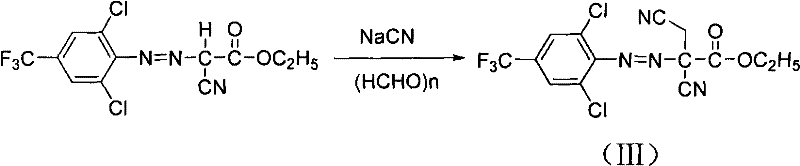
The core of this synthetic breakthrough lies in the precise execution of the diazotization and coupling sequence, which sets the foundation for high overall yield. In the first critical stage, the aniline derivative is converted into its corresponding diazonium salt, which then reacts with ethyl cyanoacetate to form the 2-cyano-2-(2,6-dichloro-4-trifluoromethyl) phenylazo ethyl acetate intermediate. This reaction is highly sensitive to stoichiometry and temperature, with the patent specifying a molar ratio of ethyl cyanoacetate to diazonium salt between 1:1 and 1.5:1 to ensure complete conversion while minimizing side reactions. The use of common organic solvents such as ethanol or acetone facilitates the dissolution of reactants and allows for efficient heat dissipation during the exothermic diazotization phase. Following isolation, the azo intermediate undergoes a transformation involving sodium cyanide and formaldehyde, a step that requires inert gas protection to prevent oxidation and ensure the stability of the reactive species. This step effectively introduces the necessary carbon atoms for the pyrazole ring closure, creating a dicyano propionate derivative that is primed for the final cyclization. The careful control of reagent addition rates, particularly the batched addition of formaldehyde, allows for precise temperature management, keeping the reaction within the optimal 25°C to 40°C window to prevent decomposition.
The final cyclization step is where the molecular architecture is finalized, converting the linear precursor into the target pyrazole structure through a reaction with ammonia. This transformation is critically dependent on the pH of the reaction medium, which must be maintained at a value greater than or equal to 9 to drive the ring closure effectively. The use of aqueous ammonia or liquefied ammonia provides the necessary nitrogen source while simultaneously acting as a base to neutralize acidic byproducts formed during the cyclization. Operating at moderate temperatures of 30°C to 40°C ensures that the reaction proceeds to completion without compromising the integrity of the sensitive cyano and amino functional groups on the ring. The mechanism involves an intramolecular nucleophilic attack that closes the five-membered heterocyclic ring, releasing ethanol as a byproduct which can be easily removed during workup. Impurity control is achieved through the high selectivity of this cyclization, which minimizes the formation of regioisomers or hydrolyzed derivatives that often plague less optimized routes. The resulting crude product exhibits high purity, often exceeding 98% after a single recrystallization, demonstrating the robustness of the chemical design. This level of control over the reaction pathway is essential for meeting the rigorous quality standards demanded by downstream formulators of crop protection agents.
How to Synthesize 5-Amino-3-Cyano-1-((2,6-Dichloro-4-Trifluoromethyl) Phenyl)-1H-Pyrazole Efficiently
Implementing this synthesis route requires a disciplined approach to process parameters to fully realize the yield and purity benefits documented in the patent literature. The procedure begins with the preparation of the diazonium salt under acidic conditions, followed by immediate coupling to prevent decomposition, necessitating tight integration between reaction vessels. Operators must monitor the temperature profile closely during the cyanation step, as the exothermic nature of the formaldehyde addition can lead to runaway reactions if not managed with appropriate cooling capacity. The extraction and separation phases utilize standard solvents like toluene or dichloromethane, allowing for straightforward phase separation and solvent recovery which contributes to the overall economic efficiency of the process. Detailed standardized synthesis steps are provided in the guide below to ensure reproducibility across different production batches and facilities. Adherence to the specified pH ranges during the final ammoniacal treatment is non-negotiable for achieving the target molecular structure, requiring calibrated pH monitoring equipment throughout the reaction cycle. By following these optimized protocols, manufacturers can transition from laboratory scale to commercial production with minimal process re-engineering, ensuring a smooth technology transfer.
- Perform diazotization of 2,6-dichloro-4-trifluoromethyl aniline followed by coupling with ethyl cyanoacetate to form the azo intermediate.
- React the azo intermediate with sodium cyanide and formaldehyde under inert gas protection to introduce the dicyano propionate moiety.
- Execute cyclization using ammonia at pH levels greater than or equal to 9 to close the pyrazole ring and yield the final product.
Commercial Advantages for Procurement and Supply Chain Teams
From a commercial perspective, the adoption of this patented synthesis route offers substantial strategic benefits for procurement managers and supply chain directors looking to optimize their sourcing portfolios. The elimination of expensive heavy metal catalysts and the reduction in purification steps translate directly into a lower cost of manufacturing, allowing for more competitive pricing structures in a volatile market. The use of readily available raw materials such as aniline derivatives and ethyl cyanoacetate ensures a stable supply chain that is less susceptible to the bottlenecks often associated with specialized reagents. Furthermore, the mild reaction conditions reduce the energy load on production facilities, contributing to lower utility costs and a smaller carbon footprint, which is increasingly important for corporate sustainability goals. The high yield and purity profile of this process mean that less raw material is wasted per unit of finished product, maximizing the return on investment for every kilogram of input. Supply continuity is enhanced by the robustness of the chemistry, which tolerates minor variations in operating conditions better than fragile hydrazine-based routes, reducing the risk of batch failures. These factors combine to create a more resilient and cost-effective supply chain for critical agrochemical intermediates, providing a buffer against market fluctuations and raw material price spikes.
- Cost Reduction in Manufacturing: The process achieves significant cost savings by removing the need for costly transition metal catalysts and the associated removal processes, which traditionally add layers of expense to the production budget. By simplifying the workup procedure and reducing the number of purification cycles required to meet purity specs, the overall processing time is shortened, leading to lower labor and overhead costs per batch. The high atom economy of the reaction sequence ensures that a larger proportion of the starting materials are converted into valuable product, minimizing waste disposal fees and raw material procurement costs. This economic efficiency allows suppliers to offer more stable pricing models to their long-term partners, fostering stronger commercial relationships.
- Enhanced Supply Chain Reliability: The reliance on commodity chemicals and standard solvents means that the supply chain is not dependent on single-source vendors for exotic reagents, significantly mitigating supply risk. The robustness of the reaction conditions allows for production in a wider range of facilities without requiring specialized high-pressure or cryogenic infrastructure, increasing the available manufacturing capacity globally. This flexibility ensures that lead times can be kept short and consistent, even during periods of high demand, as production can be easily scaled across multiple sites. The reduced safety hazards associated with avoiding hydrazine also streamline logistics and storage requirements, further smoothing the flow of materials through the supply network.
- Scalability and Environmental Compliance: The mild thermal profile and absence of heavy metals make this process inherently easier to scale from pilot plant to full commercial production without encountering the heat transfer limitations common in exothermic reactions. The reduced generation of hazardous waste aligns with increasingly strict environmental regulations, lowering the compliance burden and potential liability for manufacturing partners. The ability to recycle solvents and recover byproducts like ethanol adds another layer of sustainability, making the process attractive for companies with aggressive green chemistry targets. This scalability ensures that the technology can grow with market demand, providing a long-term solution for the production of this key insecticide intermediate.
Frequently Asked Questions (FAQ)
The following questions address common technical and commercial inquiries regarding the implementation of this synthesis technology, based on the detailed data provided in the patent documentation. These answers are designed to clarify the operational advantages and address potential concerns regarding quality and scalability for decision-makers. Understanding these nuances is vital for integrating this process into existing manufacturing frameworks or for evaluating new supplier capabilities. The responses reflect the consensus of technical analysis regarding the superiority of this route over legacy methods in terms of efficiency and safety.
Q: How does this novel route compare to traditional hydrazine-based methods in terms of yield?
A: The patented process avoids the low-yield hydrazine condensation steps found in prior art, utilizing a diazonium coupling strategy that significantly improves overall conversion rates and reduces byproduct formation.
Q: What are the critical control parameters for ensuring high purity in the cyclization step?
A: Maintaining a pH value of 9 or higher during the ammoniacal cyclization is essential to drive the reaction to completion and minimize the presence of unreacted precursors or hydrolyzed impurities.
Q: Is this synthesis route suitable for large-scale industrial production?
A: Yes, the process operates under mild temperature conditions and utilizes common organic solvents, making it highly adaptable for commercial scale-up without requiring specialized high-pressure or cryogenic equipment.
Partnering with NINGBO INNO PHARMCHEM: Your Reliable 5-Amino-3-Cyano-1-((2,6-Dichloro-4-Trifluoromethyl) Phenyl)-1H-Pyrazole Supplier
At NINGBO INNO PHARMCHEM, we recognize the critical role that high-quality intermediates play in the global agrochemical supply chain, and we are committed to delivering this specific pyrazole derivative with unmatched consistency. Our technical team possesses extensive experience scaling diverse pathways from 100 kgs to 100 MT/annual commercial production, ensuring that the transition from lab to plant is seamless and efficient. We maintain stringent purity specifications and operate rigorous QC labs to guarantee that every batch meets the exacting standards required for downstream pesticide formulation. Our facility is equipped to handle the specific solvent systems and reaction conditions outlined in the patent, allowing us to capture the full yield and cost benefits of this advanced chemistry. By partnering with us, clients gain access to a supply chain that is both technically sophisticated and commercially robust, capable of supporting long-term product lifecycles.
We invite procurement leaders to engage with our technical procurement team to discuss how this optimized route can drive value for your specific applications. We encourage you to request a Customized Cost-Saving Analysis that quantifies the potential efficiencies of switching to this manufacturing method. Our team is ready to provide specific COA data and route feasibility assessments to support your internal validation processes. Let us help you secure a reliable supply of this essential intermediate while optimizing your overall production costs.
Engineering Bottleneck?
Can't scale up this synthesis? Upload your target structure or CAS, and our CDMO team will evaluate the industrial feasibility within 24 hours. Request Evaluation →