
Advanced Synthesis of 2-Amino-9,9-Diphenylfluorene for High-Performance OLED Manufacturing
The rapid evolution of organic electroluminescent diode (OLED) technology has intensified the demand for high-performance blue light emitting materials, a sector where 2-amino-9,9-diphenylfluorene has emerged as a critical conjugated pi-system intermediate. As detailed in patent CN113582823A, published on November 2, 2021, a novel preparation method addresses the longstanding challenges of high turn-on voltage and efficiency roll-off in traditional OLED devices by enabling the introduction of carbazole and oxadiazole groups through the 2-amino position. This technical breakthrough offers a streamlined four-step synthetic pathway starting from readily available 9-fluorenone, utilizing a strategic combination of bromination, Grignard addition, Friedel-Crafts alkylation, and a specialized liquid ammonia amination protocol. For R&D directors and procurement specialists in the electronic chemicals sector, this methodology represents a significant shift towards more scalable and cost-efficient manufacturing processes that do not compromise on the stringent purity specifications required for display and optoelectronic materials.
The Limitations of Conventional Methods vs. The Novel Approach
The Limitations of Conventional Methods
Historically, the synthesis of amino-substituted fluorene derivatives has relied heavily on noble metal catalysts, such as the magnetic palladium carbon method disclosed in Chinese patent application CN 106831443A, which, while effective, introduces substantial economic and operational bottlenecks for mass production. The reliance on expensive noble metal catalysts necessitates complex separation and recovery protocols to ensure the final product meets the ultra-low metal residue standards mandated by the semiconductor and display industries. Furthermore, the reuse of magnetic catalysts often leads to gradual deactivation and inconsistent batch-to-batch performance, creating supply chain volatility for manufacturers of high-purity OLED materials. The additional processing steps required to remove trace palladium from the final API or intermediate add significant time and cost to the overall manufacturing cycle, making conventional routes less attractive for large-scale commercial adoption in a highly competitive market.
The Novel Approach
The methodology presented in CN113582823A circumvents these issues by employing a robust copper and palladium co-catalytic system in a liquid ammonia medium, which simplifies the reaction workup and eliminates the need for difficult magnetic separations. By utilizing 9-fluorenone as a starting material and progressing through a well-defined sequence of bromination and alkylation, the process achieves high yields at each stage, culminating in an efficient amination step that operates under controlled pressure conditions. This approach not only reduces the dependency on scarce noble metals but also leverages common industrial solvents and reagents, thereby enhancing the overall economic viability of producing 2-amino-9,9-diphenylfluorene. The result is a production flow that is inherently easier to scale, with fewer unit operations dedicated to purification, directly translating to lower operational expenditures for producers of electronic chemical intermediates.
Mechanistic Insights into Liquid Ammonia Amination and Friedel-Crafts Alkylation
The core of this synthetic strategy lies in the precise execution of the Friedel-Crafts alkylation followed by the high-pressure amination, where mechanistic control is paramount for impurity management. In the alkylation step, 2-bromo-9-phenyl-9-hydroxy-fluorene reacts with benzene in the presence of trifluoromethanesulfonic acid, a superacid that facilitates the formation of a stable carbocation intermediate essential for the diphenyl substitution at the 9-position. This reaction is conducted under reflux for 3 to 5.5 hours under nitrogen protection to prevent oxidation, ensuring that the resulting 2-bromo-9,9-diphenylfluorene maintains structural integrity before entering the final amination phase. The subsequent amination involves reacting this bromo-intermediate with cuprous oxide and palladium(II) acetate in liquid ammonia, where the ammonia acts as both the solvent and the nitrogen source, attacking the aryl halide bond under elevated temperatures of 100-140°C and pressures of 9-12 atmospheres.
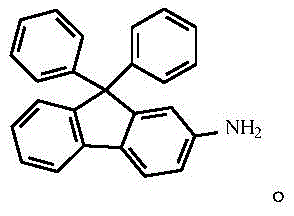
Impurity control is rigorously managed through the specific stoichiometry of the catalysts, with a molar ratio of substrate to cuprous oxide to palladium acetate maintained at approximately 10:3-7:0.05-0.07, preventing the formation of excessive homocoupling byproducts. The use of N-methylpyrrolidone (NMP) as a co-solvent further stabilizes the catalytic species, ensuring a smooth conversion to the amine without degrading the sensitive fluorene backbone. Following the reaction, the volatilization of ammonia and extraction with dichloromethane allows for the efficient removal of inorganic salts and catalyst residues, while final recrystallization from an ethanol-toluene system guarantees the high purity necessary for electronic applications. This mechanistic understanding allows process chemists to fine-tune reaction parameters to minimize side reactions, ensuring a clean impurity profile that simplifies downstream processing for reliable OLED material suppliers.
How to Synthesize 2-Amino-9,9-Diphenylfluorene Efficiently
The synthesis of this critical OLED intermediate requires strict adherence to temperature and pressure controls, particularly during the Grignard and amination stages, to ensure safety and reproducibility. The process begins with the bromination of 9-fluorenone at moderate temperatures, followed by a cryogenic Grignard reaction that must be carefully warmed to room temperature to complete the addition without decomposition. Detailed standardized synthetic steps, including specific reagent quantities and workup procedures for each of the four stages, are outlined in the technical guide below to assist process engineers in replicating these high-yield results.
- Brominate 9-fluorenone using liquid bromine in acetic acid/sulfuric acid at 50-60°C to obtain 2-bromo-9-fluorenone.
- React 2-bromo-9-fluorenone with phenylmagnesium bromide in THF at low temperature (-80 to -70°C) followed by warming to form 2-bromo-9-phenyl-9-hydroxy-fluorene.
- Perform Friedel-Crafts alkylation with benzene and trifluoromethanesulfonic acid to generate 2-bromo-9,9-diphenylfluorene.
- Conduct amination using cuprous oxide and palladium acetate in liquid ammonia at 100-140°C and 9-12 atm pressure to yield the final product.
Commercial Advantages for Procurement and Supply Chain Teams
For procurement managers and supply chain heads, the adoption of this patented synthesis route offers tangible benefits in terms of cost structure and supply reliability, primarily driven by the simplification of the catalytic system and the use of commodity chemicals. The elimination of complex magnetic catalyst recovery systems reduces capital expenditure on specialized filtration equipment and lowers the operational burden associated with catalyst regeneration cycles. Moreover, the reliance on bulk chemicals like liquid ammonia, benzene, and acetic acid ensures that raw material sourcing remains stable and insulated from the volatility often seen with specialized organometallic reagents, thereby securing the continuity of supply for high-purity electronic chemical manufacturing.
- Cost Reduction in Manufacturing: The transition away from expensive magnetic palladium carbon catalysts to a more economical copper and palladium acetate system significantly lowers the direct material costs associated with the amination step. By removing the need for intricate catalyst separation and reuse protocols, the process reduces labor hours and energy consumption typically required for multiple filtration and washing cycles, leading to substantial cost savings in the overall production budget. Additionally, the high yields reported in the patent examples, consistently reaching above 88% in the final step, minimize waste generation and maximize the throughput of valuable intermediates, further enhancing the economic efficiency of the manufacturing line.
- Enhanced Supply Chain Reliability: The synthetic route utilizes widely available starting materials such as 9-fluorenone and benzene, which are produced at a global scale, mitigating the risk of supply disruptions caused by niche reagent shortages. The robustness of the reaction conditions, particularly the tolerance of the liquid ammonia system, allows for flexible scheduling and batch sizing, enabling manufacturers to respond quickly to fluctuating market demands for OLED materials. This flexibility ensures that reliable OLED material suppliers can maintain consistent inventory levels and meet tight delivery windows without compromising on quality or facing raw material bottlenecks.
- Scalability and Environmental Compliance: The process is designed for scalability, with the high-pressure amination step being adaptable to standard industrial pressure reactors used in fine chemical production, facilitating a smooth transition from pilot scale to commercial tonnage. The simplified workup procedure, which avoids the generation of heavy metal-contaminated waste streams associated with magnetic catalysts, aligns better with increasingly stringent environmental regulations regarding hazardous waste disposal. This compliance advantage reduces the regulatory burden and potential liability for manufacturers, making the commercial scale-up of complex electronic chemical intermediates more sustainable and socially responsible.
Frequently Asked Questions (FAQ)
The following questions address common technical and commercial inquiries regarding the production of 2-amino-9,9-diphenylfluorene, derived directly from the experimental data and process descriptions within the patent literature. These insights are intended to clarify the operational requirements and quality benchmarks associated with this specific synthetic pathway for stakeholders evaluating its implementation. Understanding these details is crucial for assessing the feasibility of integrating this technology into existing production facilities for display and optoelectronic materials.
Q: What are the advantages of the liquid ammonia amination method over magnetic palladium carbon catalysis?
A: The liquid ammonia method described in CN113582823A eliminates the need for expensive magnetic palladium carbon catalysts and complex separation processes required for catalyst recovery, significantly simplifying the workflow and reducing production costs while maintaining high yields around 88%.
Q: What are the critical reaction conditions for the final amination step?
A: The final amination step requires a pressure reactor capable of sustaining 9-12 atmospheric pressures with liquid ammonia as the solvent and reactant, heated to 100-140°C for 20-30 hours using a Cu2O and Pd(OAc)2 catalytic system.
Q: How does this synthesis route impact the purity of the OLED material?
A: The multi-step purification process, including silica gel column chromatography and recrystallization from ethanol-toluene, ensures high purity suitable for electronic applications, avoiding the metal contamination risks associated with reusable magnetic catalysts.
Partnering with NINGBO INNO PHARMCHEM: Your Reliable 2-Amino-9,9-Diphenylfluorene Supplier
As the demand for advanced blue light emitting materials continues to surge, partnering with an experienced CDMO like NINGBO INNO PHARMCHEM ensures access to cutting-edge synthesis technologies that balance performance with economic viability. Our team possesses extensive experience scaling diverse pathways from 100 kgs to 100 MT/annual commercial production, leveraging rigorous QC labs and stringent purity specifications to deliver intermediates that meet the exacting standards of the global electronics industry. We are committed to optimizing every step of the value chain, from raw material sourcing to final crystallization, ensuring that our clients receive products that enable the next generation of high-efficiency OLED displays.
We invite technical procurement teams to contact us for a Customized Cost-Saving Analysis tailored to your specific volume requirements and quality targets. By engaging with our experts, you can obtain specific COA data and route feasibility assessments that demonstrate how our optimized manufacturing processes can enhance your supply chain resilience and reduce total landed costs for your critical electronic chemical needs.