
Advanced Catalytic Route for High-Purity Diarylmethyl Phosphonate Manufacturing
Advanced Catalytic Route for High-Purity Diarylmethyl Phosphonate Manufacturing
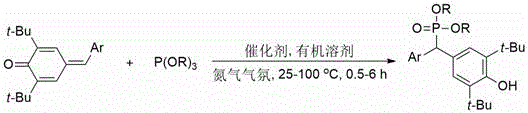
The landscape of organophosphorus chemistry is undergoing a significant transformation driven by the urgent need for safer, more efficient, and environmentally benign synthetic methodologies. A pivotal advancement in this domain is detailed in patent CN112010898A, which discloses a novel method for the高效 (efficient) and selective synthesis of diarylmethyl phosphonate derivatives. This technology represents a paradigm shift from traditional, hazard-prone protocols to a streamlined catalytic process utilizing silver tetrafluoroborate. For R&D directors and procurement strategists in the fine chemical sector, this innovation offers a robust pathway to access high-value intermediates essential for pharmaceutical structural substances, optoelectronic materials, and advanced flame retardants. The core breakthrough lies in the ability to utilize stable trialkyl phosphites as phosphorylating agents against 4-arylmethylene-2,6-di-tert-butyl-2,5-cyclohexadien-1-one substrates, achieving exceptional conversion rates without the stringent safety measures previously required for handling corrosive phosphorus halides.
The Limitations of Conventional Methods vs. The Novel Approach
The Limitations of Conventional Methods
Historically, the construction of the diarylmethyl phosphonate scaffold has been plagued by significant technical and operational hurdles that impede large-scale manufacturing. Traditional routes, such as the Friedel-Crafts reaction employing ferric chloride, often suffer from poor atom economy and generate substantial amounts of acidic waste, complicating environmental compliance and waste treatment protocols. Furthermore, nucleophilic coupling reactions relying on transition metals like palladium, copper, or nickel necessitate the use of specialized, moisture-sensitive ligands and strong bases, which drastically inflate raw material costs and introduce complex purification challenges to remove trace metal residues—a critical parameter for pharmaceutical grade intermediates. The Arbuzov reaction, another common staple, typically requires the use of highly corrosive and toxic alkyl halides or phosphorus oxychloride, posing severe safety risks to plant personnel and requiring specialized corrosion-resistant reactor infrastructure. These legacy methods frequently exhibit limited substrate scope, failing to tolerate sensitive functional groups, and often result in mediocre yields accompanied by difficult-to-separate byproducts, thereby eroding overall process profitability and supply chain reliability.
The Novel Approach
In stark contrast, the methodology outlined in CN112010898A introduces a remarkably mild and versatile catalytic system that directly addresses these historical pain points. By leveraging silver tetrafluoroborate (AgBF4) as a Lewis acid catalyst, the reaction proceeds smoothly in common organic solvents like 1,2-dichloroethane under a nitrogen atmosphere at moderate temperatures ranging from 25°C to 100°C. This approach completely bypasses the need for air-sensitive reagents or expensive transition metal complexes, utilizing readily available trialkyl phosphites which are significantly safer and more cost-effective to handle. The reaction demonstrates extraordinary chemoselectivity, with the patent reporting target product selectivity approaching 100% and isolated yields consistently exceeding 90% across a diverse array of substrates. This high level of efficiency not only minimizes raw material waste but also drastically simplifies the downstream workup, often requiring only standard column chromatography to achieve high-purity specifications suitable for demanding applications in agrochemical and electronic chemical manufacturing.
Mechanistic Insights into AgBF4-Catalyzed Phosphorylation
The mechanistic elegance of this transformation lies in the activation of the phosphorus species and the subsequent nucleophilic attack on the quinone methide derivative. In the presence of the silver catalyst, the tri-coordinate phosphorus atom of the trialkyl phosphite is activated, facilitating its conversion into a more reactive species capable of engaging with the electron-deficient exocyclic double bond of the 4-arylmethylene-2,6-di-tert-butyl-2,5-cyclohexadien-1-one. Unlike traditional pathways that might proceed through radical intermediates or harsh ionic mechanisms requiring extreme conditions, this silver-mediated process likely operates through a coordinated transition state that stabilizes the developing charge distribution. The formation of the pentacoordinate phosphorus intermediate, a common feature in organophosphorus chemistry, is managed efficiently within the catalytic cycle, ensuring rapid collapse to the thermodynamically stable tetra-coordinate phosphonate product containing the high-energy phosphoryl (P=O) bond. This controlled progression prevents side reactions such as polymerization of the quinone methide or hydrolysis of the phosphite, which are common failure modes in less optimized systems.
From an impurity control perspective, the high selectivity of this method is attributed to the specific interaction between the silver cation and the substrate, which directs the regioselectivity of the addition exclusively to the desired position. The absence of strong Bronsted acids or bases in the reaction mixture prevents the degradation of sensitive functional groups on the aromatic ring, such as esters, nitriles, or halides, which are often compromised in Friedel-Crafts conditions. Furthermore, the use of sterically hindered tert-butyl groups on the cyclohexadienone ring serves a dual purpose: it stabilizes the quinone methide precursor against self-polymerization and directs the incoming nucleophile to the exocyclic methylene carbon, effectively shutting down potential competing reaction pathways. This intrinsic selectivity means that the crude reaction mixture is exceptionally clean, reducing the burden on purification units and ensuring that the final high-purity organophosphorus intermediate meets the rigorous specifications required for downstream API synthesis or material science applications without extensive recrystallization steps.
How to Synthesize Diarylmethyl Phosphonate Efficiently
Implementing this synthesis route in a laboratory or pilot plant setting requires adherence to specific operational parameters to maximize the benefits of the catalytic system. The process begins with the precise weighing of the 4-arylmethylene-2,6-di-tert-butyl-2,5-cyclohexadien-1-one substrate and the trialkyl phosphite reagent, typically maintaining a molar ratio of 1:1.0 to 1:1.2 to ensure complete consumption of the more valuable quinone methide. The catalyst loading is remarkably low, with effective turnover observed at molar ratios of substrate to catalyst between 1:0.05 and 1:0.2, highlighting the economic efficiency of the silver salt. The reaction is conducted in an inert atmosphere to prevent oxidation of the phosphite, using 1,2-dichloroethane as the preferred solvent due to its ability to dissolve both organic substrates and the ionic catalyst while maintaining stability at the reaction temperature of 80°C. Detailed standardized synthesis steps follow below.
- Mix trialkyl phosphite, 4-arylmethylene-2,6-di-tert-butyl-2,5-cyclohexadien-1-one, and silver tetrafluoroborate catalyst in an organic solvent under nitrogen.
- Stir the reaction mixture at a controlled temperature between 25°C and 100°C for a duration of 0.5 to 6 hours.
- Upon completion, purify the resulting diarylmethyl substituted phosphonate derivatives via column chromatography to achieve high purity.
Commercial Advantages for Procurement and Supply Chain Teams
For procurement managers and supply chain heads, the adoption of this patented technology translates into tangible strategic advantages regarding cost structure and operational resilience. The shift away from precious metal catalysts like palladium or nickel, which are subject to volatile market pricing and geopolitical supply constraints, to a silver-based system offers a more stable cost baseline. Moreover, the elimination of hazardous reagents such as phosphorus oxychloride removes the need for specialized containment systems and expensive neutralization processes, leading to substantial cost savings in terms of capital expenditure and ongoing operational safety compliance. The mild reaction conditions also imply lower energy consumption for heating and cooling cycles compared to processes requiring cryogenic temperatures or prolonged reflux, contributing to a reduced carbon footprint and alignment with modern sustainability goals in chemical manufacturing.
- Cost Reduction in Manufacturing: The economic model of this process is strengthened by the use of commodity-grade starting materials. Trialkyl phosphites are produced on a massive industrial scale for other applications, ensuring a steady supply at competitive prices, unlike custom-synthesized organometallic reagents. The high yield (>90%) directly correlates to improved material throughput, meaning less raw material is required to produce the same amount of finished goods, effectively lowering the cost of goods sold (COGS). Additionally, the simplified purification process reduces the consumption of silica gel and solvents during chromatography, further driving down variable production costs and enhancing the overall margin profile for the reliable agrochemical intermediate supplier or pharma partner.
- Enhanced Supply Chain Reliability: Supply continuity is bolstered by the robustness of the reagents involved. Since the reaction does not rely on air-sensitive catalysts that require cold chain logistics or glovebox handling, the risk of shipment delays or material degradation during transit is minimized. The broad substrate scope allows manufacturers to pivot quickly between different derivatives (e.g., switching from a methyl to an ethyl ester variant) without retooling the entire production line, providing agility in responding to market demand fluctuations. This flexibility is crucial for maintaining commercial scale-up of complex polymer additives or pharmaceutical intermediates where demand can be unpredictable, ensuring that lead times remain short and reliable even during periods of high market volatility.
- Scalability and Environmental Compliance: Scaling this reaction from gram to tonnage levels is facilitated by the absence of exothermic hazards associated with strong Lewis acids like aluminum chloride. The reaction profile is smooth and controllable, allowing for safe operation in large-scale reactors without the risk of thermal runaway. From an environmental standpoint, the process generates significantly less hazardous waste; the primary byproduct is the reduced form of the catalyst or unreacted starting material which can often be recovered, contrasting sharply with the heavy metal sludge generated by traditional cross-coupling methods. This aligns perfectly with increasingly stringent global environmental regulations, reducing the liability and disposal costs associated with cost reduction in electronic chemical manufacturing and other regulated sectors.
Frequently Asked Questions (FAQ)
The following questions address common technical and commercial inquiries regarding the implementation of this silver-catalyzed phosphorylation technology. These insights are derived directly from the experimental data and comparative analysis provided in the patent documentation, aiming to clarify the operational feasibility and strategic value for potential partners. Understanding these nuances is essential for evaluating the fit of this technology within existing production portfolios and for assessing the potential for reducing lead time for high-purity organophosphorus intermediates.
Q: What are the primary advantages of the AgBF4 catalytic system over traditional transition metal methods?
A: The silver tetrafluoroborate system eliminates the need for expensive palladium or nickel catalysts and air-sensitive ligands, operating under mild conditions (25-100°C) with near 100% selectivity and yields exceeding 90%, significantly simplifying downstream purification.
Q: Is this synthesis method scalable for industrial production of organophosphorus intermediates?
A: Yes, the process utilizes stable, commercially available reagents like trialkyl phosphites and avoids hazardous phosphorus oxychloride, making it inherently safer and more suitable for commercial scale-up compared to traditional Friedel-Crafts or Arbuzov reactions.
Q: What is the substrate scope for the aryl and alkyl groups in this phosphorylation reaction?
A: The method exhibits broad substrate tolerance, successfully accommodating various substituents including electron-donating groups like methoxy and tert-butyl, as well as electron-withdrawing groups such as cyano, trifluoromethyl, and halogens on the aromatic ring.
Partnering with NINGBO INNO PHARMCHEM: Your Reliable Diarylmethyl Phosphonate Supplier
At NINGBO INNO PHARMCHEM, we recognize the transformative potential of the catalytic methods described in CN112010898A for the next generation of organophosphorus materials. As a premier CDMO partner, we possess the technical expertise and infrastructure to translate these laboratory-scale breakthroughs into robust, commercial-scale manufacturing processes. Our facilities are equipped to handle diverse synthetic pathways, with extensive experience scaling diverse pathways from 100 kgs to 100 MT/annual commercial production, ensuring that your supply needs are met with consistency and precision. We maintain stringent purity specifications through our rigorous QC labs, utilizing advanced analytical techniques to verify that every batch of diarylmethyl phosphonate meets the exacting standards required for pharmaceutical and electronic applications.
We invite you to collaborate with us to leverage this advanced synthesis technology for your specific project requirements. Our team is ready to provide a Customized Cost-Saving Analysis tailored to your volume needs, demonstrating how this efficient route can optimize your budget. Please contact our technical procurement team today to request specific COA data and route feasibility assessments, and let us help you secure a competitive advantage in the global market for high-performance chemical intermediates.