
Optimizing Linezolid Production: A Novel Lithium Tert-Butoxide Mediated Route for Commercial Scale-Up
Introduction to Next-Generation Linezolid Manufacturing
The pharmaceutical landscape for oxazolidinone antibiotics is constantly evolving, driven by the need for more efficient, scalable, and environmentally benign synthetic routes. Patent CN107540625B introduces a transformative preparation method for linezolid that addresses many of the historical bottlenecks associated with its production. This novel approach leverages a specific catalytic system involving lithium tert-butoxide in a mixed solvent of tetrahydrofuran and methanol, operating under remarkably mild conditions ranging from 2°C to 30°C. Unlike traditional methods that often require extreme temperatures or hazardous reagents, this process utilizes cheap and easily obtainable raw materials while delivering exceptional product quality. The technical breakthrough lies in the precise control of reaction kinetics, which allows for a reaction time of approximately 12-15 hours, significantly shorter than many legacy processes, while achieving yields exceeding 90%. For global supply chain stakeholders, this represents a pivotal shift towards more reliable and cost-effective antibiotic manufacturing capabilities.
The Limitations of Conventional Methods vs. The Novel Approach
The Limitations of Conventional Methods
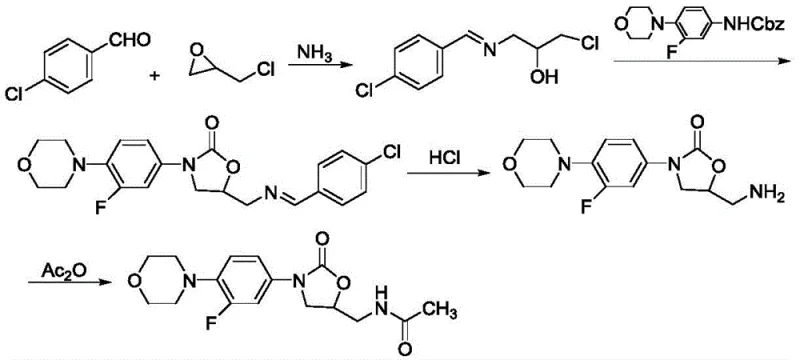
Historically, the synthesis of linezolid has been plagued by complex multi-step sequences that involve harsh reaction conditions and expensive protecting group strategies. Conventional routes often rely on the condensation of anilines with epichlorohydrin derivatives followed by cyclization under acidic or basic conditions that can degrade the sensitive oxazolidinone ring. These traditional pathways frequently suffer from low atom economy, generating substantial amounts of chemical waste that complicate downstream purification and increase environmental compliance costs. Furthermore, the use of specialized equipment to handle corrosive reagents or high-pressure hydrogenation steps adds significant capital expenditure and operational risk to the manufacturing process. The impurity profiles generated by these older methods are often difficult to control, requiring extensive chromatographic purification which is not feasible for large-scale commercial production. Consequently, procurement teams have long faced challenges in securing consistent, high-purity supplies of linezolid intermediates and APIs without incurring prohibitive costs.
The Novel Approach
In stark contrast, the methodology disclosed in patent CN107540625B streamlines the synthesis into a highly efficient sequence that eliminates the need for harsh conditions and special production equipment. By employing N-carbobenzoxy-3-fluoro-4-morpholinylaniline and reacting it directly with (S)-N-(2-acetoxy-3-chloropropyl)acetamide in the presence of lithium tert-butoxide, the process achieves rapid cyclization with minimal side reactions. The use of a tetrahydrofuran and methanol solvent system provides an optimal medium for solubility and reaction rate control, allowing the transformation to proceed smoothly at near-ambient temperatures. This approach not only simplifies the operational workflow but also drastically reduces the toxicity profile of the reagents involved, aligning with modern green chemistry principles. The result is a robust process that delivers high-purity linezolid with few impurities, making it ideally suited for industrial scale-up without the need for complex purification technologies. This strategic shift in synthetic design offers a clear pathway for manufacturers to reduce lead times and enhance overall process reliability.
Mechanistic Insights into Lithium Tert-Butoxide Mediated Cyclization
The core of this innovative synthesis lies in the mechanistic role of lithium tert-butoxide as a strong, non-nucleophilic base that facilitates the intramolecular cyclization required to form the oxazolidinone ring. In the initial stage, the base likely deprotonates the hydroxyl group or activates the nucleophilic center of the intermediate, promoting an SN2-type displacement of the chloride leaving group on the propyl chain. The specific choice of lithium tert-butoxide is critical, as it provides the necessary basicity to drive the reaction forward without inducing elimination side reactions that could compromise the stereochemical integrity of the (S)-enantiomer. The reaction proceeds through a transition state where the morpholine-substituted aniline moiety attacks the activated carbon center, closing the five-membered oxazolidinone ring with high fidelity. This mechanism is highly sensitive to temperature; maintaining the reaction between 20-30°C ensures that the kinetic energy is sufficient for cyclization but low enough to prevent thermal degradation of the product or the starting materials. Understanding this delicate balance is essential for R&D directors aiming to replicate this success in their own facilities, as slight deviations can lead to the formation of regioisomers or open-chain byproducts.
Impurity control in this system is achieved through the precise stoichiometric management of reagents and the careful selection of the recrystallization solvent. The patent data indicates that extending the reaction time beyond the optimal 15-hour window leads to a significant increase in impurity levels, suggesting that the product is susceptible to slow decomposition or secondary reactions under prolonged exposure to the basic medium. By quenching the reaction with saturated ammonium chloride and performing a rigorous extraction protocol using dichloromethane, the process effectively removes inorganic salts and polar byproducts. The final recrystallization from tetrahydrofuran acts as a powerful purification step, leveraging the differential solubility of linezolid versus its impurities to achieve purity levels as high as 99.95%. This level of control over the impurity profile is paramount for meeting stringent regulatory requirements for antibiotic APIs, ensuring that the final drug substance is safe for patient administration without requiring additional, costly polishing steps.
How to Synthesize Linezolid Efficiently
Implementing this patented route requires strict adherence to the specified temperature profiles and reagent ratios to ensure reproducibility and high yield. The process begins with the preparation of the base mixture, followed by the controlled addition of the chiral acetamide precursor, and concludes with a thermal cyclization phase. Operators must monitor the reaction progress closely, typically using HPLC to determine the residual percentage of the starting aniline derivative, ensuring complete conversion before proceeding to workup. The detailed standardized synthesis steps below outline the exact protocol derived from the patent examples, providing a clear roadmap for technical teams to follow.
- Mix N-carbobenzoxy-3-fluoro-4-morpholinylaniline with lithium tert-butoxide in tetrahydrofuran at 10-25°C, then slowly add anhydrous methanol.
- Cool the mixture to 2-8°C and add (S)-N-(2-acetoxy-3-chloropropyl)acetamide, maintaining low temperature during addition.
- Heat the reaction to 20-30°C for 12-15 hours, quench with ammonium chloride, extract, and recrystallize the crude product from tetrahydrofuran.
Commercial Advantages for Procurement and Supply Chain Teams
For procurement managers and supply chain heads, the adoption of this synthesis method offers profound strategic advantages that extend beyond simple chemical efficiency. The reliance on commodity chemicals such as lithium tert-butoxide, tetrahydrofuran, and methanol means that the supply chain is not vulnerable to the volatility associated with exotic or proprietary catalysts. This accessibility of raw materials ensures a stable supply continuity, reducing the risk of production stoppages due to material shortages. Furthermore, the elimination of harsh reaction conditions translates directly into lower operational expenditures, as standard enamel reaction kettles can be used instead of specialized corrosion-resistant vessels. The simplified workup procedure, which avoids complex chromatography, significantly reduces solvent consumption and waste disposal costs, contributing to a more sustainable and economically viable manufacturing model. These factors combined create a resilient supply chain capable of meeting global demand for this critical antibiotic without compromising on quality or cost.
- Cost Reduction in Manufacturing: The economic benefits of this process are driven primarily by the use of inexpensive, commercially available reagents and the avoidance of expensive transition metal catalysts. By removing the need for precious metal removal steps, manufacturers can save significantly on both material costs and the capital investment required for purification infrastructure. The high yield of over 90% reported in the patent examples means that less raw material is wasted per kilogram of final product, directly improving the cost of goods sold. Additionally, the shortened reaction time compared to traditional methods increases the throughput of existing manufacturing assets, allowing for more batches to be produced within the same timeframe. This operational efficiency results in substantial cost savings that can be passed down the supply chain or reinvested into further R&D initiatives.
- Enhanced Supply Chain Reliability: Supply chain reliability is bolstered by the robustness of the reaction conditions, which tolerate minor variations better than sensitive catalytic systems. The use of common solvents like THF and methanol ensures that sourcing is not a bottleneck, as these are produced globally in massive quantities. The process does not require cryogenic conditions or high-pressure equipment, reducing the dependency on specialized utility infrastructure that can be prone to failure. This simplicity allows for easier technology transfer between different manufacturing sites, ensuring that production can be scaled or shifted geographically without significant re-engineering. Consequently, partners can rely on a consistent and uninterrupted flow of high-quality linezolid, mitigating the risks associated with single-source dependencies or fragile logistical networks.
- Scalability and Environmental Compliance: From an environmental and scalability perspective, this method aligns perfectly with modern regulatory expectations for green manufacturing. The low toxicity of the reagents and the absence of heavy metals simplify the handling of effluent streams, reducing the burden on wastewater treatment facilities. The high purity of the crude product minimizes the need for extensive solvent-intensive recrystallizations, thereby lowering the overall solvent footprint of the process. Scalability is inherently supported by the use of standard unit operations such as mixing, heating, and filtration, which are well-understood and easily modeled from laboratory to pilot to commercial scale. This ease of scale-up ensures that the process can meet increasing market demand for linezolid without encountering the typical teething problems associated with novel, unproven technologies, facilitating a smoother path to commercial validation.
Frequently Asked Questions (FAQ)
The following questions address common technical and commercial inquiries regarding the implementation of this linezolid synthesis method. These answers are derived directly from the experimental data and claims presented in patent CN107540625B, providing factual clarity for decision-makers evaluating this technology. Understanding these nuances is critical for assessing the feasibility of adopting this route within your existing manufacturing framework.
Q: What are the critical reaction parameters for maximizing linezolid yield in this process?
A: The patent specifies that maintaining the reaction temperature between 20-30°C for 12-15 hours is crucial. Deviating from this, such as extending reaction time to 21 or 30 hours, significantly reduces purity below 95% due to side reactions. Additionally, the molar ratio of the aniline derivative to lithium tert-butoxide should be optimized around 1:3.
Q: Why is tetrahydrofuran preferred over methanol for the final recrystallization step?
A: Experimental data within the patent demonstrates that recrystallization using tetrahydrofuran yields up to 94.6% purity with excellent crystal formation. In contrast, using anhydrous methanol alone resulted in a drastically lower yield of only 44% and produced oily residues that were difficult to filter, highlighting THF's superior solubility profile for this specific oxazolidinone structure.
Q: How does this method improve impurity control compared to traditional routes?
A: This method achieves a finished product purity of 99.95% with a maximum single impurity content of just 0.02%. The mild reaction conditions (20-30°C) and the specific use of lithium tert-butoxide minimize degradation pathways often seen in harsher acidic or high-temperature cyclizations, ensuring a cleaner impurity profile suitable for pharmaceutical grade standards.
Partnering with NINGBO INNO PHARMCHEM: Your Reliable Linezolid Supplier
At NINGBO INNO PHARMCHEM, we recognize the critical importance of having a dependable partner for the production of essential antibiotics like linezolid. Our team possesses extensive experience scaling diverse pathways from 100 kgs to 100 MT/annual commercial production, ensuring that we can meet your volume requirements with consistency and precision. We are committed to maintaining stringent purity specifications through our rigorous QC labs, guaranteeing that every batch of linezolid we supply meets the highest international pharmacopeial standards. Our expertise in optimizing reaction conditions allows us to deliver products with superior impurity profiles, minimizing the risk of downstream processing issues for our clients. By leveraging advanced synthetic methodologies such as the one described in CN107540625B, we continue to push the boundaries of what is possible in pharmaceutical manufacturing.
We invite you to engage with our technical procurement team to discuss how our capabilities can support your specific project needs. Whether you require a Customized Cost-Saving Analysis for your current supply chain or need specific COA data to validate our quality, we are ready to provide comprehensive support. We encourage you to request route feasibility assessments to explore how our optimized linezolid synthesis can enhance your product portfolio. Partnering with us means gaining access to a wealth of chemical knowledge and a commitment to excellence that drives value for your organization.