
Scalable Production of High-Purity Dihydropyrroloindazole Intermediates for Pharmaceutical Applications
The pharmaceutical industry continuously seeks robust synthetic routes for complex heterocyclic scaffolds, particularly those exhibiting potent biological activities such as kinase inhibition. Patent CN116332943A introduces a transformative approach for synthesizing disubstituted 1,6-dihydropyrrolo[2,3-g]indazole derivatives, a critical class of pharmaceutical intermediates used in developing anticancer and anti-inflammatory agents. This innovation leverages a specialized Brønsted acidic ionic liquid catalyst within an ethanol solvent system, marking a significant departure from traditional corrosive acid methods. By integrating this advanced catalytic technology, manufacturers can achieve superior reaction kinetics and environmental compliance simultaneously. The strategic implementation of this patent data positions supply chains for greater resilience against regulatory shifts regarding hazardous waste. For R&D teams, this represents a viable pathway to access high-value chemical building blocks with enhanced structural integrity and reduced impurity profiles.
![General reaction scheme for synthesizing disubstituted 1,6-dihydropyrrolo[2,3-g]indazole derivatives using ionic liquid catalysis](/insights/img/dihydropyrroloindazole-synthesis-pharma-supplier-20260306220334-01.webp)
Historically, the construction of fused indazole systems relied heavily on conventional organic acids like acetic acid under reflux conditions, which presented substantial operational limitations for industrial partners. These traditional protocols often suffered from severe equipment corrosion due to the acidic nature of the catalyst, necessitating expensive alloy reactors and frequent maintenance schedules that inflated capital expenditure. Furthermore, the inability to recover and reuse the catalyst meant that every production batch incurred fresh material costs, while the generation of acidic wastewater created significant environmental disposal burdens. In contrast, the novel approach detailed in the patent utilizes a dual-sulfonate imidazolium-based ionic liquid that remains stable and active throughout the reaction cycle. This shift eliminates the corrosive hazards associated with mineral acids and introduces a closed-loop potential for the catalytic medium. Consequently, the new methodology not only simplifies the reactor requirements but also aligns with modern green chemistry principles by drastically reducing the ecological footprint of the manufacturing process.
Mechanistic Insights into Brønsted Acidic Ionic Liquid Catalysis
The efficacy of this synthesis hinges on the unique dual-functionality of the Brønsted acidic ionic liquid, which acts as both a proton donor and a phase-transfer mediator within the ethanolic solution. The catalyst structure, featuring two sulfonate groups linked by a long alkyl chain between imidazolyl rings, creates a highly organized microenvironment that facilitates the activation of carbonyl groups on the arylglyoxal and chromenone substrates. This precise activation lowers the energy barrier for the multicomponent condensation, allowing the reaction to proceed rapidly at relatively mild temperatures compared to uncatalyzed thermal methods. The ionic nature of the catalyst also enhances the solubility of polar intermediates, ensuring homogeneous reaction conditions that prevent localized hot spots and side reactions. Such mechanistic control is paramount for maintaining the structural fidelity of the sensitive indazole core during the cyclization process.
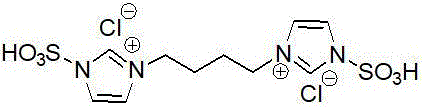
Beyond reaction acceleration, the specific architecture of the ionic liquid plays a critical role in impurity control and product isolation, addressing a major pain point for quality assurance departments. The high selectivity inherent to this catalytic system suppresses the formation of polymeric by-products and regio-isomers that typically complicate downstream purification efforts in heterocyclic chemistry. Because the crude precipitate exhibits exceptional purity immediately upon crystallization, the need for resource-intensive chromatographic separation is effectively removed from the workflow. This reduction in processing steps not only conserves solvent volumes but also minimizes product loss associated with multiple transfer and purification operations. For technical directors, this means a more predictable impurity profile that simplifies regulatory filing and ensures consistent batch-to-batch quality essential for clinical supply chains.
How to Synthesize Disubstituted 1,6-Dihydropyrrolo[2,3-g]indazole Efficiently
Implementing this patented methodology requires precise adherence to the stoichiometric ratios and thermal parameters defined in the experimental examples to maximize the benefits of the ionic liquid system. The process begins with the uniform dispersion of the three key starting materials in ethanol, followed by the addition of the catalyst at a low molar percentage relative to the total substrate load. Maintaining a steady reflux temperature is crucial to drive the condensation to completion within the specified timeframe, after which controlled cooling induces the precipitation of the target molecule. Detailed standardized synthesis steps see the guide below.
- Mix 4-hydroxy-2H-chromen-2-one, 1H-indazol-6-amine, and arylglyoxal monohydrate in ethanol with the ionic liquid catalyst.
- Heat the mixture to reflux for 36 to 59 minutes until TLC indicates completion.
- Cool to room temperature to crystallize, filter, wash with ethanol, and vacuum dry to obtain the pure product.
Commercial Advantages for Procurement and Supply Chain Teams
From a strategic sourcing perspective, the adoption of this ionic liquid catalytic route offers profound advantages in terms of total cost of ownership and supply chain stability for pharmaceutical intermediates. The ability to recycle the catalytic filtrate multiple times without significant regeneration steps translates directly into reduced raw material consumption per kilogram of finished product. This efficiency gain mitigates exposure to volatile pricing fluctuations associated with specialty catalysts and reagents, providing finance teams with more predictable budgeting models for long-term projects. Additionally, the use of ethanol as a primary solvent avoids the regulatory complexities and safety hazards linked to chlorinated or aromatic solvents, streamlining logistics and storage requirements. These factors collectively enhance the commercial viability of scaling this chemistry for global market distribution.
- Cost Reduction in Manufacturing: The elimination of expensive transition metal catalysts and the removal of complex purification columns significantly lower the operational expenditure per batch. By enabling direct crystallization of high-purity products, the process reduces solvent usage and labor hours associated with chromatography, leading to substantial cost savings in utility and waste management. The regenerable nature of the ionic liquid further extends the economic lifecycle of the catalytic charge, ensuring that material costs remain optimized even over extended production campaigns.
- Enhanced Supply Chain Reliability: Utilizing commercially available and stable starting materials such as 4-hydroxy-2H-chromen-2-one ensures that production schedules are not disrupted by niche reagent shortages. The robustness of the catalytic system against moisture and air variations reduces the risk of batch failures, thereby securing consistent delivery timelines for downstream API manufacturers. This reliability is critical for maintaining continuous supply lines in the highly regulated pharmaceutical sector where interruptions can have cascading effects on drug availability.
- Scalability and Environmental Compliance: The mild reaction conditions and absence of corrosive acids allow for seamless translation from laboratory benchtop to multi-ton industrial reactors without extensive re-engineering. The simplified workup procedure generates less hazardous waste, facilitating easier compliance with increasingly stringent environmental protection regulations across different jurisdictions. This scalability ensures that the technology can meet growing market demand for these intermediates while maintaining a sustainable manufacturing profile.
Frequently Asked Questions (FAQ)
The following questions address common technical and commercial inquiries regarding the implementation of this ionic liquid catalytic technology in industrial settings. These responses are derived directly from the experimental data and beneficial effects recorded in the patent documentation to ensure accuracy. Understanding these details helps stakeholders evaluate the feasibility of integrating this route into their existing manufacturing portfolios.
Q: Can the catalytic system be recycled for multiple batches?
A: Yes, the filtrate containing the Brønsted acidic ionic liquid can be directly reused for subsequent reactions multiple times with minimal loss in yield or purity before requiring regeneration.
Q: What is the purity level of the crude product?
A: The high selectivity of the ionic liquid catalyst results in crude product purity often exceeding 99%, eliminating the need for complex column chromatography.
Q: Is this process suitable for large-scale manufacturing?
A: Absolutely, the mild reaction conditions, use of common solvent ethanol, and simple crystallization workup make it highly scalable for industrial production.
Partnering with NINGBO INNO PHARMCHEM: Your Reliable Disubstituted 1,6-Dihydropyrrolo[2,3-g]indazole Derivative Supplier
At NINGBO INNO PHARMCHEM, we possess the technical expertise to translate complex patent methodologies like CN116332943A into reliable commercial supply chains for our global partners. Our engineering teams have extensive experience scaling diverse pathways from 100 kgs to 100 MT/annual commercial production, ensuring that the theoretical benefits of green catalysis are fully realized in practice. We operate stringent purity specifications and maintain rigorous QC labs to verify that every batch meets the exacting standards required for pharmaceutical applications. Our commitment to process optimization allows us to deliver high-quality intermediates that support your drug development timelines effectively.
We invite you to engage with our technical procurement team to discuss how this advanced synthesis route can benefit your specific project requirements. By requesting a Customized Cost-Saving Analysis, you can gain deeper insights into the economic potential of switching to this catalytic system for your supply needs. Please contact us to obtain specific COA data and route feasibility assessments tailored to your volume and quality expectations.