
Optimizing 2-Amino-6-Chloropurine Production for High-Purity Famciclovir Manufacturing
The pharmaceutical industry's demand for high-purity antiviral intermediates continues to drive innovation in process chemistry, particularly for the synthesis of Famciclovir, a potent anti-herpesvirus agent. Patent CN100549013C discloses a refined synthetic methodology for 2-amino-6-chloropurine, a pivotal building block in this therapeutic pathway. This patent addresses longstanding inefficiencies in traditional purine chlorination by introducing a controlled pre-activation strategy and a streamlined one-pot hydrolysis sequence. By optimizing the interaction between guanine and the Vilsmeier-Haack reagent, the disclosed method achieves superior yield and purity profiles compared to prior art. The structural complexity of the downstream drug, Famciclovir, necessitates such robust intermediate quality to ensure final API safety and efficacy. 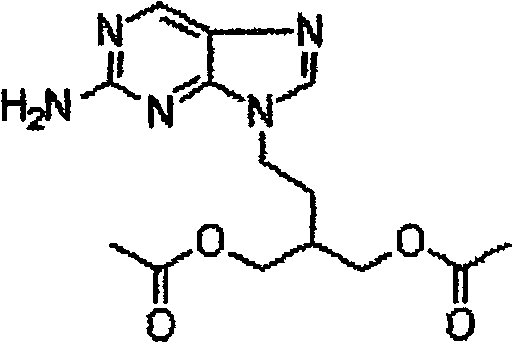
The Limitations of Conventional Methods vs. The Novel Approach
The Limitations of Conventional Methods
Historically, the synthesis of 2-amino-6-chloropurine has been plagued by low yields and cumbersome purification steps that hinder industrial scalability. Early methods, such as the direct chlorination of guanine using phosphorus oxychloride with phase-transfer catalysts, often resulted in yields as low as 30% to 42% due to the poor solubility of guanine in organic media. Alternative routes involving pyrimidine derivatives offered slightly better yields but suffered from difficult raw material preparation and prolonged reaction times. Furthermore, previous iterations of the DMF-POCl3 method, where all reagents were added simultaneously, frequently led to significant side reactions. These side reactions occurred because free phosphorus oxychloride could react directly with guanine before the active chlorinating species was fully formed, generating impurities that were difficult to remove and compromising the overall process efficiency.
The Novel Approach
The methodology outlined in CN100549013C represents a significant paradigm shift by decoupling the formation of the active chlorinating agent from the substrate reaction. Instead of a chaotic mixture, phosphorus oxychloride is first reacted with N,N-dimethylformamide (DMF) at low temperatures to generate the stable chloroiminium ion intermediate. This activated solution is then slowly dripped into the guanine suspension, ensuring that the chlorination proceeds selectively at the desired positions. Additionally, the process eliminates the isolation of the unstable 2-dimethylamino methylene imido intermediate. By proceeding directly to hydrolysis in a one-pot fashion, the method reduces solvent consumption, minimizes material loss during filtration, and simplifies the operational workflow, making it highly suitable for large-scale commercial production.
Mechanistic Insights into Vilsmeier-Haack Activation and Controlled Hydrolysis
The core chemical innovation lies in the precise management of the Vilsmeier-Haack reaction conditions. At temperatures between 0°C and 10°C, phosphorus oxychloride reacts with DMF to form the electrophilic chloroiminium salt. This species is the true chlorinating agent that attacks the electron-rich positions on the guanine ring. By maintaining low temperatures during this pre-mixing phase, the decomposition of the active species is minimized, and the formation of the 2-dimethylamino methylene imido-6-chloropurine intermediate is maximized. This contrasts sharply with ambient temperature mixing, where thermal instability can lead to reagent degradation and inconsistent reaction kinetics. The subsequent reflux in 1,2-dichloroethane ensures complete conversion of the guanine starting material without degrading the sensitive purine scaffold.
Following the chlorination, the control of pH during the hydrolysis step is critical for preserving the 6-chloro substituent. The intermediate must be hydrolyzed under acidic conditions (pH 3-5) to cleave the dimethylamino group while retaining the chlorine atom at the 6-position. If the acidity is too weak, hydrolysis is incomplete; if too strong, the 6-chlorine bond becomes susceptible to nucleophilic attack by water, reverting the molecule back to guanine. The patent specifies a tight pH window adjusted by alkali hydroxide, followed by heating to 70-75°C. This delicate balance ensures that the formamido group is generated efficiently without compromising the halogenated functionality required for the subsequent coupling reactions in Famciclovir synthesis.
How to Synthesize 2-Amino-6-Chloropurine Efficiently
The synthesis protocol described in the patent offers a reproducible pathway for manufacturing high-quality intermediates. It begins with the careful preparation of the chlorinating reagent, followed by a telescoped hydrolysis sequence that avoids intermediate isolation. The final purification leverages solubility differences to achieve pharmaceutical-grade purity. For detailed operational parameters, stoichiometry, and safety handling procedures, operators should refer to the standardized synthesis steps provided below.
- Pre-mix phosphorus oxychloride and DMF at 0-10°C to form the active chlorinating species before adding guanine in dichloroethane.
- Quench the reaction mixture into ice water, separate the organic phase, and adjust the aqueous phase pH to 3-5 for thermal hydrolysis to the formamido intermediate.
- Hydrolyze the wet formamido intermediate in mild alkali at 18-22°C, then carefully neutralize with acid below 10°C to precipitate the crude product.
- Purify the crude 2-amino-6-chloropurine via recrystallization using DMF as the solvent to remove guanine impurities and achieve >99% purity.
Commercial Advantages for Procurement and Supply Chain Teams
For procurement managers and supply chain directors, the adoption of this optimized synthetic route translates into tangible operational efficiencies and risk mitigation. The elimination of intermediate isolation steps significantly reduces the processing time per batch, allowing for higher throughput in existing reactor trains without the need for capital-intensive equipment upgrades. Furthermore, the avoidance of expensive phase-transfer catalysts, which were requisite in older low-yield methods, directly lowers the raw material cost base. The robustness of the pH-controlled hydrolysis also means less batch-to-batch variability, reducing the volume of off-spec material that requires reprocessing or disposal.
- Cost Reduction in Manufacturing: The streamlined one-pot process eliminates the need for filtering and drying the unstable intermediate, which traditionally consumed significant labor and energy resources. By removing these unit operations, the overall utility consumption per kilogram of product is drastically reduced. Additionally, the recovery and reuse of 1,2-dichloroethane from the organic phase further contribute to solvent cost savings, enhancing the overall economic viability of the manufacturing process.
- Enhanced Supply Chain Reliability: The reliance on commodity chemicals such as guanine, DMF, and phosphorus oxychloride ensures a stable supply chain不受制于 niche catalyst availability. The simplified process flow reduces the number of potential failure points in production, leading to more predictable lead times. This reliability is crucial for maintaining continuous supply to downstream API manufacturers who operate on tight just-in-time schedules.
- Scalability and Environmental Compliance: The method's design facilitates easy scale-up from pilot to commercial tonnage due to its straightforward exothermic control and lack of complex filtration steps. From an environmental perspective, the reduced solvent usage and the ability to recycle the organic phase minimize the facility's waste footprint. The avoidance of ammonia-based recrystallization in favor of DMF also mitigates the release of volatile amines, aligning with stricter environmental emission standards.
Frequently Asked Questions (FAQ)
The following questions address common technical inquiries regarding the implementation and benefits of this specific synthetic route. These answers are derived directly from the experimental data and comparative examples provided in the patent documentation, offering clarity on process optimization and quality control measures.
Q: Why is pre-mixing POCl3 and DMF critical in this synthesis?
A: Pre-mixing phosphorus oxychloride and DMF at low temperatures (0-10°C) generates the active Vilsmeier-Haack reagent (chloroiminium ion) prior to the addition of guanine. This prevents side reactions between guanine and free POCl3, significantly improving the yield of the 2-dimethylamino methylene imido intermediate compared to adding all reagents simultaneously.
Q: How does the new method control impurities during hydrolysis?
A: The process utilizes a precise pH control strategy during the hydrolysis of the intermediate. By adjusting the pH to a narrow range of 3-5 using alkali hydroxide, the method ensures complete hydrolysis of the dimethylamino group while preventing the hydrolysis of the critical 6-position chlorine atom, which would otherwise revert the molecule to guanine.
Q: What is the advantage of using DMF for recrystallization?
A: Using N,N-dimethylformamide (DMF) for recrystallization exploits the solubility difference between the product and the starting material. Since guanine is insoluble in DMF while 2-amino-6-chloropurine is soluble, this step effectively filters out unreacted guanine, ensuring the final product purity exceeds 99% without requiring complex chromatographic separation.
Partnering with NINGBO INNO PHARMCHEM: Your Reliable 2-Amino-6-Chloropurine Supplier
At NINGBO INNO PHARMCHEM, we understand that the quality of the intermediate dictates the success of the final antiviral therapy. Our technical team has extensively analyzed the process described in CN100549013C and possesses the expertise to implement this high-yield route effectively. We bring extensive experience scaling diverse pathways from 100 kgs to 100 MT/annual commercial production, ensuring that your supply needs are met with consistency. Our facilities are equipped with rigorous QC labs capable of verifying stringent purity specifications, guaranteeing that every batch of 2-amino-6-chloropurine meets the >99% purity threshold required for sensitive pharmaceutical applications.
We invite global partners to collaborate with us to optimize their supply chains for Famciclovir production. Contact our technical procurement team today to request a Customized Cost-Saving Analysis tailored to your volume requirements. We are ready to provide specific COA data and route feasibility assessments to demonstrate how our manufacturing capabilities can support your long-term strategic goals.