
Advanced Synthesis and Purification of High-Purity SARS-CoV-2 3CL Protease Inhibitor Intermediates for Commercial Scale-Up
The global pharmaceutical landscape has been profoundly reshaped by the urgent demand for effective antiviral therapeutics, particularly those targeting SARS-CoV-2. Patent CN114591303B represents a critical technological breakthrough in the manufacturing of key intermediates for next-generation oral protease inhibitors, specifically addressing the bottlenecks associated with the synthesis of compounds structurally related to S-217622. This intellectual property discloses a robust methodology for preparing and purifying high-purity Formula (I) compounds, which serve as pivotal building blocks in the value chain of modern antiviral drug development. The significance of this patent lies not merely in the chemical structure itself, but in the reproducible process that delivers material with purity levels exceeding 98.5%, a threshold often required for regulatory approval in strict pharmacopeial standards. By leveraging advanced crystallization techniques and optimized reaction conditions, this technology offers a viable pathway for reliable pharmaceutical intermediate supplier networks to meet the rigorous quality demands of multinational drug developers.
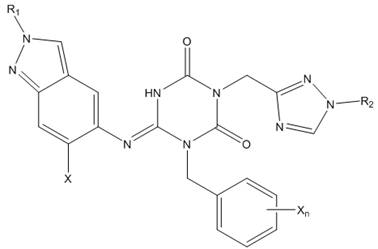
In the context of rapid drug development, the ability to source high-purity active pharmaceutical ingredient (API) precursors is a strategic imperative. The compound described in this patent features a complex heterocyclic architecture involving a triazinane-dione core linked to a substituted indazole moiety. Achieving high purity in such multifunctional molecules is notoriously difficult due to the formation of closely related structural impurities during the condensation steps. The innovation presented here effectively mitigates these challenges, ensuring that the final product possesses the necessary chemical integrity to proceed into salt formation and final dosage form manufacturing without extensive rework. For procurement managers and supply chain heads, understanding the technical nuances of this patent is essential for evaluating potential partners who can deliver cost reduction in API manufacturing through efficient, high-yield processes that minimize waste and maximize throughput.
The Limitations of Conventional Methods vs. The Novel Approach
The Limitations of Conventional Methods
Prior to the innovations detailed in CN114591303B, the synthesis of this specific class of protease inhibitor intermediates was plagued by significant inefficiencies that hindered commercial viability. Reference literature, such as the work by Yuto Unoh et al., disclosed a preparation method where the critical coupling step resulted in a dismal yield of merely 25%. Furthermore, the purity of the target product obtained through these conventional routes was approximately 86%, which is woefully inadequate for pharmaceutical applications requiring stringent impurity profiles. The low yield necessitates processing larger volumes of starting materials to obtain the same amount of product, drastically inflating raw material costs and increasing the burden on waste management systems. Additionally, the post-processing operations described in the prior art were complex, often involving tedious chromatographic separations that are difficult to scale and introduce risks of solvent retention. These limitations created a fragile supply chain where the availability of high-quality intermediates was a major constraint on the overall production timeline for the final antiviral medication.
The Novel Approach
The methodology outlined in the present invention fundamentally reengineers the synthesis and purification workflow to overcome these historical barriers. By optimizing the reaction stoichiometry and introducing a controlled addition of strong bases like lithium hexamethyldisilazide (LHMDS), the new process achieves reaction yields that are more than double those of the prior art, reaching up to 68.9% in specific embodiments. More importantly, the integration of a specialized purification protocol involving solvent dispersion and recrystallization allows for the removal of trace impurities that typically persist in crude reaction mixtures. This approach consistently delivers the target Formula (I) compound with purity levels greater than 95.0%, and in many optimized examples, exceeding 99.0%. The shift from complex chromatography to crystallization-based purification not only enhances the chemical quality but also streamlines the operational workflow, making it inherently more suitable for commercial scale-up of complex pharmaceutical intermediates. This transition represents a paradigm shift from laboratory-scale curiosity to industrial-grade reliability.
Mechanistic Insights into Base-Catalyzed Condensation and Purification
The core chemical transformation driving this synthesis is a nucleophilic substitution reaction facilitated by a strong non-nucleophilic base. The process involves the reaction of a 6-ethylthio-1,3,5-triazine-2,4-dione derivative (Formula II) with a 6-chloro-2-methyl-2H-indazol-5-amine (Formula III). The use of LHMDS is critical here, as it effectively deprotonates the amine nitrogen, generating a highly reactive nucleophile that attacks the electrophilic carbon of the triazine ring, displacing the ethylthio leaving group. The patent specifies that controlling the temperature profile, initially maintaining the reaction at 0°C and then allowing it to warm to room temperature, is vital for minimizing side reactions and maximizing the formation of the desired imino linkage. This precise thermal control prevents the degradation of sensitive functional groups and ensures the stereochemical integrity of the resulting double bond, which is defined as the (6E)-isomer. The mechanistic efficiency of this step is the foundation upon which the high yields are built, demonstrating a deep understanding of physical organic chemistry principles applied to process development.
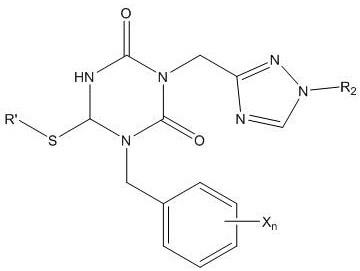
Following the reaction, the purification mechanism plays an equally pivotal role in defining the quality of the final product. The patent describes a multi-step purification strategy that leverages the differential solubility of the target compound versus its impurities in specific solvent systems. Techniques such as dispersing the crude residue in isopropanol or recrystallizing from mixtures of dichloromethane and isopropyl ether are employed to selectively precipitate the pure product while keeping impurities in solution. This is not a simple wash but a thermodynamic equilibration process where the crystal lattice of the target molecule forms preferentially, excluding structurally similar contaminants. The result is a material where single impurity content is controlled to less than 0.1%, a specification that is critical for safety and efficacy. This level of impurity control reduces the burden on downstream analytical testing and ensures that the subsequent salt formation step proceeds without interference, ultimately leading to a final drug substance that meets all regulatory requirements for human consumption.
How to Synthesize High-Purity Formula (I) Compound Efficiently
The practical implementation of this synthesis requires adherence to specific operational parameters to ensure reproducibility and safety. The process begins with the careful preparation of the reaction mixture under inert atmosphere conditions to prevent moisture sensitivity issues associated with the LHMDS base. Operators must follow a strict addition protocol for the base, often adding it in portions or via slow dropwise addition to manage the exotherm and maintain the desired reaction kinetics. Following the reaction completion, the quenching step with saturated ammonium chloride solution must be performed at controlled temperatures to prevent product decomposition. The subsequent isolation involves standard liquid-liquid extraction followed by concentration, but the true value lies in the crystallization steps. These standardized steps ensure that every batch produced meets the high-purity specifications defined in the patent, providing a consistent starting point for further pharmaceutical development.
- React 6-ethylthio-1,3,5-triazine-2,4-dione derivative with 6-chloro-2-methyl-2H-indazol-5-amine in THF using LHMDS as a base at 0°C to room temperature.
- Quench the reaction with aqueous ammonium chloride, extract with ethyl acetate, and concentrate the organic layer under reduced pressure to obtain the crude residue.
- Purify the crude product by dispersing in isopropanol or recrystallizing from mixed solvents like dichloromethane and isopropyl ether, followed by filtration and drying to achieve >98% purity.
Commercial Advantages for Procurement and Supply Chain Teams
For procurement managers and supply chain directors, the adoption of the technology described in CN114591303B offers tangible strategic benefits that extend beyond simple chemical metrics. The primary advantage lies in the substantial cost savings derived from the dramatic improvement in process yield. By more than doubling the output from the same amount of starting materials, manufacturers can significantly reduce the cost of goods sold (COGS), allowing for more competitive pricing in the global market. Furthermore, the elimination of resource-intensive chromatographic purification steps reduces the consumption of silica gel and large volumes of organic solvents, directly lowering operational expenditures and environmental impact. This streamlined process also shortens the production cycle time, enhancing the agility of the supply chain to respond to fluctuating market demands for antiviral therapies. The ability to produce high-quality intermediates reliably ensures reducing lead time for high-purity pharmaceutical intermediates, preventing bottlenecks that could delay the availability of life-saving medications.
Another critical commercial advantage is the superior solid-state properties of the material produced via this method, which has profound implications for downstream formulation. The patent data demonstrates that the high-purity intermediate facilitates the formation of fumarate salts with exceptional flowability and anti-caking characteristics. As illustrated in the comparative data, the Carr index for the product prepared using this method is significantly lower than that of the prior art, indicating excellent powder flow. This physical property is crucial for tablet manufacturing, as poor flow can lead to weight variation and content uniformity issues, potentially causing batch failures. By sourcing intermediates with these optimized physical characteristics, pharmaceutical companies can improve their own manufacturing efficiency, reducing downtime and waste during the tableting process. This creates a value-added supply chain where the quality of the raw material directly contributes to the robustness of the final drug product.
Frequently Asked Questions (FAQ)
Understanding the technical and commercial implications of this patent is vital for stakeholders involved in the antiviral drug supply chain. The following questions address common inquiries regarding the scalability, purity, and application of this synthesis method. These insights are designed to clarify how this technology aligns with current industry standards for quality and efficiency, providing confidence to partners looking to integrate this intermediate into their production portfolios.
Q: What is the primary advantage of the purification method in Patent CN114591303B?
A: The primary advantage is the significant improvement in both yield and purity compared to prior art. While previous methods yielded only 25% with 86% purity, this patent achieves yields over 65% and purity exceeding 98.5%, which is critical for pharmaceutical grade materials.
Q: How does this process improve the solid-state properties for formulation?
A: The high-purity intermediate produced via this method facilitates the formation of fumarate salts with superior flowability and anti-caking properties. Data shows a Carr index as low as 11.3%, indicating excellent flow, which is essential for tablet compression and consistent dosing.
Q: Is this synthesis suitable for large-scale industrial production?
A: Yes, the method avoids complex column chromatography, relying instead on crystallization and filtration. This simplification, combined with the use of common solvents like THF and isopropanol, makes the process highly scalable and cost-effective for commercial manufacturing.
Partnering with NINGBO INNO PHARMCHEM: Your Reliable S-217622 Intermediate Supplier
At NINGBO INNO PHARMCHEM, we recognize the critical importance of high-quality intermediates in the race against viral pathogens. Our team of expert chemists has extensively analyzed the methodologies presented in CN114591303B and possesses the technical capability to implement these advanced synthesis and purification protocols at scale. We understand that transitioning from bench-scale success to commercial production requires more than just a recipe; it demands rigorous process control and deep engineering expertise. Our facilities are equipped to handle complex synthetic pathways, ensuring that we can deliver extensive experience scaling diverse pathways from 100 kgs to 100 MT/annual commercial production. We are committed to maintaining stringent purity specifications through our rigorous QC labs, ensuring that every batch of S-217622 Intermediate we supply meets the highest international standards for pharmaceutical use.
We invite global pharmaceutical partners to collaborate with us to leverage this cutting-edge technology for your antiviral development programs. By partnering with NINGBO INNO PHARMCHEM, you gain access to a supply chain that prioritizes quality, reliability, and continuous improvement. We encourage you to contact our technical procurement team to request a Customized Cost-Saving Analysis tailored to your specific volume requirements. Let us provide you with specific COA data and route feasibility assessments to demonstrate how our optimized manufacturing processes can enhance your project's timeline and budget. Together, we can accelerate the delivery of effective treatments to patients worldwide by ensuring a stable and high-quality supply of essential medicinal ingredients.