
Advanced Sclareolide Manufacturing: Overcoming Yield Losses with Dual-Resin Adsorption Technology
The global demand for high-purity Sclareolide, a valued sesquiterpene lactone widely utilized in the flavor, fragrance, and pharmaceutical industries, continues to drive innovation in synthetic methodologies. As a key intermediate for producing ambergris-like aromas and bioactive compounds, the efficiency of its production directly impacts supply chain stability and cost structures. Patent CN101781276B introduces a transformative modification to the conventional preparation of Sclareolide from Sclareol, specifically addressing the critical bottleneck of yield loss during the purification phase. By implementing a sophisticated dual-resin adsorption strategy to recover Sclareolide from crystallization mother liquors, this technology offers a robust solution for maximizing resource utilization. This report analyzes the technical merits of this approach, providing strategic insights for R&D directors seeking process optimization and procurement managers focused on cost-effective sourcing of reliable sclareolide suppliers.
The Limitations of Conventional Methods vs. The Novel Approach
The Limitations of Conventional Methods
Traditionally, the industrial synthesis of Sclareolide involves the oxidation of Sclareol followed by recrystallization to achieve the necessary purity standards for fine chemical applications. However, a significant inefficiency plagues this standard workflow: the crystallization mother liquor invariably retains a substantial quantity of the target compound. In conventional processing, this mother liquor is often treated as waste or subjected to inefficient recovery methods that fail to separate the product from complex impurity profiles effectively. This results in a tangible loss of raw material value, forcing manufacturers to process larger volumes of starting material to meet output targets, which subsequently inflates production costs and increases the environmental burden of waste disposal. Furthermore, the accumulation of impurities in recycled streams without precise separation mechanisms can degrade the quality of subsequent batches, creating a cycle of diminishing returns that hampers commercial viability.
The Novel Approach
The methodology disclosed in CN101781276B fundamentally restructures the purification workflow by integrating a targeted recovery loop that treats the mother liquor not as waste, but as a valuable resource stream. Instead of discarding the supernatant after initial crystallization, the process subjects it to a sequential adsorption treatment using specific macroporous resins. This approach leverages the differential adsorption capacities of polystyrene and polyacrylate resins to selectively capture Sclareolide while allowing impurities to pass through or be washed away. By merging the recovered high-concentration eluate back into the main crystallization feed, the process effectively closes the material balance loop. This innovation not only elevates the total yield of the synthesis but also ensures that the final product maintains stringent purity specifications, thereby offering a superior alternative for cost reduction in flavor & fragrance manufacturing.
Mechanistic Insights into Dual-Resin Adsorption and Recovery
The core of this technological advancement lies in the precise selection and application of macroporous adsorbent resins, which function based on hydrophobic interactions and pore size exclusion principles. The process initiates by adjusting the concentration of the mother liquor with methanol or ethanol to an optimal range, ensuring the solute is in a state favorable for adsorption. The first stage employs a polystyrene-type macroporous adsorbent resin, such as HZ-845 or XAD-7, which acts as a pre-purification filter. This resin captures bulk impurities and prepares the stream for the critical second stage. The filtrate is then passed through a polyacrylate macroporous adsorbent resin, such as HZ-816 or D101, which exhibits a high affinity for the lactone structure of Sclareolide. The specific surface area and pore distribution of these polyacrylate resins allow for the dense packing of Sclareolide molecules, effectively stripping them from the solvent matrix.
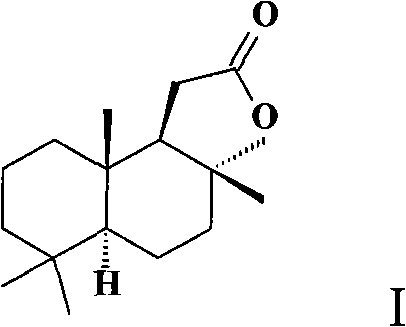
Following adsorption, the resin bed undergoes a rigorous washing protocol using buffered solutions and deionized water to remove residual polar contaminants without dislodging the target molecule. The desorption or elution step is equally critical, utilizing a tailored solvent system composed of aliphatic saturated alkanes, monohydric fatty alcohols, and aliphatic esters in a specific volume ratio. This ternary solvent system disrupts the adsorption equilibrium, releasing the Sclareolide in a highly concentrated form. The recovered product is then concentrated and merged with the crude synthetic Sclareolide for a final crystallization. This mechanistic precision ensures that impurities do not accumulate in the recycle loop, maintaining the integrity of the final crystal lattice and achieving purity levels exceeding 96%, which is essential for high-purity OLED material or pharmaceutical intermediate applications where trace contaminants can be detrimental.
How to Synthesize Sclareolide Efficiently
The implementation of this recovery-enhanced synthesis route requires careful attention to resin conditioning and solvent ratios to ensure reproducibility at scale. The process begins with the standard oxidation of Sclareol, but diverges significantly in the downstream processing where the mother liquor is valorized rather than discarded. Operators must strictly control the flow rates during the adsorption phase, typically maintaining velocities between 4BV/h and 10BV/h to maximize contact time without causing channeling in the resin bed. The detailed standardized synthesis steps, including specific resin loading capacities and elution gradients, are outlined below to facilitate technology transfer and process validation.
- Oxidize sclareol using a ruthenium catalyst or potassium permanganate to obtain crude sclareolide, followed by initial crystallization to isolate the pure product.
- Treat the resulting crystallization mother liquor by mixing with methanol or ethanol and passing it through polystyrene-type macroporous adsorbent resin to remove initial impurities.
- Adsorb the filtrate onto polyacrylate macroporous adsorbent resin, wash with buffer and water, elute with a specific alkane-alcohol-ester mixture, and merge the recovered sclareolide back into the main crystallization process.
Commercial Advantages for Procurement and Supply Chain Teams
For procurement managers and supply chain heads, the adoption of this resin-based recovery technology translates directly into enhanced operational efficiency and reduced cost of goods sold (COGS). By extracting value from what was previously considered waste, manufacturers can significantly increase the output per batch without proportionally increasing raw material input. This efficiency gain provides a buffer against fluctuations in the price of Sclareol, the primary starting material, thereby stabilizing long-term pricing contracts. Moreover, the ability to recycle solvents used in the elution process aligns with modern green chemistry mandates, reducing the costs associated with hazardous waste disposal and solvent procurement. This creates a more resilient supply chain capable of sustaining high-volume production runs with minimal environmental impact.
- Cost Reduction in Manufacturing: The primary economic driver of this technology is the substantial increase in total yield achieved by recovering product from the mother liquor. In traditional processes, the loss of product in the supernatant represents a direct financial drain; this method recaptures that value, effectively lowering the unit cost of production. Additionally, the elimination of complex distillation or extraction steps often used in inferior recovery methods simplifies the equipment requirements, reducing capital expenditure and maintenance costs. The use of recyclable solvents further contributes to cost savings by minimizing the need for continuous fresh solvent purchases and waste treatment fees.
- Enhanced Supply Chain Reliability: Implementing a high-yield recovery process ensures that manufacturers can meet demanding order volumes with greater consistency. By maximizing the output from each batch of raw materials, the dependency on external raw material supply is slightly mitigated, as less starting material is required to produce the same amount of finished goods. This efficiency enhances the reliability of the supply chain, reducing the risk of stockouts during peak demand periods. Furthermore, the robustness of the resin adsorption method allows for flexible scaling, enabling producers to ramp up capacity quickly to accommodate urgent client requirements without compromising product quality.
- Scalability and Environmental Compliance: The process is inherently scalable, relying on standard chromatography columns and ambient temperature operations that are easily replicated in large-scale industrial reactors. The use of macroporous resins, which are durable and reusable over multiple cycles, supports sustainable manufacturing practices. From an environmental compliance perspective, the reduction in waste discharge and the recycling of organic solvents position this method favorably against increasingly strict regulatory frameworks. This ensures long-term operational continuity without the risk of regulatory shutdowns or fines, making it a strategically sound investment for forward-thinking chemical enterprises.
Frequently Asked Questions (FAQ)
The following questions address common technical and commercial inquiries regarding the implementation of this advanced Sclareolide recovery process. These insights are derived directly from the patent specifications and are intended to clarify the operational parameters and benefits for potential partners and technical stakeholders. Understanding these details is crucial for evaluating the feasibility of integrating this technology into existing production lines.
Q: How does the dual-resin adsorption method improve sclareolide yield compared to traditional crystallization?
A: Traditional crystallization leaves significant amounts of sclareolide dissolved in the mother liquor, which is typically discarded or poorly processed. The patented dual-resin method specifically targets this waste stream, using polystyrene resin for pre-purification and polyacrylate resin for high-capacity adsorption, allowing for the recovery and re-integration of lost product, thereby drastically increasing total batch yield without compromising purity.
Q: What specific resins are recommended for this recovery process?
A: The patent specifies the use of polystyrene-type macroporous adsorbent resins such as HZ-845 or XAD-7 for the initial filtration step. For the critical adsorption of the target molecule, polyacrylate macroporous adsorbent resins like HZ-816, HZ-818, D101, or XAD-1600 are recommended due to their specific pore structures and surface properties that favor sclareolide retention over impurities.
Q: Is this recovery process scalable for industrial production?
A: Yes, the process is designed for scalability. It operates under normal temperature (20°C–25°C) and pressure conditions, utilizing standard chromatography columns and common organic solvents like hexane, butyl acetate, and methanol. The solvents are recyclable, and the resin beds can be scaled up by increasing column volume and flow rates proportionally, making it highly suitable for commercial-scale manufacturing.
Partnering with NINGBO INNO PHARMCHEM: Your Reliable Sclareolide Supplier
The technological advancements detailed in patent CN101781276B underscore the potential for significant process intensification in the production of high-value terpenes. At NINGBO INNO PHARMCHEM, we possess the technical expertise and infrastructure to translate such innovative laboratory methodologies into robust, commercial-scale manufacturing processes. Our team has extensive experience scaling diverse pathways from 100 kgs to 100 MT/annual commercial production, ensuring that the theoretical yields and purity benefits of this resin adsorption technique are fully realized in practice. We operate stringent purity specifications and maintain rigorous QC labs to guarantee that every batch of Sclareolide meets the exacting standards required by the global flavor, fragrance, and pharmaceutical markets.
We invite industry partners to collaborate with us to optimize their supply chains through the adoption of these efficient synthesis routes. By leveraging our process development capabilities, clients can achieve a Customized Cost-Saving Analysis tailored to their specific volume requirements. We encourage you to contact our technical procurement team to request specific COA data and route feasibility assessments, allowing us to demonstrate how our advanced manufacturing capabilities can drive value and reliability for your business.
Engineering Bottleneck?
Can't scale up this synthesis? Upload your target structure or CAS, and our CDMO team will evaluate the industrial feasibility within 24 hours. Request Evaluation →