
Advanced Synthesis of D-2-Chloropropionyl Chloride: A Scalable Route for High-Purity Pharmaceutical Intermediates
Advanced Synthesis of D-2-Chloropropionyl Chloride: A Scalable Route for High-Purity Pharmaceutical Intermediates
The pharmaceutical industry constantly seeks robust, scalable, and cost-effective pathways for critical intermediates, particularly those serving parenteral nutrition and anti-inflammatory sectors. Patent CN112479853A introduces a groundbreaking preparation method for D-2-chloropropionyl chloride, a pivotal building block for Alanyl Glutamine and Loxoprofen Sodium. This technology addresses long-standing inefficiencies in traditional synthesis by leveraging a novel resin-catalyzed hydrolysis system. By shifting from harsh alkaline conditions to a mild, recyclable resin and formic acid environment, the process achieves exceptional purity levels exceeding 99% without the need for energy-intensive rectification towers. For R&D directors and supply chain leaders, this represents a significant opportunity to enhance the reliability of their API intermediate supply chains while drastically simplifying the manufacturing footprint.
The Limitations of Conventional Methods vs. The Novel Approach
The Limitations of Conventional Methods
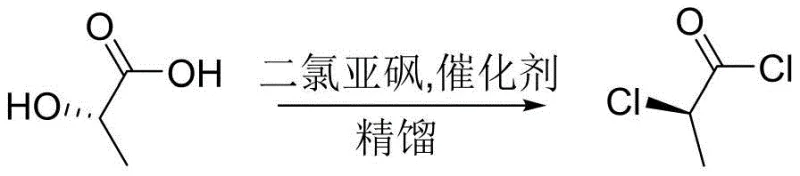
Historically, the synthesis of D-2-chloropropionyl chloride has been plagued by significant chemical and operational bottlenecks that hinder large-scale commercial viability. One prevalent prior art method utilizes anhydrous L-lactic acid reacted directly with thionyl chloride in the presence of organic bases like pyridine. However, this one-step approach suffers from the inherent instability of anhydrous lactic acid, which tends to undergo self-polymerization, thereby reducing the effective concentration of the starting material and complicating reaction kinetics. Furthermore, the sensitivity of this system to moisture makes it incompatible with commercially available aqueous lactic acid, necessitating expensive dehydration steps. Another common route involves a three-step sequence starting from L-methyl lactate, where the hydrolysis step relies on sodium hydroxide. This alkaline environment poses a severe risk of nucleophilic attack on the alpha-chloro group, leading to hydrolysis of the desired chloro functionality and requiring complex post-treatment with hydrochloric acid and multiple chloroform extractions to recover the product.

The Novel Approach
In stark contrast to these legacy methods, the patented process introduces a sophisticated three-step strategy that prioritizes selectivity and operational simplicity. The innovation begins with the chlorination of L-ethyl lactate using thionyl chloride under strictly controlled low-temperature conditions to form D-2-ethyl chloropropionate with minimal byproduct formation. The true breakthrough occurs in the subsequent hydrolysis step, where the traditional sodium hydroxide is replaced by a catalytic system comprising a cation exchange resin and anhydrous formic acid. This mild acidic environment effectively hydrolyzes the ester bond while preserving the sensitive alpha-chloro group, virtually eliminating the risk of racemization or dechlorination. Finally, the resulting D-2-chloropropionic acid is converted to the acid chloride using thionyl chloride. This streamlined approach not only boosts overall yield but also enables the use of simple distillation for purification, bypassing the need for complex rectification equipment entirely.
Mechanistic Insights into Resin-Catalyzed Hydrolysis
The core chemical advancement in this patent lies in the mechanistic superiority of the resin/formic acid catalytic system during the hydrolysis of D-2-ethyl chloropropionate. In traditional alkaline hydrolysis, the hydroxide ion acts as a strong nucleophile that competes with water to attack the electrophilic carbon adjacent to the chlorine atom. This side reaction leads to the formation of lactic acid derivatives and the loss of optical purity, which is catastrophic for pharmaceutical intermediates requiring strict stereochemical control. The patented method utilizes a sulfonic acid-type cation exchange resin (such as type 732) in conjunction with anhydrous formic acid. This system generates a controlled proton-rich environment that facilitates the protonation of the carbonyl oxygen, making the carbonyl carbon more susceptible to nucleophilic attack by water molecules specifically, rather than aggressive hydroxide ions. This selectivity ensures that the ester bond is cleaved efficiently while the carbon-chlorine bond remains intact, preserving the chiral integrity of the molecule throughout the transformation.
Furthermore, the optimization of water content within this reaction system plays a critical role in impurity control and yield maximization. The patent data indicates that maintaining a system water content between 7% and 15% is crucial for balancing reaction rate and selectivity. Too little water slows the hydrolysis kinetics, while excessive water can dilute the catalytic effect of the formic acid and potentially promote unwanted side reactions. By fine-tuning this parameter alongside the weight ratio of the ester to formic acid (optimized at approximately 1:1), the process achieves a single-step average yield of over 93% with purity reaching 99.4%. Additionally, the solid nature of the resin catalyst allows for easy filtration and regeneration, enabling the catalyst to be recycled multiple times without significant loss of activity, which fundamentally alters the economic model of the production process by reducing raw material consumption.

How to Synthesize D-2-Chloropropionyl Chloride Efficiently
The implementation of this synthesis route requires precise adherence to temperature profiles and reagent ratios to maximize the benefits of the resin catalysis. The process is designed to be scalable from kilogram to multi-ton levels, with specific attention paid to the exothermic nature of the chlorination steps and the equilibrium dynamics of the hydrolysis. Operators must ensure that the thionyl chloride addition is performed at sub-zero temperatures to prevent thermal degradation, followed by a controlled heat-up to drive the reaction to completion. The hydrolysis step demands careful monitoring of the water content and temperature to maintain the delicate balance between ester cleavage and chloro-group preservation. For detailed standard operating procedures and specific parameter settings validated at the 10-kilogram scale, please refer to the technical guide below.
- Chlorinate L-ethyl lactate with thionyl chloride and a catalyst at controlled temperatures to form D-2-ethyl chloropropionate.
- Hydrolyze the ester using a recyclable cation exchange resin and anhydrous formic acid system to obtain D-2-chloropropionic acid.
- React the acid with thionyl chloride followed by distillation to isolate the final D-2-chloropropionyl chloride product.
Commercial Advantages for Procurement and Supply Chain Teams
For procurement managers and supply chain heads, the transition to this patented synthesis method offers profound strategic advantages beyond mere chemical efficiency. The most significant impact is the drastic simplification of the production infrastructure. By eliminating the requirement for high-efficiency rectification towers and replacing them with conventional distillation units, the capital expenditure (CapEx) for setting up production lines is substantially reduced. This reduction in equipment complexity also translates to lower maintenance costs and decreased energy consumption, as rectification is inherently energy-intensive compared to simple distillation. Furthermore, the ability to recycle the resin catalyst and the high efficiency of the reaction system mean that raw material utilization is optimized, leading to a leaner cost structure that is less vulnerable to fluctuations in commodity prices.
- Cost Reduction in Manufacturing: The elimination of complex rectification equipment and the implementation of a recyclable catalyst system fundamentally lower the operational overhead. By avoiding the need for expensive solvent extraction processes associated with alkaline hydrolysis, such as multiple chloroform washes and pH adjustments, the process reduces both solvent purchase costs and waste disposal fees. The high selectivity of the resin-catalyzed step minimizes the formation of difficult-to-separate impurities, which further reduces the cost associated with downstream purification and yield loss. This holistic approach to cost optimization ensures a more competitive pricing structure for the final API intermediate without compromising on quality standards.
- Enhanced Supply Chain Reliability: The robustness of this synthetic route significantly mitigates supply chain risks associated with raw material availability and process stability. Since the method can utilize L-ethyl lactate, a stable and widely available ester, rather than moisture-sensitive anhydrous lactic acid, the sourcing of starting materials becomes more reliable and less prone to logistical disruptions. The simplified post-treatment procedures, which do not rely on complex pH adjustments or hazardous solvent extractions, reduce the likelihood of batch failures due to operational errors. This increased process reliability ensures consistent delivery schedules and helps maintain continuous production flows, which is critical for meeting the demanding timelines of pharmaceutical clients.
- Scalability and Environmental Compliance: From an environmental and scalability perspective, this method aligns perfectly with modern green chemistry principles and regulatory expectations. The avoidance of chloroform, a hazardous solvent often required in traditional workups, significantly reduces the environmental footprint and simplifies compliance with increasingly stringent waste disposal regulations. The recyclable nature of the resin catalyst minimizes solid waste generation, while the high atom economy of the reaction reduces the overall volume of chemical effluents. These factors make the process highly scalable, allowing for seamless expansion from pilot plant quantities to hundred-ton annual production capacities without encountering the bottlenecks typically associated with complex purification trains.
Frequently Asked Questions (FAQ)
The following questions address common technical and commercial inquiries regarding the implementation of this synthesis technology. These insights are derived directly from the experimental data and process descriptions found in the patent literature, providing a clear understanding of the operational benefits and chemical mechanisms involved. Understanding these details is essential for technical teams evaluating the feasibility of adopting this route for commercial manufacturing.
Q: Why is the resin/formic acid system superior to sodium hydroxide for hydrolysis?
A: Traditional sodium hydroxide hydrolysis creates a strongly nucleophilic environment that risks attacking the alpha-chloro group, leading to byproduct formation and racemization. The resin/formic acid system provides a milder, controlled acidic environment that preserves the chiral integrity and chloro functionality while allowing catalyst recycling.
Q: Does this process require complex rectification equipment?
A: No. A key advantage of this patented method is the elimination of the need for complex rectification towers. The optimized reaction parameters and high selectivity allow for product isolation using conventional distillation, significantly reducing capital expenditure and energy consumption.
Q: What are the primary pharmaceutical applications of this intermediate?
A: D-2-chloropropionyl chloride is a critical starting material for the synthesis of Alanyl Glutamine, a vital component in parenteral nutrition for catabolic patients, and serves as a precursor for the anti-inflammatory drug Loxoprofen Sodium.
Partnering with NINGBO INNO PHARMCHEM: Your Reliable D-2-Chloropropionyl Chloride Supplier
At NINGBO INNO PHARMCHEM, we recognize the critical role that high-quality intermediates play in the global pharmaceutical supply chain. Our team possesses extensive experience scaling diverse pathways from 100 kgs to 100 MT/annual commercial production, ensuring that the transition from laboratory innovation to industrial reality is seamless. We are committed to delivering products that meet stringent purity specifications through our rigorous QC labs, guaranteeing that every batch of D-2-chloropropionyl chloride adheres to the highest standards required for parenteral nutrition and analgesic drug synthesis. Our capability to implement advanced catalytic systems like the resin-mediated hydrolysis described in recent patents demonstrates our dedication to continuous process improvement and technological leadership.
We invite potential partners to engage with our technical procurement team to discuss how this optimized synthesis route can benefit your specific supply chain requirements. By requesting a Customized Cost-Saving Analysis, you can gain a deeper understanding of the economic advantages of switching to this more efficient manufacturing method. We encourage you to contact us today to obtain specific COA data and route feasibility assessments tailored to your project needs, ensuring that your production goals are met with maximum efficiency and reliability.